Athlete Protections The NCAA has declined oversight protecting - - PowerPoint PPT Presentation

athlete
SMART_READER_LITE
LIVE PREVIEW

Athlete Protections The NCAA has declined oversight protecting - - PowerPoint PPT Presentation

College Athlete Protections The NCAA has declined oversight protecting college athletes The NCAA has declined to enforce rules to ensure athletes are actually getting an education. UNC Aug. 2017 The NCAA determined no rules violation


slide-1
SLIDE 1

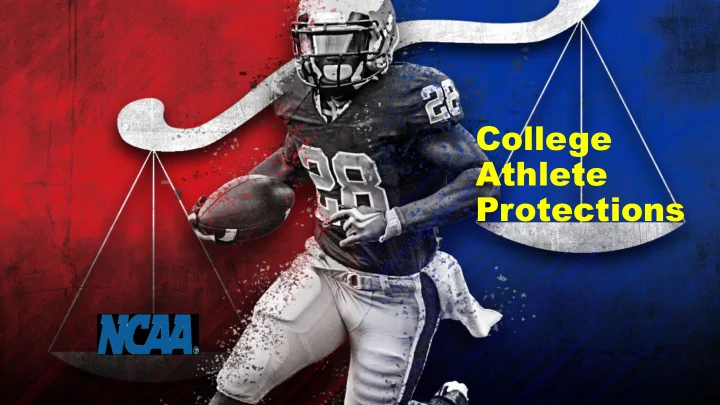
College Athlete Protections

slide-2
SLIDE 2

The NCAA has declined oversight protecting college athletes

slide-3
SLIDE 3
  • The NCAA has declined to enforce rules to ensure athletes are actually getting an education. –UNC Aug. 2017
  • The NCAA determined no rules violation regarding the sexual-assault of former athletes. –MSU Aug. 2018
  • The NCAA determined no rules violation regarding heat stroke death of athlete. -U Maryland Aug. 2018

The opportunity to stop this constant abuse has been placed in the jurisdiction of the Legislature by the NCAA. It is time to make the equitable decision and provide oversight to protect college athletes.

slide-4
SLIDE 4

Create the N.C. Bureau of College Athletics

Under th the N.C. Department of f Public Safety

  • Be an advocate for College Athletes. Create a hotline for help and advice.
  • Create and enforce the N.C. College Athlete Bill of Rights
  • Create and enforce the N.C. Coaches and Administrators Code of Conduct
  • Create and enforce the N.C. College Athletics Health and Safety Standards created

with the N.C. Athletic Trainers association, university sports medicine doctors and Mathew Gfeller Center.

  • Create a database where all injuries are reported and documented for analytical

use to determine if all athletes are getting the same fair treatment. (Available for public use with names redacted).

  • In coordination with the SBI, investigate all claims of abuse and violations of

College Athlete Protections.

  • Maintain a database of all claims of abuse and violations. (Available for public use

with names redacted such has been done with SafeSport).

  • Monitor Title IX compliance in regards to athletics at state universities.
slide-5
SLIDE 5

Only 2% of NCAA Athletes will turn professional For many college athletes, the payoff is lifelong disabilities

slide-6
SLIDE 6
  • An Indiana University study found former Division I athletes were more than twice as likely to have physical problems that

limited their daily activities and exercise. 67% of these former athletes said they had suffered a major injury and 50% said they had chronic injuries during college.

  • "Division I athletes may sacrifice their future health-related quality of life for their brief athletic career in college," lead

investigator Janet Simon, a graduate student in the kinesiology department, said in a university news release.

  • The study also found that 70% of athletes said they had practiced or played with an injury.
  • 40% of athletes were diagnosed with osteoarthritis after college, joint injuries may increase the risk of developing
  • steoarthritis.
  • Former college athletes also had higher levels of depression, fatigue and poor sleep than non-athletes, according to the

study.

slide-7
SLIDE 7

Rx: Rx: For Medical Car

  • r Medical Care

e and Athlet and Athlete e Pr Protection

  • tection
  • Every university should have a chief medical officer reporting directly to the university president and is responsible for

healthcare of all students including athletes along with direct supervision of athletic trainers.

  • The state should develop a secondary medical insurance policy that would cover 100% of an athletes medical care for

the entire year. Athletes will continue to have such care two years after their eligibility is completed to correct injuries. Athletes with documented catastrophic injuries that caused disability will continue to have the care permanently. Costs could be paid for with a N.C. ticket fee on every ticket sold at an athletic event or negotiated into the current state health contracts.

  • Athletes must be copied in all communication between coaches and medical staff.
  • Athletes should have immediate access to all electronic medical records.
  • An athlete seeking an outside medical opinion shall supersede that of the university medical staff in regards to player

safety.

  • It should be deemed under state law that college athletes are employees based on their hourly commitment and

revenue generation and benefits provided to the universities. Graduate school teacher’s assistants are considered

  • employees. This would allow athletes to receive workman’s comp protection and various employee protections. In

addition this would provide an incentive to universities to reduce chronic injuries by treating to the point they are healed.

  • All player deaths should be investigated by the SBI and the Bureau of College Athletics for manslaughter.
  • Create law whereby college coaches and athletic administrative staff must abide by the same rules and laws as athletes

in regards to college athlete guidelines, hazing rules and laws. Create law to apply North Carolina General Statute § 115C-407.15. Bullying and harassing behavior to college coaches and athletic staff as well. Punishment should include fines and termination of employment contracts with cause.

  • The Bureau of College Athletics must be provided records of all prescription medication administered to athletes.
slide-8
SLIDE 8
  • All athletes, coaches and administrators are required reporters of violations. Having knowledge of, being present

during, instigating, encouraging, or facilitating a violation of College Athlete Bill of Rights, N.C. College Athletics Health and Safety Standards, and Coaches/Administrators Code of Conduct to the N.C. Bureau of College Athletics.

  • Modify state Tort laws against athletic departments filed in Superior Court verses the Industrial Commission. Athletic

Departments are to provide their own legal counsel and take the financial responsibility instead of the state or

  • university. This would save taxpayer dollars and provide an incentive for athletic departments to protect athletes.

Universities will be required to carry liability insurance for claims against the athletic department.

  • In case the student-athlete sustains a permanent injury and is no longer medically able to participate based on the

decision of the medical staff and the student-athlete then the scholarship will last up to the completion of the undergraduate degree or five years from the initial semester. The student-athlete cannot be required to work to offset the cost of the scholarship and can be placed on a non-counting scholarship.

  • For employment of all college coaches in North Carolina they are required to present any and all documentation

regarding abuse claims made against them before their employment. Failing to do so will result in immediate termination with cause.

  • In concussion related injuries the athlete has the right to delay his/her return.
slide-9
SLIDE 9

North Carolina Universities will gain a competitive advantage by providing safety and security to college athletes over states that do not. Where would you want your child to play in college? A) A state that respects the rights of your child, provides a high level of medical care and protects his/her safety. OR B) A state that refuses to address the unregulated and unsafe conditions coaches and universities can force on your child.