
SLIDE 1
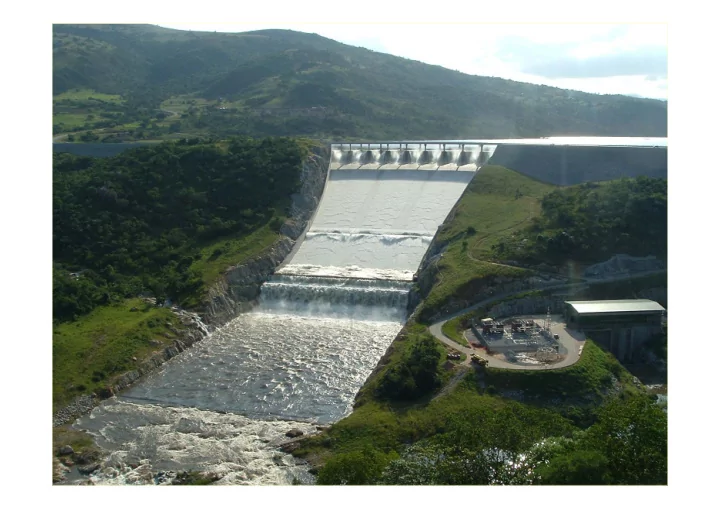
ANBO PRESENTATION KOPANONG HOTEL MARCH 2007 Progress with - - PowerPoint PPT Presentation
ANBO PRESENTATION KOPANONG HOTEL MARCH 2007 Progress with Cross Border IWRM in the IncoMaputo Basins Niel van Wyk Chief Engineer: National Water Resource Planning (East) Department of Water Affairs and Forestry, Republic of South Africa.
KOPANONG HOTEL MARCH 2007 Niel van Wyk
Chief Engineer: National Water Resource Planning (East) Department of Water Affairs and Forestry, Republic of South Africa.
Enough water for all needs All countries develop with little or no
All three countries develop considerable
1980 – Competition for water forces
Komati River Development Treaty between
Mozambique not directly involved
1991 - Piggs Peak Agreement start of
Joint Incomati Basin Study results from
Political situation in both Mozambique
Appoint Task Team Terms of Reference Development/negotiation process
TRIPARTITE INTERIM AGREEMENT BETWEEN THE REPUBLIC OF MOZAMBIQUE AND THE REPUBLIC OF SOUTH AFRICA AND THE KINGDOM OF SWAZILAND FOR CO-OPERATION ON THE PROTECTION AND SUSTAINABLE UTILISATION OF THE WATER RESOURCES OF THE INCOMATI AND MAPUTO WATERCOURSES
Water quality management Transboundary impact Establishment of monitoring systems Mitigation of the effects of floods and
Partnership in effective and efficient water
Security of infrastructure Reference projects
Commitment from member states Basis for cross border cooperation A milestone water agreement for southern
Access to investor funding National level planning with more certainty
Develop tight tor Begin with technical side – it allows for
Secretarial function very important Consider: transparency, honesty,
Process has to be supported from high
Participants should be capacitated
Process needs to be managed strongly Negotiating rules unspecified
Political will Common needs and objectives Communication skills Access to specialist knowledge Strong management Technical/subject knowledge Administrative support Trust Patience Understanding
Convert into “CUSTOMARY
Implementation of the IIMA
Analyse IIMA for work to be done Develop implementation and activity plan Develop Scopes of Work and ToR’s Implement
WP1-Shared watercourse institutions WP2-Review national water policies and
WP3-Integrated water resource management WP4-Augmentation of water supply to Maputo WP5-Disaster management WP6-Transboundary impacts
WP7-Exchange and access to information WP8-Capacity and confidence building WP9-Stakeholder participation WP10-System operating rules WP11-Preparation for comprehensive
WP12-Managing the implementation of
TPTC strengthening Project manager and coordinator Information exchange Maputo water supply study Disaster management
On Orange-Senqu and Limpopo the
On the IncoMaputo the strategy was to do
When reviewing the relative progress of
N.J. (Niel) van Wyk Chief Engineer: National Water Resource Planning (East) Department of Water Affairs and Forestry, Private Bag X313 Pretoria 0001 Republic of South Africa. Landline (work) +27 123368327 Fax +27 123368295 Mobile +27 828085651 E-mail vanwykn@dwaf.gov.za