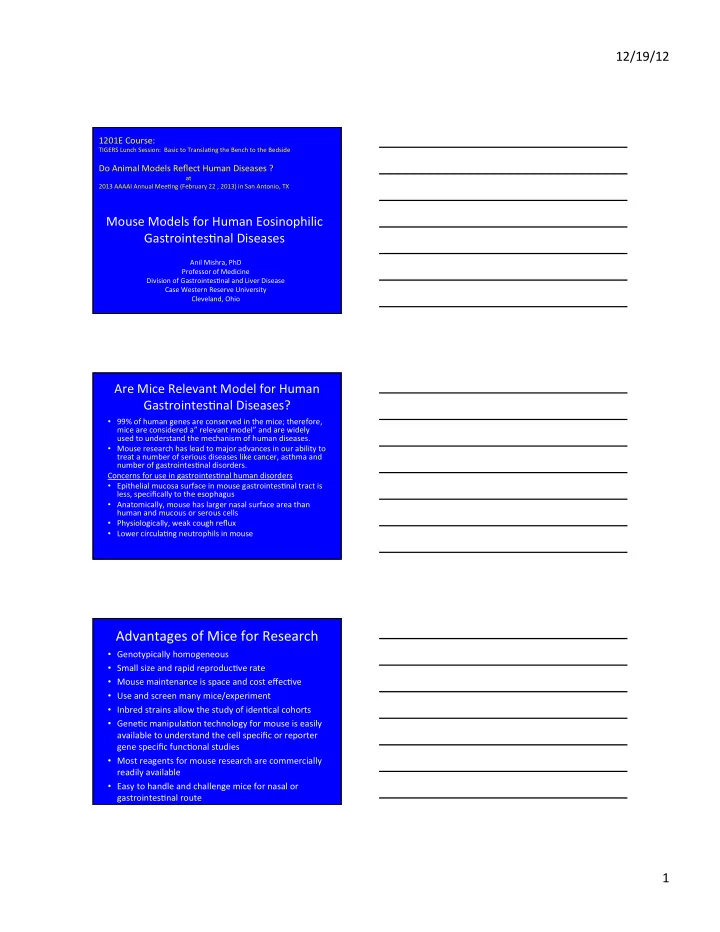
Advantages of Mice for Research Genotypically homogeneous - - PDF document

advantages of mice for research
SMART_READER_LITE
LIVE PREVIEW

Advantages of Mice for Research Genotypically homogeneous - - PDF document

12/19/12 1201E Course: TIGERS Lunch Session: Basic to Transla:ng the Bench to the Bedside Do Animal Models Reflect Human Diseases ?


slide-1
SLIDE 1

12/19/12 ¡ 1 ¡ Mouse ¡Models ¡for ¡Human ¡Eosinophilic ¡ Gastrointes:nal ¡Diseases ¡

Anil ¡Mishra, ¡PhD ¡ Professor ¡of ¡Medicine ¡ Division ¡of ¡Gastrointes:nal ¡and ¡Liver ¡Disease ¡ Case ¡Western ¡Reserve ¡University ¡ Cleveland, ¡Ohio ¡ ¡

1201E ¡Course: ¡ ¡

TIGERS ¡Lunch ¡Session: ¡ ¡Basic ¡to ¡Transla:ng ¡the ¡Bench ¡to ¡the ¡Bedside ¡ ¡

Do ¡Animal ¡Models ¡Reflect ¡Human ¡Diseases ¡? ¡

¡ ¡ ¡ ¡ ¡ ¡ ¡at ¡ ¡ 2013 ¡AAAAI ¡Annual ¡Mee:ng ¡(February ¡22 ¡, ¡2013) ¡in ¡San ¡Antonio, ¡TX ¡

Are ¡Mice ¡Relevant ¡Model ¡for ¡Human ¡ Gastrointes:nal ¡Diseases? ¡

  • 99% ¡of ¡human ¡genes ¡are ¡conserved ¡in ¡the ¡mice; ¡therefore, ¡

mice ¡are ¡considered ¡a” ¡relevant ¡model” ¡and ¡are ¡widely ¡ used ¡to ¡understand ¡the ¡mechanism ¡of ¡human ¡diseases. ¡

  • Mouse ¡research ¡has ¡lead ¡to ¡major ¡advances ¡in ¡our ¡ability ¡to ¡

treat ¡a ¡number ¡of ¡serious ¡diseases ¡like ¡cancer, ¡asthma ¡and ¡ number ¡of ¡gastrointes:nal ¡disorders. ¡ Concerns ¡for ¡use ¡in ¡gastrointes:nal ¡human ¡disorders ¡ ¡

  • Epithelial ¡mucosa ¡surface ¡in ¡mouse ¡gastrointes:nal ¡tract ¡is ¡

less, ¡specifically ¡to ¡the ¡esophagus ¡

  • Anatomically, ¡mouse ¡has ¡larger ¡nasal ¡surface ¡area ¡than ¡

human ¡and ¡mucous ¡or ¡serous ¡cells ¡

  • Physiologically, ¡weak ¡cough ¡reflux ¡
  • Lower ¡circula:ng ¡neutrophils ¡in ¡mouse ¡

Advantages ¡of ¡Mice ¡for ¡Research ¡

  • Genotypically ¡homogeneous ¡
  • Small ¡size ¡and ¡rapid ¡reproduc:ve ¡rate ¡
  • Mouse ¡maintenance ¡is ¡space ¡and ¡cost ¡effec:ve ¡
  • Use ¡and ¡screen ¡many ¡mice/experiment ¡
  • Inbred ¡strains ¡allow ¡the ¡study ¡of ¡iden:cal ¡cohorts ¡
  • Gene:c ¡manipula:on ¡technology ¡for ¡mouse ¡is ¡easily ¡

available ¡to ¡understand ¡the ¡cell ¡specific ¡or ¡reporter ¡ gene ¡specific ¡func:onal ¡studies ¡

  • Most ¡reagents ¡for ¡mouse ¡research ¡are ¡commercially ¡

readily ¡available ¡

  • Easy ¡to ¡handle ¡and ¡challenge ¡mice ¡for ¡nasal ¡or ¡

gastrointes:nal ¡route ¡

slide-2
SLIDE 2

12/19/12 ¡ 2 ¡ Disadvantages ¡of ¡Mice ¡for ¡Research ¡

  • Differences ¡among ¡mouse ¡strains ¡can ¡be ¡

major; ¡therefore, ¡more ¡than ¡one ¡strain ¡has ¡to ¡ be ¡studied ¡

  • Gastrointes:nal ¡biopsy ¡are ¡not ¡easily ¡

performed; ¡therefore, ¡mouse ¡has ¡to ¡be ¡ sacrificed ¡for ¡whole ¡organ ¡analysis ¡

  • Technology ¡for ¡only ¡colon ¡biopsy ¡is ¡now ¡

available ¡for ¡mouse ¡ ¡

Mouse ¡Models ¡

  • Several ¡mouse ¡models ¡are ¡in ¡use ¡for ¡a ¡number ¡
  • f ¡gastrointes:nal ¡diseases ¡to ¡study ¡the ¡role ¡
  • f ¡eosinophils ¡or ¡other ¡cells ¡
  • Food ¡Allergy ¡
  • Eosinophilic ¡Esophagi:s ¡
  • Allergic ¡Gastroenteri:s ¡ ¡

¡ ¡ ¡ ¡and ¡

  • Allergic ¡Coli:s ¡ ¡ ¡

Eosinophils ¡in ¡Gastrointes:nal ¡tract ¡

  • Eoisinophils ¡are ¡the ¡mul:func:onal ¡leukocyte ¡

involved ¡in ¡parasite ¡excre:on ¡and ¡a ¡number ¡of ¡ inflammatory ¡responses. ¡

  • Eosinophils ¡reside ¡in ¡gastrointes:nal ¡tract ¡form ¡

prenatal ¡to ¡the ¡adult ¡stage ¡in ¡both ¡mouse ¡and ¡ human ¡

  • This ¡presenta:on ¡will ¡be ¡focused ¡on ¡the ¡use ¡of ¡

mice ¡to ¡understand ¡the ¡mechanism ¡ ¡ ¡ ¡ ¡ ¡of ¡eosinophilc ¡gastrointes:nal ¡ ¡ ¡ ¡ ¡ ¡disorders ¡in ¡human ¡

slide-3
SLIDE 3

12/19/12 ¡ 3 ¡ Pathological ¡Similari:es ¡in ¡Human ¡and ¡ Mouse ¡Eosinophilc ¡Esophagi:s ¡

Mouse ¡EoE ¡ Normal ¡ Human ¡EoE ¡ EoE ¡Pa:ent ¡

Protocol ¡for ¡inducing ¡EoE ¡in ¡Mice ¡

Week ¡ 1 ¡ 2 ¡ 3 100 µg Aspergillus with 50 µl saline

  • r saline alone was given to each mouse ¡

Sacrificed 18-20 hrs ¡ after last Challenge ¡ Mice were ¡

Aeroallergen ¡ Food ¡allergen ¡ DAY ¡ 0 14 ¡

I.P ¡with ¡Peanut ¡ extract ¡ 100ug ¡and ¡1mg ¡ alum ¡ ¡

21 ¡ 23 ¡

50 ¡ug ¡of ¡peanut ¡extract ¡ with ¡50 ¡ul ¡of ¡Saline ¡or ¡ saline ¡alone ¡were ¡given ¡I.N. ¡

  • n ¡alterna:ve ¡days. ¡

Mice ¡were ¡sacked ¡18-­‑20 ¡ hrs ¡ager ¡last ¡challenge ¡

25 ¡

Similari:es ¡in ¡Aeroallergen ¡and ¡Food ¡ Allergen-­‑induced ¡Experimental ¡EoE ¡

Aeroallergen ¡(Aspergillus) ¡ ¡ Food ¡Allergen ¡(Peanut) ¡ Saline ¡ Saline ¡ Aspergillus ¡100x ¡ Peanut ¡100x ¡ Aspergillus ¡400x ¡ Peanut ¡400x ¡

slide-4
SLIDE 4

12/19/12 ¡ 4 ¡ Cytokines ¡Profile ¡in ¡Human ¡and ¡ Experimental ¡EoE ¡

Mouse ¡ Human ¡

Gene:c ¡Manipula:on ¡in ¡Mice ¡

  • Transgenic ¡Mouse ¡

¡ ¡ ¡ ¡ ¡ ¡ ¡ ¡ ¡ ¡ ¡ ¡ ¡ ¡Add ¡an ¡exogenious ¡gene ¡to ¡the ¡mouse ¡ genome ¡ ¡

  • Gene ¡Targehed ¡(Knockout) ¡Mouse ¡

¡ ¡ ¡ ¡ ¡ ¡ ¡ ¡ ¡ ¡ ¡Mutate ¡an ¡endogeneous ¡gene ¡within ¡the ¡ mouse ¡genome ¡

Role ¡of ¡IL-­‑15 ¡in ¡the ¡Human ¡and ¡Mouse ¡ Model ¡of ¡Experimental ¡EoE ¡

slide-5
SLIDE 5

12/19/12 ¡ 5 ¡ Uses ¡of ¡Transgenic ¡Mice ¡

  • Gene ¡Func:on ¡

¡ ¡ ¡ ¡ ¡ ¡ ¡ ¡ ¡ ¡ ¡ ¡Overexpression ¡or ¡Ectopic ¡expression ¡

  • Muta:onal ¡Analysis ¡of ¡Gene ¡Components ¡

¡ ¡ ¡ ¡ ¡ ¡ ¡ ¡ ¡ ¡ ¡ ¡Sequence ¡and ¡Domain ¡analysis ¡

  • Overexpression ¡Mutant ¡gene, ¡e.g ¡Oncogene ¡

¡ ¡ ¡ ¡ ¡ ¡ ¡ ¡ ¡ ¡ ¡Make ¡mouse ¡model ¡of ¡human ¡cancer ¡ ¡

¡ ¡Uses ¡of ¡Gene-­‑deficient ¡(Knockout) ¡Mice ¡

  • To ¡establish ¡a ¡cri:cal ¡role ¡of ¡a ¡par:cular ¡gene’s ¡

func:on ¡ ¡ ¡ ¡ ¡ ¡ ¡ ¡ ¡ ¡ ¡ ¡ ¡ ¡ ¡ ¡ ¡ ¡

iNKT ¡Cells ¡in ¡the ¡Human ¡and ¡Mouse ¡ Model ¡of ¡Experimental ¡EoE ¡

Making ¡of ¡Trasgenic ¡Mice ¡

DOX-­‑Inducible ¡Bi-­‑Transgenic ¡Gene ¡Construct ¡

Tissue-­‑specific ¡ ¡ ¡promoter ¡ (eg. ¡intes:ne ¡FABP) ¡

hGH ¡polyadeny ¡ ¡ ¡ ¡

¡ ¡ ¡Gene-­‑specific ¡ cDNA ¡ ¡

EcoR1 ¡ EcoR1 ¡ Bam ¡H1 ¡ Bam ¡H1 ¡

1200 ¡bp ¡ ? ¡bp ¡ 2100bp ¡

Single ¡Tissue ¡specific-­‑Transgenic ¡Gene ¡Construct ¡

slide-6
SLIDE 6

12/19/12 ¡ 6 ¡

EoE ¡pathogenesis ¡in ¡human ¡and ¡experimental ¡EoE ¡

Human ¡EoE ¡ IL-­‑5 ¡Transgenic ¡mice ¡show ¡characteris:cs ¡of ¡Human ¡EoE ¡

Genera:on ¡and ¡Phenotype ¡of ¡DOX-­‑ inducible ¡IL-­‑13 ¡Bi-­‑transgenic ¡mice ¡

IL-13 Tg mice constructs CC10-rtTA, tetO7-IL-15 Bi-Tg mice construct

CC10 Promoter Reverse Tet Activator hGH Poly A TetO7/ CMV m IL-13 cDNA bGH Poly A rtTA ¡ CC10 Promoter TetO7/ CMV Promoter Reverse Tet Activator m IL-13 cDNA rtTA ¡ Dox ¡ hGH Poly A bGH Poly A

No ¡DOX ¡ No ¡DOX ¡ 3 ¡weeks ¡DOX ¡ 3 ¡weeks ¡DOX ¡ MM ¡ MM ¡ EP ¡ EP ¡

Mouse ¡Esophageal ¡Stricture ¡Develops ¡ in ¡EoE ¡transgenic ¡model ¡is ¡similar ¡to ¡ the ¡Stricture ¡observed ¡in ¡Human ¡EoE ¡

WT ¡ CD2-­‑IL-­‑5 ¡Transgenic ¡mice ¡

slide-7
SLIDE 7

12/19/12 ¡ 7 ¡

iFABP-­‑IL-­‑5 ¡and ¡eotaxin-­‑1 ¡Transgenic ¡Mice ¡ Show ¡Eosinophilic ¡Gastroenteri:s ¡ Addi:onal ¡Manipula:on ¡of ¡Transgenic ¡Mice ¡to ¡ Understand ¡the ¡Role ¡of ¡a ¡Par:cular ¡Gene ¡

Gene:c ¡rescue ¡of ¡eotaxin-­‑deficiency ¡with ¡ the ¡iET ¡transgene ¡ The ¡effect ¡of ¡the ¡β-­‑7 ¡integrin ¡on ¡eotaxin ¡ transgene-­‑induced ¡ ¡eosinophilia ¡ Intranasal and intratracheal aeroallergens-induces eosinophilic esophagitis (Mishra et al. J. Clin.

  • Invest. 2001)

Interleukin (IL)-5 regulate eosinophil trafficking into the esophagus (Mishra et al. J. Immunol. 2002). IL-13 delivery to the lung promotes EoE and regulated by eotaxin and STAT 6 (Mishra et al.

  • Gastroenterology. 2003)

T cells are critical; however, no apparent role of CD8+ and no major role of conventional CD4+ T cells in the EoE (Mishra et al. J. Leuko. Biol. 2006)

Important ¡Findings ¡Using ¡Mouse ¡models ¡of ¡EoE ¡

EOS

IL-13 IL-5 IL-5

IL-15 has a critical role in human and experimental EoE pathogenesis (Zhu et al. Gastroenterology 2010). Esophagus is devoid of esophageal eosinophilia. (Mishra et al. J. Clin. Invest. 1999) Microarray analysis indicated that Eotaxin-3 and IL-15 is induced in human EoE (Carine et al. . J.

  • Clin. Invest. 2006).
slide-8
SLIDE 8

12/19/12 ¡ 8 ¡ Conclusions ¡ ¡

  • The ¡overwhelming ¡message ¡is ¡that ¡mouse ¡models ¡contribute ¡

to ¡our ¡understanding ¡in ¡health ¡and ¡disease ¡and ¡the ¡ development ¡of ¡new ¡treatments ¡and ¡diagnos:c ¡tools. ¡

  • Although ¡models ¡have ¡some ¡concerns ¡and ¡are ¡not ¡perfect, ¡

but ¡most ¡research ¡uses ¡mouse ¡models ¡to ¡understand ¡the ¡ diseases ¡mechanism ¡that ¡is ¡not ¡possible ¡without ¡a ¡relevant ¡ model ¡of ¡the ¡disease. ¡

  • Without ¡using ¡mouse ¡models, ¡we ¡may ¡no ¡t ¡be ¡able ¡to ¡develop ¡

and ¡perform ¡preclinical ¡studies ¡of ¡the ¡new ¡drugs ¡to ¡treat ¡ human ¡diseases. ¡

  • Mouse ¡models ¡have ¡been ¡successfully ¡used ¡to ¡validate ¡drug ¡

targets ¡and ¡to ¡determine ¡efficacious ¡and ¡safe ¡usage ¡schemes ¡ for ¡combina:on ¡treatment ¡in ¡human. ¡

  • However, ¡ques:ons ¡always ¡be ¡raised ¡that ¡how ¡useful ¡and ¡

valid ¡these ¡mouse ¡models ¡for ¡mimicking ¡human ¡diseases. ¡