
SLIDE 1
8 8 Average number of windows open at the same time on a workers - - PowerPoint PPT Presentation
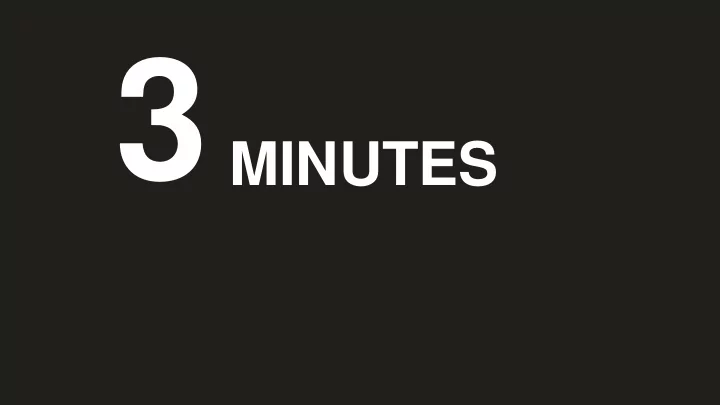
3 MINUTES 3 MINUTES How frequently the average office worker is interrupted or distracted UNIVERSITY OF CALIFORNIA, IRVINE 23 MINUTES 23 MINUTES How long it takes to return to a task after being interrupted UNIVERSITY OF CALIFORNIA, IRVINE 204
How frequently the average office worker is interrupted or distracted
UNIVERSITY OF CALIFORNIA, IRVINE How long it takes to return to a task after being interrupted
UNIVERSITY OF CALIFORNIA, IRVINE Emails sent per second
MASHABLE Average number of windows
worker’s computer
TORKEL KLINGBERG Average number of times per hour an office worker checks his or her email inbox
NATIONAL CENTER FOR BIOTECHNOLOGY INFORMATION How often the average smartphone user in the UK checks his or her phone every day
TECHMARK Connected devices in use in 2015
GARTNER Increase in average time spent
Workers who can’t choose where to work depending on the task
STEELCASE WELLBEING SURVEY GLOBAL AVERAGE, 17 COUNTRIES Think Better Neuroscience: The Next Competitive Advantage
Attention is a scarce resource.
Too much information is resulting in an “epidemic of overwhelm.”
Emails sent per second
MASHABLE Connected devices in use in 2015
GARTNER Increase in average time spent
Intensification of work
We’re experiencing more distractions More often. We are experiencing more distractions, more often.
How frequently the average office worker is interrupted or distracted
UNIVERSITY OF CALIFORNIA, IRVINE How long it takes to return to a task after being interrupted
UNIVERSITY OF CALIFORNIA, IRVINE Humans are hardwired to be distracted.
Workplaces and schools are not helping.
What neuroscience is teaching us
Understanding attention
Understanding attention
Controlled attention is our capacity to intentionally and willfully direct our minds to a specific item or task.
Understanding attention
Stimulus-driven attention is an involuntary attraction to any external or internal lure.
Our brains at work
The brain comprises merely 2% of the body’s weight, but consumes more than 20% of the daily caloric intake of energy—more than any
is inefficient
OUR BRAINS AT WORK Research shows that multitasking increases your error rate by 50%.
JOHN MEDINA OUR BRAINS AT WORK Change focus ten times an hour, and your productive thinking time is only a fraction of what’s possible.”
DAVID ROCK“
OUR BRAINS AT WORK Being fully immersed in a feeling of energized focus, full involvement and enjoyment in the process of the activity.
OUR BRAINS AT WORKFlow
trains the brain
OUR BRAINS AT WORK Meditation can actually change the structure
perception and cognitive functioning.” “
OUR BRAINS AT WORK RICHARD DAVIDSON Engaging in mindfulness means that we are practicing our ability to recognize when our minds have wandered and gaining ability to redirect our attention. The more we practice this, the better we get at it.”
BEATRIZ ARANTES, SENIOR RESEARCHER, STEELCASE“
OUR BRAINS AT WORK The workplace and schools can be designed to mitigate distractions and prime us to better manage our attention.” “
OUR BRAINS AT WORK JOHN MEDINA Respecting brain modes
Steelcase researchers and designers have identified three brain modes that each require distinct behaviors and settings.
Focus
RESPECTING BRAIN MODESBrain modes
Focus Regenerate and inspire
RESPECTING BRAIN MODESBrain modes
Focus Regenerate and inspire Activate
RESPECTING BRAIN MODESBrain modes
Focus
Regenerate and inspire
When overwhelmed minds need a break, regenerative activities strengthen brain functioning. Activate
When we need to boost Movement engages the brain.
Respecting the rhythms of our brain
RESPECTING BRAIN MODES Focus Regeneration and inspiration Activation Taking a moment / plan the day Serendipitous encounter / coffee + food Brainstorm session Project review Lunch Taking a moment / personal phone call Thinking work Taking a moment / movement Building & developing relationships Design to support attention
No single solution for everyone, all the time
Ecosystem
interdependent spaces that support the physical, cognitive and emotional needs of people.
DESIGN TO SUPPORT ATTENTION Choice + Control
Posture
DESIGN TO SUPPORT ATTENTIONPalette of place
Posture Presence
DESIGN TO SUPPORT ATTENTIONPalette of place
Posture Presence Privacy
DESIGN TO SUPPORT ATTENTIONPalette of place
Thoughtstarters
Focus
THOUGHTSTARTERS Focus
THOUGHTSTARTERS Regeneration and inspiration
THOUGHTSTARTERS Regeneration and inspiration
THOUGHTSTARTERS Regeneration and inspiration
THOUGHTSTARTERS Activation
THOUGHTSTARTERS Activation
THOUGHTSTARTERS Activation
THOUGHTSTARTERS Neuroscience provides a new lens through which we can understand cognitive wellbeing and optimize performance.