Wind Turbines, Low Frequency Noise, and Public Health - - PowerPoint PPT Presentation

wind turbines low frequency noise and public health
SMART_READER_LITE
LIVE PREVIEW

Wind Turbines, Low Frequency Noise, and Public Health - - PowerPoint PPT Presentation

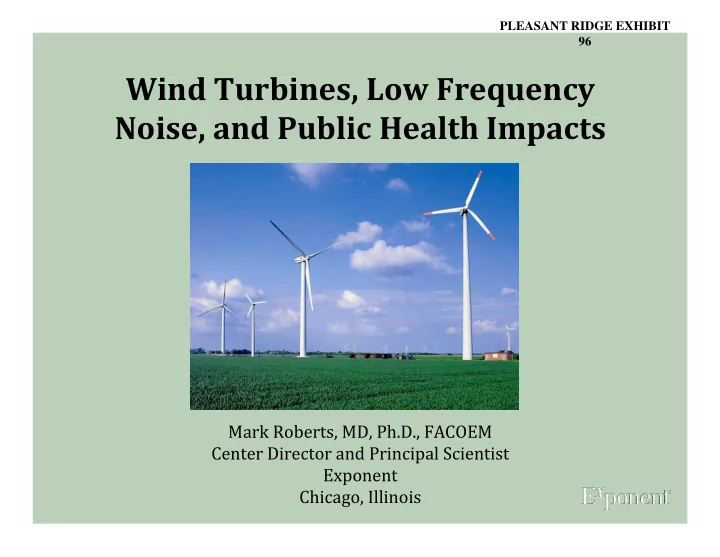
PLEASANT RIDGE EXHIBIT 96 Wind Turbines, Low Frequency Noise, and Public Health Impacts Mark Roberts, MD, Ph.D., FACOEM Center Director and Principal Scientist


slide-1
SLIDE 1

Wind ¡Turbines, ¡Low ¡Frequency ¡ Noise, ¡and ¡Public ¡Health ¡Impacts ¡ ¡

Mark ¡Roberts, ¡MD, ¡Ph.D., ¡FACOEM ¡ Center ¡Director ¡and ¡Principal ¡Scientist ¡ Exponent ¡ Chicago, ¡Illinois ¡

PLEASANT RIDGE EXHIBIT 96
slide-2
SLIDE 2

Introduction ¡

  • Education ¡and ¡Training ¡

Ø M.D.—University ¡of ¡Oklahoma ¡ Ø Ph.D.—Biostatistics ¡and ¡Epidemiology, ¡University ¡of ¡

Oklahoma ¡

Ø Board ¡certiIied ¡by ¡the ¡American ¡Board ¡of ¡Preventive ¡

Medicine ¡

  • Occupational ¡and ¡Environmental ¡Medicine ¡

Ø Licensed ¡to ¡practice ¡medicine ¡in ¡Wisconsin, ¡Illinois, ¡and ¡

Oklahoma ¡

  • Professional ¡Experience ¡

Ø Exponent ¡ Ø State ¡Epidemiologist ¡for ¡the ¡Oklahoma ¡State ¡Department ¡

  • f ¡Health ¡

Ø Past ¡corporate ¡Medical ¡Director ¡for ¡several ¡global ¡

companies ¡

slide-3
SLIDE 3
  • Dr. ¡Mark ¡Roberts ¡Wind ¡Turbine ¡and ¡

Energy ¡Related ¡Testimony ¡ ¡

  • Glacier ¡Hills ¡Wind ¡Park ¡siting ¡hearing, ¡Wisconsin ¡Public ¡Service ¡Commission, ¡Madison, ¡

Wisconsin, ¡November ¡13, ¡2009 ¡

  • Stuben ¡Wind ¡Project, ¡Hartsville ¡Planning ¡Board, ¡Hartsville, ¡New ¡York, ¡November ¡23-­‑2009 ¡
  • Zotos ¡Wind ¡Turbine ¡Site, ¡Geneva ¡Planning ¡Board, ¡Geneva, ¡New ¡York, ¡April ¡20, ¡2010 ¡
  • Goodhue ¡Wind ¡Energy ¡Project, ¡Minnesota ¡Public ¡Utilities ¡Hearing, ¡Goodhue, ¡Minnesota, ¡July ¡21, ¡

2010 ¡

  • Pioneer ¡Trail ¡Wind ¡Farm ¡hearing, ¡Iroquois ¡County ¡Zoning ¡Board, ¡Wateska, ¡Illinois, ¡November ¡

30, ¡2010 ¡ ¡

  • Rothschild ¡Co-­‑generation ¡Facility ¡application ¡hearing, ¡Wisconsin ¡Public ¡Service ¡Commission, ¡

Madison, ¡Wisconsin, ¡December ¡2, ¡2010 ¡

  • Pioneer ¡Trail ¡Wind ¡Farm ¡application ¡hearing, ¡Iroquois ¡County ¡Zoning ¡Board, ¡Paxton, ¡Illinois ¡

December ¡7, ¡2010 ¡ ¡

  • La ¡Sierrita ¡Wind ¡Project, ¡San ¡Miguel ¡County ¡Public ¡Hearing, ¡December ¡14, ¡2010 ¡
  • Wind ¡Energy ¡Project ¡hearing, ¡North ¡Kingston ¡Planning ¡Commission, ¡North ¡Kingston, ¡Rhode ¡

Island, ¡January ¡4, ¡2011 ¡

  • TULE ¡Wind ¡Energy ¡Project ¡-­‑-­‑-­‑Bureau ¡of ¡Land ¡Management ¡Project, ¡ ¡December ¡2011 ¡
  • Highland ¡Wind ¡Project ¡Wisconsin ¡Energy ¡Commission, ¡Madison, ¡Wisconsin, ¡Jan ¡15, ¡2013 ¡

¡

slide-4
SLIDE 4

Acceptance ¡of ¡Dr. ¡Roberts ¡ Opinions ¡

  • Bureau ¡of ¡Land ¡Management ¡Joint ¡Final ¡

Environmental ¡Impact ¡Report/Environmental ¡ Impact ¡Statement ¡(EIR/EIS): ¡East ¡County ¡ Substation/Tule ¡Wind/Energia ¡Sierra ¡Juarez ¡ Gen-­‑Tie ¡Projects ¡submitted ¡

Ø Dr. ¡Roberts ¡testimony ¡cited ¡in ¡the ¡EIS/EIR ¡

  • United ¡States ¡District ¡Court, ¡S.D. ¡

California* ¡agreed ¡with ¡the ¡BLM ¡EIR/EIS ¡and ¡ speciIically ¡cited ¡to ¡Dr. ¡Roberts ¡critique ¡of ¡Dr. ¡ Pierpont’s ¡opinions ¡regarding ¡wind ¡turbines ¡

*THE ¡PROTECT ¡OUR ¡COMMUNITIES ¡FOUNDATION, ¡Backcountry ¡Against ¡Dumps, ¡and ¡Donna ¡Tisdale, ¡Plaintiffs, ¡

  • v. ¡Sally ¡JEWELL, ¡et ¡al., ¡Defendants, ¡And ¡Tule ¡Wind ¡LLC, ¡Intervenor–Defendant. ¡No. ¡13CV575 ¡JLS ¡(JMA). ¡ ¡Signed ¡

March ¡25, ¡2014. ¡

¡

slide-5
SLIDE 5

Noise ¡

  • Noise ¡exposure ¡is ¡multidimensional ¡

Ø Frequency ¡

  • Frequency ¡ranges ¡for ¡audible ¡noise ¡varies ¡with ¡

individuals ¡ Ø Pressure ¡Level ¡

  • Pressure ¡of ¡sound ¡(dB) ¡has ¡a ¡tremendous ¡range ¡and ¡

it ¡cannot ¡be ¡combined ¡ ¡to ¡create ¡an ¡additive ¡effect ¡ Ø Duration ¡of ¡exposure ¡

  • Duration ¡of ¡exposure ¡is ¡ ¡ ¡ ¡ ¡ ¡ ¡ ¡ ¡ ¡ ¡ ¡ ¡ ¡ ¡ ¡ ¡ ¡ ¡ ¡ ¡ ¡ ¡ ¡ ¡ ¡ ¡ ¡ ¡ ¡ ¡ ¡ ¡ ¡ ¡ ¡ ¡ ¡ ¡ ¡ ¡ ¡ ¡ ¡ ¡ ¡ ¡ ¡ ¡ ¡ ¡ ¡

signiIicant ¡(explosions) ¡ Ø Receptor ¡

  • One ¡person’s ¡noise ¡is ¡ ¡ ¡ ¡ ¡ ¡ ¡ ¡ ¡ ¡ ¡ ¡ ¡ ¡ ¡ ¡ ¡ ¡ ¡ ¡ ¡ ¡ ¡ ¡ ¡ ¡ ¡ ¡ ¡ ¡ ¡ ¡ ¡ ¡ ¡ ¡ ¡ ¡ ¡ ¡ ¡ ¡ ¡ ¡ ¡ ¡ ¡ ¡ ¡ ¡ ¡ ¡

another ¡person’s ¡music ¡

slide-6
SLIDE 6

Low ¡Frequency ¡Noise ¡

  • Low ¡frequency ¡noise ¡is ¡with ¡us ¡all ¡the ¡time ¡

Ø Our ¡body ¡makes ¡noises ¡in ¡normal ¡function ¡

  • Heart ¡sounds ¡are ¡in ¡the ¡range ¡of ¡27 ¡to ¡35 ¡dB ¡at ¡20-­‑40 ¡

Hz ¡(Sakai ¡A. ¡et ¡al. ¡1971) ¡

  • Lung ¡sounds ¡are ¡reported ¡in ¡the ¡range ¡of ¡5-­‑35 ¡dB ¡at ¡

150-­‑ ¡600 ¡Hz ¡(Fiz ¡JA. ¡Et ¡al. ¡2008) ¡ Ø Our ¡body ¡movements ¡make ¡noise ¡ Ø Our ¡environment ¡makes ¡noises ¡

slide-7
SLIDE 7

Infrasound ¡

  • Infrasound ¡is ¡not ¡a ¡“silent ¡health ¡threat” ¡

Ø Noise ¡at ¡low ¡frequency ¡& ¡high ¡pressure ¡have ¡been ¡

studied ¡

¡

slide-8
SLIDE 8

Hearing ¡Thresholds ¡

  • At ¡low ¡frequencies, ¡a ¡much ¡higher ¡sound ¡level ¡

is ¡necessary ¡for ¡a ¡sound ¡to ¡be ¡heard ¡in ¡ comparison ¡to ¡higher ¡frequencies ¡

Ø At ¡10 ¡Hz, ¡the ¡sound ¡must ¡be ¡at ¡97 ¡dB ¡to ¡be ¡

audible ¡

Ø Levels ¡from ¡wind ¡turbines ¡at ¡4 ¡Hz ¡are ¡more ¡likely ¡

to ¡be ¡around ¡70 ¡dB ¡or ¡lower, ¡and ¡therefore ¡ inaudible ¡

slide-9
SLIDE 9

Noise ¡Concerns ¡

  • Noise ¡concerns ¡from ¡human ¡activities ¡are ¡not ¡

new ¡

Ø “The ¡silent ¡sound ¡menaces ¡drivers” ¡ ¡

  • Daily ¡Mirror, ¡Oct ¡19th, ¡1969 ¡

Ø “Danger ¡in ¡unheard ¡car ¡sounds” ¡

  • The ¡Observer, ¡April ¡21st, ¡1974 ¡

Ø “Does ¡infrasound ¡make ¡drivers ¡drunk?” ¡

  • New ¡Scientist, ¡March ¡16th, ¡1972 ¡
slide-10
SLIDE 10

Annoyance ¡

  • Annoyance ¡is ¡not ¡a ¡pathologic ¡response, ¡it ¡is ¡a ¡

normal ¡response ¡to ¡an ¡irritant ¡

Ø Fears ¡increase ¡one’s ¡awareness ¡ ¡ Ø Sounds ¡

  • Bump ¡in ¡the ¡night ¡
  • Train ¡by ¡one’s ¡house ¡

Ø Sights ¡

  • Dead ¡limb ¡hanging ¡from ¡ ¡ ¡ ¡ ¡ ¡ ¡ ¡ ¡ ¡ ¡ ¡ ¡ ¡ ¡ ¡ ¡ ¡ ¡ ¡ ¡ ¡ ¡ ¡ ¡ ¡ ¡ ¡ ¡ ¡ ¡ ¡ ¡ ¡ ¡ ¡ ¡ ¡ ¡ ¡ ¡ ¡ ¡ ¡ ¡ ¡ ¡ ¡ ¡ ¡ ¡ ¡ ¡ ¡ ¡ ¡ ¡ ¡ ¡ ¡ ¡ ¡ ¡ ¡ ¡ ¡ ¡ ¡ ¡ ¡ ¡ ¡ ¡ ¡

a ¡tree ¡ Ø Smells ¡

  • Smell ¡of ¡smoke ¡
  • Smell ¡of ¡some ¡foods ¡
slide-11
SLIDE 11

Annoyance ¡

  • “If ¡there ¡is ¡fear ¡of ¡a ¡noise ¡source, ¡or ¡an ¡

antagonism ¡to ¡its ¡creators, ¡then ¡the ¡responses ¡ are ¡more ¡negative ¡than ¡they ¡would ¡otherwise ¡ have ¡been” ¡– ¡Dr. ¡Geoff ¡Leventhall1 ¡

Ø Boom ¡box ¡music ¡in ¡the ¡next ¡ ¡ ¡ ¡ ¡ ¡ ¡ ¡ ¡ ¡ ¡ ¡ ¡ ¡ ¡ ¡ ¡ ¡ ¡ ¡ ¡ ¡ ¡ ¡ ¡ ¡ ¡ ¡ ¡ ¡ ¡ ¡ ¡ ¡ ¡ ¡ ¡ ¡ ¡ ¡

apartment ¡

Ø Car ¡alarm ¡sounding ¡outside ¡ ¡ ¡ ¡ ¡ ¡ ¡ ¡ ¡ ¡ ¡ ¡ ¡ ¡ ¡ ¡ ¡ ¡ ¡ ¡ ¡ ¡ ¡ ¡ ¡ ¡ ¡ ¡ ¡ ¡ ¡ ¡ ¡ ¡ ¡ ¡ ¡ ¡ ¡ ¡ ¡ ¡ ¡ ¡ ¡ ¡ ¡ ¡ ¡ ¡ ¡ ¡ ¡ ¡ ¡

your ¡window ¡

1: ¡Direct ¡testimony ¡of ¡Dr. ¡Geoff ¡Leventhall ¡on ¡behalf ¡of ¡Wisconsin ¡Electric ¡Power ¡ Company ¡-­‑ ¡psc.wi.gov/apps/erf_share/view/viewdoc.aspx?docid=121870 ¡

slide-12
SLIDE 12

Annoyance ¡

  • Annoyance ¡was ¡strongly ¡correlated ¡with ¡a ¡

negative ¡attitude ¡toward ¡the ¡visual ¡impact ¡of ¡ wind ¡turbines ¡on ¡the ¡landscape ¡

  • The ¡study ¡further ¡demonstrates ¡that ¡people ¡

who ¡beneIit ¡economically ¡from ¡wind ¡turbines ¡ have ¡a ¡signiIicantly ¡decreased ¡risk ¡of ¡ annoyance, ¡despite ¡exposure ¡to ¡similar ¡sound ¡ levels ¡

¡Pedersen ¡et ¡al., ¡Response ¡to ¡noise ¡from ¡modern ¡wind ¡farms ¡in ¡the ¡Netherlands. ¡J ¡ ¡Acoust. ¡Soc ¡.Am. ¡2009;126:634–643. ¡

  • Growing ¡body ¡of ¡literature ¡which ¡supports ¡

this ¡observation ¡

slide-13
SLIDE 13

Psychological ¡Responses ¡To ¡Noise ¡

  • Annoyance ¡leads ¡to ¡a ¡psychological ¡response ¡
  • r ¡an ¡emotional ¡response ¡to ¡a ¡stimulus ¡

Ø Anxiety ¡

  • Health ¡concerns ¡

Ø Fear ¡

  • Association ¡with ¡a ¡perceived ¡ ¡ ¡ ¡ ¡ ¡ ¡ ¡ ¡ ¡ ¡ ¡ ¡ ¡ ¡ ¡ ¡ ¡ ¡ ¡ ¡ ¡ ¡ ¡ ¡ ¡ ¡ ¡ ¡ ¡ ¡ ¡ ¡ ¡ ¡ ¡ ¡ ¡ ¡ ¡ ¡ ¡ ¡ ¡ ¡ ¡

adverse ¡health ¡event ¡ Ø Happiness ¡

  • Babies ¡crying ¡is ¡a ¡reminder ¡that ¡the ¡child ¡is ¡ok ¡

Ø Anger ¡

  • Reminder ¡about ¡lack ¡of ¡control ¡
slide-14
SLIDE 14

Wind ¡Turbines ¡and ¡Noise ¡ ¡

  • The ¡swishing ¡type ¡of ¡noise ¡is ¡typically ¡the ¡

dominant ¡component ¡of ¡wind ¡turbine ¡noise ¡

Ø This ¡is ¡the ¡varying ¡frequencies ¡of ¡the ¡

aerodynamic ¡noise ¡of ¡the ¡wind ¡turbine ¡

Ø The ¡“swish” ¡of ¡some ¡wind ¡ ¡ ¡ ¡ ¡ ¡ ¡ ¡ ¡ ¡ ¡ ¡ ¡ ¡ ¡ ¡ ¡ ¡ ¡ ¡ ¡ ¡ ¡ ¡ ¡ ¡ ¡ ¡ ¡ ¡ ¡ ¡ ¡ ¡ ¡ ¡ ¡ ¡ ¡ ¡ ¡ ¡ ¡ ¡ ¡ ¡ ¡ ¡ ¡ ¡ ¡ ¡ ¡

turbines ¡is ¡not ¡infrasound ¡

Ø A ¡time ¡varying ¡noise ¡is ¡ ¡

more ¡annoying ¡than ¡a ¡ ¡ steady ¡sound ¡at ¡the ¡same ¡level ¡

slide-15
SLIDE 15

Wind ¡Turbines ¡and ¡Noise ¡ ¡

  • Wind ¡Turbine ¡Noise ¡

Ø say ¡46 ¡dBA ¡or ¡less ¡at ¡1500 ¡feet ¡ Ø Aerodynamic ¡noise ¡500 ¡– ¡1,000 ¡Hz ¡ Ø Infrasound ¡

  • Levels ¡from ¡wind ¡ ¡ ¡ ¡ ¡ ¡ ¡ ¡ ¡ ¡ ¡ ¡ ¡ ¡ ¡ ¡ ¡ ¡ ¡ ¡ ¡ ¡ ¡ ¡ ¡ ¡ ¡ ¡ ¡ ¡ ¡ ¡ ¡ ¡ ¡ ¡ ¡ ¡ ¡ ¡ ¡ ¡ ¡ ¡ ¡ ¡ ¡ ¡ ¡ ¡ ¡ ¡ ¡ ¡ ¡ ¡ ¡ ¡ ¡ ¡ ¡ ¡ ¡ ¡ ¡ ¡ ¡ ¡ ¡ ¡ ¡ ¡ ¡ ¡ ¡ ¡ ¡

turbines ¡at ¡4 ¡Hz ¡are ¡ ¡ ¡ ¡ ¡ ¡ ¡ ¡ ¡ ¡ ¡ ¡ ¡ ¡ ¡ ¡ ¡ ¡ ¡ ¡ ¡ ¡ ¡ ¡ ¡ ¡ ¡ ¡ ¡ ¡ ¡ ¡ ¡ ¡ ¡ ¡ ¡ ¡ ¡ ¡ ¡ ¡ ¡ ¡ ¡ ¡ ¡ ¡ ¡ ¡ ¡ ¡ ¡ ¡ ¡ ¡ ¡ ¡ ¡ ¡ ¡ ¡ ¡ ¡ ¡ ¡ ¡ ¡ ¡ ¡ ¡ ¡ ¡ ¡ ¡ ¡ ¡ ¡ ¡ ¡ ¡ ¡ ¡ ¡ ¡ ¡ ¡ ¡ ¡ ¡ ¡ ¡ ¡ ¡ ¡ more ¡likely ¡to ¡be ¡ ¡ ¡ ¡ ¡ ¡ ¡ ¡ ¡ ¡ ¡ ¡ ¡ ¡ ¡ ¡ ¡ ¡ ¡ ¡ ¡ ¡ ¡ ¡ ¡ ¡ ¡ ¡ ¡ ¡ ¡ ¡ ¡ ¡ ¡ ¡ ¡ ¡ ¡ ¡ ¡ ¡ ¡ ¡ ¡ ¡ ¡ ¡ ¡ ¡ ¡ ¡ ¡ ¡ ¡ ¡ ¡ ¡ ¡ ¡ ¡ ¡ ¡ ¡ ¡ ¡ ¡ ¡ ¡ ¡ ¡ ¡ ¡ ¡ ¡ ¡ ¡ ¡ ¡ ¡ ¡ ¡ ¡ ¡ ¡ ¡ ¡ ¡ around ¡70 ¡dB ¡or ¡ ¡ ¡ ¡ ¡ ¡ ¡ ¡ ¡ ¡ ¡ ¡ ¡ ¡ ¡ ¡ ¡ ¡ ¡ ¡ ¡ ¡ ¡ ¡ ¡ ¡ ¡ ¡ ¡ ¡ ¡ ¡ ¡ ¡ ¡ ¡ ¡ ¡ ¡ ¡ ¡ ¡ ¡ ¡ ¡ ¡ ¡ ¡ ¡ ¡ ¡ ¡ ¡ ¡ ¡ ¡ ¡ ¡ ¡ ¡ ¡ ¡ ¡ ¡ ¡ ¡ ¡ ¡ ¡ ¡ ¡ ¡ ¡ ¡ ¡ ¡ ¡ ¡ ¡ ¡ ¡ ¡ ¡ ¡ ¡ ¡ ¡ ¡ lower, ¡and ¡therefore ¡ ¡ ¡ ¡ ¡ ¡ ¡ ¡ ¡ ¡ ¡ ¡ ¡ ¡ ¡ ¡ ¡ ¡ ¡ ¡ ¡ ¡ ¡ ¡ ¡ ¡ ¡ ¡ ¡ ¡ ¡ ¡ ¡ ¡ ¡ ¡ ¡ ¡ ¡ ¡ ¡ ¡ ¡ ¡ ¡ ¡ ¡ ¡ ¡ ¡ ¡ ¡ ¡ ¡ ¡ ¡ ¡ ¡ ¡ ¡ ¡ ¡ ¡ ¡ ¡ ¡ ¡ ¡ ¡ ¡ ¡ ¡ ¡ ¡ ¡ ¡ ¡ ¡ ¡ ¡ ¡ ¡ ¡ ¡ ¡ ¡ ¡ ¡ ¡ ¡ ¡ ¡ ¡ ¡ ¡ ¡ ¡ inaudible ¡

slide-16
SLIDE 16

Something ¡Experienced ¡Every ¡Day ¡

  • Infrasound ¡is ¡not ¡a ¡problem ¡at ¡the ¡sound ¡levels ¡

we ¡encounter ¡in ¡our ¡daily ¡lives ¡

  • Most ¡of ¡the ¡health ¡claims ¡made ¡about ¡wind ¡

turbines ¡are ¡made ¡based ¡on ¡overbroad ¡ interpretations ¡and/or ¡misinterpretations ¡of ¡ effect ¡of ¡sound ¡on ¡health ¡

Ø In ¡several ¡cases ¡health ¡claims ¡are ¡made ¡by ¡application ¡

  • f ¡research ¡never ¡meant ¡for ¡application ¡to ¡wind ¡

turbines ¡at ¡all ¡

Ø In ¡fact ¡some ¡of ¡the ¡authors ¡whose ¡work ¡has ¡been ¡cited ¡

have ¡stated ¡that ¡their ¡work ¡does ¡not ¡apply ¡to ¡wind ¡ turbine ¡analysis ¡

  • Mechanotransduction ¡(Dr. ¡Ingber) ¡
  • Tensegrity ¡(Dr. ¡Mulvihill) ¡
slide-17
SLIDE 17

Where ¡do ¡we ¡go ¡from ¡here…? ¡

  • Information ¡is ¡not ¡knowledge ¡
  • Internet ¡is ¡the ¡source ¡of ¡the ¡best ¡and ¡the ¡worst ¡

information ¡

Ø Fact ¡checking ¡is ¡very ¡important ¡

  • Peer ¡reviewed ¡scientiIic ¡literature ¡

Ø Peer ¡review ¡process-­‑ ¡“critical ¡review” ¡ Ø Difference ¡between ¡science ¡and ¡opinion ¡ Ø Everyone ¡has: ¡

  • Opinions ¡
  • Biases ¡
  • Guard ¡against ¡the ¡use ¡of ¡volume ¡instead ¡of ¡

veracity ¡ ¡

slide-18
SLIDE 18

ScientiOic ¡Method: ¡Association ¡vs. ¡ Causation ¡

  • ScientiOic ¡method: ¡Generally ¡characterized ¡as ¡a ¡process ¡

that ¡generates ¡and ¡utilizes ¡experiments, ¡systematic ¡

  • bservations, ¡and ¡relevant ¡data ¡to ¡test ¡an ¡idea ¡or ¡theory, ¡

which ¡is ¡most ¡commonly ¡known ¡as ¡a ¡hypothesis ¡

  • Hypothesis: ¡An ¡assumption ¡with ¡limited ¡evidence ¡that ¡

needs ¡to ¡be ¡investigated ¡in ¡order ¡to ¡be ¡proven ¡or ¡disproven ¡

Ø i.e., ¡low ¡frequency ¡noise ¡from ¡wind ¡turbines ¡is ¡not ¡associated ¡

with ¡adverse ¡human ¡health ¡effects ¡

Ø Note: ¡Certain ¡studies ¡are ¡designed ¡to ¡test ¡hypotheses ¡and ¡

provide ¡evidence ¡suggesting ¡a ¡potential ¡association ¡whereas ¡

  • ther ¡studies ¡are ¡ONLY ¡hypothesis-­‑generating ¡(i.e., ¡generates ¡

an ¡idea ¡that ¡needs ¡to ¡be ¡evaluated ¡further ¡and/or ¡tested) ¡

slide-19
SLIDE 19

Epidemiology, ¡Association, ¡ Causation ¡

Epidemiology ¡is ¡deIined ¡as ¡“The ¡study ¡of ¡the ¡ distribution ¡and ¡determinants ¡of ¡health-­‑related ¡ states ¡or ¡events ¡in ¡speciIied ¡populations ¡and ¡the ¡ application ¡of ¡this ¡study ¡to ¡control ¡of ¡health ¡ problems” ¡ ¡ Correlation/Association ¡is ¡not ¡proof ¡of ¡causation —scienti8ic ¡method ¡must ¡be ¡applied ¡

¡

slide-20
SLIDE 20

Sounds ¡of ¡Wind ¡Turbines ¡

  • There ¡are ¡two ¡types ¡of ¡noise ¡generated ¡from ¡

wind ¡turbines: ¡

Ø ¡Mechanical ¡noise ¡originating ¡from ¡the ¡gearbox, ¡

generator, ¡and ¡yaw ¡motors ¡

Ø Aerodynamic ¡noise ¡originating ¡from ¡the ¡Ilow ¡of ¡air ¡

around ¡the ¡components ¡of ¡the ¡wind ¡turbine ¡ (blades ¡and ¡tower) ¡produces ¡a ¡“whooshing” ¡sound ¡ in ¡the ¡range ¡of ¡500 ¡to ¡1000 ¡Hz ¡ ¡

Ø The ¡sound ¡power ¡levels ¡reached ¡by ¡wind ¡turbines ¡

are ¡determined ¡by ¡the ¡mechanical ¡and ¡ aerodynamic ¡speciIications ¡ ¡

slide-21
SLIDE 21

Epidemiologic ¡Peer ¡Reviewed, ¡ Published ¡studies(cross-­‑sectional ¡ studies) ¡

  • Wolsink ¡et ¡al., ¡1993 ¡[Netherlands, ¡Denmark, ¡and ¡Germany] ¡
  • Pedersen ¡and ¡Waye ¡KP, ¡2004 ¡[Sweden] ¡
  • Pedersen ¡and ¡Waye ¡KP, ¡2007 ¡[Sweden] ¡
  • Pedersen ¡and ¡Larsman, ¡2008 ¡[Sweden] ¡
  • Pedersen ¡and ¡Waye ¡2008 ¡[Sweden] ¡
  • Pedersen ¡et ¡al., ¡2009 ¡[Netherlands] ¡
  • Pedersen ¡et ¡al., ¡2010 ¡[Netherlands] ¡
  • Bakker ¡et ¡al., ¡2012 ¡[Netherlands] ¡
  • Pedersen, ¡2011 ¡[Netherlands] ¡
  • Janssen ¡et ¡al., ¡2011 ¡[Netherlands] ¡
  • Shepherd ¡et ¡al., ¡2011 ¡[New ¡Zealand] ¡
  • Mrocek ¡et ¡al., ¡2012 ¡[Poland] ¡
  • Nissenbaum ¡et ¡al., ¡2012 ¡[U.S.] ¡
  • Taylor ¡et ¡al., ¡2013 ¡[U.K.] ¡
slide-22
SLIDE 22

Controlled ¡Human ¡Noise ¡Exposure ¡ Studies ¡

  • Chapman ¡et ¡al., ¡2013 ¡[Australia] ¡
  • Crichton ¡et ¡al., ¡2013 ¡[New ¡Zealand] ¡
  • Maffei ¡et ¡al., ¡2013 ¡[Italy] ¡
  • Crichton ¡et ¡al., ¡2014 ¡[New ¡Zealand] ¡

¡ In ¡general, ¡the ¡authors ¡found ¡that ¡negative ¡ expectations ¡resulted ¡in ¡an ¡increase ¡in ¡ symptoms ¡and ¡signiIicant ¡deterioration ¡in ¡ mood ¡while ¡positive ¡expectations ¡were ¡ associated ¡with ¡a ¡decrease ¡in ¡symptoms ¡and ¡a ¡ signiIicant ¡improvement ¡in ¡mood. ¡

slide-23
SLIDE 23

Recent ¡peer ¡reviewed ¡publications ¡

¡

  • To ¡date, ¡McCunney ¡et ¡al. ¡(November ¡2014) ¡

has ¡conducted ¡the ¡largest ¡critical ¡review ¡ regarding ¡wind ¡turbines ¡and ¡health ¡

Ø Conclusions: ¡“The ¡epidemiological ¡and ¡experimental ¡

literature ¡provides ¡no ¡convincing ¡or ¡consistent ¡ evidence ¡that ¡wind ¡turbine ¡noise ¡is ¡associated ¡with ¡ any ¡well-­‑deIined ¡disease ¡outcome.” ¡ ¡

  • Knopper ¡et ¡al. ¡(June ¡2014) ¡has ¡also ¡

conducted ¡one ¡of ¡the ¡largest ¡and ¡most ¡ comprehensive ¡reviews ¡to ¡date. ¡ ¡

Ø The ¡authors ¡concluded ¡that, ¡“Based ¡on ¡the ¡Iindings ¡and ¡

scientiIic ¡merit ¡of ¡the ¡available ¡studies, ¡the ¡weight ¡of ¡ evidence ¡suggests ¡that ¡when ¡sited ¡properly, ¡wind ¡turbines ¡ are ¡not ¡related ¡to ¡adverse ¡health.” ¡

McCunney ¡et ¡al., ¡2014. ¡Wind ¡Turbines ¡and ¡Health. ¡JOEM. ¡11(56): ¡108-­‑130. ¡ Knopper ¡et ¡al., ¡2014 ¡. ¡Wind ¡turbines ¡and ¡human ¡health. ¡Front ¡Public ¡Health. ¡2: ¡63. ¡ ¡

slide-24
SLIDE 24

International ¡Reviews/Statements ¡

  • United ¡Kingdom ¡

Ø Ad ¡Hoc ¡Expert ¡Group ¡on ¡Noise ¡and ¡Health ¡for ¡Health ¡

Protection ¡Agency ¡– ¡2010 ¡

  • Canada ¡

Ø Ontario, ¡Canada, ¡Chief ¡Medical ¡OfIicer ¡of ¡Health ¡Report ¡– ¡

May, ¡2010 ¡

Ø KFL&A ¡Report ¡“Wind ¡Turbines ¡and ¡Health: ¡A ¡ModiIied ¡

Scoping ¡Review,” ¡– ¡April, ¡2011 ¡

Ø Health ¡Canada’s ¡Community ¡Noise ¡and ¡Health ¡Study ¡

(Wind ¡Turbines) ¡– ¡October, ¡2014 ¡

  • Australia ¡

Ø ¡Australian ¡Medical ¡Association ¡– ¡2014 ¡ ¡

  • Scotland ¡

Ø Report ¡on ¡Health ¡Impacts ¡of ¡Wind ¡Turbines ¡– ¡April, ¡2013 ¡

slide-25
SLIDE 25

ScientiOic ¡Review ¡Panel ¡Findings: ¡ Canada, ¡November ¡6, ¡2014 ¡

  • Health ¡Canada ¡conducted ¡a ¡large-­‑scale ¡

epidemiological ¡study ¡to ¡address ¡community ¡ health ¡concerns ¡in ¡relation ¡to ¡wind ¡turbines ¡

Ø Preliminary ¡Iindings ¡suggested ¡that ¡self-­‑reported ¡

sleep, ¡illnesses, ¡perceived ¡stress ¡and ¡Quality ¡of ¡ Life ¡(QOL) ¡were ¡not ¡found ¡to ¡be ¡associated ¡with ¡ wind ¡turbine ¡exposure ¡

Ø ¡However, ¡annoyance ¡was ¡found ¡to ¡be ¡statistically ¡

associated ¡with ¡increasing ¡levels ¡of ¡wind ¡turbines ¡

slide-26
SLIDE 26

ScientiOic ¡Review ¡Panel ¡Findings: ¡ Australia, ¡2014 ¡

  • The ¡Australian ¡Medical ¡Association ¡evaluated ¡the ¡

health ¡impact ¡relative ¡to ¡wind ¡turbines ¡and ¡released ¡ a ¡position ¡statement ¡

Ø Results: ¡“The ¡available ¡Australian ¡and ¡international ¡

evidence ¡does ¡not ¡support ¡the ¡view ¡that ¡the ¡ infrasound ¡or ¡low ¡frequency ¡sound ¡generated ¡by ¡ wind ¡farms, ¡as ¡they ¡are ¡currently ¡regulated ¡in ¡ Australia, ¡causes ¡adverse ¡health ¡effects ¡on ¡ populations ¡residing ¡in ¡their ¡vicinity. ¡The ¡infrasound ¡ and ¡low ¡frequency ¡sound ¡generated ¡by ¡modern ¡wind ¡ farms ¡in ¡Australia ¡is ¡well ¡below ¡the ¡level ¡where ¡ known ¡health ¡effects ¡occur, ¡and ¡there ¡is ¡no ¡accepted ¡ physiological ¡mechanism ¡where ¡sub-­‑audible ¡ infrasound ¡could ¡cause ¡health ¡effects.” ¡

slide-27
SLIDE 27

U.S. ¡ScientiOic ¡Review ¡Panels ¡

  • The ¡following ¡agencies ¡have ¡issued ¡reports ¡evaluating ¡the ¡

potential ¡health ¡impacts ¡associated ¡with ¡wind ¡turbines: ¡ ¡

Ø Minnesota, ¡2009 ¡ ¡[Minnesota ¡Dept. ¡of ¡Health] ¡ Ø Vermont, ¡2010 ¡[Vermont ¡Dept. ¡of ¡Public ¡Health] ¡ ¡ Ø Massachusetts, ¡2012 ¡[Massachusetts ¡DEP ¡and ¡Dept. ¡of ¡Public ¡

Health ¡created ¡an ¡independent ¡panel ¡who ¡issued ¡a ¡report ¡in ¡ 2012] ¡

Ø Maine, ¡2012 ¡[Maine ¡Dept. ¡of ¡Health ¡and ¡Human ¡Services] ¡ Ø Illinois, ¡ ¡2012[SpringIield-­‑Sangamon ¡County ¡Regional ¡Planning ¡

Commission] ¡

Ø Oregon, ¡2013 ¡[State ¡of ¡Oregon] ¡ Ø Wisconsin, ¡2014 ¡[Wisconsin ¡Wind ¡Siting ¡Council] ¡ ¡

  • To ¡date, ¡there ¡is ¡no ¡consistent ¡ ¡scientiIic ¡evidence ¡that ¡

wind ¡turbine ¡noise ¡is ¡associated ¡with ¡any ¡deIined ¡disease ¡

  • utcome ¡recognized ¡by ¡the ¡medical ¡community ¡
slide-28
SLIDE 28

ScientiOic ¡Review ¡Panel ¡Findings: ¡ Minnesota, ¡2009 ¡

  • The ¡Minnesota ¡Department ¡of ¡Health ¡evaluated ¡

the ¡public ¡health ¡impacts ¡of ¡wind ¡turbines ¡

Ø Results: ¡“Most ¡available ¡evidence ¡suggests ¡that ¡

reported ¡health ¡effects ¡are ¡ ¡related ¡to ¡audible ¡low ¡ frequency ¡noise. ¡Complaints ¡appear ¡to ¡ ¡rise ¡with ¡ increasing ¡outside ¡ ¡noise ¡levels ¡above ¡35 ¡dB(A). ¡It ¡ has ¡been ¡ ¡hypothesized ¡that ¡direct ¡activation ¡of ¡ the ¡ ¡vestibular ¡and ¡autonomic ¡nervous ¡system ¡ may ¡be ¡responsible ¡for ¡less ¡common ¡ ¡complaints, ¡ but ¡evidence ¡is ¡scant.” ¡

slide-29
SLIDE 29

ScientiOic ¡Review ¡Panel ¡Findings: ¡ Vermont, ¡2010 ¡

  • The ¡Vermont ¡Department ¡of ¡Public ¡Health ¡evaluated ¡the ¡

potential ¡impact ¡on ¡the ¡public’s ¡health ¡from ¡sound ¡ associated ¡with ¡turbine ¡facilities ¡

Ø Results: ¡“There ¡is ¡no ¡direct ¡health ¡effect ¡from ¡sound ¡

associated ¡with ¡wind ¡turbine ¡facilities. ¡However, ¡there ¡is ¡ sufIicient ¡evidence ¡of ¡a ¡secondary ¡health ¡effect ¡from ¡sleep ¡ disturbance ¡due ¡to ¡excessive ¡sound ¡at ¡night. ¡The ¡potential ¡ adverse ¡health ¡effects ¡that ¡can ¡result ¡from ¡sleep ¡ disturbance ¡include ¡increased ¡heart ¡rate, ¡sleep ¡state ¡ changes ¡and ¡awakening, ¡increased ¡use ¡of ¡medications ¡to ¡ aid ¡sleep, ¡increased ¡body ¡movements, ¡insomnia, ¡fatigue, ¡ accidents, ¡reduced ¡performance, ¡cardiovascular ¡illness ¡ and ¡depression ¡and ¡other ¡mental ¡illness ¡(WHO ¡1999). ¡The ¡ 1999 ¡WHO ¡report ¡also ¡concludes ¡that ¡limiting ¡sound ¡ exposure ¡at ¡night ¡to ¡reduce ¡the ¡probability ¡of ¡sleep ¡ disturbance ¡can ¡minimize ¡these ¡effects ¡in ¡the ¡exposed ¡ population.” ¡

slide-30
SLIDE 30

ScientiOic ¡Review ¡Panel ¡Findings: ¡ Massachusetts, ¡2012 ¡

  • The ¡Massachusetts ¡Department ¡of ¡Environmental ¡

Protection ¡selected ¡a ¡panel ¡of ¡scientiIic ¡experts ¡to ¡ evaluate ¡the ¡public ¡health ¡impacts ¡potentially ¡related ¡to ¡ wind ¡turbines ¡ ¡

Ø Results: ¡“There ¡is ¡no ¡evidence ¡for ¡a ¡set ¡of ¡health ¡effects, ¡

from ¡exposure ¡to ¡wind ¡turbines ¡that ¡could ¡be ¡ characterized ¡as ¡a ¡"Wind ¡Turbine ¡Syndrome.” ¡ ¡

Ø “ ¡The ¡strongest ¡epidemiological ¡study ¡suggests ¡that ¡there ¡

is ¡not ¡an ¡association ¡between ¡noise ¡from ¡wind ¡turbines ¡ and ¡measures ¡of ¡psychological ¡distress ¡or ¡mental ¡health ¡

  • problems. ¡There ¡were ¡two ¡smaller, ¡weaker, ¡studies: ¡one ¡

did ¡note ¡an ¡association, ¡one ¡did ¡not. ¡Therefore, ¡we ¡ conclude ¡the ¡weight ¡of ¡the ¡evidence ¡suggests ¡no ¡ association ¡between ¡noise ¡from ¡wind ¡turbines ¡and ¡ measures ¡of ¡psychological ¡distress ¡or ¡mental ¡health ¡ problems.” ¡

slide-31
SLIDE 31

ScientiOic ¡Review ¡Panel ¡Findings: ¡ Maine, ¡2012 ¡

  • The ¡Maine ¡Department ¡of ¡Health ¡and ¡Human ¡

Services ¡evaluated ¡the ¡health ¡effects ¡from ¡wind ¡ turbines, ¡including ¡effects ¡from ¡noise ¡

Ø Results: ¡“The ¡Maine ¡CDC ¡Iinds ¡that ¡there ¡is ¡no ¡

evidence ¡that ¡sound ¡from ¡wind ¡generating ¡ facilities ¡that ¡are ¡operating ¡in ¡compliance ¡with ¡ Maine’s ¡regulations ¡directly ¡cause ¡health ¡ problems.” ¡ ¡

slide-32
SLIDE 32

ScientiOic ¡Review ¡Panel ¡Findings: ¡ ¡ Illinois, ¡2012 ¡

  • The ¡SpringIield-­‑Sangamon ¡County ¡Regional ¡

Planning ¡Commission ¡evaluated ¡the ¡effects ¡of ¡wind ¡ turbine ¡sound ¡on ¡health ¡ ¡as ¡a ¡result ¡of ¡growing ¡ concern ¡

  • Results: ¡While ¡they ¡found ¡that ¡sounds ¡generated ¡by ¡

wind ¡turbines ¡can ¡be ¡annoying, ¡they ¡stated, ¡“Based ¡upon ¡ this ¡review, ¡it ¡is ¡our ¡current ¡opinion ¡that ¡there ¡is ¡no ¡ reliable ¡empirical ¡evidence ¡that ¡the ¡sounds—including ¡ low-­‑frequency ¡and ¡infrasound ¡– ¡generated ¡by ¡wind ¡ energy ¡facilities ¡is ¡a ¡threat ¡to ¡public ¡health ¡and ¡safety. ¡ Our ¡opinion ¡seems ¡to ¡be ¡conIirmed ¡by ¡the ¡much ¡more ¡ extensive ¡review ¡and ¡analysis ¡of ¡the ¡literature ¡ conducted ¡for ¡the ¡Commonwealth ¡of ¡Massachusetts.” ¡

slide-33
SLIDE 33

ScientiOic ¡Review ¡Panel ¡Findings: ¡ Oregon, ¡2013 ¡

  • The ¡Oregon ¡Division ¡of ¡Public ¡Health ¡Division ¡evaluated ¡the ¡

health ¡impact ¡relative ¡to ¡Wind ¡Energy ¡Development ¡

Ø Results: ¡“Given ¡the ¡current ¡scientiIic ¡evidence, ¡Oregon’s ¡

ambient ¡degradation ¡standard ¡of ¡ ¡36 ¡dBA ¡for ¡wind ¡energy ¡ facilities ¡is ¡not ¡expected ¡to ¡result ¡in ¡annoyance, ¡sleep ¡ ¡ disturbance ¡or ¡other ¡health ¡effects ¡in ¡the ¡general ¡population, ¡ and ¡is ¡protective ¡of ¡ ¡public ¡health. ¡However, ¡the ¡10 ¡dBA ¡change ¡ allowed ¡under ¡this ¡standard ¡could ¡ ¡result ¡in ¡a ¡noticeable ¡change ¡ in ¡outdoor ¡noise ¡levels ¡at ¡impacted ¡residences.” ¡

Ø “Wind ¡energy ¡facilities ¡in ¡Oregon ¡could ¡indirectly ¡result ¡in ¡

positive ¡health ¡impacts ¡if ¡they ¡reduce ¡regional ¡emissions ¡of ¡ GHGs, ¡criteria ¡air ¡pollutants ¡and ¡hazardous ¡air ¡pollutants. ¡ Communities ¡near ¡fossil-­‑fuel ¡based ¡power ¡plants ¡that ¡are ¡ displaced ¡by ¡wind ¡energy ¡could ¡experience ¡reduced ¡risks ¡for ¡ respiratory ¡illness, ¡cardiovascular ¡diseases, ¡cancer, ¡and ¡ premature ¡death.” ¡

slide-34
SLIDE 34

ScientiOic ¡Review ¡Panel ¡Findings: ¡ Wisconsin, ¡October ¡31, ¡2014 ¡

  • The ¡Wisconsin ¡Siting ¡Council ¡was ¡appointed ¡by ¡the ¡

Wisconsin ¡Public ¡Service ¡Commission ¡to ¡conduct ¡a ¡ review ¡of ¡the ¡literature ¡regarding ¡public ¡health ¡impacts ¡ relative ¡to ¡wind ¡turbines ¡

Ø Results: ¡“Based ¡on ¡the ¡available ¡literature, ¡what ¡the ¡

Council ¡can ¡reasonably ¡conclude ¡ ¡is ¡that ¡some ¡ ¡individuals ¡ ¡ residing ¡in ¡close ¡proximity ¡to ¡wind ¡turbines ¡perceive ¡ audible ¡noise ¡and ¡Iind ¡it ¡ ¡annoying. ¡A ¡small ¡subset ¡of ¡these ¡ individuals ¡report ¡that ¡this ¡noise ¡negatively ¡affects ¡their ¡ sleep ¡ ¡and ¡may ¡result ¡in ¡other ¡negative ¡health ¡effects. ¡ However, ¡based ¡on ¡objective ¡surveys ¡near ¡wind ¡ ¡energy ¡ projects, ¡it ¡appears ¡that ¡this ¡group ¡is ¡in ¡the ¡minority ¡and ¡ that ¡most ¡individuals ¡do ¡not ¡ ¡experience ¡annoyance, ¡ stress, ¡or ¡perceived ¡ ¡adverse ¡health ¡effects ¡due ¡to ¡the ¡

  • peration ¡of ¡ ¡wind ¡ ¡turbines.” ¡

¡

slide-35
SLIDE 35

TULE ¡Wind ¡Project: ¡BLM ¡in ¡ California, ¡2011 ¡

  • The ¡BLM ¡relied ¡upon ¡Dr. ¡Mark ¡Robert’s ¡expert ¡opinion ¡rebuttal ¡testimony ¡

provided ¡in ¡the ¡Wisconsin ¡Public ¡Utilities ¡Commission ¡ ¡for ¡the ¡ development ¡of ¡their ¡Joint ¡Final ¡Environmental ¡Impact ¡Report/ Environmental ¡Impact ¡Statement ¡(EIR/EIS) ¡written ¡for ¡the ¡East ¡County ¡ Substation/Tule ¡Wind/Energia ¡Sierra ¡Juarez ¡Gen-­‑Tie ¡Projects. ¡

Ø Results: ¡Citation ¡of ¡Dr. ¡Roberts ¡rebuttal ¡testimony-­‑-­‑“My ¡assessment ¡is ¡that ¡the ¡

material ¡(Pierpont ¡research) ¡describing ¡the ¡phenomena ¡does ¡not ¡appear ¡to ¡ have ¡been ¡peer ¡reviewed ¡in ¡a ¡critical, ¡blinded ¡fashion ¡in ¡the ¡same ¡manner ¡as ¡ the ¡articles ¡published ¡in ¡the ¡leading ¡medical ¡journals. ¡In ¡addition, ¡some ¡of ¡the ¡ references ¡that ¡I ¡have ¡seen ¡cited ¡are ¡newspaper ¡articles, ¡TV ¡interviews, ¡and ¡ addresses ¡before ¡legislative ¡bodies. ¡Those ¡are ¡not ¡traditional ¡formats ¡to ¡ present ¡scientiIic ¡data. ¡It ¡shortcuts ¡the ¡review ¡process ¡that ¡is ¡part ¡of ¡the ¡ scientiIic ¡process ¡of ¡discovery.” ¡

Ø BLM ¡relied ¡upon ¡epidemiologist ¡Dr. ¡Mark ¡Roberts's ¡expert ¡opinion, ¡which ¡

calls ¡into ¡question ¡the ¡scientiIic ¡validity ¡of ¡the ¡Pierpont ¡study. ¡(AR ¡3748 ¡ (“ScientiIic ¡evidence ¡challenges ¡the ¡notion ¡that ¡adverse ¡health ¡effects ¡from ¡ wind ¡turbine ¡sound ¡[are] ¡plausible ¡.... ¡Dr. ¡Pierpont's ¡peer-­‑review ¡process ¡ appears ¡to ¡be ¡among ¡colleagues ¡and ¡friends ¡and ¡not ¡a ¡single-­‑ ¡or ¡double ¡blind ¡

  • process. ¡Nontraditional ¡references ¡such ¡as ¡newspaper ¡articles ¡and ¡television ¡

interviews ¡are ¡used ¡to ¡support ¡Dr. ¡Pierpont's ¡hypothesis.”)) ¡

slide-36
SLIDE 36

Example: ¡“Wind ¡Turbine ¡ Syndrome” ¡

  • “Wind ¡turbine ¡syndrome” ¡as ¡promoted ¡by ¡Dr. ¡Nina ¡

Pierpont ¡(2009) ¡appears ¡to ¡be ¡based ¡on ¡the ¡following ¡ two ¡hypotheses: ¡

(1) Low ¡levels ¡of ¡airborne ¡infrasound ¡from ¡wind ¡turbines, ¡at ¡

1 ¡to ¡2 ¡Hz, ¡directly ¡affect ¡the ¡vestibular ¡system ¡

(2) Low ¡levels ¡of ¡airborne ¡infrasound ¡from ¡wind ¡turbines ¡at ¡

4 ¡to ¡8 ¡Hz ¡enter ¡the ¡lungs ¡via ¡the ¡mouth ¡and ¡then ¡vibrate ¡ the ¡diaphragm, ¡which ¡transmits ¡vibration ¡to ¡the ¡viscera, ¡

  • r ¡internal ¡organs ¡of ¡the ¡body ¡
  • The ¡combined ¡effect ¡of ¡these ¡infrasound ¡frequencies ¡

sends ¡confusing ¡information ¡to ¡the ¡position ¡and ¡ motion ¡detectors ¡of ¡the ¡body, ¡which ¡in ¡turn ¡leads ¡to ¡a ¡ range ¡of ¡disturbing ¡symptoms ¡

slide-37
SLIDE 37

Hypothesis ¡1 ¡

  • Low ¡levels ¡of ¡airborne ¡infrasound ¡from ¡wind ¡

turbines, ¡at ¡1 ¡to ¡2 ¡Hz, ¡directly ¡affect ¡the ¡ vestibular ¡system ¡

  • There ¡is ¡no ¡credible ¡scientiIic ¡evidence ¡that ¡low ¡

levels ¡of ¡wind ¡turbine ¡sound ¡at ¡1 ¡to ¡2 ¡Hz ¡will ¡ directly ¡affect ¡the ¡vestibular ¡system ¡

  • In ¡fact, ¡it ¡is ¡likely ¡that ¡the ¡sound ¡will ¡be ¡lost ¡in ¡the ¡

natural ¡infrasonic ¡background ¡sound ¡of ¡the ¡body ¡

slide-38
SLIDE 38

Hypothesis ¡2 ¡

  • Low ¡levels ¡of ¡airborne ¡infrasound ¡from ¡wind ¡

turbines ¡at ¡4 ¡to ¡8 ¡Hz ¡enter ¡the ¡lungs ¡via ¡the ¡ mouth ¡and ¡then ¡vibrate ¡the ¡diaphragm, ¡which ¡ transmits ¡vibration ¡to ¡the ¡viscera, ¡or ¡internal ¡

  • rgans ¡of ¡the ¡body ¡
  • The ¡second ¡hypothesis ¡is ¡equally ¡unsupported ¡with ¡

appropriate ¡scientiIic ¡investigations ¡

  • The ¡body ¡is ¡a ¡natural ¡noisy ¡system ¡at ¡low ¡frequencies ¡
  • The ¡beating ¡heart ¡generates ¡sound ¡at ¡a ¡frequency ¡of ¡1 ¡to ¡2 ¡Hz ¡
  • The ¡body ¡emits ¡sounds ¡from ¡blood ¡circulation, ¡bowels, ¡stomach, ¡

muscle ¡contraction, ¡and ¡other ¡internal ¡sources ¡

  • Body ¡sounds ¡can ¡be ¡detected ¡externally ¡to ¡the ¡body ¡by ¡the ¡

stethoscope ¡

slide-39
SLIDE 39

Epidemiology, ¡Association, ¡ Causation ¡

  • Appropriateness ¡of ¡Study ¡Design ¡

Ø Case ¡studies/case ¡series ¡cannot ¡be ¡used ¡to ¡

determine ¡causation ¡

  • Dr. ¡Nina ¡Pierpont ¡used ¡the ¡case ¡series ¡results ¡

for ¡ten ¡families ¡(37 ¡subjects) ¡by ¡recruiting ¡ anybody ¡believing ¡their ¡health ¡had ¡been ¡ adversely ¡affected ¡by ¡wind ¡turbines ¡

¡

slide-40
SLIDE 40

Epidemiology, ¡Association, ¡ Causation ¡

  • Dr. ¡Nina ¡Pierpont’s ¡case ¡series ¡is ¡substantially ¡

limited ¡by ¡selection ¡bias ¡

Ø People ¡who ¡already ¡think ¡that ¡they ¡have ¡been ¡

affected ¡by ¡wind ¡turbines ¡“self ¡select“ ¡to ¡participate ¡in ¡ the ¡case ¡series ¡

  • Dr. ¡Nina ¡Pierpont’s ¡case ¡series ¡is ¡substantially ¡

limited ¡by ¡information ¡bias ¡

Ø This ¡approach ¡introduces ¡a ¡signiIicant ¡bias ¡in ¡the ¡

results, ¡especially ¡in ¡the ¡absence ¡of ¡a ¡control ¡group ¡ who ¡do ¡not ¡live ¡in ¡proximity ¡of ¡a ¡wind ¡turbine ¡

Ø The ¡results ¡of ¡this ¡case ¡series ¡do ¡not ¡provide ¡support ¡

for ¡a ¡causal ¡link ¡between ¡wind ¡turbine ¡sound ¡“wind ¡ turbine ¡syndrome” ¡

slide-41
SLIDE 41

Peer-­‑Review ¡Process ¡[II] ¡

  • “Wind ¡Turbine ¡Syndrome: ¡A ¡Report ¡on ¡a ¡

Natural ¡Experiment” ¡– ¡by ¡Dr. ¡Nina ¡Pierpont ¡

Ø Uses ¡nontraditional ¡references ¡such ¡as ¡newspaper ¡

articles ¡and ¡television ¡interviews ¡

Ø Published ¡by ¡a ¡publishing ¡company ¡which ¡has ¡only ¡

two ¡published ¡books ¡including ¡this ¡one ¡ ¡

Ø Publishing ¡company ¡editorial ¡board ¡includes ¡Dr. ¡Nina ¡

Pierpont ¡and ¡her ¡husband ¡(Calvin ¡Luther ¡Martin) ¡

slide-42
SLIDE 42

Shadow ¡Flicker ¡

  • Shadow ¡Ilicker ¡is ¡characterized ¡by ¡the ¡wind ¡

turbine ¡blades’ ¡ability ¡to ¡interrupt ¡sunlight ¡and ¡ create ¡a ¡repeating ¡cycle ¡of ¡changing ¡light ¡ intensity ¡ ¡

Ø Several ¡U.K. ¡guidance ¡documents ¡suggest ¡that ¡shadow ¡

Ilicker ¡should ¡not ¡exceed ¡30 ¡hours ¡per ¡year ¡

  • This ¡phenomena ¡is ¡believed ¡to ¡be ¡linked ¡to ¡

photosensitive ¡epilepsy ¡(PSE) ¡which ¡affects ¡up ¡to ¡ 5% ¡of ¡people ¡with ¡epilepsy ¡and ¡is ¡triggered ¡by ¡ Ilashing ¡light ¡or ¡certain ¡patterns ¡

Ø According ¡to ¡the ¡UK ¡Epilepsy ¡Society, ¡the ¡frequency ¡

  • f ¡the ¡wind ¡turbine ¡blades ¡needs ¡to ¡be ¡faster ¡than ¡3 ¡

Ilashes ¡per ¡second ¡(hertz) ¡in ¡order ¡to ¡trigger ¡PSE ¡

Sources: ¡http://www.ltu.edu/engineering/mechanical/delphi_wind_handouts.asp ¡ http://www.epilepsysociety.org.uk/wind-­‑turbines-­‑and-­‑photosensitive-­‑epilepsy#.VFvbFBbzib8 ¡ http://webcache.googleusercontent.com/search?q=cache:lG82Tc3eZi8J:https://www.gov.uk/government/uploads/ ¡ system/uploads/attachment_data/Iile/48052/1416-­‑update-­‑uk-­‑shadow-­‑Ilicker-­‑evidencebase.pdf +&cd=1&hl=en&ct=clnk&gl=us&client=Iirefox-­‑a ¡ ¡

slide-43
SLIDE 43

More ¡on ¡Shadow ¡Flicker ¡ ¡

  • Flicker ¡frequency ¡due ¡to ¡a ¡turbine ¡is ¡on ¡the ¡
  • rder ¡of ¡the ¡rotor ¡frequency ¡(i.e., ¡0.6-­‑1.0 ¡

Hz), ¡which ¡is ¡harmless ¡to ¡humans ¡ According ¡to ¡the ¡Epilepsy ¡Foundation, ¡only ¡ frequencies ¡above ¡10 ¡Hz ¡are ¡likely ¡to ¡cause ¡ epileptic ¡seizures ¡ ¡

  • For ¡reference, ¡frequencies ¡of ¡strobe ¡lights ¡

used ¡in ¡light ¡shows ¡are ¡higher ¡than ¡3 ¡Hz ¡ but ¡lower ¡than ¡10 ¡Hz ¡

slide-44
SLIDE 44

Human ¡Response ¡

  • In ¡contrast ¡to ¡ ¡experiencing ¡a ¡beneIicial ¡response ¡ ¡

as ¡a ¡result ¡of ¡receiving ¡a ¡placebo, ¡commonly ¡ known ¡as ¡a ¡“placebo ¡effect”, ¡the ¡“nocebo ¡effect” ¡ is ¡expected ¡to ¡elicit ¡a ¡negative ¡expectation ¡when ¡ a ¡patient ¡receives ¡a ¡“nocebo” ¡

  • Several ¡studies ¡(Crichton ¡et ¡al., ¡2013; ¡Taylor ¡et ¡

al., ¡2013; ¡Wolsink ¡et ¡al., ¡2000; ¡Pedersen ¡and ¡ Waye, ¡2007; ¡Witthoft ¡and ¡Rubin, ¡2013) ¡have ¡ demonstrated ¡that ¡patients ¡who ¡receive ¡a ¡ “nocebo” ¡(i.e., ¡videos ¡displaying ¡negative ¡aspects ¡

  • f ¡wind ¡turbines, ¡exposure ¡to ¡a ¡sham ¡infrasound, ¡

visual ¡image ¡of ¡wind ¡turbine) ¡are ¡more ¡likely ¡to ¡ exhibit ¡perceived ¡symptoms ¡they ¡believe ¡are ¡ related ¡to, ¡or ¡caused ¡by, ¡ ¡wind ¡turbines ¡

¡

slide-45
SLIDE 45

Independent ¡Medical ¡Examinations ¡ among ¡Wind ¡Turbine ¡Residents ¡

  • To ¡date, ¡no ¡study ¡has ¡conducted ¡

independent, ¡clinical ¡medical ¡ examinations ¡among ¡study ¡participants ¡

  • Dr. ¡Jeffrey ¡Ellenbogen ¡has ¡performed ¡ ¡

independent ¡medical ¡evaluations, ¡ something ¡that ¡has ¡not ¡been ¡reported ¡ anywhere ¡else ¡in ¡the ¡peer ¡reviewed, ¡ published ¡literature ¡

slide-46
SLIDE 46

Conclusions ¡

  • There ¡is ¡nothing ¡unique ¡about ¡the ¡sounds ¡and ¡

vibrations ¡emitted ¡from ¡modern ¡wind ¡ turbines ¡

  • The ¡body ¡of ¡accumulated ¡knowledge ¡and ¡

health ¡is ¡substantial ¡

  • The ¡body ¡of ¡accumulated ¡scientiIic ¡evidence ¡

conIirms ¡that ¡the ¡audible ¡or ¡inaudible ¡sounds ¡ emitted ¡by ¡wind ¡turbines ¡have ¡no ¡direct ¡ adverse ¡health ¡effects ¡