
SLIDE 1
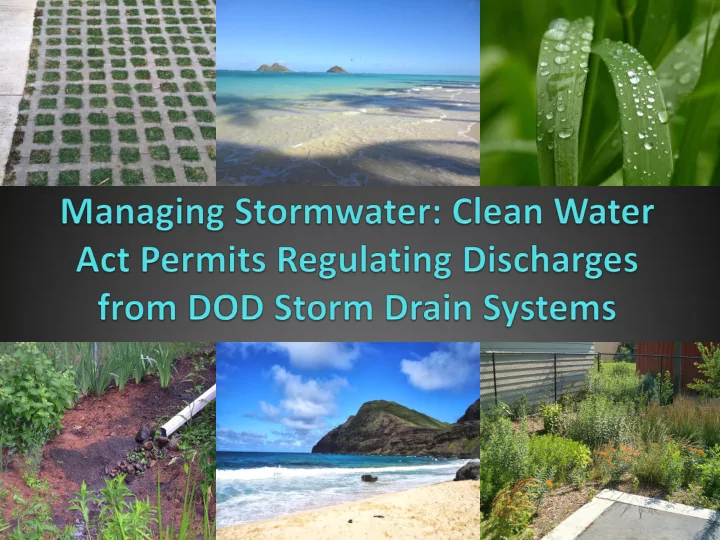
Why Stormwater Matters When it rains on Oahu, stormwater picks up - - PowerPoint PPT Presentation
Why Stormwater Matters When it rains on Oahu, stormwater picks up debris, chemicals, sediment and other pollutants. The stormwater flows into a storm sewer system, where it is discharged untreated into streams and coastal waters.
When it rains on Oahu, stormwater picks up debris, chemicals, sediment and other pollutants.
The stormwater flows into a storm sewer system, where it is discharged untreated into streams and coastal waters.
Pollutants in streams and coastal waters affect water quality. They destroy aquatic habitats and cloud the water, cause algal blooms, contribute bacteria and other pathogens to recreational waters, as well as deposit debris and hazardous materials like solvents, paint, motor oil, or pesticides.
Urban impervious surfaces speed up and direct the flow of stormwater into the storm sewer system, which prevents it from being absorbed into and filtered by the ground.
According to DOH’s 2012 State of
Hawaii Water Quality Monitoring and Assessment Report, of the 310 marine waterbody segments surveyed statewide, 225 were impaired for various pollutants.
The most common cause of
impairment listings in marine waters was turbidity, caused in large part by polluted runoff.
On Oahu, 73 of the 134 marine
segments assessed (54%) were impaired.
100 200 300 400 Statewide Oahu Total Waterbody Segments Assessed Impaired Marine Waterbody Segments
The CWA’s MS4 permits are designed to control
and prevent stormwater from discharging harmful pollutants into streams, lakes, and coastal waters.
Army Garrison Hawaii, Department of Public Works and NAVFAC, are covered by State issued NPDES MS4 permits
Stormwater in urbanized areas is regulated through the Clean Water Act’s (CWA’s)
NPDES program via Municipal Separate Storm Sewer System (MS4) permits.
An MS4 is a publicly-owned system of conveyances that is used to collect
stormwater that discharges to waters of the U.S. MS4 stormwater discharges are considered point sources under the CWA.
Army Garrison Hawaii MS4 Permit includes requirements
NAVFAC is responsible for stormwater discharges from:
All permits have them…
Pollution Prevention/Good Housekeeping Public Outreach/ Education Public Involvement/ Participation Construction Site Runoff Control Post Construction Runoff Control Illicit Discharge Elimination (IDDE)
DOD Storm Drain System
Stormwater management requires an integrated approach to environmental compliance
will be required to develop and implement updated stormwater management programs.
for sharing and an economy of scale between services.
compliance.
Currently, Army Garrison Hawaii and NAVFAC have either been issued Administrative Actions for Permit non- compliance or may be issued one in the near future.
Stormwater management is a key part
DOD MS4 permits provide a variety of
http://health.hawaii.gov/cwb