WHA HATS T THE HE DE DEAL W AL WITH TH FOOD WAS ASTE TE? A - - PowerPoint PPT Presentation

wha hat s t the he de deal w al with th food was aste te
SMART_READER_LITE
LIVE PREVIEW

WHA HATS T THE HE DE DEAL W AL WITH TH FOOD WAS ASTE TE? A - - PowerPoint PPT Presentation

WHA HATS T THE HE DE DEAL W AL WITH TH FOOD WAS ASTE TE? A third of all food produced for human consumption is wasted. In the UK alone more than 10 million tonnes of food, worth over 20 billion, is wasted throughout the supply chain


slide-1
SLIDE 1
slide-2
SLIDE 2

While many of the cold hard facts and stats about food waste may not be new, they don't lose their chilling impact. Equally, the economic benefits

  • f keeping food on the plate

are as clear and obvious as they have always been. A A renew ewed ed focus o

  • n f

food wa waste e is impe perativ ive t this is y yea ear.

WHA HAT’S T THE HE DE DEAL W AL WITH TH FOOD WAS ASTE TE?

A third of all food produced for human consumption is wasted. In the UK alone more than 10 million tonnes of food, worth over £20 billion, is wasted throughout the supply chain every year.

FIVE REASONS WHY FOOD SERVICE BUSINESSES SHOULD DO MORE:

  • 1. The annual environmental cost of food waste in the UK is 20m

tonnes of CO2, which is equivalent to the annual emissions of ALL 3.5m cars across the East of England.

  • 2. One million tonnes of food are wasted across the foodservice

sector in the UK, equivalent to one in six of the eight billion meals served annually landing in the bin, 75% of which is avoidable food waste. This is enough food to fill the Shard more than 10 times.

  • 3. Food waste costs the sector £2.9bn a year, or almost £20,000 for

every site.

  • 4. For restaurants, the cost of avoidable food waste on every plate
  • f food averages about 97p per plate.
  • 5. For every £1 invested in reducing food waste an average of £7 is

saved.

Ignorance is no longer a legitimate excuse.

Failure to

  • Measure
  • Monitor
  • Set reduction targets
  • Redistribute surplus or
  • Offer customers the
  • pportunity to take home

leftovers … leaves a bad smell hanging over the industry.

97p

slide-3
SLIDE 3

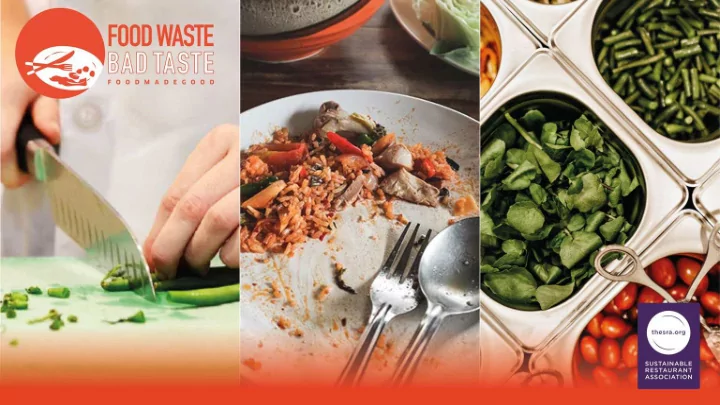
FOOD W D WASTE BA BAD T D TASTE

The SRA is joining WRAP in calling on the industry to accelerate change by setting ambitious targets to reduce food waste, and work towards the UN Sustainable Development Goal 12.3 to halve global food waste by 2030.

The Sustainable Restaurant Association has launched a six-week action programme, Food Waste Bad Taste, to support hospitality and foodservice businesses to Target, Measure and Act on their food waste in line with the UK Food Waste Reduction Roadmap.

THE SIX-WEEK PROGRAMME WILL:

  • Support your business to ask the right questions

and build the right team at the start

  • Hold your hand through a two-week baselining

period

  • Guide you through setting an ambitious, but

measurable and meaningful target

  • Inspire you with actions to deliver results

A six-week online programme “Let’s halve global food waste by 2030”

slide-4
SLIDE 4

WH WHAT WI WILL IT LOOK L LIKE? E?

SIX WEEK TARGETED APPROACH

TWO WEEKS OF BASELINING PREPARING FOR AUDIT

1 2 3 4 5 6

SETTING A TARGET BASED ON YOUR BASELINE IMPLEMENTING CHANGES

TAKING ACTION MEASURING BASELINE The programme is accessed online, with resources, case studies and videos to explore and return to at your leisure. Access to a private group on our Food Made Good online Community platform will also enable your team to share successes and ask questions of the

  • ther participating businesses, inspiring each other to overcome challenges along the way.

TARGET SETTING PREP

slide-5
SLIDE 5

WH WHAT WI WILL IT LOOK L LIKE? E?

The programme will supporting your team to measure, set a meaningful target, engage with senior management and build an action plan to drive down waste in line with the UK Food Waste Reduction Roadmap.

WHO? When signing up, choose a team leader to take responsibility for the project (most often a sustainability lead or project manager), and then build a task force that includes a representative from:

  • The kitchen
  • Front of house
  • Purchasing or

procurement

WEEK ONE: PREP The focus of week one is to prepare your kitchen for a detailed audit. The programme will provide a detailed video explaining exactly how to complete the audit alongside all of the data entry documents, a checklist of all that is needed, and a video to share with the team. WEEKS TWO & THREE: BASELINE MEASURING You will then work for two weeks to capture Prep, Plate and Spoilage through a detailed audit of all of the food that is going in the bin. At the end of each week the Team Leader will be asked to upload their information online. During this two week period of concentrated activity we will be on hand to support you and your team, answering questions throughout the process and will share a series of short videos from chefs at the forefront of the fight against food waste.

SIX WEEK TARGETED APPROACH

slide-6
SLIDE 6

WH WHAT WI WILL IT LOOK L LIKE? E?

WEEK FOUR: SETTING A TARGET With the data you submit we will produce a detailed, tailored report with benchmarks and advice on how to set an ambitious but realistic

  • target. During this week, we will then be focused on supporting the

team leader to work with senior management to set a business-wide target, providing them with examples of other businesses who have set targets, data around the impact, both financial and environmental, and understanding and insight around your baseline.

Follow up:

Throughout the programme, you will have access to a bespoke page in the Food Made Good Community that allows you to share questions, ideas, challenges and best practice with your fellow participants. This space will remain open following the programme. The SRA will also prompt and support you to submit total food waste output data each month, allowing you to build a full 12 month record of their food waste, inline with WRAP’s Target Measure Act framework. We will be encouraging businesses to publically support the UK Food Waste Reduction Roadmap and to share targets and progress in order to inspire greater change across the industry. WEEKS FIVE AND SIX: TAKING ACTION The final two weeks of Food Waste: Bad Taste will support you in building your action plan, with targeted steps you can take to reduce waste. Action plans will be built by each different member of the task force, focusing on the results

  • f your audit to tackle their biggest problem areas first.

SIX WEEK TARGETED APPROACH

slide-7
SLIDE 7

In return for the data provided to the SRA, we will provide you with reports throughout the six week programme that help you make sense of the information, share it with stakeholders throughout your business.

DATA A AND R D REPORTI TING

The SRA will support your business to complete a detailed audit for two weeks not only to understand your total volumes of food waste, but also to understand the source of the waste.

We will talk you through exactly how to complete the audit and how to enter the data in a document that looks like this:

We will then support your business to continue to measure and report on a monthly basis in line with the UK guidelines for measuring and reporting food surplus and waste. This will be through data provided by your waste contractor.

slide-8
SLIDE 8

CELE LEBRATI TION

We will celebrate participating businesses throughout the year, championing your progress and showcasing you at the Food Made Good

  • Awards. We will look to promote your food waste reduction successes as

widely as possible via press and social media.

slide-9
SLIDE 9

Don’t miss your opportunity to take part in this six week impact programme designed to help you on the road to halving your food waste by 2030.

To enquire about taking the Food Waste: Bad Taste programme visit: thesra.org/foodwaste