
SLIDE 1
Wellbeing Manifesto for Aotearoa New Zealand Warnings At the end - - PowerPoint PPT Presentation
Wellbeing Manifesto for Aotearoa New Zealand Warnings At the end of this presentation I show an image and voice of Geoffrey Gurrumul Yunupingu who died last year. During this presentation I may say things that upset mental heath professionals.
At the end of this presentation I show an image and voice of Geoffrey Gurrumul Yunupingu who died last year. During this presentation I may say things that upset mental heath
Inquiry panel on 31 July wellbeingmanifesto.nz
Big Psychiatry sits at the hub of the system shaping the world view, using most of the resources and doing routine harm:
Big Psychiatry Big Community
Mental disorder – health deficit Mental distress – recoverable life disruption Health entry point led by medicine Multi entry points led by sectors and communities Most resources used for ‘pills and pillows’ Resources for a broad menu of services Mostly medical and allied professional Equal mix of peer, cultural and professional workers Legacy of paternalism and human rights breaches Commitment to partnerships and human rights Focus on compliance and risk management Focus on access, strengths and life
Responds to risk with coercion and compulsion Responds to risk with compassion and intensive support Colonising and excludes other world views Includes multiple world views
We are about here
from Big Psychiatry to Big Community
All people and their whānau:
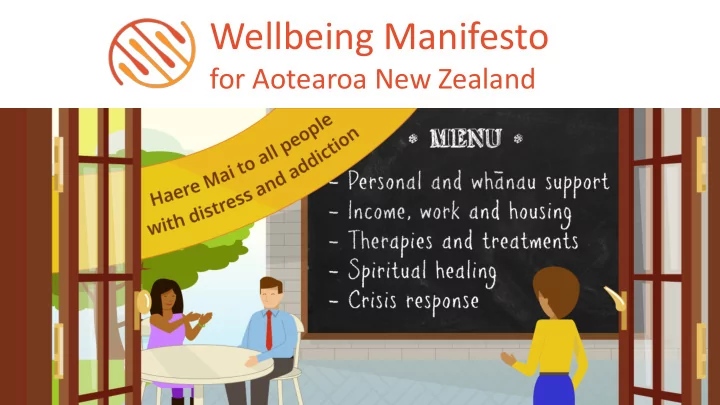
Open access to a full menu of services, supports and opportunities to sustain and restore wellbeing.
Cultural workers and peer workers work alongside the traditional workforce with equal status and in equal numbers.
All the sectors that have responsibility for wellbeing, distress and addiction - not just health - but social development, justice, corrections and education need to jointly fund a full menu of services at the local level, in partnership with people affected by distress and addiction.
The services, supports and opportunities need to be based in communities not hospitals, and co-delivered, under as few roofs as possible, in community settings, such as primary health, marae, community centres, schools and large workplaces.
Long term bi-partisan commitment to Big Community:
Although the health sector and health professionals have a role, a system lead by health will not deliver open access to a full menu of services or better outcomes for people and their whānau. The Manifesto proposes that funding mot going to health services but to pooled multi-sector governance of planning and funding.
From UNCRPD
Māori need to design and deliver services for Māori.
Co-production is a way for participants with different expertise to work collaboratively together.
Co-production Big Community Big Psychiatry
Mary O’Hagan mary@peerzone.info 021736452