Welcome to Class 2: Did people in Columbuss >me - - PDF document

welcome to class 2
SMART_READER_LITE
LIVE PREVIEW

Welcome to Class 2: Did people in Columbuss >me - - PDF document

Welcome to Class 2: Did people in Columbuss >me think the Science History, Earth was flat? Pseudoscience and Theory What is pseudoscience


slide-1
SLIDE 1

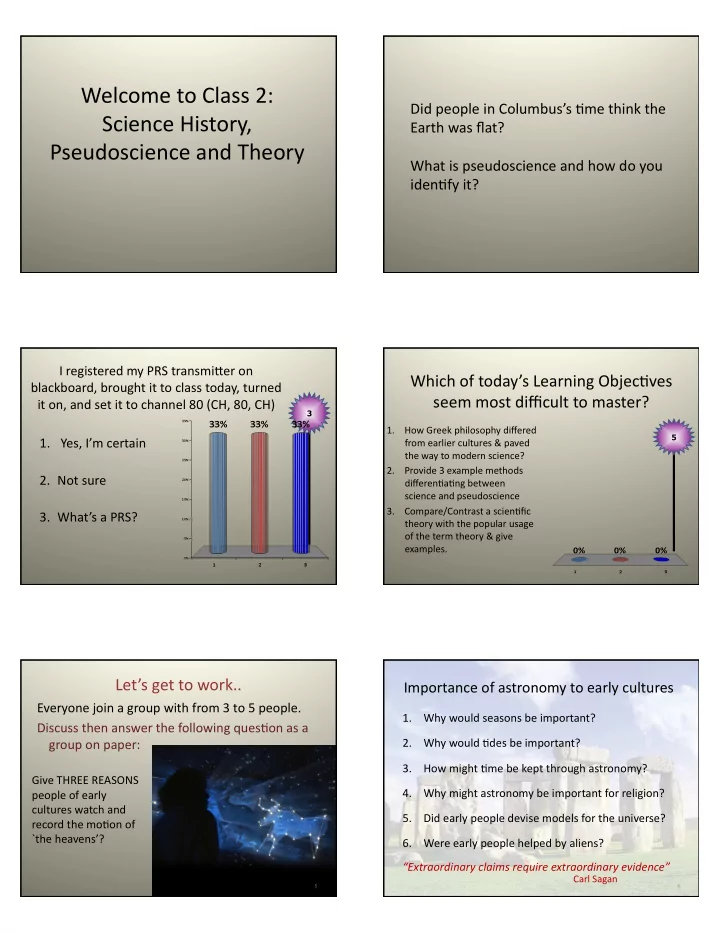
Welcome ¡to ¡Class ¡2: ¡ ¡ Science ¡History, ¡ ¡ Pseudoscience ¡and ¡Theory ¡

Did ¡people ¡in ¡Columbus’s ¡>me ¡think ¡the ¡ Earth ¡was ¡flat? ¡ What ¡is ¡pseudoscience ¡and ¡how ¡do ¡you ¡ iden>fy ¡it? ¡

2 ¡

I ¡registered ¡my ¡PRS ¡transmiHer ¡on ¡ blackboard, ¡brought ¡it ¡to ¡class ¡today, ¡turned ¡ it ¡on, ¡and ¡set ¡it ¡to ¡channel ¡80 ¡(CH, ¡80, ¡CH) ¡

3

  • 1. ¡Yes, ¡I’m ¡certain ¡ ¡ ¡ ¡ ¡ ¡ ¡ ¡
  • 2. Not ¡sure ¡ ¡ ¡ ¡ ¡ ¡ ¡ ¡ ¡ ¡ ¡ ¡ ¡ ¡ ¡ ¡ ¡ ¡ ¡ ¡
  • 3. What’s ¡a ¡PRS? ¡

3 ¡

Which ¡of ¡today’s ¡Learning ¡Objec>ves ¡ seem ¡most ¡difficult ¡to ¡master? ¡

5

  • 1. How ¡Greek ¡philosophy ¡differed ¡

from ¡earlier ¡cultures ¡& ¡paved ¡ the ¡way ¡to ¡modern ¡science? ¡

  • 2. Provide ¡3 ¡example ¡methods ¡

differen>a>ng ¡between ¡ science ¡and ¡pseudoscience ¡

  • 3. Compare/Contrast ¡a ¡scien>fic ¡

theory ¡with ¡the ¡popular ¡usage ¡

  • f ¡the ¡term ¡theory ¡& ¡give ¡
  • examples. ¡

4 ¡

Let’s ¡get ¡to ¡work.. ¡ ¡ ¡

  • Give ¡THREE ¡REASONS ¡

people ¡of ¡early ¡ cultures ¡watch ¡and ¡ record ¡the ¡mo>on ¡of ¡ `the ¡heavens’? ¡

Everyone ¡join ¡a ¡group ¡with ¡from ¡3 ¡to ¡5 ¡people. ¡ Discuss ¡then ¡answer ¡the ¡following ¡ques>on ¡as ¡a ¡ group ¡on ¡paper: ¡

5 ¡

Importance ¡of ¡astronomy ¡to ¡early ¡cultures ¡

1. Why ¡would ¡seasons ¡be ¡important? ¡ 2. Why ¡would ¡>des ¡be ¡important? ¡ 3. How ¡might ¡>me ¡be ¡kept ¡through ¡astronomy? ¡ 4. Why ¡might ¡astronomy ¡be ¡important ¡for ¡religion? ¡ 5. Did ¡early ¡people ¡devise ¡models ¡for ¡the ¡universe? ¡ 6. Were ¡early ¡people ¡helped ¡by ¡aliens? ¡ “Extraordinary ¡claims ¡require ¡extraordinary ¡evidence” ¡

Carl ¡Sagan ¡

6 ¡

slide-2
SLIDE 2

List ¡methods ¡used ¡by ¡the ¡ ancient ¡Greeks ¡which ¡ paved ¡the ¡way ¡for ¡ modern ¡science ¡

  • Individually, ¡in ¡your ¡notes ¡for ¡two ¡minutes, ¡list ¡

three ¡of ¡their ¡methods ¡and ¡philosophies. ¡ ¡

  • In ¡your ¡group ¡take ¡a ¡few ¡minutes ¡to ¡compare ¡

and ¡discuss ¡what ¡you ¡each ¡wrote. ¡

7 ¡

Which ¡method ¡of ¡the ¡early ¡Greeks ¡is ¡ not ¡accepted ¡by ¡modern ¡scien>sts? ¡

3

  • 1. Mathema>cs ¡
  • 2. Natural ¡explana>ons ¡
  • 3. Philosophical ¡thought ¡
  • 4. Debate/Challenge ¡ideas ¡
  • 5. Observing ¡facts ¡

8 ¡

Why ¡did ¡the ¡Greeks ¡accept ¡a ¡(wrong) ¡ geocentric ¡model ¡for ¡the ¡universe? ¡

Their ¡observa>ons ¡lead ¡them ¡to ¡think…. ¡ Parallax, ¡clouds/birds, ¡etc. ¡: ¡The ¡earth ¡wasn’t ¡moving. ¡ The ¡heavens ¡should ¡be ¡harmonious, ¡perfect, ¡simple…. ¡ ¡ ¡ A ¡priori ¡expecta>ons: ¡the ¡`heavens’ ¡must ¡move ¡in ¡perfect ¡

  • circles. ¡ ¡ ¡Isn’t ¡this ¡`Occam’s ¡Razor’? ¡

Did ¡the ¡Greeks ¡know ¡the ¡Earth ¡was ¡a ¡sphere ¡(not ¡flat)? ¡

  • Yes. ¡ ¡They ¡even ¡knew ¡the ¡diameter ¡to ¡a ¡few ¡percent. ¡

(They ¡were ¡the ¡experts ¡that ¡invented ¡geometry) ¡

9 ¡

Do ¡you ¡believe ¡scien>fic ¡ques>ons ¡

  • f ¡our ¡day ¡affect ¡your ¡life? ¡

3

  • 1. ¡No

¡ ¡ ¡

  • 2. Yes, ¡but ¡I ¡don’t ¡have ¡the ¡

answers ¡anyway ¡ ¡

  • 3. Yes, ¡but ¡I ¡rely ¡on ¡others ¡

as ¡to ¡what ¡to ¡believe. ¡

  • 4. Yes, ¡and ¡I ¡try ¡to ¡

understand ¡them ¡myself. ¡

10 ¡

If ¡this ¡course ¡helps ¡you ¡discover ¡that ¡ some ¡things ¡you’ve ¡believed ¡for ¡a ¡long ¡ >me ¡are ¡not ¡true, ¡how ¡would ¡you ¡feel? ¡

11 ¡

With ¡con>nued ¡ success, ¡this ¡typically ¡ leads ¡to ¡a ¡model. ¡ Highly ¡successful ¡ models ¡can ¡ some>mes ¡lead ¡to ¡ scien,fic ¡theories. ¡

12 ¡

slide-3
SLIDE 3

In ¡your ¡group, ¡select ¡an ¡observa>on: ¡

  • Your ¡car ¡won’t ¡start ¡
  • Your ¡mother ¡doesn’t ¡return ¡your ¡phone ¡call. ¡
  • Your ¡jeans ¡are ¡too ¡>ght ¡to ¡zip ¡up. ¡
  • Everyone ¡is ¡laughing ¡at ¡you ¡as ¡you ¡enter ¡a ¡
  • room. ¡
  • You ¡woke ¡up ¡feeling ¡sick. ¡

Produce ¡3 ¡HYPOTHESIS ¡to ¡explain ¡your ¡observa>on ¡and ¡ construct ¡a ¡MATCHING ¡PREDICTION ¡to ¡test ¡each ¡one. ¡ ¡ ¡

13 ¡

A ¡scien>fic ¡Hypothesis ¡

  • An ¡educated ¡guess ¡– ¡using ¡informa>on ¡already ¡

understood ¡or ¡constrained. ¡

  • NEEDS ¡TO ¡BE ¡TESTABLE ¡or ¡make ¡a ¡PREDICTION ¡
  • Does ¡not ¡rely ¡on ¡‘the ¡supernatural’ ¡

14 ¡

Hallmarks ¡of ¡Science ¡

Explains ¡observed ¡ phenomenon ¡relying ¡

  • nly ¡on ¡natural ¡

causes ¡ ¡ Crea>on ¡and ¡tes>ng ¡

  • f ¡models ¡to ¡explain ¡
  • bserva>ons ¡simply. ¡

Models ¡make ¡testable ¡ predic>ons. ¡ ¡Revise ¡or ¡ abandon ¡models ¡if ¡not ¡ in ¡agreement ¡with ¡

  • bserva>ons. ¡

15 ¡

In ¡your ¡groups, ¡fill ¡in ¡the ¡blank ¡boxes: ¡

Science ¡ Pseudo ¡Science ¡ Uses ¡unnatural, ¡spiritual ¡or ¡ mys>cal ¡events ¡to ¡explain ¡

  • bserved ¡phenomenon. ¡

Creates ¡and ¡tests ¡models ¡of ¡ nature ¡to ¡explain ¡observa>ons ¡ as ¡simply ¡as ¡possible ¡ Theories ¡do ¡not ¡develop ¡or ¡ change, ¡models ¡can ¡not ¡make ¡ predic>ons ¡or ¡are ¡able ¡to ¡be ¡

  • tested. ¡

16 ¡

Some ¡characteris>cs ¡of ¡Pseudoscience ¡

  • ¡Claims ¡which ¡can ¡not ¡be ¡tested ¡or ¡verified ¡
  • ¡Reliance ¡on ¡confirma>on ¡rather ¡than ¡refuta>on ¡
  • ¡Lack ¡of ¡openness ¡of ¡tes>ng ¡by ¡others ¡
  • ¡A ¡lack ¡of ¡progress ¡in ¡`theory’ ¡development ¡

A ¡Scien>fic ¡Theory ¡

  • A ¡model ¡which ¡survives ¡repeated ¡and ¡varied ¡

tes>ng. ¡

  • Has ¡a ¡powerful ¡ability ¡to ¡predict ¡and ¡explain ¡
  • bserva>ons. ¡ ¡
  • Is ¡rela>vely ¡simple*, ¡not ¡contrived ¡or ¡needing ¡

modifica>ons ¡for ¡different ¡applica>ons. ¡

  • Un-­‑provable ¡(can ¡not ¡be ¡proven ¡true), ¡but ¡

falsifiable ¡(can ¡be ¡proven ¡wrong). ¡

*Einstein’s ¡Theory ¡of ¡Rela>vity ¡is ¡by ¡no ¡means ¡‘simple’, ¡but ¡it ¡ is ¡a ¡single ¡set ¡of ¡equa>ons ¡applied ¡to ¡all ¡applica>ons. ¡

18 ¡

slide-4
SLIDE 4

What ¡is ¡NOT ¡true ¡about ¡a ¡ scien>fic ¡theory? ¡

3

  • 1. Can ¡be ¡proved ¡wrong ¡
  • 2. Can ¡be ¡proved ¡right ¡
  • 3. Makes ¡predic>ons ¡
  • 4. It ¡is ¡omen ¡a ¡model ¡to ¡

explain ¡observed ¡ phenomenon ¡

19 ¡

Examples ¡of ¡Scien>fic ¡Theories ¡

  • Theory ¡of ¡Plate ¡tectonics ¡– ¡describes ¡the ¡large ¡

scale ¡mo,on ¡of ¡Earth’s ¡lithosphere* ¡(~crust). ¡

  • Germ ¡Theory ¡of ¡Disease ¡– ¡Disease* ¡is ¡omen ¡

caused ¡by ¡microorganisms. ¡

  • Dalton’s ¡Atomic ¡Theory ¡of ¡MaHer ¡– ¡that ¡

maDer* ¡is ¡made ¡up ¡of ¡indivisible ¡atoms. ¡

  • Darwin’s ¡Theory ¡of ¡Evolu>on ¡– ¡the ¡evolu,on* ¡
  • f ¡species ¡is ¡driven ¡by ¡natural ¡selec>on. ¡

*Observed ¡phenomenon ¡

20 ¡

Spread ¡out ¡in ¡the ¡room. ¡ ¡ Let’s ¡check ¡your ¡understanding ¡

  • f ¡today’s ¡learning ¡objec>ves. ¡

Please ¡work ¡alone ¡on ¡this ¡quiz ¡

  • 1. ¡Prehistoric, ¡ancient ¡people ¡

were ¡good ¡astronomers ¡but ¡ did ¡NOT ¡______ ¡ ¡

5

  • 1. Observe ¡and ¡predict ¡

eclipses ¡

  • 2. Predict ¡seasons ¡
  • 3. Model ¡the ¡universe ¡
  • 4. Observe ¡and ¡predict ¡

>des ¡

  • 5. Use ¡sun ¡dials. ¡

22 ¡

  • 2. ¡Which ¡method ¡of ¡the ¡early ¡ ¡

Greeks ¡is ¡not ¡accepted ¡by ¡ ¡ modern ¡scien>sts? ¡

5

  • 1. Mathema>cs ¡
  • 2. Disregard ¡explana>ons ¡

that ¡did ¡not ¡work ¡

  • 3. Pure ¡philosophical ¡

thought ¡

  • 4. Debate/Challenge ¡
  • 5. Observing ¡facts ¡

23 ¡

  • 3. ¡A ¡good ¡scien>fic ¡hypothesis ¡must ¡be ¡

______ ¡

5

  • 1. Correct ¡from ¡the ¡start. ¡
  • 2. Infallible ¡(can’t ¡be ¡

proven ¡wrong). ¡

  • 3. Randomly ¡derived. ¡
  • 4. Testable. ¡

24 ¡

slide-5
SLIDE 5
  • 4. ¡Which ¡method ¡below ¡is ¡a ¡hallmark ¡
  • f ¡pseudoscience? ¡

5

  • 1. Models ¡can ¡predict ¡
  • 2. Rigid, ¡Unchanging ¡

theories ¡

  • 3. Strives ¡for ¡simplicity ¡
  • 4. Models ¡open ¡for ¡
  • utside ¡tes>ng ¡
  • 5. Explains ¡without ¡

unnatural ¡events. ¡

25 ¡

  • 5. ¡A ¡scien>fic ¡theory ¡

5

  • 1. survives ¡repeated ¡

tes>ng ¡

  • 2. is ¡able ¡to ¡make ¡

predic>ons. ¡

  • 3. is ¡capable ¡of ¡being ¡

proved ¡wrong. ¡

  • 4. can ¡not ¡be ¡proved ¡
  • true. ¡
  • 5. All ¡of ¡the ¡above. ¡

26 ¡

To ¡do ¡list ¡for ¡next ¡class ¡

  • Refer ¡to ¡the ¡class ¡syllabus ¡
  • Read ¡assigned ¡pages ¡in ¡textbook ¡and ¡review ¡

study ¡ques>ons ¡and ¡learning ¡objec>ves. ¡

  • Take ¡the ¡on-­‑line ¡quiz ¡through ¡the ¡class ¡BB ¡Site ¡

(before ¡6:30am ¡the ¡day ¡of ¡class). ¡

  • Register ¡and ¡bring ¡PRS ¡transmiHer ¡to ¡class ¡

27 ¡