
SLIDE 1
Kristi Thrailkill, LCSW-C
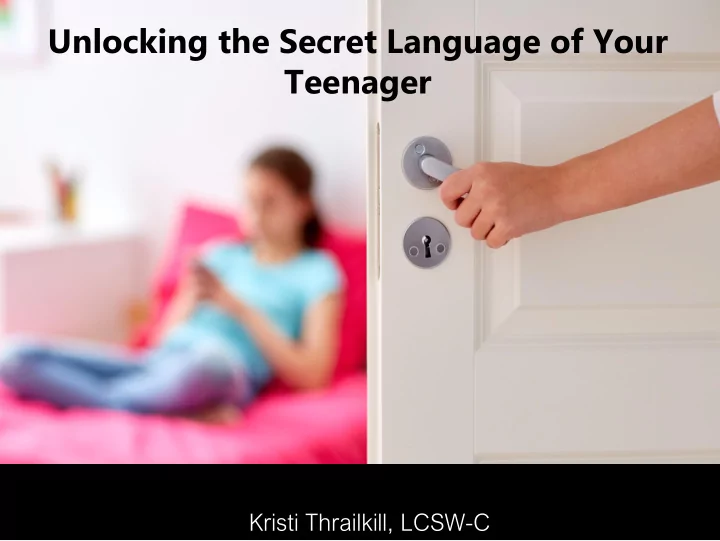
Unlocking the Secret Language of Your Teenager Kristi Thrailkill, - - PowerPoint PPT Presentation
Unlocking the Secret Language of Your Teenager Kristi Thrailkill, LCSW-C A Bit About Me www.baltimorefamilytherapy.com kristi@baltimorefamilytherapy.com Parent trainings focus on a much younger population of children, And the FIRST TIME
Kristi Thrailkill, LCSW-C
Parent trainings focus on a much younger population of children, And the FIRST TIME parent.
Communicating POSITIVELY Encouraging & Engaging Managing Conflict Becoming a Team
LEARN TO CONNECT WITH YOUR TEEN BY:
OBJECTIVES:
SCHOOL: Teachers, Nurse, Guidance Counselor, Administration COMMUNITY: PCP, Psychotherapist, Psychiatrist
The Journal of the American Medical Association states:
*Authoritarian *Authoritative (Positive) *Permissive *Uninvolved
https://www.verywell.com/ways-to-become-a-more-authoritative-parent-4136329
10.Turn Mistakes Into Learning Opportunities 11.Encourage Self-Discipline
RESEARCH SAYS: Teens raised by Authoritative (POSITIVE) parents: ■ Do better in school ■ Have lower rates of depression and anxiety ■ Are less likely to engage in risky behavior ■ Have stronger social skills ■ Are more respectful of authority
“It’s not my place to control how you think or feel, but I am responsible for keeping you safe and expecting you to behave appropriately.”
Is health or safety at risk? Be stubborn!
Are values not compromised? Is health or safety NOT at risk? Resist the urge to be stubborn!
STOP SAYING, “Because I said so!”
Possible times to be PRESENT with your teen:
■ Before school, in the morning ■ Slow down, have breakfast together ■ When they arrive home from school ■ Dinner ■ NO TV ■ NO CELL PHONES ■ Bedtime ■ It’s okay to occasionally think outside of the box. Do something
Be involved:
■ Know WHO they hang out with ■ Know WHAT they’re doing ■ Know WHERE they are ■ Know WHEN they’ll be home
Approaches —-> Your teens view of you: Nagging—-> Annoying Hands-Off—-> Cold, Distant, but “Cool.” Asking, Learning, Knowing —-> Caring, Concerned, Loving
■ Make this a norm— ■
GET TO KNOW THEIR FRIENDS & THEIR FRIEND’S FAMILIES
■
Give your teens permission to use you as an excuse when they’re in over their head.
■
Have a plan for how teens can bail out of unsafe situations, talk about this with your teen NOW! Have a Family Code Phrase, like “Lemonade” – it means – “Get me out of this situation NOW!”
No questions asked!
■
Avoid “power struggles.”
■
Focus on the important issues of health and safety.
■
Model the language and tone of voice you expect from your teen.
■
Stay calm and remember you are in charge - you are the adult
■
Avoid conflicts when you are rushing or super busy
■
Be realistic about how your teen behaves.
■
They are NOT adults.
■
Find a common ground, and say YES sometimes.
■
LAUGH.
Becoming more private and keeping thoughts and feelings to themselves is common in adolescence, especially for boys.
■Find regular times to be together -just you and your teen ■Don’t interrupt - Listen. ■Be available by stating, “You can always talk to me when you’re ready.”
BE THERE WHEN THEY ARE READY TO TALK!! No “In a minute,” or “Can we talk later?” It may seem extreme, but drop EVERYTHING when they are opening that door. Talk to them THEN. Don’t miss an opportunity to connect. Those moments are fleeting.
■ Who’s the best for your teen and family?
■ RESEARCH! ■ www.psychologytoday.com ■ Interview! ■ Specialties ■ Modes of Practice ■ Psychoanayltic, Cognitive Behavior Therapy, etc? ■ How is confidentiality regulated with parents? ■ What will a typical session look like? ■ Any other questions that are catered to your specific needs. ■ A picture is worth $1,000 words ■ Insurance vs Self-Pay
⦿ Harrison, S, MA(2015, March). Partnering with Parents and DBR. Retrieved from
http://www.slideshare.net/tlassiter80/files-pptpartnering-with-parents-and-dbr.
⦿ Chapman, G. D. (1995). The five love languages: How to express heartfelt commitment to your
⦿ American Academy of Child & Adolescent Psychiatry (AACAP). Retrieved from
http://www.aacap.org.
⦿ Coyne, M. Thriving With Your Teen. Retrieved from http://www.ourkidsnetwork.ca.