
2008
Peak year for DXA scanning
Estimated Consequences
70%
Decline to $42 reimbursement for DXA scans since 2006
3,680,948
Fewer woman to receive a DXA scan than projected since 2008
26%
Decline in the number of DXA physicians since 2008
43,661
Additional hip fractures due to reduced screening
9.4%
Decline in DXA testing of Medicare women since 2008
9,518
Additional hip fracture related deaths per year
21.5%
Decline in osteoporosis diagnosis since 2009
$1.8B
Additional cost to Medicare to treat hip fractures alone
United States
By the numbers: DXA Testing
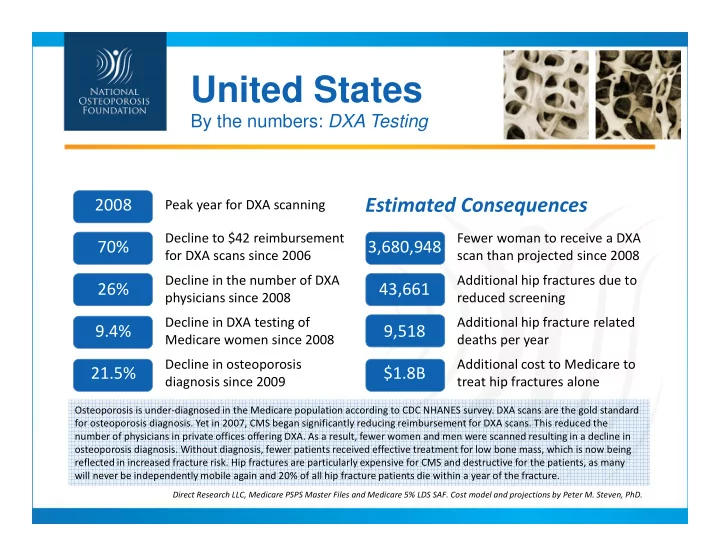
Osteoporosis is under-diagnosed in the Medicare population according to CDC NHANES survey. DXA scans are the gold standard for osteoporosis diagnosis. Yet in 2007, CMS began significantly reducing reimbursement for DXA scans. This reduced the number of physicians in private offices offering DXA. As a result, fewer women and men were scanned resulting in a decline in
- steoporosis diagnosis. Without diagnosis, fewer patients received effective treatment for low bone mass, which is now being
reflected in increased fracture risk. Hip fractures are particularly expensive for CMS and destructive for the patients, as many will never be independently mobile again and 20% of all hip fracture patients die within a year of the fracture.
Direct Research LLC, Medicare PSPS Master Files and Medicare 5% LDS SAF. Cost model and projections by Peter M. Steven, PhD.