to hydrogen-powered digital technologies Mobility and movement - - PowerPoint PPT Presentation

to hydrogen powered digital technologies
SMART_READER_LITE
LIVE PREVIEW

to hydrogen-powered digital technologies Mobility and movement - - PowerPoint PPT Presentation

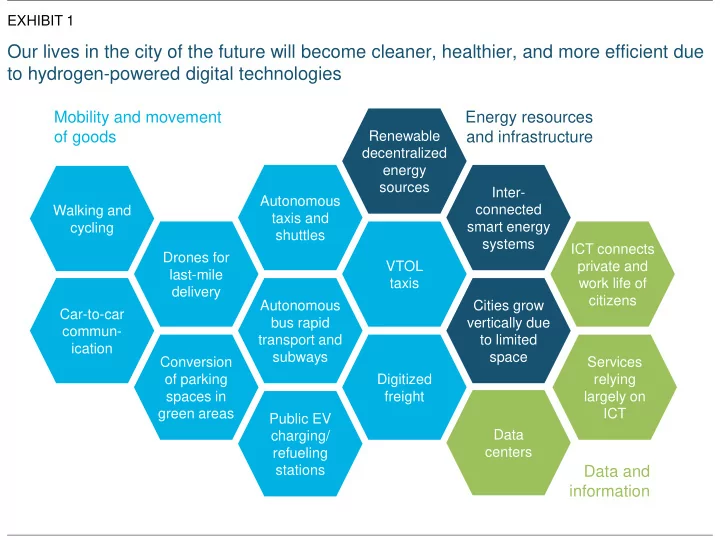
EXHIBIT 1 Our lives in the city of the future will become cleaner, healthier, and more efficient due to hydrogen-powered digital technologies Mobility and movement Energy resources of goods Renewable and infrastructure decentralized energy


slide-1
SLIDE 1

EXHIBIT 1

Our lives in the city of the future will become cleaner, healthier, and more efficient due to hydrogen-powered digital technologies

Mobility and movement

  • f goods

Energy resources and infrastructure Data and information

Drones for last-mile delivery Digitized freight VTOL taxis Walking and cycling Autonomous bus rapid transport and subways Conversion

  • f parking

spaces in green areas Car-to-car commun- ication Public EV charging/ refueling stations Autonomous taxis and shuttles Cities grow vertically due to limited space Inter- connected smart energy systems Renewable decentralized energy sources Services relying largely on ICT Data centers ICT connects private and work life of citizens

slide-2
SLIDE 2

EXHIBIT 2

Autonomous taxis and shuttles1, million units

10 15 5 20 25 0.1 Shuttles 23 2021 25 27 2030 Taxis 0.5 2.8 10.0 20.5

Autonomous taxis are becoming a reality

1 Shuttles = shared robotaxis with pooled demand SOURCE: Bloomberg; expert interviews; GM; IHS Automotive; press reports; Uber; Waymo

~USD 15-20 bn

investments in the past 5 years

16+ m test kilometers

in level 4 autonomous cars

10+ OEMs

planning for level 5 autonomous cars by 2025

slide-3
SLIDE 3

EXHIBIT 3

Hydrogen as energy vector for autonomous taxis enables zero emission operation without long stops for battery charging Recharging time required for BEV

60 to 90 minutes per day1

Refueling time required for FCEV

~5 minutes per day

7:15 PM-8 PM

Battery fast charging (with risk of battery lifetime reduction)

Example: airport shuttle

1 Depending on availability of fast charging infrastructure 12 AM - 6 AM 6 AM - 12:15 PM Taxi operation 1 PM - 7:15 PM Taxi operation 8 PM - 12 AM Taxi operation

12:15 PM-1 PM

Battery fast charging (with risk of battery lifetime reduction)

9:05 PM - 12 AM Taxi operation 6 AM - 9 PM Taxi operation 12 AM - 6 AM

9 PM-9:05 PM

Pause for the refueling

slide-4
SLIDE 4

EXHIBIT 4

Hydrogen as an energy vector for autonomous taxis and shuttles requires less space for refueling infrastructure

SOURCE: EPA; Curbed New York; NBA; New York City Taxi and Limousine Commission; Tesla

Example: New York City cabs1

Charging stations for all NYC cabs would take up space equal to … Battery NBA courts

180

Hydrogen NBA courts

12

1 Number of taxis and cabs: ~74,000; annual mileage per taxi 70,000 miles; refueling times FCEVs 0.02 minutes/mile, BEVs 0.26 minutes/mile; area for one fueling station 30 m²; size of NBA court (436 m²; 28.7 x 15.2 m)

slide-5
SLIDE 5

EXHIBIT 5 50 2015 20 200 25 2030 50 100 150 250 300 350 ~100 >170 >290

Global parcels, billion units

Quickly growing home deliveries require energy that is zero-carbon and emission-free Growing e-commerce and clean cities

▪ Booming e-commerce

and growing demand for delivery speed

▪ Cities take action against

local emissions

▪ Freight operations along

the entire value chain need to be green

slide-6
SLIDE 6

EXHIBIT 6

Hydrogen can efficiently move goods from the warehouse to the door

Hydrogen technology status

Long-haul truck delivery Autonomous ships Short-haul van delivery Material handling Last-mile parcel drones Hydrogen forklifts already in use Hydrogen as future technology Hydrogen pilots being tested

slide-7
SLIDE 7

EXHIBIT 7

Hydrogen as an energy vector for long-haul trucks requires less weight for the powertrain

SOURCE: DOE; Nikola Motors; Bloomberg; Manager Magazin; Sustainable Transportation Lab

Powertrain weight comparison, in tons (18-ton tractor unit of a semitruck)

2.5 Battery 1.8-2.1 Hydrogen Diesel 4.5-5.5

10 times

the energy density (by weight) than batteries1 Hydrogen tanks have

1 0.2 kWh/ kilogram for rechargeable batteries used in battery electric vehicles (BEV) compared to 2.2 kWh/kilogram for onboard hydrogen storage for light- duty fuel cell vehicles (FCEV); Source: U.S. DOE Office of Energy Efficiency and Renewable Energy, MCFM

slide-8
SLIDE 8

EXHIBIT 8 241 80 160 321 402 10 20 30 40 50

Energy capacity converted to range, kilometers

Hydrogen as an energy vector for long-haul trucks enables storage of large amounts of energy at lower costs than batteries

SOURCE: DOE; Hydrogen – scaling up

System costs of battery vs. hydrogen, USD thousands

Battery truck Hydrogen truck ~100 kilometers

~100 kilometers:

the threshold range for hydrogen trucks to become cheaper than battery trucks

slide-9
SLIDE 9

EXHIBIT 9

Hydrogen as an energy vector for VTOLs allows for longer routes without recharging A >120-kilometers hydrogen range A ~50-kilometers battery range

San Francisco

slide-10
SLIDE 10

EXHIBIT 10

Data centers, as the backbone of all digital trends, require large amounts of green energy

SOURCE: Bloomberg; Cisco; Digital Realty; Enerdata; expert interviews; Forbes; Gartner; IEA; Intellect UK; zdnet

Energy demand, TWh

Renewables Conventional energy 2030 25 2020 >700 510 >1,000

35%

annual growth of data center storage from 2016 to 2021

30-50%

  • f data center costs are attributed

to energy, mostly for cooling

slide-11
SLIDE 11

EXHIBIT 11

For the four selected use cases, hydrogen demand could grow to 5-7 m tons by 2030

In 2030, hydrogen could power … Hydrogen demand of the four selected use cases, million tons

7 19 5 14 2020 30 15 25 2035 5 10 20

~1.0-1.5 m

autonomous taxis

~300-700k

autonomous shuttles

~3.0-4.0 m

delivery trucks and vans

130-260k

drones for express parcel delivery

~4-8k

vertical take-off and landing taxis (VTOL)

~1 TWh

  • f backup power in

data centers

slide-12
SLIDE 12

EXHIBIT 12

Hydrogen as an energy vector for autonomous taxis and shuttles allows for high uptime (long ranges and fast refueling)

Example: airport shuttle

Battery Uptime for 18 hours

80-90%

Hydrogen

>99%

Fast charging with risk of battery lifetime reduction 06:00 09:00 12:00 15:00 18:00 21:00 00:00 06:00 09:00 12:00 15:00 18:00 21:00 00:00

SOURCE: EPA; Hyundai; New York City Taxi and Limousine Commission; Tesla; McKinsey Powertrain model; Tesla