The Review Team Visit 39 Classroom Observations - - PDF document

the review team visit
SMART_READER_LITE
LIVE PREVIEW

The Review Team Visit 39 Classroom Observations - - PDF document

The Review Team Visit 39 Classroom Observations Interviews were held with students in grades PK4-7, teachers, parents, and community members.


slide-1
SLIDE 1

The ¡Review ¡Team ¡Visit ¡

¡ 39 ¡Classroom ¡Observations ¡ Interviews ¡were ¡held ¡with ¡students ¡in ¡grades ¡PK4-­‑7, ¡teachers, ¡parents, ¡and ¡ community ¡members. ¡Forty-­‑three ¡individuals ¡participated ¡in ¡the ¡interviews. ¡ ¡ ¡ Documents/artifacts ¡binders ¡were ¡comprehensive ¡and ¡well ¡organized. ¡ Documentation ¡provided ¡a ¡realistic ¡picture ¡of ¡practices ¡and ¡policies ¡being ¡ implemented ¡within ¡the ¡school. ¡ ¡

Classroom ¡Observation ¡Results ¡

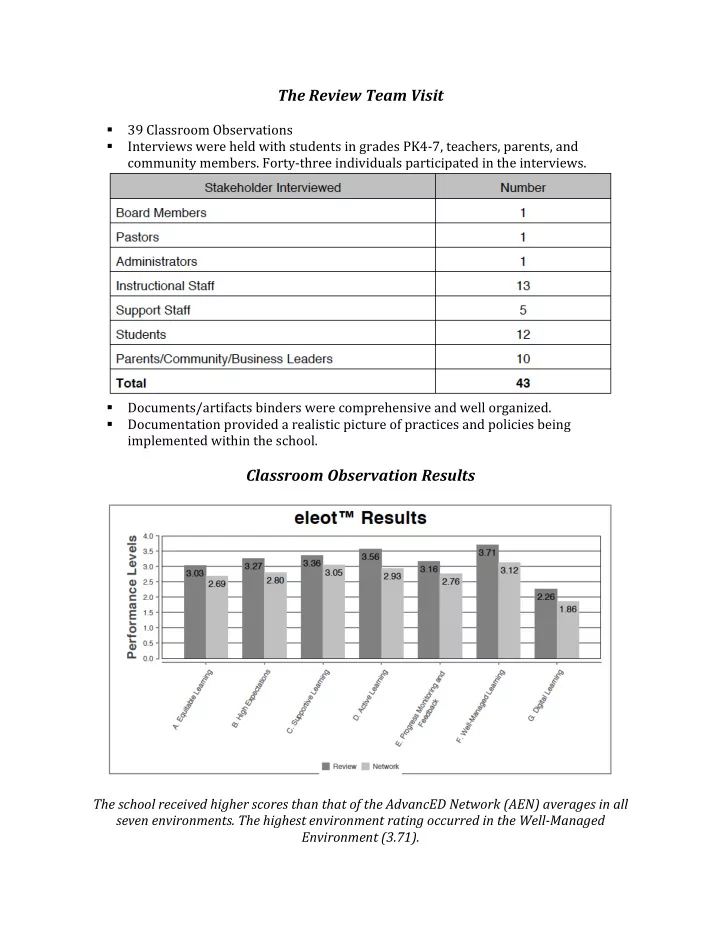
¡ ¡ ¡ The ¡school ¡received ¡higher ¡scores ¡than ¡that ¡of ¡the ¡AdvancED ¡Network ¡(AEN) ¡averages ¡in ¡all ¡ seven ¡environments. ¡The ¡highest ¡environment ¡rating ¡occurred ¡in ¡the ¡Well-­‑Managed ¡ Environment ¡(3.71). ¡

slide-2
SLIDE 2

Classroom ¡Observation ¡Results ¡Continued ¡

¡ Active ¡Learning: ¡ Students ¡had ¡many ¡opportunities ¡to ¡participate ¡in ¡small ¡group ¡activities, ¡as ¡well ¡as ¡ to ¡engage ¡in ¡discussions ¡with ¡teachers. ¡ ¡ Engagement ¡was ¡seen ¡at ¡all ¡grade ¡levels ¡and ¡subject ¡areas. ¡ ¡ Students ¡used ¡the ¡Promethean ¡Boards, ¡computers, ¡and ¡manipulative ¡materials. ¡ ¡ Students ¡responded ¡well ¡to ¡teacher ¡initiated ¡questions. ¡ ¡ Application ¡of ¡knowledge ¡was ¡seen ¡throughout ¡all ¡observations. ¡ Students ¡were ¡required ¡to ¡compare, ¡contrast, ¡and ¡classify ¡information ¡in ¡practical ¡

  • situations. ¡

¡ Supportive ¡Learning: ¡ Positive ¡learning ¡experiences ¡and ¡positive ¡attitudes ¡about ¡learning ¡were ¡"evident" ¡ to ¡"strongly ¡evident" ¡in ¡all ¡grade ¡levels ¡and ¡across ¡all ¡subject ¡areas. ¡ Students ¡willingly ¡participated ¡in ¡activities ¡and ¡showed ¡excitement ¡when ¡asked ¡to ¡ work ¡at ¡the ¡Promethean ¡Boards, ¡answer ¡questions ¡or ¡read ¡aloud. ¡ ¡ Students ¡were ¡willing ¡to ¡try ¡new ¡tasks ¡and ¡asked ¡questions. ¡ ¡ Other ¡Areas ¡of ¡Learning: ¡ Students ¡know ¡and ¡strive ¡to ¡meet ¡the ¡high ¡expectations ¡established ¡in ¡the ¡ classrooms ¡as ¡indicated ¡by ¡ratings ¡being ¡"evident" ¡to ¡"very ¡evident." ¡ ¡ Learning ¡activities ¡were ¡rigorous ¡and ¡challenging ¡at ¡all ¡grade ¡levels ¡and ¡across ¡all ¡ subject ¡areas. ¡ The ¡school ¡is ¡focused ¡on ¡continuous ¡quality ¡improvement ¡in ¡all ¡areas ¡of ¡operation. ¡ ¡ The ¡school ¡maintains ¡a ¡strong, ¡family-­‑orientated, ¡Catholic ¡culture. ¡All ¡stakeholder ¡ groups ¡espoused ¡the ¡value ¡of ¡having ¡a ¡small ¡school ¡with ¡a ¡welcoming, ¡loving ¡ environment ¡that ¡maintains ¡high ¡expectations ¡for ¡instruction/learning. ¡ The ¡use ¡of ¡differentiated ¡learning ¡opportunities ¡and ¡activities ¡was ¡stronger ¡at ¡the ¡ lower ¡grade ¡levels. ¡ All ¡students ¡have ¡equal ¡access ¡to ¡classroom ¡discussions, ¡activities, ¡resources, ¡ technology, ¡and ¡support. ¡Teachers ¡called ¡on ¡students ¡randomly ¡ensuring ¡all ¡ students ¡had ¡their ¡turn ¡to ¡participate. ¡ Rules ¡and ¡consequences ¡were ¡consistently ¡applied. ¡ ¡ Support ¡previous ¡improvements: ¡ The ¡eleot ¡ratings ¡support ¡the ¡recent ¡decision ¡of ¡the ¡faculty ¡to ¡increase ¡daily ¡math ¡for ¡ grades ¡5-­‑7 ¡by ¡15 ¡minutes ¡to ¡better ¡meet ¡the ¡needs ¡of ¡the ¡middle ¡school ¡students. ¡ ¡ The ¡school-­‑wide ¡use ¡of ¡the ¡Depth ¡of ¡Knowledge ¡questioning ¡techniques ¡and ¡the ¡ emphasis ¡on ¡Bloom's ¡Taxonomy ¡supports ¡the ¡number ¡of ¡activities ¡that ¡required ¡ application ¡of ¡higher ¡order ¡thinking ¡skills. ¡ ¡ The ¡high ¡ratings ¡in ¡the ¡Well-­‑Managed ¡Environment ¡and ¡in ¡the ¡consistent ¡use ¡of ¡ rules ¡and ¡consequences ¡attest ¡to ¡the ¡implementation ¡of ¡the ¡school's ¡PBIS ¡program. ¡ ¡

Ratings ¡-­‑ ¡Projected ¡

slide-3
SLIDE 3

Opportunities ¡for ¡improvement: ¡

¡

  • 1. Math ¡instruction ¡improvement ¡recommendations: ¡
  • a. Use ¡of ¡rubrics/exemplars ¡
  • b. Use ¡of ¡additional/alternative ¡instruction ¡– ¡Differentiated ¡instruction ¡
  • c. Use ¡of ¡supplementary ¡materials ¡
  • d. Use ¡of ¡exemplars ¡
  • e. Implementation ¡of ¡question ¡techniques ¡using ¡higher ¡order ¡thinking ¡skills ¡
  • f. Use ¡of ¡additional ¡time ¡to ¡revise/improve ¡work ¡
  • 2. Forty ¡percent ¡of ¡the ¡upper ¡grade ¡levels ¡received ¡a ¡rating ¡of ¡"somewhat ¡evident" ¡on ¡

differentiated ¡learning ¡opportunities. ¡ ¡

  • 3. There ¡is ¡a ¡need ¡for ¡more ¡opportunity ¡to ¡learn ¡about ¡own ¡and/or ¡other's ¡

backgrounds/cultures/differences. ¡

  • 4. The ¡school ¡stated ¡in ¡the ¡Self-­‑Assessment ¡that ¡there ¡is ¡a ¡need ¡for ¡additional ¡training ¡

to ¡fully ¡implement ¡the ¡tools ¡and ¡programs ¡in ¡technology ¡that ¡the ¡school ¡recently ¡

  • purchased. ¡
  • 5. Develop ¡a ¡formal ¡mentoring, ¡coaching, ¡and ¡induction ¡program ¡to ¡accommodate ¡

changes ¡in ¡your ¡teaching ¡staff. ¡ ¡

  • a. “A ¡formalized ¡mentoring, ¡coaching, ¡and ¡induction ¡program ¡allows ¡for ¡the ¡full ¡

integration ¡of ¡all ¡employees ¡whether ¡they ¡be ¡new ¡to ¡the ¡school ¡or ¡to ¡the ¡ grade ¡level/subject ¡area.” ¡ ¡

  • b. “However, ¡it ¡is ¡not ¡only ¡new ¡personnel ¡who ¡need ¡to ¡feel ¡supported ¡and ¡to ¡

have ¡a ¡“go-­‑to ¡person” ¡for ¡advice ¡on ¡teaching ¡techniques/strategies. ¡Veteran ¡ teachers ¡also ¡need ¡reassurance ¡and ¡support. ¡Peer-­‑to-­‑peer ¡coaching ¡allows ¡ teachers ¡to ¡share ¡among ¡themselves ¡their ¡teaching ¡strategies ¡in ¡order ¡to ¡ perfect ¡best ¡practices. ¡Mentoring ¡and ¡developing ¡peer ¡relationships ¡and ¡ cross ¡grade ¡level ¡partnerships ¡are ¡ways ¡of ¡supporting ¡the ¡individuals ¡and ¡ groups ¡implementing ¡improvement ¡initiatives. ¡

  • 6. Formalize ¡professional ¡development ¡to ¡coincide ¡with ¡data ¡from ¡formal ¡and ¡informal ¡

teacher ¡observations ¡and ¡current ¡educational ¡research. ¡-­‑ ¡more ¡professional ¡ development ¡is ¡needed ¡as ¡a ¡whole ¡school ¡on ¡effective ¡use ¡of ¡present ¡technology, ¡ using ¡standardized ¡testing ¡data ¡to ¡determine ¡gaps ¡within ¡the ¡curriculum, ¡and ¡ identifying ¡techniques ¡to ¡assist ¡with ¡student ¡needs. ¡

  • 7. Train ¡professional ¡and ¡support ¡staff ¡on ¡the ¡interpretation ¡and ¡use ¡of ¡test ¡data. ¡-­‑ ¡

With ¡the ¡abundance ¡of ¡testing ¡data ¡available ¡to ¡the ¡instructional ¡staff, ¡they ¡need ¡to ¡ understand ¡the ¡relationship ¡among ¡all ¡this ¡information ¡and ¡to ¡know ¡how ¡to ¡apply ¡ the ¡information ¡to ¡best ¡meet ¡the ¡needs ¡of ¡the ¡student ¡and ¡to ¡track ¡instructional ¡

  • improvements. ¡
slide-4
SLIDE 4

Improvement ¡Priorities ¡

¡

  • 1. Address ¡campus ¡safety ¡concerns ¡expressed ¡in ¡stakeholder ¡surveys ¡and ¡interviews. ¡
  • Safety ¡concerns ¡were ¡expressed ¡about ¡drop ¡off ¡areas ¡and ¡the ¡security ¡risk ¡of ¡
  • utside ¡restrooms. ¡
  • Even ¡with ¡all ¡the ¡improvements, ¡the ¡campus ¡is ¡still ¡too ¡accessible. ¡
  • Until ¡a ¡fence ¡is ¡placed ¡around ¡the ¡entire ¡campus ¡and ¡interior ¡permission ¡to ¡

enter ¡all ¡exterior ¡doors ¡is ¡required, ¡the ¡students ¡will ¡still ¡be ¡at ¡risk. ¡

  • 2. Develop ¡a ¡strategic ¡technology ¡plan ¡which ¡would ¡address ¡classroom ¡use, ¡

professional ¡development, ¡and ¡future ¡purchases. ¡– ¡lowest ¡rating ¡

  • Develop ¡a ¡strategic ¡technology ¡plan ¡which ¡would ¡address ¡classroom ¡use, ¡

professional ¡development, ¡and ¡future ¡purchases. ¡

  • Strengthen ¡technology ¡use ¡based ¡on ¡the ¡recent ¡upgrades ¡that ¡were ¡made ¡to ¡

the ¡school’s ¡network. ¡The ¡school ¡also ¡needs ¡to ¡provide ¡additional ¡training ¡to ¡ fully ¡implement ¡the ¡tools ¡and ¡programs ¡that ¡the ¡school ¡has ¡purchased. ¡

  • An ¡updated ¡technology ¡plan ¡will ¡guide ¡future ¡technology ¡purchases/ ¡

upgrades ¡and ¡increase ¡technology ¡application ¡in ¡teaching ¡and ¡learning. ¡

  • 3. Review ¡and ¡evaluate ¡support ¡services ¡being ¡provided ¡to ¡meet ¡the ¡academic, ¡

physical, ¡emotional, ¡and ¡social ¡needs ¡of ¡the ¡student ¡population. ¡

  • Expand ¡existing ¡counseling ¡services ¡and ¡interventions ¡to ¡support ¡newly ¡

created ¡targeted ¡programs ¡designed ¡to ¡meet ¡individual ¡needs ¡(grief ¡support, ¡ self-­‑esteem, ¡anxiety, ¡personal ¡relationships ¡and ¡family ¡relationships). ¡ ¡

  • Expectations ¡are ¡for ¡students ¡to ¡participate ¡in ¡group ¡discussions/guidance ¡

classes ¡and ¡to ¡develop ¡coping ¡skills ¡through ¡these ¡activities. ¡ ¡

  • The ¡school ¡wants ¡students ¡to ¡receive ¡interventions ¡to ¡support ¡learning ¡

before ¡being ¡sent ¡out ¡for ¡evaluations. ¡ ¡

  • The ¡counselor ¡will ¡be ¡providing ¡training ¡to ¡the ¡teachers ¡on ¡identifying ¡

techniques ¡to ¡assist ¡with ¡student ¡needs. ¡It ¡will ¡also ¡be ¡the ¡responsibility ¡of ¡ the ¡counselor ¡to ¡follow-­‑up ¡implementation ¡and ¡effectiveness ¡of ¡interventions ¡ and ¡to ¡develop ¡student ¡support ¡filing ¡protocol. ¡

  • The ¡Review ¡Team ¡recommends ¡counseling ¡services ¡on ¡campus ¡full ¡time. ¡

¡

School ¡Improvement ¡Plan ¡

(see ¡attached) ¡

¡ ¡ ¡ ¡

slide-5
SLIDE 5

Powerful ¡Practices ¡

¡

  • 1. Test ¡data ¡provides ¡verifiable ¡information ¡on ¡how ¡students ¡are ¡performing ¡in ¡the ¡
  • curriculum. ¡The ¡data ¡is ¡being ¡used ¡to ¡identify ¡needs ¡of ¡students. ¡Programs ¡and ¡

improvements ¡in ¡professional ¡practices ¡have ¡been ¡implemented ¡to ¡ensure ¡student ¡

  • success. ¡
  • 2. The ¡school ¡is ¡proactive ¡in ¡engaging ¡all ¡stakeholder ¡groups. ¡Parental ¡and ¡community ¡

involvement ¡is ¡encouraged ¡in ¡a ¡variety ¡of ¡volunteer ¡opportunities. ¡“Parent ¡and ¡ community ¡members ¡are ¡very ¡active ¡in ¡promoting ¡support ¡of ¡the ¡school.” ¡ ¡

  • 3. The ¡size ¡of ¡the ¡school ¡allows ¡for ¡all ¡students ¡to ¡have ¡personal ¡and ¡meaningful ¡

relationships ¡with ¡the ¡faculty, ¡staff, ¡and ¡other ¡students. ¡

  • a. The ¡intimate ¡size ¡also ¡allows ¡faculty ¡and ¡staff ¡to ¡serve ¡as ¡advocates ¡for ¡all ¡

students ¡and ¡facilitates ¡a ¡deeper ¡understanding ¡and ¡insight ¡into ¡each ¡ student’s ¡personality ¡and ¡learning ¡styles. ¡ ¡

  • b. The ¡students ¡feel ¡a ¡deep ¡connection ¡with ¡the ¡faculty ¡and ¡staff. ¡
  • c. In ¡the ¡interview ¡session, ¡students ¡could ¡identify ¡a ¡specific ¡person ¡that ¡they ¡

felt ¡is ¡an ¡advocate ¡for ¡them ¡when ¡they ¡are ¡in ¡need. ¡

  • d. Interview ¡sessions ¡revealed ¡that ¡a ¡meaningful ¡long ¡term ¡relationship ¡not ¡
  • nly ¡exists ¡between ¡the ¡students ¡and ¡the ¡teachers, ¡but ¡also ¡extends ¡to ¡the ¡

family ¡and ¡community. ¡ ¡

  • e. Interviewees ¡described ¡the ¡school ¡as ¡being ¡a ¡generational ¡school. ¡Many ¡of ¡the ¡

present ¡teachers ¡have ¡ties ¡as ¡former ¡students. ¡

  • 4. All ¡stakeholder ¡groups ¡were ¡actively ¡involved ¡in ¡the ¡revision ¡of ¡the ¡vision, ¡mission, ¡

and ¡motto ¡of ¡the ¡school ¡which ¡focuses ¡on ¡student ¡success. ¡

  • 5. The ¡effectual ¡relationship ¡between ¡the ¡pastor ¡and ¡the ¡principal ¡has ¡allowed ¡the ¡

principal ¡the ¡autonomy ¡to ¡manage ¡the ¡operation ¡of ¡the ¡school ¡effectively. ¡

  • 6. The ¡faculty ¡and ¡staff ¡members ¡are ¡dedicated ¡to ¡fostering ¡a ¡welcoming ¡atmosphere ¡

for ¡their ¡students ¡and ¡family ¡members. ¡There ¡is ¡a ¡strong ¡sense ¡of ¡community ¡among ¡ all ¡stakeholder ¡groups ¡and ¡a ¡commitment ¡to ¡school ¡improvement ¡by ¡all ¡members ¡of ¡ the ¡school ¡community. ¡

  • a. Open ¡door ¡policy ¡
  • b. Small, ¡friendly ¡atmosphere ¡
  • c. Welcoming, ¡loving ¡environment ¡

¡

¡ ¡

slide-6
SLIDE 6

Commendations ¡

¡

  • 1. We ¡received ¡perfect ¡scores ¡in ¡the ¡following ¡areas: ¡
  • a. “The ¡school ¡engages ¡families ¡in ¡meaningful ¡ways ¡in ¡their ¡children's ¡education ¡

and ¡keeps ¡them ¡informed ¡of ¡their ¡children's ¡learning ¡progress.” ¡

  • b. “The ¡school ¡engages ¡in ¡a ¡systematic, ¡inclusive, ¡and ¡comprehensive ¡process ¡to ¡

review, ¡revise, ¡and ¡communicate ¡a ¡school ¡purpose ¡for ¡student ¡success.” ¡

  • 2. Highlights ¡are ¡(direct ¡quotes ¡indicated): ¡ ¡
  • a. “The ¡school ¡maintains ¡a ¡strong, ¡family-­‑orientated, ¡Catholic ¡culture.” ¡
  • b. “The ¡school ¡has ¡a ¡welcoming, ¡loving ¡environment ¡that ¡maintains ¡high ¡

expectations ¡for ¡instruction ¡and ¡learning.” ¡

  • c. “Students ¡feel ¡a ¡deep ¡connection ¡with ¡the ¡faculty ¡and ¡staff.” ¡
  • d. “The ¡school ¡has ¡a ¡formal ¡structure ¡whereby ¡each ¡student ¡is ¡well ¡known ¡by ¡at ¡

least ¡one ¡adult ¡advocate ¡in ¡the ¡school ¡who ¡supports ¡that ¡student's ¡ educational ¡experience.” ¡

  • e. “Learning ¡activities ¡were ¡rigorous ¡and ¡challenging ¡at ¡all ¡grade ¡levels ¡and ¡

across ¡all ¡subject ¡areas.” ¡

  • f. The ¡school ¡received ¡higher ¡scores ¡than ¡that ¡of ¡the ¡AdvancED ¡Network ¡(AEN) ¡

averages ¡in ¡all ¡seven ¡learning ¡environments ¡on ¡their ¡observation ¡tool. ¡The ¡ highest ¡environment ¡rating ¡occurred ¡in ¡the ¡Well-­‑Managed ¡Classroom ¡Area. ¡

  • g. “There ¡exists ¡a ¡positive, ¡mutually ¡supportive ¡relationship ¡between ¡the ¡pastor ¡

and ¡the ¡principal. ¡The ¡pastor ¡takes ¡an ¡active ¡role ¡in ¡all ¡aspects ¡of ¡the ¡school.” ¡ ¡ The ¡school ¡relies ¡heavily ¡on ¡stakeholder ¡involvement ¡and ¡acknowledged ¡in ¡its ¡ Accreditation ¡Report ¡that ¡it ¡is ¡honored ¡to ¡have ¡such ¡a ¡high ¡level ¡of ¡involvement ¡from ¡ its ¡school ¡community, ¡parents, ¡and ¡family ¡members. ¡ ¡

Conclusion ¡

¡ ¡

The ¡purpose ¡of ¡the ¡school ¡clearly ¡focuses ¡on ¡developing ¡students ¡to ¡be ¡open-­‑ minded ¡leaders ¡and ¡life-­‑long ¡learners. ¡Emphasis ¡is ¡placed ¡on ¡honesty, ¡positive ¡ behavior, ¡and ¡service. ¡The ¡school ¡is ¡providing ¡a ¡Catholic, ¡faith-­‑based ¡and ¡ academically ¡challenging ¡education ¡for ¡its ¡students. ¡