
SLIDE 1
. .. . . .. . . .. . . .. . . .. . . .. . . .. . . .. . . .. . . .. . . .. . . .. . . .. . . .. . . .. . . .. . . .. . . .. . . .. . . .. .
The Fabliau . .. .. . . . .. . . .. . . .. . . .. . - - PowerPoint PPT Presentation
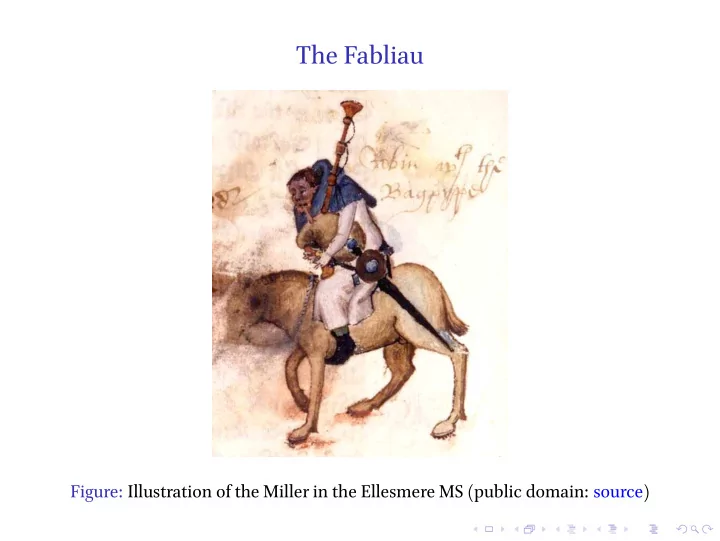
. .. .. . . .. . . .. . . .. . . . . . .. . . .. . . .. . . .. . The Fabliau . .. .. . . . .. . . .. . . .. . . .. . .. . . . .. . . .. . . .. . . .. . Figure: Illustration of the Miller
. .. . . .. . . .. . . .. . . .. . . .. . . .. . . .. . . .. . . .. . . .. . . .. . . .. . . .. . . .. . . .. . . .. . . .. . . .. . . .. .
. .. . . .. . . .. . . .. . . .. . . .. . . .. . . .. . . .. . . .. . . .. . . .. . . .. . . .. . . .. . . .. . . .. . . .. . . .. . . .. .
. .. . . .. . . .. . . .. . . .. . . .. . . .. . . .. . . .. . . .. . . .. . . .. . . .. . . .. . . .. . . .. . . .. . . .. . . .. . . .. .
. .. . . .. . . .. . . .. . . .. . . .. . . .. . . .. . . .. . . .. . . .. . . .. . . .. . . .. . . .. . . .. . . .. . . .. . . .. . . .. .
. .. . . .. . . .. . . .. . . .. . . .. . . .. . . .. . . .. . . .. . . .. . . .. . . .. . . .. . . .. . . .. . . .. . . .. . . .. . . .. .
▶ Described in ideal terms in the Prologue ▶ Tells “a noble storie” according to all, especially “the gentils”
▶ Portrayed as a secular hunter in the Prologue, but not dishonest ▶ Eventually tells a moralizing tale of Boethian tragedy ▶ The Knight and the Host criticize his tale as depressing and boring
. .. . . .. . . .. . . .. . . .. . . .. . . .. . . .. . . .. . . .. . . .. . . .. . . .. . . .. . . .. . . .. . . .. . . .. . . .. . . .. .
▶ Drunk ▶ “A cherl” ▶ “Abyd, Robyn, my leeve brother; / Some bettre man shal telle us first
▶ Tells a tale of cuckoldry ▶ “Diverse folk diversely they seyde”
▶ Depicted as a shrewd and dishonest man in the Prologue ▶ Tells a filthier tale than the Miller
▶ “Wel koude he knowe a draughte of Londoun ale” ▶ Fraudulent cooking practices ▶ Tells a tale about a prostitute
. .. . . .. . . .. . . .. . . .. . . .. . . .. . . .. . . .. . . .. . . .. . . .. . . .. . . .. . . .. . . .. . . .. . . .. . . .. . . .. .
▶ Carpenter ▶ Shopkeeper ▶ Merchant ▶ Miller
▶ “A clerk hadde litherly biset his whyle, / But if he koude a carpenter