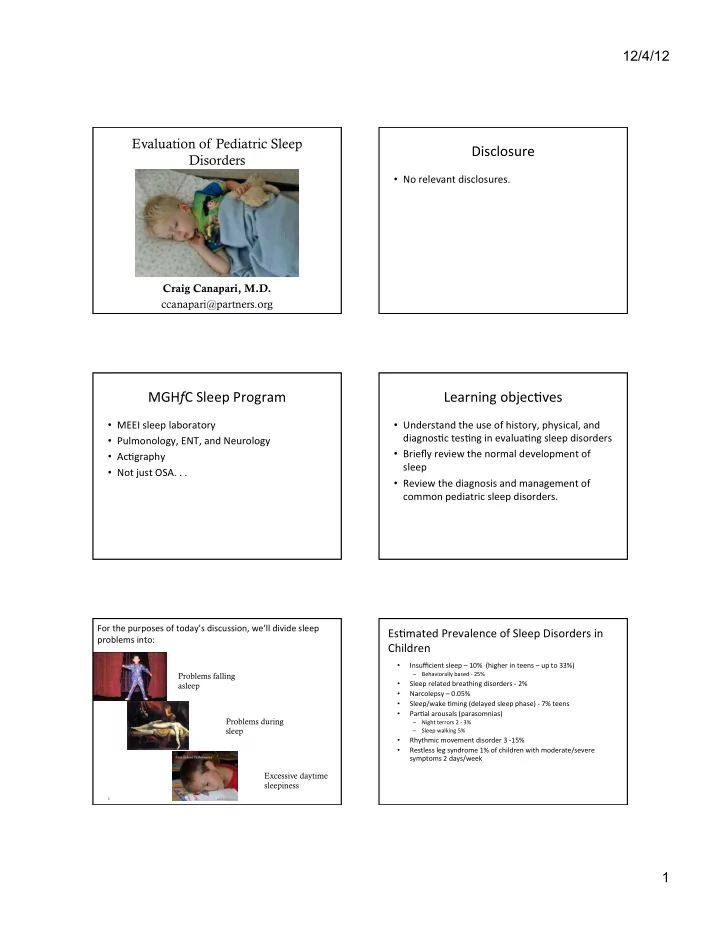

SLIDE 1
12/4/12 1 Evaluation of Pediatric Sleep Disorders
Craig Canapari, M.D. ccanapari@partners.org
Disclosure ¡
- No ¡relevant ¡disclosures. ¡ ¡
MGHfC ¡Sleep ¡Program ¡
- MEEI ¡sleep ¡laboratory ¡
- Pulmonology, ¡ENT, ¡and ¡Neurology ¡
- AcBgraphy ¡
- Not ¡just ¡OSA. ¡. ¡. ¡
¡ ¡
Learning ¡objecBves ¡
- Understand ¡the ¡use ¡of ¡history, ¡physical, ¡and ¡
diagnosBc ¡tesBng ¡in ¡evaluaBng ¡sleep ¡disorders ¡
- Briefly ¡review ¡the ¡normal ¡development ¡of ¡
sleep ¡
- Review ¡the ¡diagnosis ¡and ¡management ¡of ¡
common ¡pediatric ¡sleep ¡disorders. ¡
¡ 8 ¡
Problems falling asleep
For ¡the ¡purposes ¡of ¡today’s ¡discussion, ¡we’ll ¡divide ¡sleep ¡ problems ¡into: ¡
Problems during sleep Excessive daytime sleepiness
EsBmated ¡Prevalence ¡of ¡Sleep ¡Disorders ¡in ¡ Children ¡
- Insufficient ¡sleep ¡– ¡10% ¡ ¡(higher ¡in ¡teens ¡– ¡up ¡to ¡33%) ¡
– Behaviorally ¡based ¡-‑ ¡25% ¡
- Sleep ¡related ¡breathing ¡disorders ¡-‑ ¡2% ¡
- Narcolepsy ¡– ¡0.05% ¡
- Sleep/wake ¡Bming ¡(delayed ¡sleep ¡phase) ¡-‑ ¡7% ¡teens ¡
- ParBal ¡arousals ¡(parasomnias) ¡
– Night ¡terrors ¡2 ¡-‑ ¡3% ¡ ¡ – Sleep ¡walking ¡5% ¡
- Rhythmic ¡movement ¡disorder ¡3 ¡-‑15% ¡
- Restless ¡leg ¡syndrome ¡1% ¡of ¡children ¡with ¡moderate/severe ¡
symptoms ¡2 ¡days/week ¡