SLIDE 1
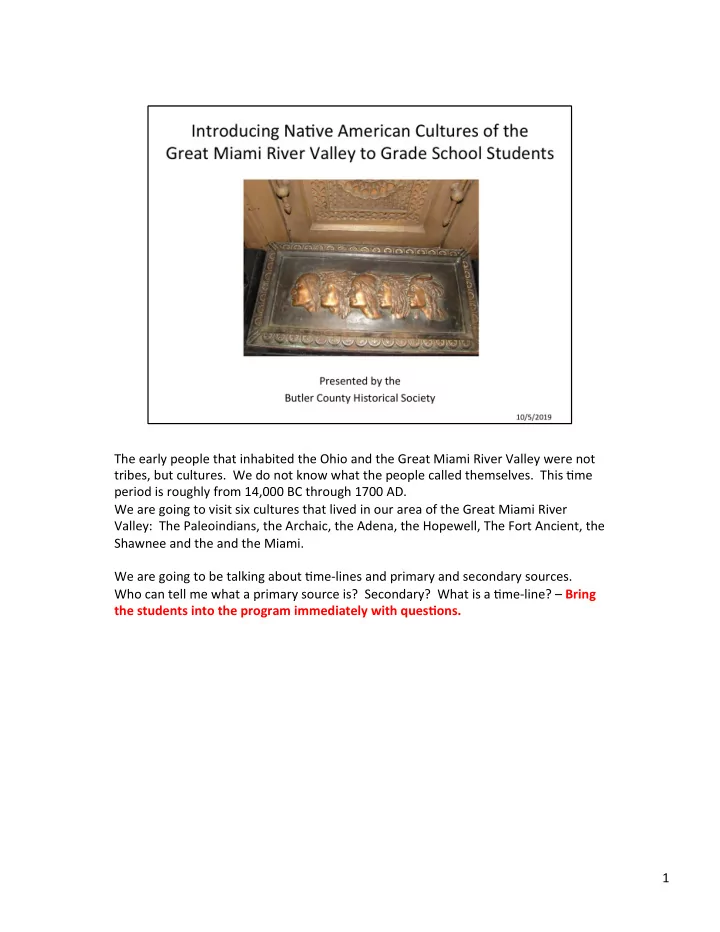
The ¡early ¡people ¡that ¡inhabited ¡the ¡Ohio ¡and ¡the ¡Great ¡Miami ¡River ¡Valley ¡were ¡not ¡ tribes, ¡but ¡cultures. ¡ ¡We ¡do ¡not ¡know ¡what ¡the ¡people ¡called ¡themselves. ¡ ¡This ¡?me ¡ period ¡is ¡roughly ¡from ¡14,000 ¡BC ¡through ¡1700 ¡AD. ¡ ¡ ¡ We ¡are ¡going ¡to ¡visit ¡six ¡cultures ¡that ¡lived ¡in ¡our ¡area ¡of ¡the ¡Great ¡Miami ¡River ¡ Valley: ¡ ¡The ¡Paleoindians, ¡the ¡Archaic, ¡the ¡Adena, ¡the ¡Hopewell, ¡The ¡Fort ¡Ancient, ¡the ¡ Shawnee ¡and ¡the ¡and ¡the ¡Miami. ¡ ¡ We ¡are ¡going ¡to ¡be ¡talking ¡about ¡?me-‑lines ¡and ¡primary ¡and ¡secondary ¡sources. ¡ ¡ Who ¡can ¡tell ¡me ¡what ¡a ¡primary ¡source ¡is? ¡ ¡Secondary? ¡ ¡What ¡is ¡a ¡?me-‑line? ¡– ¡Bring ¡ the ¡students ¡into ¡the ¡program ¡immediately ¡with ¡ques5ons. ¡ ¡ 1 ¡
SLIDE 2
How ¡many ¡of ¡you ¡have ¡Indian ¡ar?facts ¡as ¡part ¡of ¡your ¡collec?on? ¡ ¡ Do ¡you ¡use ¡them ¡for ¡programming? ¡ 2 ¡
SLIDE 3
Social ¡Studies ¡Standards ¡Themes ¡ ¡ Given ¡you ¡copies ¡of ¡the ¡2018 ¡Ohio ¡Social ¡Studies ¡Standards ¡for ¡grades ¡1-‑4, ¡along ¡with ¡ the ¡sheet ¡I ¡give ¡to ¡the ¡teachers ¡for ¡each ¡grade ¡explaining ¡which ¡strands ¡(history, ¡ geography, ¡government ¡and ¡economics) ¡that ¡the ¡program ¡hits. ¡ ¡ Rather ¡than ¡go ¡through ¡the ¡actual ¡standards, ¡I’m ¡going ¡go ¡show ¡you ¡how ¡I ¡ incorporate ¡them ¡into ¡my ¡program. ¡ 3 ¡
SLIDE 4
Ask ¡what ¡is ¡an ¡archaeologist. ¡ Hold ¡up ¡rolling ¡pin ¡and ¡ask ¡what ¡this ¡is. ¡ 4 ¡
SLIDE 5 Picture ¡of ¡chickens ¡– ¡story ¡of ¡finding ¡rolling ¡pin ¡– ¡probably ¡used ¡by ¡the ¡paleoindians ¡– ¡ archeologists ¡are ¡who ¡discover ¡the ¡primary ¡sources ¡for ¡these ¡early ¡Na5ve ¡American ¡
¡ ¡ 5 ¡
SLIDE 6
Dogs ¡domes?cated ¡(learned ¡to ¡get ¡along ¡and ¡live ¡with ¡people) ¡– ¡Tell ¡the ¡students ¡to ¡ stop ¡you ¡if ¡you ¡use ¡a ¡word ¡they ¡don’t ¡understand ¡– ¡don’t ¡be ¡a ¡bobble ¡head! ¡ ¡This ¡ vocabulary ¡is ¡used ¡in ¡the ¡1st-‑3rd ¡grade ¡– ¡assume ¡4th ¡graders ¡know ¡– ¡but ¡ask ¡them. ¡ ¡ 6 ¡
SLIDE 7 1st ¡Culture ¡ Paleoindians ¡were ¡the ¡hun?ng ¡and ¡gathering ¡peoples ¡who ¡originally ¡discovered ¡the ¡
Explain ¡Hunter/Gatherer ¡ They ¡lived ¡in ¡Ohio ¡in ¡the ¡last ¡centuries ¡of ¡the ¡Ice ¡Age. ¡Early ¡Paleoindians ¡hunted ¡now ¡ ex?nct ¡species ¡of ¡big ¡game ¡animals ¡such ¡as ¡mammoth ¡and ¡mastodon. ¡They ¡also ¡ hunted ¡deer ¡and ¡small ¡game, ¡fished, ¡and ¡gathered ¡nuts ¡and ¡fruit ¡when ¡available. ¡ Their ¡dis?nc?ve ¡spear ¡points ¡are ¡found ¡across ¡North ¡America. ¡ ¡WOOLEY ¡MAMMOTH ¡ TOOTH ¡– ¡can ¡have ¡the ¡students ¡come ¡up ¡to ¡a ¡table ¡where ¡you ¡have ¡the ¡ar5facts, ¡or ¡ just ¡hold ¡the ¡object ¡up. ¡ 7 ¡
SLIDE 8
One ¡of ¡their ¡most ¡important ¡natural ¡resources ¡of ¡the ¡paleoindians ¡was ¡flint. ¡They ¡got ¡ flint ¡from ¡several ¡sources. ¡In ¡Ohio, ¡their ¡favorite ¡materials ¡were ¡Upper ¡Mercer ¡flint ¡ from ¡Coshocton ¡County ¡and ¡Flint ¡Ridge ¡flint ¡from ¡Licking ¡County. ¡Tools ¡made ¡from ¡ flint ¡supplied ¡them ¡with ¡all ¡they ¡needed ¡to ¡live. ¡ ¡ ¡FLINT ¡ ¡ 8 ¡
SLIDE 9
7000 ¡sheep ¡ 6500 ¡oxen ¡for ¡work ¡purposes ¡ 5000 ¡corn ¡ 3000 ¡cats ¡ 3000 ¡horses ¡ 2600 ¡pyramids ¡ 9 ¡
SLIDE 10
Archaic ¡– ¡2nd ¡Culture ¡ 8000-‑1000BC ¡– ¡comes ¡at ¡the ¡end ¡of ¡the ¡Ice ¡Age ¡and ¡coming ¡of ¡modern ¡plants ¡and ¡ animals ¡ ¡ Seasonal ¡migratory ¡way ¡of ¡life, ¡Hun?ng ¡and ¡gathering ¡ Highly ¡mobile ¡but ¡probably ¡spent ¡most ¡of ¡their ¡?me ¡within ¡a ¡loosely ¡defined ¡home ¡ territory ¡ ¡ ¡ 10 ¡
SLIDE 11 Made ¡new ¡kinds ¡of ¡tools ¡
- Processing ¡hard ¡seeds ¡
- Baskets, ¡nets ¡
- Fishing ¡and ¡birding ¡tools ¡
Exclusively ¡hunters ¡and ¡gatherers ¡ ¡ ¡ Spear ¡points ¡typically ¡long ¡and ¡broad ¡ ¡SPEARS, ¡AXES ¡and ¡ARROW ¡HEADS ¡ ¡ ¡ ¡ 11 ¡
SLIDE 12
776 ¡BC ¡– ¡Olympic ¡Games ¡ 438 ¡– ¡Parthenon ¡ 70 ¡AD ¡-‑ ¡Coliseum ¡ 12 ¡
SLIDE 13
Adena, ¡ ¡3rd ¡Culture ¡-‑ ¡also ¡known ¡as ¡the ¡early ¡mound ¡builders, ¡1000 ¡BC-‑200 ¡AD ¡ ¡ ¡ Located ¡in ¡Ohio, ¡Indiana, ¡West ¡Virginia, ¡Kentucky, ¡New ¡York, ¡Pennsylvania ¡and ¡ Maryland ¡– ¡concentrated ¡in ¡a ¡rela?vely ¡small ¡area ¡– ¡maybe ¡200 ¡sites ¡in ¡central ¡Ohio ¡ Valley ¡with ¡another ¡scafered ¡throughout ¡Indiana, ¡Kentucky, ¡West ¡Virginia ¡and ¡ Pennsylvania ¡ ¡ Lived ¡in ¡wigwam ¡(keep ¡repea?ng) ¡small ¡villages ¡with ¡several ¡families ¡in ¡a ¡large ¡house ¡ – ¡small ¡seflements ¡of ¡1-‑2 ¡structures ¡– ¡house ¡circle ¡form ¡15-‑45’ ¡in ¡diameter ¡made ¡of ¡ poles ¡and ¡bark. ¡ ¡Cone ¡shaped ¡roof ¡ ¡ ¡ Established ¡permanent ¡villages ¡ ¡ ¡ ¡ Noted ¡for ¡their ¡agricultural ¡prac?ces, ¡pofery, ¡ar?s?c ¡work ¡and ¡extensive ¡trading ¡ network ¡– ¡ranging ¡from ¡copper ¡from ¡the ¡Great ¡Lakes ¡to ¡shells ¡from ¡the ¡Gulf ¡coast ¡ First ¡people ¡in ¡region ¡to ¡sefle ¡down ¡and ¡live ¡in ¡small ¡villages, ¡cul?vate ¡crops, ¡use ¡ pofery ¡vessels, ¡acquire ¡exo?c ¡raw ¡materials ¡such ¡as ¡copper ¡and ¡marine ¡shells, ¡make ¡ jewelry, ¡and ¡bury ¡their ¡dead ¡in ¡conical ¡burial ¡mounds ¡ ¡ 13 ¡
SLIDE 14
Food ¡source ¡– ¡and ¡grew ¡crops ¡– ¡maize, ¡beans, ¡squash ¡and ¡pumpkins ¡deer, ¡elk, ¡bear, ¡ woodchuck, ¡beaver, ¡porcupine, ¡turkey, ¡swan, ¡ruffled ¡grouse ¡– ¡gathered ¡edible ¡seed ¡ grasses ¡& ¡nuts ¡cul?vated ¡pumpkin, ¡squash, ¡sunflower, ¡goosefoot, ¡sunflower ¡– ¡turned ¡ local ¡plants ¡into ¡the ¡basis ¡for ¡a ¡food-‑producing ¡economy ¡– ¡INTRODUCTION ¡OF ¡ AGRICULTURE ¡(FARMING) ¡ ¡PROBABLY ¡DON”T ¡KNOW ¡WHAT ¡AGRICULTURE ¡MEANS ¡ ¡ 14 ¡
SLIDE 15
Pofery ¡– ¡large, ¡thick-‑walled ¡vessels ¡that ¡were ¡used ¡to ¡cook ¡with ¡– ¡made ¡from ¡local ¡ clay ¡mixed ¡with ¡pieces ¡of ¡stone ¡to ¡add ¡strength ¡– ¡4th ¡Grade ¡Adena ¡pipe ¡is ¡Ohio ¡ Archaeological ¡item ¡ ¡NEEDS ¡AND ¡WANTS ¡ Art ¡– ¡common ¡paferns, ¡weeping ¡eye ¡and ¡cross ¡& ¡circle ¡design ¡– ¡many ¡pieces ¡ revolved ¡around ¡shamanic ¡prac?ces ¡and ¡the ¡transforma?on ¡of ¡humans ¡into ¡animals, ¡ par?cularly ¡birds, ¡wolves, ¡bears ¡and ¡deer ¡– ¡dis?nc?ve ¡tubular ¡smoking ¡pipes ¡with ¡ flafened ¡or ¡blocked ¡end ¡mouthpieces, ¡suggest ¡the ¡offering ¡of ¡smoke ¡to ¡the ¡spirits ¡ ¡ ¡_ ¡ PIPE ¡AND ¡ARROW ¡HEAD ¡ ¡ 15 ¡
SLIDE 16 Mounds ¡and ¡earthen ¡enclosures ¡normally ¡built ¡in ¡prominent ¡loca?ons, ¡onen ¡at ¡edges ¡
- f ¡a ¡river ¡valley ¡– ¡may ¡have ¡served ¡as ¡boundary ¡of ¡territories ¡and ¡a ¡way ¡to ¡
demonstrate ¡wealth ¡and ¡power ¡– ¡also ¡seen ¡as ¡place ¡for ¡communi?es ¡to ¡come ¡ together ¡to ¡mourn ¡the ¡dead, ¡celebrate ¡marriages ¡and ¡hold ¡fes?vi?es ¡or ¡conduct ¡ ceremonies ¡ ¡ Mounds ¡were ¡built ¡using ¡hundreds ¡of ¡thousands ¡of ¡baskets ¡full ¡of ¡specially ¡selected ¡ and ¡graded ¡earth ¡– ¡mounds ¡were ¡isolated ¡from ¡domes?c ¡areas ¡– ¡usually ¡built ¡as ¡part ¡
- f ¡a ¡burial ¡ritual ¡in ¡which ¡the ¡earth ¡of ¡the ¡mound ¡was ¡piled ¡immediately ¡atop ¡a ¡
burned ¡mortuary ¡building ¡ ¡ Mounds ¡ranged ¡in ¡size ¡from ¡20’ ¡to ¡300’ ¡and ¡served ¡as ¡burial ¡structures, ¡ceremonial ¡ sites, ¡historical ¡markers ¡and ¡ ¡possibly ¡gathering ¡places ¡– ¡tops ¡were ¡pointed ¡cones ¡(vrs ¡ domes ¡of ¡the ¡Hopewell) ¡– ¡used ¡mul?ple ¡?mes ¡for ¡burial ¡– ¡mounds ¡contained ¡pofery, ¡ pipes, ¡jewelry, ¡and ¡copper ¡items ¡ ¡ 16 ¡
SLIDE 17
70 ¡ad ¡– ¡coliseum ¡built ¡– ¡year ¡“0” ¡ 17 ¡
SLIDE 18
Hopewell ¡Culture ¡4th ¡Culture ¡-‑ ¡200 ¡BC ¡– ¡500 ¡AD ¡– ¡began ¡to ¡decline ¡around ¡400 ¡AD ¡ ¡ ¡ Thrived ¡in ¡central ¡Ohio ¡from ¡about ¡100 ¡BC ¡to ¡400 ¡AD ¡ ¡ ¡ People ¡were ¡farmers, ¡fishermen, ¡hunters ¡and ¡gatherers ¡and ¡lived ¡in ¡small ¡villages ¡ scafered ¡along ¡the ¡major ¡tributaries ¡of ¡the ¡Ohio ¡River, ¡especially ¡the ¡Great ¡and ¡Lifle ¡ Miami, ¡The ¡Scioto ¡and ¡the ¡Muskingum ¡Rivers ¡ ¡ Epicenter ¡for ¡the ¡Hopewell ¡was ¡the ¡Ohio ¡Valley, ¡the ¡Scioto ¡Valley ¡and ¡the ¡Miami ¡ Valley ¡– ¡much ¡of ¡its ¡origins ¡come ¡from ¡the ¡Adena ¡tradi?on ¡ ¡ Greatest ¡concentra?on ¡of ¡Hopewell ¡ceremonial ¡sites ¡in ¡Ohio ¡is ¡in ¡the ¡Scioto ¡River ¡ Valley ¡– ¡Columbus ¡to ¡Portsmouth ¡and ¡adjacent ¡to ¡Paint ¡Creek, ¡centered ¡on ¡ Chillicothe, ¡Ohio ¡ ¡ 18 ¡
SLIDE 19
Lived ¡in ¡small, ¡circular ¡or ¡oval ¡shaped ¡shelters ¡ ¡ ¡ Hunters ¡and ¡gatherers ¡ ¡ Cleared ¡patches ¡of ¡forest ¡in ¡which ¡to ¡plant ¡their ¡gardens ¡of ¡Maygrass, ¡knotweed, ¡ goosefoot, ¡sumpweed, ¡sunflower ¡and ¡squash. ¡ ¡When ¡the ¡land ¡lost ¡its ¡fer?lity, ¡they ¡ moved ¡on ¡ 19 ¡
SLIDE 20 Made ¡ar?s?c ¡bowls ¡for ¡smoking ¡tobacco ¡out ¡of ¡Ohio ¡pipe ¡stone, ¡a ¡son ¡stone ¡found ¡in ¡ the ¡Scioto ¡River ¡Valley ¡– ¡easily ¡carved ¡then ¡baked ¡to ¡make ¡pofery ¡ Created ¡fine ¡cranwork ¡and ¡artwork ¡– ¡expert ¡carvers ¡of ¡pipestone ¡– ¡created ¡both ¡ abstract ¡and ¡realis?c ¡portrayals ¡of ¡the ¡human ¡form ¡which ¡gives ¡us ¡details ¡of ¡dress, ¡
- rnamenta?ons, ¡and ¡hair ¡styles ¡
¡ ¡ Best ¡known ¡for ¡their ¡high ¡ar?s?c ¡achievements ¡and ¡mounds ¡ ¡ 20 ¡
SLIDE 21 Hopewell ¡Exchange ¡System ¡ran ¡from ¡the ¡Southeastern ¡US ¡into ¡the ¡Southeastern ¡ Canadian ¡shores ¡of ¡Lake ¡Ontario ¡– ¡most ¡of ¡the ¡ac?vity ¡was ¡along ¡waterways, ¡with ¡ most ¡of ¡the ¡material ¡treaded ¡being ¡exo?c ¡products ¡and ¡materials ¡ Raw ¡Materials ¡
- Copper ¡and ¡silver ¡(Lake ¡Superior ¡Region) ¡
- Mica, ¡quartz ¡crystal, ¡chlorite ¡(southern ¡Appalachians) ¡
- Galena ¡cubes ¡(NW ¡Illinois ¡and ¡Missouri) ¡
- Flint ¡(Illinois, ¡Indiana, ¡North ¡Dakota) ¡
- Obsidian ¡(Yellowstone ¡region ¡in ¡the ¡Rocky ¡Mountains) ¡
- Marine ¡shells, ¡shark ¡& ¡alligator ¡teeth ¡(Florida’s ¡eastern ¡and ¡Gulf ¡coast ¡regions) ¡
- Meteoric ¡iron ¡
¡ ¡ ¡ 21 ¡
SLIDE 22
Fort ¡Ancient ¡in ¡Warren ¡County ¡is ¡the ¡largest ¡prehistoric ¡construc?on ¡project ¡in ¡the ¡US ¡ – ¡mounds ¡and ¡walls ¡more ¡than ¡3.5 ¡miles ¡in ¡length ¡and ¡enclosed ¡about ¡100 ¡acres ¡– ¡ largest ¡example ¡of ¡a ¡hilltop ¡enclosure ¡– ¡Built ¡in ¡3 ¡stages ¡over ¡400 ¡years ¡– ¡Believed ¡ built ¡for ¡social ¡and ¡ceremonial ¡purposes ¡related ¡to ¡astronomical ¡events. ¡ ¡Was ¡Ohio’s ¡ First ¡State ¡Park ¡-‑ ¡1891 ¡ ¡ 22 ¡
SLIDE 23
1000 ¡Vikings ¡ 1200-‑1572 ¡Incas ¡ 1300-‑1500 ¡Aztecs ¡ 1492 ¡Columbus ¡ 23 ¡
SLIDE 24 Had ¡large ¡villages ¡of ¡100-‑500 ¡people ¡– ¡number ¡varied ¡with ¡the ¡season ¡as ¡people ¡ would ¡leave ¡in ¡the ¡winter ¡for ¡hun?ng ¡camps ¡ ¡ ¡ Sun ¡Watch ¡is ¡the ¡most ¡thoroughly ¡excavated ¡village ¡of ¡the ¡Fort ¡Ancients ¡– ¡village ¡ structure ¡was ¡a ¡pafern ¡of ¡concentric ¡circles ¡with ¡plaza ¡in ¡the ¡center ¡– ¡surrounding ¡ the ¡plaza ¡was ¡a ¡circular ¡cemetery ¡zone ¡– ¡around ¡the ¡burial ¡zone ¡was ¡a ¡circular ¡zone ¡
- f ¡storage ¡pits, ¡trash ¡pits ¡and ¡work/cooking ¡areas. ¡ ¡Surrounding ¡that ¡zone ¡was ¡a ¡
circular ¡ring ¡of ¡domes?c ¡structures. ¡ ¡The ¡houses ¡were ¡rectangular ¡in ¡shape ¡in ¡size ¡ from ¡16 ¡to ¡22 ¡feet ¡wide ¡and ¡19 ¡to ¡30 ¡feet ¡long ¡– ¡village ¡surrounded ¡by ¡a ¡substan?al ¡ stockade ¡ ¡ Circular ¡or ¡rectangular ¡houses ¡that ¡surrounded ¡an ¡open ¡plaza, ¡built ¡small ¡burial ¡ mounds ¡near ¡villages ¡ ¡ 24 ¡
SLIDE 25 Maize ¡based ¡agriculture ¡society ¡ ¡ Noted ¡for ¡their ¡intensive ¡reliance ¡on ¡corn ¡agriculture ¡and ¡their ¡large, ¡densely ¡
- ccupied ¡villages, ¡such ¡as ¡Sun ¡Watch ¡
¡ ¡ Corn ¡primary ¡crop, ¡supplemented ¡with ¡beans ¡and ¡squash ¡– ¡referred ¡to ¡by ¡Na?ve ¡ Americans ¡as ¡the ¡“Three ¡Sisters” ¡Diet ¡comprised ¡of ¡the ¡New ¡World ¡staples ¡known ¡as ¡ the ¡three ¡sisters ¡(maize, ¡squash ¡and ¡beans) ¡– ¡supplemented ¡by ¡hun?ng ¡and ¡fishing ¡– ¡ turkeys ¡may ¡have ¡been ¡kept ¡in ¡pens ¡ ¡ ¡ ¡ ¡ ¡ ¡ 25 ¡
SLIDE 26
Early ¡1600s ¡– ¡Pocahontas ¡and ¡Pilgrims ¡ 1650-‑1795 ¡– ¡Na?ve ¡American ¡Wars ¡in ¡Ohio ¡ 1776 ¡– ¡American ¡Revolu?on ¡ 1789 ¡– ¡George ¡Washington ¡elected ¡ 1860 ¡– ¡Abraham ¡Lincoln ¡Elected ¡ 2019 ¡-‑Trump ¡ 26 ¡
SLIDE 27 Women ¡were ¡the ¡workers ¡in ¡the ¡field ¡– ¡cul?vated ¡corn, ¡beans, ¡melons ¡and ¡tobacco ¡ jerked ¡and ¡dried ¡the ¡deer, ¡bear ¡and ¡buffalo ¡meat ¡– ¡prepared ¡meals, ¡gathered ¡wood, ¡ sewed ¡the ¡bark ¡canoes ¡together. ¡ ¡ ¡ Men ¡hunted, ¡skinned ¡and ¡tanned ¡the ¡hides, ¡trapped ¡animals ¡and ¡went ¡to ¡war. ¡ ¡Men ¡ were ¡allowed ¡to ¡marry ¡more ¡than ¡once ¡– ¡if ¡had ¡many ¡wives, ¡considered ¡to ¡be ¡
- wealthy. ¡ ¡Divorce ¡was ¡easy; ¡the ¡husband ¡could ¡just ¡“walk ¡away”. ¡ ¡Reputa?on ¡as ¡
skilled ¡warriors ¡ ¡ ¡ Quiet, ¡persevering ¡determined ¡nature. ¡ ¡Enjoyed ¡playing ¡games, ¡especially ¡those ¡ involving ¡gambling. ¡ ¡Reputa?on ¡for ¡being ¡slow-‑spoken ¡and ¡inclina?on ¡towards ¡fancy ¡ dress, ¡especially ¡the ¡chiefs. ¡ ¡Tafooing ¡was ¡common ¡to ¡both ¡sexes. ¡ ¡ Patrilineal ¡vrs ¡matrilineal ¡3rd ¡and ¡4th ¡grade ¡ ¡ 27 ¡
SLIDE 28
Had ¡important ¡loca?ons ¡along ¡the ¡trade ¡routes ¡which ¡helped ¡them ¡to ¡be ¡more ¡in ¡ control ¡than ¡other ¡tribes ¡in ¡the ¡area. ¡ ¡ ¡ Villages ¡were ¡built ¡in ¡woodlands ¡or ¡on ¡freshwater ¡lakes ¡and ¡rivers. ¡ ¡Stayed ¡in ¡the ¡ village ¡approximately ¡8 ¡months ¡out ¡of ¡the ¡year. ¡ ¡Winter ¡months ¡broke ¡into ¡smaller ¡ groups ¡for ¡hun?ng. ¡ ¡ Lived ¡in ¡dome ¡shaped ¡wigwams ¡and ¡villages ¡were ¡surrounded ¡by ¡fields ¡of ¡corn. ¡ ¡Corn ¡ was ¡their ¡main ¡crop. ¡ ¡ Most ¡of ¡their ¡diet ¡came ¡from ¡agriculture ¡and ¡were ¡noted ¡for ¡a ¡unique ¡variety ¡of ¡ white ¡corn ¡which ¡was ¡generally ¡regarded ¡as ¡superior ¡to ¡that ¡of ¡other ¡tribes ¡ ¡ 28 ¡
SLIDE 29
Li^le ¡Turtle ¡– ¡Born ¡near ¡Fort ¡Wayne, ¡Indiana ¡in ¡1751 ¡or ¡52 ¡– ¡Became ¡tribal ¡leader ¡at ¡ a ¡young ¡age. ¡ ¡Carried ¡himself ¡with ¡a ¡dignity ¡that ¡caused ¡both ¡the ¡Indians ¡and ¡the ¡ whites ¡to ¡respect ¡him. ¡ ¡Clever ¡and ¡strategic ¡warrior ¡but ¡once ¡peace ¡was ¡established ¡ he ¡honored ¡and ¡accepted ¡it. ¡ ¡ ¡ Fought ¡against ¡giving ¡strong ¡drink ¡to ¡his ¡followers. ¡– ¡Know ¡what ¡he ¡looked ¡like ¡as ¡he ¡ had ¡his ¡picture ¡painted ¡and ¡drawn. ¡ ¡ 29 ¡
SLIDE 30 As ¡wanderers, ¡(by ¡force, ¡not ¡by ¡choice) ¡the ¡Shawnee ¡had ¡a ¡unique ¡place ¡in ¡Na?ve ¡ American ¡history ¡and ¡culture, ¡introducing ¡cultural ¡traits ¡of ¡the ¡northern ¡tribes ¡to ¡the ¡ southern ¡tribes ¡and ¡vice ¡versa. ¡ ¡Generally ¡classified ¡as ¡Northeast ¡Indians ¡as ¡they ¡ hunted, ¡fished, ¡gathered ¡and ¡farmed ¡in ¡ways ¡similar ¡to ¡the ¡more ¡northern ¡ Algonquians, ¡but ¡also ¡picked ¡up ¡lifeways ¡of ¡the ¡southeast ¡Indians ¡too. ¡ ¡Their ¡language ¡ was ¡one ¡of ¡the ¡most ¡well ¡known ¡in ¡the ¡late ¡1600s ¡and ¡early ¡1700s ¡because ¡of ¡their ¡
¡ Lived ¡in ¡the ¡Ohio ¡Valley ¡as ¡early ¡as ¡the ¡late ¡1600s, ¡but ¡then ¡forced ¡out ¡by ¡the ¡Iroquois ¡ who ¡didn’t ¡want ¡to ¡share ¡the ¡rich ¡hun?ng ¡grounds. ¡ ¡Shawnee ¡went ¡to ¡Pennsylvania, ¡ Maryland, ¡Georgia ¡and ¡Illinois. ¡ ¡As ¡the ¡power ¡of ¡the ¡Iroquois ¡weakened, ¡the ¡Shawnee ¡ returned ¡to ¡Ohio. ¡ ¡ ¡ ¡ ¡ 30 ¡
SLIDE 31
Kentucky ¡was ¡considered ¡sacred ¡to ¡the ¡Na?ve ¡Americans ¡– ¡all ¡tribes ¡could ¡hunt ¡but ¡ not ¡live ¡in ¡it ¡and ¡they ¡resented ¡it ¡when ¡the ¡whites ¡moved ¡in ¡ ¡ ¡ From ¡the ¡beginning ¡of ¡the ¡French ¡and ¡Indian ¡War ¡un?l ¡the ¡Treaty ¡of ¡Greenville, ¡they ¡ were ¡almost ¡constantly ¡figh?ng ¡with ¡the ¡Bri?sh ¡or ¡the ¡Americans ¡For ¡about ¡40 ¡years, ¡ constantly ¡at ¡war ¡with ¡the ¡Bri?sh ¡or ¡Americans ¡ ¡ ¡ Fierce ¡warriors ¡and ¡were ¡among ¡the ¡most ¡feared ¡and ¡respected ¡of ¡Ohio’s ¡na?ves. ¡ ¡ 31 ¡
SLIDE 32
Famous ¡Shawnee: ¡ ¡Cornstalk, ¡Blackfish, ¡Black ¡Hoof, ¡Blue ¡Jacket, ¡Tecumseh ¡and ¡ Tenskwatawa ¡(The ¡Prophet) ¡ ¡ ¡ ¡ 32 ¡
SLIDE 33 33 ¡ Fort ¡Hamilton ¡was ¡built ¡in ¡the ¡Fall, ¡1791 ¡of ¡and ¡served ¡as ¡a ¡major ¡supply ¡base ¡for ¡the ¡ army ¡un?l ¡abandoned ¡in ¡the ¡summer ¡of ¡1796 ¡– ¡aner ¡the ¡Indian ¡menace ¡had ¡been ¡
- removed. ¡Sept ¡30, ¡1791, ¡about ¡2300 ¡men ¡were ¡assembled ¡in ¡the ¡fort. ¡ ¡The ¡main ¡army ¡
moved ¡north ¡on ¡Oct ¡4, ¡1791. ¡
SLIDE 34 34 ¡ There ¡were ¡several ¡bafles ¡between ¡the ¡Na?ve ¡Americans ¡and ¡the ¡Americans. ¡ ¡ ¡ ¡ Blue ¡Jacket ¡led ¡the ¡combined ¡Indian ¡forces ¡at ¡the ¡Bafle ¡of ¡Lifle ¡Timbers, ¡Aug ¡20, ¡
- 1794. ¡ ¡Lifle ¡Turtle ¡had ¡stepped ¡aside ¡as ¡he ¡knew ¡Wayne ¡to ¡be ¡an ¡able ¡commander ¡of ¡
well ¡trained ¡men ¡who ¡would ¡be ¡a ¡formifable ¡enemy. ¡The ¡Indians ¡were ¡1400-‑2000 ¡ strong ¡and ¡represented ¡the ¡Miamis, ¡Delawares, ¡Wyandots, ¡Ofawas, ¡Kickapoos, ¡ Tawas, ¡Pofamafomies ¡and ¡the ¡Shawnee. ¡the ¡Americans ¡were ¡under ¡the ¡command ¡
- f ¡General ¡Anthony ¡Wayne. ¡ ¡ ¡
¡ Defeated ¡at ¡the ¡Bafle ¡of ¡Fallen ¡Timbers. ¡The ¡bafle ¡broke ¡the ¡combined ¡strength ¡of ¡ the ¡Indian ¡tribes ¡and ¡they ¡lost ¡all ¡hope ¡of ¡recovering ¡their ¡Ohio ¡homelands. ¡ ¡Lasted ¡ less ¡than ¡two ¡hours ¡and ¡not ¡all ¡of ¡Wayne’s ¡men ¡were ¡engaged ¡ ¡ ¡
SLIDE 35
Signed ¡by ¡12 ¡Indian ¡na?ons ¡August ¡3, ¡1795 ¡– ¡considered ¡to ¡be ¡the ¡most ¡important ¡ Indian ¡accord ¡ever ¡concluded ¡ ¡ ¡ Treaty ¡ended ¡40 ¡years ¡of ¡con?nuous ¡warfare ¡over ¡the ¡Ohio ¡River ¡Valley ¡and ¡opened ¡ the ¡floodgates ¡to ¡seflement ¡– ¡promises ¡made ¡by ¡the ¡US ¡not ¡upheld. ¡surrendered ¡ most ¡of ¡their ¡lands ¡in ¡Ohio ¡in ¡the ¡Treaty ¡of ¡Greeneville. ¡ ¡ ¡ ¡ ¡ ¡ 35 ¡
SLIDE 36
36 ¡
SLIDE 37 4th ¡Grade ¡– ¡separate ¡program ¡on ¡Indian ¡Wars ¡ Iroquois ¡League ¡wanted ¡to ¡expand ¡their ¡hun?ng ¡area, ¡especially ¡for ¡beaver ¡and ¡to ¡ create ¡a ¡monolopy ¡with ¡the ¡Europeans ¡– ¡beaver ¡were ¡becoming ¡scare ¡in ¡the ¡Iroquois ¡ hun?ng ¡areas ¡ ¡ ¡ French ¡and ¡Bri?sh ¡both ¡wanted ¡to ¡monopolize ¡the ¡fur ¡trade ¡with ¡the ¡Indians ¡and ¡ both ¡wanted ¡dominance ¡in ¡North ¡America ¡ ¡ Bafles ¡were ¡brutal ¡and ¡considered ¡one ¡of ¡the ¡bloodiest ¡series ¡of ¡conflicts ¡in ¡the ¡ history ¡of ¡North ¡America. ¡ ¡Series ¡of ¡intermifent ¡wars ¡-‑ ¡Iroquois ¡succeeded ¡in ¡ enlarging ¡their ¡territory, ¡realigned ¡the ¡tribal ¡geography ¡of ¡North ¡America ¡and ¡ destroyed ¡several ¡large ¡tribal ¡confederacies, ¡including ¡the ¡Huron, ¡Neutral, ¡Erie, ¡ Susqehannock ¡and ¡Shawnee, ¡and ¡pushed ¡some ¡eastern ¡tribes ¡west ¡of ¡the ¡Mississippi ¡
- r ¡southward ¡into ¡the ¡Carolinas. ¡ ¡The ¡Iroquois ¡controlled ¡the ¡Ohio ¡Valley ¡lands ¡as ¡
hun?ng ¡grounds ¡from ¡about ¡1660 ¡onward. ¡ ¡The ¡Ohio ¡Country ¡and ¡Lower ¡Peninsula ¡of ¡ Michigan ¡was ¡virtually ¡emp?ed ¡of ¡Na?ve ¡Americans ¡as ¡refugees ¡fled ¡westward ¡to ¡ escape ¡the ¡Iroquois ¡Warriors ¡ ¡ ¡ 37 ¡
SLIDE 38
We ¡now ¡have ¡our ¡Na?ve ¡Americans ¡in ¡place ¡ 38 ¡
SLIDE 39
What ¡happened ¡to ¡our ¡principal ¡figures? ¡ Cornstalk ¡ ¡ Point ¡Pleasant ¡was ¡Cornstalk’s ¡ ¡final ¡bafle ¡aner ¡agreeing ¡to ¡the ¡Treaty ¡at ¡Camp ¡ Charlofe ¡– ¡strove ¡to ¡preserve ¡the ¡neutrality ¡of ¡the ¡Shawnee ¡during ¡the ¡American ¡ Revolu?on ¡ ¡ ¡ ¡ While ¡on ¡peace ¡mission, ¡was ¡taken ¡hostage, ¡along ¡with ¡his ¡son, ¡and ¡killed ¡by ¡Virginia ¡ troops ¡at ¡Fort ¡Randolph ¡at ¡Point ¡Pleasant ¡in ¡1777 ¡ ¡ Lewis ¡ Became ¡a ¡Brigadier ¡General ¡in ¡American ¡Revolu?on. ¡ ¡Lewisburg, ¡West ¡Virginia ¡is ¡ named ¡for ¡him, ¡helped ¡found ¡Liberty ¡Hall ¡(later ¡Washington ¡and ¡Lee ¡University) ¡ ¡ 39 ¡
SLIDE 40 Object: ¡
- US ¡was ¡to ¡secure ¡lands ¡for ¡seflement ¡north ¡and ¡west ¡of ¡the ¡Ohio ¡River ¡
- Indians ¡was ¡to ¡stem ¡the ¡?de ¡of ¡white ¡encroachment ¡and ¡preserve ¡their ¡hun?ng ¡
grounds ¡ ¡ During ¡the ¡early ¡1780s, ¡na?ve ¡raids ¡on ¡both ¡sides ¡of ¡the ¡Ohio ¡River ¡resulted ¡in ¡ increasing ¡casual?es ¡with ¡approximately ¡1500 ¡sefler ¡casual?es. ¡ ¡Seflers ¡retaliated ¡ with ¡afacks ¡on ¡the ¡na?ves. ¡ ¡ Under ¡Treaty ¡of ¡Paris ¡(1783) ¡ending ¡the ¡Revolu?onary ¡War, ¡Great ¡Britain ¡ceded ¡the ¡ Northwest ¡Territory ¡to ¡the ¡US, ¡which ¡was ¡occupied ¡by ¡numerous ¡Na?ve ¡American ¡
- tribes. ¡ ¡However, ¡the ¡Bri?sh ¡kept ¡forts ¡and ¡policies ¡that ¡supported ¡the ¡na?ves ¡against ¡
the ¡US. ¡ ¡President ¡Washington ¡sought ¡to ¡end ¡the ¡hos?li?es ¡between ¡the ¡Na?ves ¡and ¡ the ¡white ¡seflers ¡and ¡enforce ¡US ¡sovereignty ¡over ¡the ¡territory. ¡ ¡ ¡ 40 ¡
SLIDE 41
Introduce ¡the ¡principle ¡players ¡for ¡each ¡bafle, ¡then ¡go ¡into ¡the ¡bafle ¡ 41 ¡
SLIDE 42 42 ¡ In ¡the ¡fall ¡of ¡1790, ¡the ¡army ¡moved ¡north ¡along ¡the ¡Lifle ¡Miami ¡River, ¡crossing ¡over ¡ to ¡the ¡Great ¡Miami ¡and ¡marched ¡on ¡the ¡Indian ¡towns. ¡ ¡Their ¡goal ¡was ¡the ¡destruc?on ¡
- f ¡the ¡Miami ¡Village ¡at ¡present ¡day ¡Fort ¡Wayne, ¡Indiana. ¡ ¡
¡
- Sec. ¡of ¡War ¡Henry ¡Knox’s ¡instruc?ons ¡to ¡Harmar ¡was ¡to ¡punish ¡the ¡Miami, ¡Shawnee ¡
and ¡Delaware ¡by ¡destroying ¡their ¡towns ¡and ¡crops. ¡ ¡They ¡had ¡seven ¡villages ¡at ¡ Kekionga ¡which ¡were ¡deserted ¡when ¡Harmar ¡arrived ¡on ¡Oct ¡17. ¡ ¡They ¡burned ¡the ¡ villages ¡and ¡destroyed ¡the ¡crops. ¡ ¡Harmar ¡started ¡back ¡to ¡Cincinna?, ¡then ¡split ¡his ¡ forces ¡and ¡sent ¡part ¡back ¡to ¡Kekionga ¡and ¡this ¡group ¡went ¡straight ¡into ¡an ¡ambush. ¡ ¡ In ¡October ¡1790, ¡the ¡Na?ve ¡Americans, ¡under ¡the ¡command ¡of ¡ ¡Lifle ¡Turtle, ¡ ambushed ¡a ¡part ¡of ¡the ¡expedi?on ¡inflic?ng ¡heavy ¡losses ¡– ¡183 ¡killed ¡and ¡35 ¡
- wounded. ¡ ¡Harmar ¡returned ¡to ¡Fort ¡Washington ¡in ¡disgrace. ¡ ¡ ¡He ¡was ¡subsequently ¡
court-‑mar?aled, ¡at ¡his ¡own ¡request, ¡on ¡various ¡charges ¡of ¡negligence, ¡but ¡was ¡
¡ ¡
SLIDE 43
43 ¡ The ¡troops ¡were ¡short ¡on ¡both ¡training ¡and ¡supplies. ¡ ¡On ¡November ¡4, ¡they ¡were ¡on ¡ the ¡southeastern ¡fork ¡of ¡the ¡Wabash ¡River ¡(about ¡80 ¡miles ¡north ¡of ¡Fort ¡Hamilton ¡-‑ ¡ future ¡site ¡of ¡Fort ¡Recovery ¡about ¡the ¡Darke-‑Mercer ¡County ¡line). ¡ ¡At ¡sunrise, ¡1200 ¡ Indians ¡(Miami, ¡Shawnee, ¡Wyandot, ¡Ofawa, ¡Chippewa, ¡Delaware ¡and ¡Potawatomie ¡ and ¡under ¡the ¡leadership ¡of ¡Lifle ¡Turtle ¡and ¡Blue ¡Jacket ¡afacked ¡the ¡army ¡of ¡about ¡ 2300 ¡(only ¡600 ¡regulars) ¡men ¡and ¡officers, ¡and ¡St. ¡Clair ¡ordered ¡a ¡retreat. ¡ ¡593 ¡ soldiers ¡and ¡37 ¡officers ¡were ¡killed, ¡including ¡General ¡Richard ¡Butler, ¡for ¡whom ¡Butler ¡ County ¡is ¡named. ¡ ¡The ¡Indians ¡lost ¡between ¡50-‑150 ¡braves. ¡ ¡Nearly ¡300 ¡men ¡returned ¡ to ¡Fort ¡Jefferson ¡wounded. ¡ ¡It ¡was ¡the ¡worst ¡defeat ¡the ¡US ¡Army ¡ever ¡suffered ¡at ¡the ¡ hands ¡of ¡the ¡Indians. ¡
SLIDE 44 The ¡Indian ¡lines ¡were ¡broken ¡and ¡they ¡were ¡defeated. ¡ ¡The ¡bafle ¡broke ¡the ¡ combined ¡strength ¡of ¡the ¡Indian ¡tribes ¡and ¡they ¡lost ¡all ¡hope ¡of ¡recovering ¡their ¡Ohio ¡
- homelands. ¡Indians ¡fled ¡in ¡such ¡haste ¡that ¡they ¡did ¡not ¡take ¡their ¡dead ¡or ¡wounded ¡
and ¡the ¡combined ¡forces ¡of ¡the ¡Indians ¡had ¡been ¡defeated, ¡not ¡just ¡a ¡minor ¡force ¡ when ¡led ¡to ¡the ¡breakup ¡of ¡the ¡Indian ¡union ¡and ¡the ¡treaty ¡of ¡peace ¡ ¡ American ¡dead ¡33 ¡and ¡130 ¡died ¡later ¡of ¡wounds ¡from ¡bafle ¡ ¡ ¡ 1500 ¡Indians, ¡losses ¡probably ¡double ¡that ¡of ¡Americans ¡ ¡ Indians ¡retreated ¡to ¡Fort ¡Miamis ¡(about ¡5 ¡miles) ¡where ¡they ¡hoped ¡to ¡receive ¡ protec?on ¡from ¡the ¡Bri?sh, ¡but ¡was ¡not ¡completed ¡and ¡the ¡Indians ¡were ¡denied ¡ entry ¡– ¡Blue ¡Jacket ¡realized ¡that ¡they ¡could ¡not ¡count ¡on ¡the ¡Bri?sh ¡for ¡support ¡ ¡ 44 ¡
SLIDE 45
45 ¡