
SLIDE 1
Recovery Ac*on 29 : Design and implement large-scale control - - PowerPoint PPT Presentation
Recovery Ac*on 29 : Design and implement large-scale control [removal] experiments to assess the effects of barred owl removal on spo=ed owl site occupancy, reproducAon, and survival. Friends of Animals sued to stop the U.S. Fish and
compliance with four international treaties -one each with Canada, Mexico, Japan, and Russia.
used for scientific purposes, for propagation or for museums.” Id., art. II(A) and that the experiment is benefitting the spotted owl, not the barred owls that will be shot.
mean “to employ” the bird, or “to carry out” a scientific purpose “by means of” the bird, or “to derive service” from the bird for a scientific purpose. Removing a bird to procure its demise likely fits within the letter of those definitions, even if the bird (or its cadaver) is not itself the subject of scientific experiment.
site specific impacts of its anticipated activities, and failing to establish that ravens and other predators are depressing or otherwise injuring populations
predators and other wildlife to “benefit” native species is also unlawful because it exceeds the agency’s statutory authority under the Animal Damage Control Act, which only allows Wildlife Services to take actions deemed “necessary” to control “injurious animal species.” 7 U.S.C. § 426. The 2016 Idaho EA and DN/FONSI fail to establish that the target species are “injurious,” and hence Wildlife Services lacks statutory authority to undertake its proposed new wildlife killing.
The most immediate threat to the existence of the Northern spotted
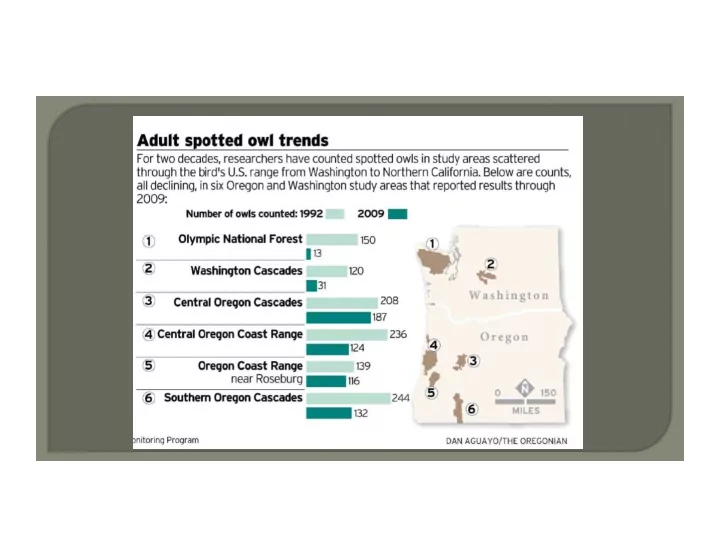
It doesn’t wear plaid, work in a sawmill, or drive a pickup truck featuring a faded yellow bumper sticker reading “Save a logger—kill an owl.” Instead, 25 years removed from the Timber Wars of the early ’90s, which anecdotally pitted hemp-wearing environmentalists against grizzled loggers, the spotted owl is challenged by a foe hardly distinguishable from itself. That’s because it’s another owl. Specifically, the barred owl, an invasive species that has moved into Pacific Northwest forests and wrought havoc on their native cousins. “If we don’t do something about the barred owl, we’re going to lose the Northern subspecies of the spotted owl,” U.S. Fish and Wildlife Service’s Robin Bown says. “I wouldn’t have told you that 10 years ago.”