Ranavirus Evolu-on Andrew Storfer School of Biological - - PDF document

ranavirus evolu on
SMART_READER_LITE
LIVE PREVIEW

Ranavirus Evolu-on Andrew Storfer School of Biological - - PDF document

2/10/16 Ranavirus Evolu-on Andrew Storfer School of Biological Sciences Washington State University Acknowledgements Collaborators: Funding: LiseCe Waits


slide-1
SLIDE 1

2/10/16 1

Ranavirus ¡Evolu-on ¡

Andrew ¡Storfer ¡ School ¡of ¡Biological ¡Sciences ¡ Washington ¡State ¡University ¡

Acknowledgements ¡

Collaborators: ¡

  • LiseCe ¡Waits ¡
  • Luke ¡Harmon ¡

¡Lab: ¡ ¡ – Postdocs: ¡Jake ¡Kerby, ¡ Ben ¡Ridenhour ¡ – Graduate ¡Students: ¡ Melanie ¡Murphy, ¡Jon ¡ Eastman, ¡Steve ¡Spear, ¡ Daryl ¡Trumbo, ¡Sarah ¡ Emel, ¡Karen ¡Chojnacki ¡ – Undergraduate ¡Students: ¡ Becky ¡Featherkile, ¡Nicole ¡ Sinacore, ¡Alison ¡Hart ¡

Funding: ¡ ¡

  • ¡ ¡Na-onal ¡Science ¡ ¡ ¡ ¡

Founda-on ¡

  • NSF ¡Ecology ¡ ¡
  • NSF ¡IRCEB ¡ ¡
  • WA ¡State ¡Game ¡& ¡

Fish ¡

  • USGS ¡

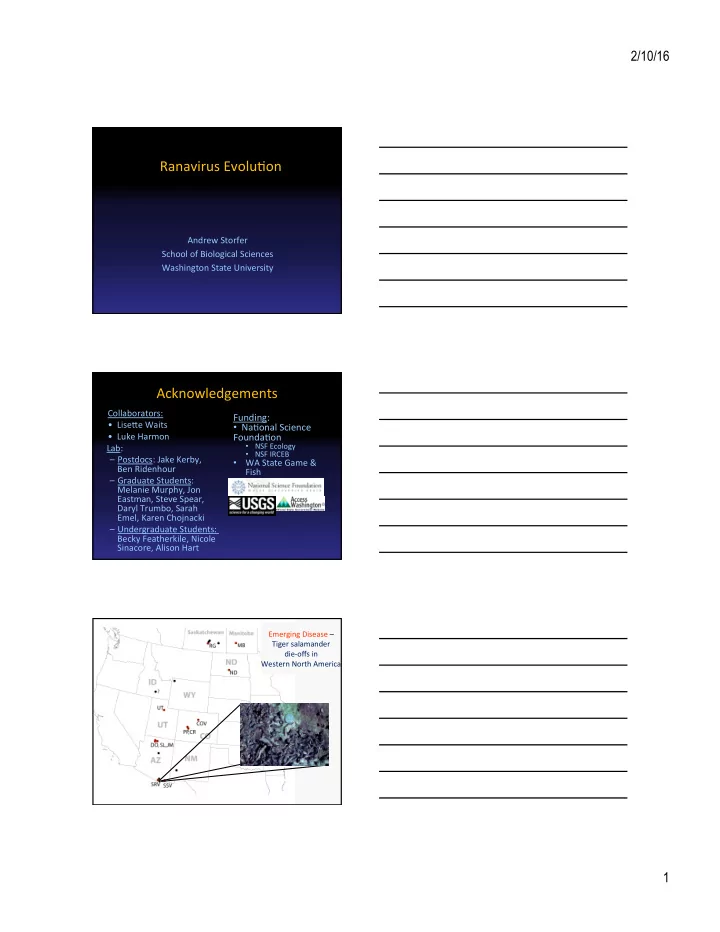
¡ ND Emerging ¡Disease ¡– ¡ Tiger ¡salamander ¡ ¡ die-­‑offs ¡in ¡ Western ¡North ¡America ¡ ¡ ¡

slide-2
SLIDE 2

2/10/16 2

100 ¡nm ¡

ATV-­‑ ¡Ambystoma ¡*grinum ¡virus ¡

  • Koch’s ¡postulates ¡sa-sfied ¡
  • Large ¡dsDNA ¡virus ¡(~106 ¡kb) ¡
  • Easily ¡transmiCed ¡
  • Host ¡range: ¡most ¡vectors ¡eliminated ¡
  • Salamanders ¡primary ¡vector ¡ ¡
  • Epizoo-cs: ¡some ¡to ¡all ¡salamanders ¡in ¡a ¡

given ¡year ¡

  • Some ¡popula-ons ¡not ¡recovered ¡

Big ¡ques-ons: ¡ 1) Why ¡do ¡diseases ¡[ranaviruses] ¡emerge? ¡ 2) What ¡is ¡their ¡capacity ¡to ¡spread? ¡

Emerging ¡infec-ous ¡diseases: ¡A ¡leading ¡ threat ¡to ¡public ¡and ¡wildlife ¡health ¡ 1) ¡Why ¡did ¡ATV ¡emerge? ¡ [Why ¡are ¡ranaviruses ¡emerging?] ¡

Alterna-ve ¡Hypotheses: ¡

a) Because ¡disease ¡has ¡expanded ¡its ¡range ¡(“novel”) ¡ ¡

Or ¡ ¡ ¡ ¡ ¡ ¡ ¡ ¡ ¡ ¡ ¡ ¡ ¡ ¡ ¡ ¡ ¡

b) Environment ¡has ¡changed ¡(disease ¡is ¡old; ¡ “endemic”) ¡

slide-3
SLIDE 3

2/10/16 3

Iridovirus ¡phylogeny ¡ ¡

(from Jancovich et al. 2010)

  • Phylogeny ¡suggests ¡

that ¡ATV ¡arose ¡as ¡a ¡ host ¡switch ¡from ¡fish ¡to ¡ salamanders

  • Closely ¡related ¡strain ¡– ¡

EHNV ¡– ¡came ¡from ¡ rainbow ¡trout

  • Rainbow ¡trout ¡

introduced ¡for ¡fishing

Is ¡disease ¡new ¡or ¡old? ¡A ¡test ¡using ¡ phylogene-c ¡concordance. ¡

  • If ¡old, ¡expect: ¡

– virus ¡to ¡be ¡coevolved ¡ with ¡host ¡and ¡thus ¡ phylogene-c ¡ concordance ¡

  • If ¡new, ¡expect: ¡

– lack ¡of ¡coevolu-on ¡ and ¡thus ¡non-­‑ concordance ¡

a ¡ b ¡ c ¡ I ¡ II ¡ III ¡

host ¡ pathogen ¡

a ¡ b ¡ c ¡ I ¡ II ¡ III ¡

host ¡ pathogen ¡

Salamander ¡ ¡ ¡ ¡Virus ¡

Trees ¡not ¡concordant: ¡SH ¡test ¡(p<0.002); ¡SOWH ¡(p<0.005); ¡Bayesian ¡(p<0.0001) ¡

Host ¡switches ¡in ¡color ¡(Bayesian ¡posterior ¡support ¡values ¡on ¡nodes) ¡

1540 ¡bp ¡mtDNA ¡(GTR+I) ¡ 1056 ¡bp ¡(K81 ¡+ ¡I) ¡

slide-4
SLIDE 4

2/10/16 4

Are ¡host ¡switching ¡events ¡caused ¡by ¡human ¡ movement ¡of ¡salamanders? ¡ ¡

  • Ecological ¡evidence: ¡

– Human-­‑dominated ¡ landscape ¡(caCle ¡tanks) ¡ – Bait ¡salamanders ¡moved ¡ throughout ¡W.US ¡ ¡

  • AZ/NM/TX ¡bait ¡shops ¡

posi-ve ¡for ¡virus ¡(Picco ¡& ¡ Collins ¡2008) ¡

Are ¡host ¡switching ¡ ¡ events ¡caused ¡ ¡ by ¡human ¡movement ¡

  • f ¡bait ¡salamanders? ¡
  • SC ¡AZ ¡(SSV) ¡salamanders ¡introduced ¡(Collins ¡1981) ¡ ¡
  • SC ¡AZ ¡(ATV): ¡

– hybridiza-on ¡between ¡na-ve ¡subspecies ¡ (stebbinsi ¡endangered) ¡& ¡introduced ¡(bait ¡– mavor*um) ¡(Storfer ¡et ¡al., ¡Copeia ¡2004) ¡

  • W. ¡CO. ¡(MUD) ¡strain ¡nearly ¡iden-cal ¡to ¡bait ¡shop ¡

strain ¡(Jancovich…Storfer, ¡Mol. ¡Ecol. ¡2005) ¡

Salamander ¡ Virus ¡

Topology: ¡p ¡<0.0001 ¡ Coalescent ¡-me ¡concordance: ¡r2 ¡=0.859 ¡ Evidence ¡of ¡coevolu-on ¡

Storfer ¡et ¡al. ¡2007, ¡Ecology ¡Le;ers ¡

slide-5
SLIDE 5

2/10/16 5 1) ¡Why ¡did ¡ATV ¡emerge? ¡

a) Because ¡disease ¡has ¡expanded ¡its ¡range ¡(“novel”) ¡

  • r ¡ ¡ ¡ ¡ ¡ ¡ ¡ ¡ ¡ ¡ ¡ ¡ ¡ ¡ ¡ ¡

b) Environment ¡has ¡changed ¡(disease ¡is ¡old; ¡“endemic”) ¡

  • Concordance ¡suggests ¡evidence ¡for ¡coevolu-on ¡

1) ¡Why ¡do ¡diseases ¡emerge? ¡ ¡

ü Environment ¡has ¡changed ¡

  • How? ¡

– Hypothesis: ¡Bait ¡environment ¡high ¡density ¡– ¡ could ¡ar-ficially ¡select ¡for ¡high ¡virulence ¡

  • Classic ¡virulence-­‑transmission ¡tradeoff ¡
  • Predic-on: ¡Introduced ¡strains ¡should ¡be ¡more ¡

virulent ¡than ¡coevolved ¡strains ¡

  • Test: ¡Cross-­‑infec-on ¡experiment ¡of ¡coevolved ¡

versus ¡introduced ¡virus ¡strain ¡

Does ¡selec-on ¡differ ¡between ¡bait ¡and ¡ endemic ¡strains? ¡

endemic

bait-­‑associated ¡

atv ¡ ssv ¡

  • r

v ¡

c

  • v

¡ axo ¡

slide-6
SLIDE 6

2/10/16 6

ATV ¡Genomic ¡Sequencing ¡

Sequenced ¡9 ¡ORFs ¡associated ¡with ¡host ¡immune ¡evasion/ ¡virulence. ¡ 4 ¡showed ¡evidence ¡of ¡posi-ve ¡selec-on ¡(ω>1) ¡among ¡viral ¡strains: ¡ βOH ¡– ¡host ¡steroid ¡upregula-on ¡ DNK/RDR ¡– ¡mobiliza-on ¡of ¡ ¡host ¡resources ¡for ¡viral ¡replica-on ¡ DMT ¡– ¡genome ¡methyla-on, ¡TLR-­‑9 ¡downregula-on ¡

Ridenhour & Storfer, 2008; JEB Storfer & Eastman, unpubl.

17

¡ Molecular ¡evolu-on: ¡POSITIVE ¡selec-on ¡

endemic ¡versus ¡bait-­‑associated ¡strains ¡for ¡genes ¡globally ¡under ¡ posi>ve ¡selec-on ¡ Amino ¡acid ¡sites ¡‘typically’ ¡under ¡posi-ve ¡selec-on ¡are ¡more ¡ strongly ¡selected ¡in ¡bait-­‑shops ¡(p ¡= ¡0.007) ¡ ¡ ¡

1) ¡Why ¡is ¡ATV ¡emerging? ¡

Jennifer ¡Stewart, ¡(MS ¡2008) ¡

  • Compare ¡gene ¡expression ¡

(mRNA ¡transcript) ¡levels ¡in ¡ infected ¡vs ¡uninfected ¡ animals ¡

  • A. ¡mexicanum/ ¡*grinum ¡
  • ligo ¡(Affymetrix) ¡chip ¡with: ¡

– 4844 ¡EST-­‑based ¡features ¡ – ~250 ¡controls/replicates ¡

¡

Hypothesis: ¡Weak ¡host ¡immune ¡response ¡ Approach: ¡Microarray ¡analysis ¡

slide-7
SLIDE 7

2/10/16 7

Molecular ¡Evolu-on: ¡Host ¡response ¡

  • Microarray ¡study ¡supports ¡poten-al ¡role ¡of ¡

these ¡viral ¡genes: ¡

– Upregula-on ¡of ¡genes ¡in ¡steroid ¡pathway ¡(βOH) ¡ – Downregula-on ¡of ¡genes ¡associated ¡with: ¡

  • Protein ¡destruc-on ¡(ubiqiu-ns) ¡
  • Apoptosis ¡(caspases; ¡CRD) ¡
  • Interferon ¡pathway ¡(VIF2-­‑α; ¡DMT) ¡
  • Tumor ¡recogni-on ¡

– limited ¡adap-ve ¡immune ¡response ¡in ¡host ¡

CoCer, ¡Storfer ¡et ¡al., ¡2008, ¡BMC ¡Genomics ¡

1) ¡Why ¡do ¡diseases ¡emerge? ¡ ¡

ü Environment ¡has ¡changed ¡

  • How? ¡

ü Bait ¡strains ¡under ¡stronger ¡selec-on ¡at ¡puta-ve ¡ host ¡immune ¡evasion ¡genes ¡than ¡na-ve ¡strains ¡ – Hypothesis: ¡Bait ¡environment ¡ar-ficially ¡high ¡ density ¡– ¡could ¡select ¡for ¡high ¡virulence ¡

  • Classic ¡virulence-­‑transmission ¡tradeoff ¡

Hypothesis: ¡Bait ¡environment ¡ar-ficially ¡high ¡ density ¡– ¡could ¡select ¡for ¡high ¡virulence ¡ Predic>on: ¡Introduced ¡strains ¡should ¡be ¡more ¡ virulent ¡than ¡coevolved ¡strains ¡ Test: ¡Cross-­‑infec-on ¡experiment ¡of ¡coevolved ¡ versus ¡introduced ¡virus ¡strain ¡

slide-8
SLIDE 8

2/10/16 8

Virulence ¡experiment ¡results ¡

0% 10% 20% 30% 40% 50% 60% 70% control UTV CRV DOV SLV SRV Virus strain

Mortality rate a c a b ab d

0% 10% 20% 30% 40% 50% 60% 70% control UTV CRV DOV SLV SRV Virus strain

Mortality rate

0% 10% 20% 30% 40% 50% 60% 70% control UTV CRV DOV SLV SRV Virus strain

Mortality rate a c a b ab d

Host-­‑switch ¡

Overall ¡ANOVA ¡(F5,18 ¡= ¡17.116, ¡p ¡< ¡0.0001) ¡ ¡ Storfer ¡et ¡al. ¡2007, ¡Ecology ¡Le;ers ¡

Why ¡is ¡ATV ¡emerging? ¡

  • Viral ¡evolu-on ¡

– Ar-ficial ¡selec-on ¡on ¡bait ¡strains ¡

  • Par-cularly ¡genes ¡associated ¡with ¡host ¡immune ¡evasion

¡

  • Genes ¡do ¡downregulate ¡host ¡defenses ¡

– Evolu-on ¡of ¡higher ¡virulence ¡in ¡bait ¡strains ¡

  • Virulence-­‑resistance ¡trade-­‑off ¡relaxed ¡

– Movement ¡of ¡higher ¡virulence ¡strains ¡through ¡bait ¡ trade ¡

  • OIE ¡reportable ¡pathogens ¡

2) ¡What ¡is ¡the ¡capacity ¡of ¡ATV ¡to ¡spread? ¡

  • Concern: ¡introduc-on ¡and ¡spread ¡of ¡more ¡

virulent ¡bait ¡strains ¡ ¡

  • Test: ¡Local ¡adapta-on ¡experiment ¡
  • Hypothesis: ¡Virus ¡strains ¡should ¡be ¡locally ¡adapted ¡

– Higher ¡muta-on ¡rates, ¡reproduc-ve ¡rates ¡and ¡shorter ¡ genera-on ¡-me ¡than ¡hosts ¡

slide-9
SLIDE 9

2/10/16 9

Home vs. away Local vs. foreign

Measures ¡of ¡local ¡adapta-on ¡ ¡

Prac-cal ¡applica-on: ¡ Can ¡think ¡of ¡h ¡v ¡a ¡as ¡a ¡measure ¡

  • f ¡a ¡pathogen’s ¡invasiveness ¡

maladapted ¡

L

  • c

a l l y ¡ a d a p t e d ¡

¡-­‑-­‑ ¡host ¡gene-c ¡distanceà ¡

parasite ¡performance ¡ parasite ¡performance ¡

Source ¡host ¡

Prac-cal ¡applica-on: ¡ Can ¡think ¡of ¡l ¡v ¡f ¡as ¡a ¡ measure ¡of ¡a ¡pathogen’s ¡ invasibility ¡

Geographic ¡PaCern ¡of ¡Molecular ¡Selec-on ¡

Suggests ¡ATV ¡strains ¡ undergo ¡local ¡selec-on ¡ ¡ ¡ ¡ Some ¡strains ¡may ¡be ¡ beCer ¡adapted ¡ than ¡others ¡ 4 ¡ORFs ¡associated ¡with ¡ host ¡immune ¡evasion/ ¡

  • virulence. ¡

¡ PaCern ¡not ¡associated ¡ with ¡phylogeny ¡

Methods: ¡ ¡

  • 4 ¡x ¡5 ¡factorial ¡infec-on ¡experiment ¡

– 4 ¡host ¡strains ¡(DAL, ¡CRV, ¡YEL, ¡DOT) ¡ – 5 ¡virus ¡treatments ¡(DAL, ¡CRV, ¡YEL, ¡DOT, ¡control) ¡

  • 103.5 ¡p.f.u./ ¡ml ¡

– 30 ¡animals ¡per ¡treatment ¡

  • 600 ¡animals ¡total ¡
  • Response ¡variables: ¡

– Infec-vity, ¡virulence ¡(mortality), ¡within-­‑host ¡ growth ¡(qPCR), ¡transmission ¡(qPCR) ¡

slide-10
SLIDE 10

2/10/16 10

Results: ¡Infec-vity ¡vs ¡Transmission ¡

Storfer ¡et ¡al., ¡in ¡prep. ¡

m

(0) ¡ (2) ¡ (3) ¡ (2) ¡

Storfer ¡et ¡al., ¡in ¡prep. ¡

Viral ¡fitness ¡and ¡molecular ¡evolu-on ¡

  • Viral ¡performance ¡mul-variate ¡

– Infec-vity ¡o~en ¡sole ¡measure ¡ – Can ¡be ¡misleading ¡

  • Performance ¡strongly ¡correlated ¡with ¡molecular ¡

evolu-onary ¡rate ¡ ¡

slide-11
SLIDE 11

2/10/16 11

Conclusions: ¡capacity ¡to ¡spread ¡

  • Two ¡strains ¡(DAL, ¡CAP) ¡appear ¡locally ¡adapted ¡

with ¡host ¡shi~s ¡poten-ally ¡less ¡likely ¡

  • One ¡strain ¡appears ¡maladapted ¡(DOT) ¡with ¡

host ¡shi~s ¡poten-ally ¡more ¡likely ¡

  • One ¡strain ¡(YEL) ¡equivocal ¡

Remaining ¡ques-ons ¡about ¡ATV/ ¡ ranaviruses ¡in ¡general? ¡

  • Evolu-on ¡for ¡higher ¡virulence ¡in ¡cap-vity ¡a ¡

general ¡phenomenon? ¡

  • Evolu-on ¡of ¡hosts? ¡

c ¡

Asmussen ¡M., ¡unpl. ¡data ¡

Global ¡wildlife ¡trade ¡

28 ¡million ¡amphibians ¡imported ¡into ¡US ¡between ¡ 2000-­‑2005 ¡with ¡8.5% ¡prevalence ¡of ¡ranavirus ¡infec-on ¡

slide-12
SLIDE 12

2/10/16 12

Bullfrogs ¡are ¡a ¡problem ¡

Bullfrogs ¡(Rana ¡catesbeiana) ¡ 0 ¡ 0.2 ¡ 0.4 ¡ 0.6 ¡ 0.8 ¡ RACAT ¡ RALU ¡ RACAS ¡ RASP ¡

Infec>vity ¡ ¡

(propor>on ¡infected) ¡

Host ¡species ¡

RCV-Z (captive) RCV-WA (wild)

** * *

n.s.

Cross-­‑infec-on ¡experiment: ¡farmed ¡bullfrogs ¡and ¡their ¡ ¡ ranavirus ¡vs. ¡introduced ¡bullfrogs ¡& ¡their ¡virus ¡

Bullfrog ¡ranavirus ¡virulence ¡

0.04 ¡ 0.045 ¡ 0.05 ¡ 0.055 ¡ 0.06 ¡ 0.065 ¡ 0.07 ¡ 0.075 ¡ RACAT ¡ RALU ¡ RACAS ¡ RASP ¡

Virulence ¡ ¡ (1/Days ¡infected ¡Alive) ¡

Host ¡species ¡

n.s. n.s.

* *

RCV-Z (captive) RCV-WA (wild)

slide-13
SLIDE 13

2/10/16 13

Host ¡evolu-on ¡

  • Common ¡frogs ¡infected ¡for ¡several ¡genera-ons ¡

showed ¡selec-on ¡for ¡certain ¡MHC ¡alleles ¡than ¡ uninfected ¡popula-ons ¡(Teacher ¡et ¡al. ¡2009; ¡PLoS ¡ One) ¡

  • Possible ¡behavioral ¡change ¡(assorta-ve ¡ma-ng) ¡in ¡

common ¡frogs ¡a~er ¡selec-on ¡by ¡disease ¡(Teacher ¡et ¡

  • al. ¡2009; ¡Mol ¡Ecol) ¡

– Maybe ¡selec-vely ¡ma-ng ¡with ¡resistant ¡individuals? ¡

  • Agile ¡frog ¡suscep-bility ¡related ¡to ¡background ¡

gene-c ¡diversity ¡(Garner ¡et ¡al. ¡2005) ¡

Emerging ¡infec-ous ¡diseases ¡

1) ¡Why ¡is ¡ATV ¡emerging? ¡

¡Phylogene-c ¡concordance ¡suggests ¡virus ¡is ¡ endemic ¡(old); ¡emerging ¡because ¡of: ¡ ü human ¡ar-ficial ¡selec-on ¡for, ¡and ¡introduc-on ¡

  • f, ¡virulent ¡bait ¡strains ¡

2) ¡What ¡is ¡the ¡capacity ¡of ¡ATV ¡to ¡spread? ¡

a) Spa-ally ¡variable ¡selec-on ¡on ¡virus ¡virulence ¡genes ¡ ¡ b) Local ¡adapta-on ¡results ¡mixed ¡

  • Some ¡strains ¡may ¡spread; ¡others ¡less ¡likely ¡

c) Future: ¡experiments ¡to ¡test ¡bait ¡strain ¡invasibility ¡of ¡naïve ¡ hosts ¡and ¡hosts ¡with ¡resident ¡strains ¡

  • Some ¡strains ¡may ¡be ¡invaded; ¡others ¡less ¡likely ¡

More ¡studies ¡needed ¡on: ¡

  • Ranavirus ¡evolu-on ¡(in ¡general) ¡
  • Host ¡immunity/ ¡response ¡to ¡RV ¡infec-on ¡

– RNA ¡work ¡

  • Spa-al ¡varia-on ¡in ¡die-­‑offs ¡among ¡host ¡

popula-on ¡

  • Gene-c/ ¡genomic ¡causes ¡for ¡variability ¡in ¡host ¡

suscep-bility ¡ ¡