
SLIDE 1
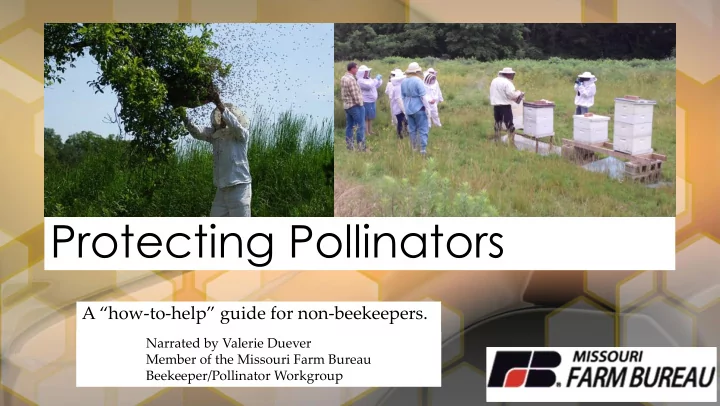
Protecting Pollinators
A “how-to-help” guide for non-beekeepers.
Narrated by Valerie Duever Member of the Missouri Farm Bureau Beekeeper/Pollinator Workgroup
Protecting Pollinators A how -to- help guide for non -beekeepers. - - PowerPoint PPT Presentation
Protecting Pollinators A how -to- help guide for non -beekeepers. Narrated by Valerie Duever Member of the Missouri Farm Bureau Beekeeper/Pollinator Workgroup Missouri Farm Bureau Beekeeper/Pollinator Workgroup The
A “how-to-help” guide for non-beekeepers.
Narrated by Valerie Duever Member of the Missouri Farm Bureau Beekeeper/Pollinator Workgroup
working together for one year
industry and how FB members can help
educate about the industry challenges and needs
recommendations to be reviewed in the FB policy development process
becoming a managed beekeeper.
Cabbage)
Connection with Nature Socializing Hobby
Honey and Products made with honey Pollen and Propolis Bees Equipment and Services
in local honey prices
commercial agricultural practices
invasive pest “varroa mite”
disorder
A nature reserve near Bavaria showed a decline in recorded butterfly and moth species from 117 in 1840 to 71 in 2013, a 39% decline. Tent trap studies in western Germany have shown a steady decline in biomass of insects, from 3.5 pounds in 1989 to 10.6 ounces in 2014, a 81% decline.
Plant areas with pollinator friendly, flowering plants Only mow “out-of-the- way” areas after plants have flowered and seeded
Plant areas with pollinator friendly, flowering plants that attract butterflies Educate staff on benefits
Research use of cover crops for corn and winter fields. Consider leaving 2-foot wide areas in marginally- productive fence rows for pollinator plants
More Forbs in pastures Rotational Grazing
S.T.E.M. and honey bees Encourage outdoor classrooms
Reduce lawn by 10% Landscape with more pollinator friendly plants
Missouri
fearing them.
against them
but helping the honey bee does help all pollinators.