SLIDE 1
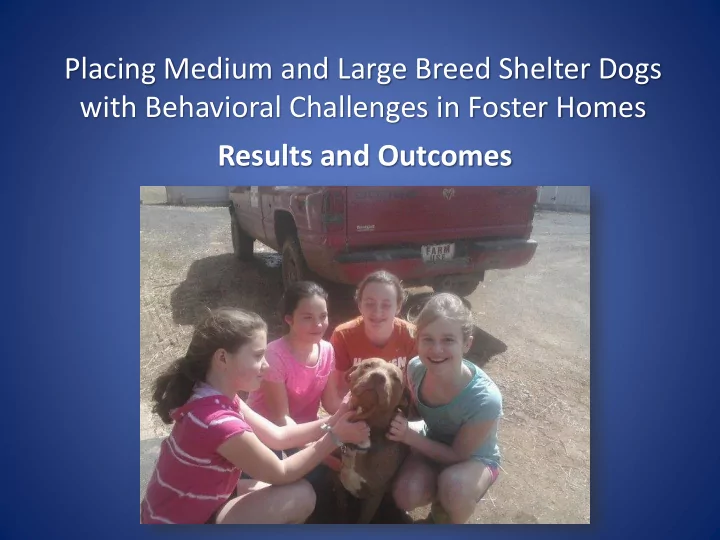
Placing Medium and Large Breed Shelter Dogs with Behavioral Challenges in Foster Homes Results and Outcomes
SLIDE 2
Kristen Auerbach, MA Deputy Director, Austin Animal Center Formerly Assistant Director, Fairfax County Animal Shelter Fairfax, Virginia
SLIDE 3 BACKGROUND
Part I
SLIDE 4
- Fairfax County Animal Shelter is an open-access, municipal animal shelter that
falls under the Fairfax County Police Department in Fairfax, Virginia
- Shelter serves 1.2 million people over 400 square miles
- Average annual intake between 4,000 and 5,000 animals
- Live outcomes anticipated to be 90% in 2015
Washington, DC Fairfax, Virginia
SLIDE 5 Prior to 2012:
- Euthanizing for space and time limits for adoption for some
animals
- ‘Pit bull’ adoption restrictions up to 80% of pit bull dogs
euthanized
- Euthanizing for common behavioral challenges
- Euthanized dogs for ‘failing’ SAFER evaluation
- Euthanized 25% of animals entering shelter.
Sample Outcomes List – Open access shelter in Maryland 2015
SLIDE 6 Beginning in 2013:
- Worked towards ending euthanasia based
- n perceived breed
- No euthanasia for ‘failing’ standardized
behavior evaluation
- Shelter began implementing enrichment,
playgroups, adult dog foster program
SLIDE 7 Restrictions on ‘pit bull’ adoptions
SLIDE 8 Lifesaving programs for shelter dogs
Play Groups Adult Dog Fostering
SLIDE 9 Dog with behavioral challenges No behavior staff or rescue placement
Concerns from staff, volunteers, ACOs Declining behavior
SLIDE 10 THE STUDY
Part II
SLIDE 11
Patty’s story…
SLIDE 12 May 2013 to March 2015 52 medium/large shelter dogs of various breeds and types
- No viable placement options
because of behavioral challenges in shelter
towards people or animals
The Dogs
SLIDE 13 16 Foster Families
- Characteristics
- Number of dogs they fostered
- What the foster families agreed to
SLIDE 14 Study objectives
- 1. Could we place medium and large dogs with behavioral
challenges in foster homes and see their behavior improve?
- 2. Could these dogs eventually be adopted into permanent homes?
- 3. Could we do all of this safely?
SLIDE 15 What we studied
- Ages
- Primary and secondary behavioral issues
- Duration of stay in foster
- Outcome - adopted or euthanized
- Reasons for euthanasia
- Rate of and reasons for return
- Any behavioral challenges experienced by
– Foster families – Adopters
- Status of dogs six months to 18 months
after adoption
SLIDE 16
Age
Over 80% of dogs were 3 years and under
SLIDE 17
Primary Behavioral Issues
SLIDE 18
Secondary Behavioral Issues
10 - extremely energetic 4 - possibly dog aggressive 2 - dog selective 2 - afraid of men 2 - under-socialized 2 - displayed separation anxiety 1 - reactivity
SLIDE 19 How long did the dogs stay in foster?
Place of Adoption:
- 33 adopted directly from the foster home
- 16 returned to shelter and subsequently adopted
88% of the dogs were in foster 30 days or less.
SLIDE 20
Live Outcomes 90.4%
SLIDE 21
SLIDE 22 Returned Adoptions
Six dogs (11%) adopted/returned prior to foster Three dogs (6%) sent to foster, adopted, returned and re-adopted Two dogs (4%) sent to foster, adopted, returned and euthanized
Return rate of dogs in study: 9.6% Overall return rate of adopted dogs: 13%
SLIDE 23 DISCUSSION
Part III.
SLIDE 24 Here’s what the fosters said about their experiences…
- 1. They felt well-informed about
issues prior to taking dogs home
- 2. They felt they either did not
witness the behavior described to them or they stated the described behavior diminished
- r disappeared within a week
- 3. They said sometimes new
behavioral issues emerged over time
- 4. They felt trainer support and
someone to consult was key
SLIDE 25
Adopter Follow-up
We called our adopters six to 18 months following adoption and asked them four questions…
SLIDE 26
- 1. Is this dog still in your home?
96% of respondents said YES!*
*respondents represent the final, adoptive homes. Some dogs adopted, returned and re-adopted.
SLIDE 27
- 2. Did you experience any challenges?
“Barks a lot, digs and pulls too much.” “Needs training and will run away if off leash but so loving” “Afraid of cars. Wants to chase them but scared.” “Sometimes he’s a bit naughty. Chewing on things” “None. She fits right into the family and bonded with our other dog.” “Mindy is a handful and she’s great with our family but experiences anxiety and is fearful around some men.” “Bella has severe anxiety. She hasn’t left the house since the day she came home.” “No behavioral issues, but she has skin allergies.”
SLIDE 28
- 3. Would you re-adopt this dog?
“Yes. Dogs are dogs.” “No. not knowing what we know now. But we love Mindy and have no intention of giving her up.” “Yes, in a heartbeat.” “No. We love her very much but we wouldn’t adopt a young dog again because of the need for exercise and training.” “Oh yeah. Absolutely. He’s perfect.” “I love him now but in the beginning I would have opted for another dog if I had known about his skin allergies.”
SLIDE 29
- 4. Could we have offered you more
support?
- Basic training
- Training support immediately following adoption
- Someone to call to help them ‘troubleshoot’ behavior issues
SLIDE 30
dogs were adopted by their foster family
fosters use more than any other to describe their foster dogs?
met with potential adopters
SLIDE 31 Dogs Helping Dogs
- Dogs socialized with other dogs
- Playgroups played a key role in
identifying dogs with shelter-based behavioral issues
- All dogs were evaluated with other
dogs off leash
SLIDE 32 Study Objectives results
1.Could we place medium and large dogs with behavioral challenges in foster homes and see their behavior improve? 2.Could these dogs eventually be adopted into permanent homes? 3.Could we do all of this safely?
SLIDE 33
THANK YOU!
Find me on Twitter @KEADasher And on Facebook, LinkedIn, and Instagram. Kristen.auerbach@ Austintexas.gov