Outline ___________________________________ 2 - - PDF document

outline
SMART_READER_LITE
LIVE PREVIEW

Outline ___________________________________ 2 - - PDF document

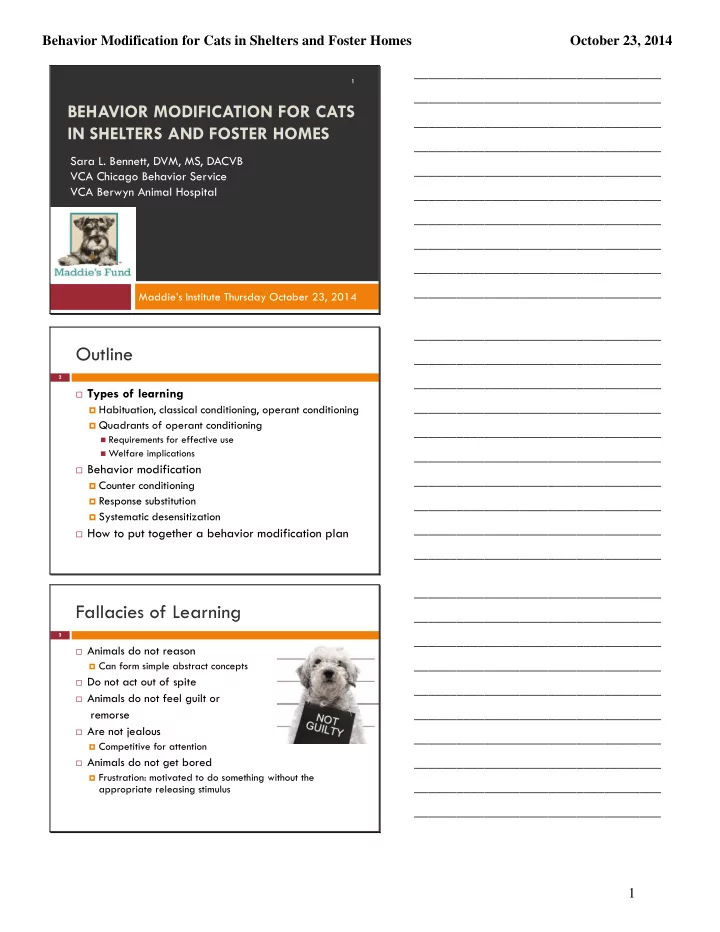
Behavior Modification for Cats in Shelters and Foster Homes October 23, 2014 ___________________________________ 1 ___________________________________ BEHAVIOR MODIFICATION FOR CATS ___________________________________ IN SHELTERS AND FOSTER


slide-1
SLIDE 1

Behavior Modification for Cats in Shelters and Foster Homes October 23, 2014 1

BEHAVIOR MODIFICATION FOR CATS IN SHELTERS AND FOSTER HOMES

Maddie’s Institute Thursday October 23, 2014

1

Sara L. Bennett, DVM, MS, DACVB VCA Chicago Behavior Service VCA Berwyn Animal Hospital

___________________________________ ___________________________________ ___________________________________ ___________________________________ ___________________________________ ___________________________________ ___________________________________ ___________________________________ ___________________________________ ___________________________________

Outline

2

 Types of learning  Habituation, classical conditioning, operant conditioning  Quadrants of operant conditioning  Requirements for effective use  Welfare implications  Behavior modification  Counter conditioning  Response substitution  Systematic desensitization  How to put together a behavior modification plan

___________________________________ ___________________________________ ___________________________________ ___________________________________ ___________________________________ ___________________________________ ___________________________________ ___________________________________ ___________________________________ ___________________________________

Fallacies of Learning

 Animals do not reason  Can form simple abstract concepts  Do not act out of spite  Animals do not feel guilt or

remorse

 Are not jealous  Competitive for attention  Animals do not get bored  Frustration: motivated to do something without the

appropriate releasing stimulus

3

___________________________________ ___________________________________ ___________________________________ ___________________________________ ___________________________________ ___________________________________ ___________________________________ ___________________________________ ___________________________________ ___________________________________

slide-2
SLIDE 2

Behavior Modification for Cats in Shelters and Foster Homes October 23, 2014 2

Types of Learning

 Habituation  Modify response to stimuli  Classical Conditioning  Form associations between stimuli  Pavlov  Associative Learning  Operant Conditioning  Form associations between stimuli and responses  Skinner  Trial and Error

4

___________________________________ ___________________________________ ___________________________________ ___________________________________ ___________________________________ ___________________________________ ___________________________________ ___________________________________ ___________________________________ ___________________________________

Habituation

 Definition:  Animal’s response to a novel, neutral stimulus weakens

after repeated exposure to stimulus

 Neutral: non harmful and non threatening  Animal learns stimulus has no consequence  Doesn’t mean or predict anything  Active learning process  Not just forgetting  Occurs in:  Systematic desensitization  Flooding

5

A.U. Luescher

___________________________________ ___________________________________ ___________________________________ ___________________________________ ___________________________________ ___________________________________ ___________________________________ ___________________________________ ___________________________________ ___________________________________

Classical Conditioning

 Definition:  Previously neutral stimulus attains meaning/ becomes a

predictor (now a conditioned stimulus) for something after it was paired with an inherently meaningful (unconditioned) stimulus

 Making association between two unrelated stimuli  Involves involuntary visceral responses  Emotional responses  Blood pressure, heart rate, salivation  Excitement, fear responses

6

___________________________________ ___________________________________ ___________________________________ ___________________________________ ___________________________________ ___________________________________ ___________________________________ ___________________________________ ___________________________________ ___________________________________

slide-3
SLIDE 3

Behavior Modification for Cats in Shelters and Foster Homes October 23, 2014 3

Classical Conditioning

 Learning fastest if:  The two stimuli are always paired together, and never

not together

 The neutral stimulus becomes a perfect predictor  Cat carrier is inherently neutral  Only time cat put in carrier is to go to vet  Trip to vet is frightening  Cat carrier predicts trip to vet  Cat carrier elicits fear

7

Chzlolcats.wordpress.com

___________________________________ ___________________________________ ___________________________________ ___________________________________ ___________________________________ ___________________________________ ___________________________________ ___________________________________ ___________________________________ ___________________________________

Classical Conditioning

 ALWAYS OCCURRING! Whether the handler

intends it or not

 Animal will associate a situation with the experience

they had (vet office)

 Sometimes, only takes one exposure to the paired

stimuli

 Classical conditioning can interfere with operant

conditioning

8

___________________________________ ___________________________________ ___________________________________ ___________________________________ ___________________________________ ___________________________________ ___________________________________ ___________________________________ ___________________________________ ___________________________________

Operant Conditioning

 Operant Conditioning  B.F. Skinner  Trial and Error  Form associations between stimuli and responses  Learning that a particular behavior has a particular

consequence

 Associate responses with stimuli that are not naturally

associated with each other

 Create behaviors that are not naturally occurring

9

___________________________________ ___________________________________ ___________________________________ ___________________________________ ___________________________________ ___________________________________ ___________________________________ ___________________________________ ___________________________________ ___________________________________

slide-4
SLIDE 4

Behavior Modification for Cats in Shelters and Foster Homes October 23, 2014 4

Law of Effect

 Behavior resulting in pleasant consequence

strengthened/ Increases in frequency

 Behavior resulting in no consequence is weakened/

decreases in frequency

 Behavior resulting in unpleasant consequence

weakened/ decreases in frequency more quickly*

 Interpretation of consequence based on cat’s perception, not

  • urs!

10

___________________________________ ___________________________________ ___________________________________ ___________________________________ ___________________________________ ___________________________________ ___________________________________ ___________________________________ ___________________________________ ___________________________________

Operant Conditioning: Important Definitions

 Reinforcement  Anything that increases the probability of the behavior

  • ccurring

 Punishment  Anything that decreases the probability of the

behavior occurring

 Positive  Add something to situation  Negative  Take something away from situation

11

___________________________________ ___________________________________ ___________________________________ ___________________________________ ___________________________________ ___________________________________ ___________________________________ ___________________________________ ___________________________________ ___________________________________

Operant Conditioning: Important Definitions

Positive Negative Reinforcement Food presented Threat retreats Punishment Shout or throw something Attention withdrawn

12

A.U. Luescher

___________________________________ ___________________________________ ___________________________________ ___________________________________ ___________________________________ ___________________________________ ___________________________________ ___________________________________ ___________________________________ ___________________________________

slide-5
SLIDE 5

Behavior Modification for Cats in Shelters and Foster Homes October 23, 2014 5

Definitions

Positive Punishment

Negative Reinforcement

Negative Punishment Need to know difference between these!

13

___________________________________ ___________________________________ ___________________________________ ___________________________________ ___________________________________ ___________________________________ ___________________________________ ___________________________________ ___________________________________ ___________________________________

Aversive Conditioning

 Negative reinforcement  Creates very strong behaviors  Cruel method of training new behavior  Escape conditioning  Learning that a behavior can terminate an aversive stimulus  Avoidance conditioning  Learning to avoid an aversive stimulus

14

___________________________________ ___________________________________ ___________________________________ ___________________________________ ___________________________________ ___________________________________ ___________________________________ ___________________________________ ___________________________________ ___________________________________

Aversive Conditioning

 Positive Punishment  Requirements for correct use:  Motivation strength  Contingency  Intensity  Timing  Alternative

15

___________________________________ ___________________________________ ___________________________________ ___________________________________ ___________________________________ ___________________________________ ___________________________________ ___________________________________ ___________________________________ ___________________________________

slide-6
SLIDE 6

Behavior Modification for Cats in Shelters and Foster Homes October 23, 2014 6

Aversive Conditioning

 Positive punishment  Basic facts  Complex technique that is difficult to use and therefore

  • ften ineffective in practice

 Poorly understood and overused  If effective, will work within 3-4 times  If taking longer than that, NOT WORKING  Probably being applied incorrectly  So let’s try something else 

16

___________________________________ ___________________________________ ___________________________________ ___________________________________ ___________________________________ ___________________________________ ___________________________________ ___________________________________ ___________________________________ ___________________________________

Aversive Conditioning

 Side effects  Inhibits learning, no longer offers behaviors  Exacerbates many behavior problems  Fear  Aggression- Dangerous!  Conflict and anxiety related problems  Unintended classically conditioned associations made  Makes handler focus on bad behavior  Doesn’t teach appropriate behavior  Damages human- animal bond

17

___________________________________ ___________________________________ ___________________________________ ___________________________________ ___________________________________ ___________________________________ ___________________________________ ___________________________________ ___________________________________ ___________________________________

Operant Conditioning

 Steps for success with positive reinforcement:  Prompting and fading (free-shaping) or capturing

(rewarding spontaneous behavior)

 Shaping (successive approximation)  Continuous reinforcement (fast learning)  Discrimination training (put on cue/ command)  Over-learning (practice)  Intermittent reinforcement (persistent behavior)

18

___________________________________ ___________________________________ ___________________________________ ___________________________________ ___________________________________ ___________________________________ ___________________________________ ___________________________________ ___________________________________ ___________________________________

slide-7
SLIDE 7

Behavior Modification for Cats in Shelters and Foster Homes October 23, 2014 7

Capturing

 Rewarding spontaneous behavior  Wait for a behavior that resembles the target behavior

and reward it!

 Clicker training well suited

for this

 Great option for aggressive

  • r fearful animals

 Hands off training

19

___________________________________ ___________________________________ ___________________________________ ___________________________________ ___________________________________ ___________________________________ ___________________________________ ___________________________________ ___________________________________ ___________________________________

Shaping

 Training by rewarding successive approximations of the

target behavior

 Break it down into steps  Takes advantage of variability of behavior  Gradually become more discriminating in what you reward

(increase criteria)

 Small steps  If animal isn’t performing the desired behavior, go back a step

and proceed with more smaller steps

 Reward only the best (most accurate) behavior  Need a training plan

20

___________________________________ ___________________________________ ___________________________________ ___________________________________ ___________________________________ ___________________________________ ___________________________________ ___________________________________ ___________________________________ ___________________________________

But How Do You Reward A Cat?

21

 Toys  Treats  Petting, brushing  Preference testing

___________________________________ ___________________________________ ___________________________________ ___________________________________ ___________________________________ ___________________________________ ___________________________________ ___________________________________ ___________________________________ ___________________________________

slide-8
SLIDE 8

Behavior Modification for Cats in Shelters and Foster Homes October 23, 2014 8

Reward Preference Testing

22

___________________________________ ___________________________________ ___________________________________ ___________________________________ ___________________________________ ___________________________________ ___________________________________ ___________________________________ ___________________________________ ___________________________________

Outline

23

 Types of learning  Habituation, classical conditioning, operant conditioning  Quadrants of operant conditioning  Requirements for effective use  Welfare implications  Behavior modification  Counter conditioning  Response substitution  Systematic desensitization  How to put together a behavior modification plan

___________________________________ ___________________________________ ___________________________________ ___________________________________ ___________________________________ ___________________________________ ___________________________________ ___________________________________ ___________________________________ ___________________________________

3 Behavior Modification Techniques

24

 Behavior modification, the basics:  (Classical) Counter Conditioning  Response Substitution  Systematic Desensitization

___________________________________ ___________________________________ ___________________________________ ___________________________________ ___________________________________ ___________________________________ ___________________________________ ___________________________________ ___________________________________ ___________________________________

slide-9
SLIDE 9

Behavior Modification for Cats in Shelters and Foster Homes October 23, 2014 9

(Classical) Counter Conditioning

 Use classical conditioning to change the meaning of a

previously conditioned stimulus

 Pair previously fear evoking (but harmless) stimulus with:  Food, play, relaxation  Handling  You’re not scary, you’re

the treat person!!!

 Touch leg, treat  Touch ear, treat  Touch tail, treat  Open mouth, treat  Gentle hug, treat  Treats are cheap 

25

___________________________________ ___________________________________ ___________________________________ ___________________________________ ___________________________________ ___________________________________ ___________________________________ ___________________________________ ___________________________________ ___________________________________

Izzy and Steve

26

 Fear of a person  Steve is “the treat guy”  Steve tosses treats each time he enters the room  Steve prepares meals and feeds Izzy  Steve offers food stuffed toys  Izzy’s response  Izzy no longer hisses and swats at him

as he enters

 Izzy actually will sit near him  Izzy beginning to offer eye contact

  • n cue

Pxleyes.com

___________________________________ ___________________________________ ___________________________________ ___________________________________ ___________________________________ ___________________________________ ___________________________________ ___________________________________ ___________________________________ ___________________________________

Other Applications- (Classical) Counter Conditioning

27

 Frightening noises  Fear- vet care, handling, people  Introductions to other animals  New housemates  Group housing

___________________________________ ___________________________________ ___________________________________ ___________________________________ ___________________________________ ___________________________________ ___________________________________ ___________________________________ ___________________________________ ___________________________________

slide-10
SLIDE 10

Behavior Modification for Cats in Shelters and Foster Homes October 23, 2014 10

Response Substitution

28

 Ask for a behavior that is incompatible with the

undesired behavior and reward that instead

 Also referred to as:  Operant counter conditioning  Differential reinforcement of alternate/ incompatible/

  • ther behavior (DRA, DRI, DRO)

 Example:  Cat likely to attack your leg as you approach  Ask cat to fetch toy  Cat is rewarded for chasing toy instead

___________________________________ ___________________________________ ___________________________________ ___________________________________ ___________________________________ ___________________________________ ___________________________________ ___________________________________ ___________________________________ ___________________________________

Law of Effect in Shelters

29

 Frustration  Motivated to perform a behavior without an appropriate

  • utlet

 Results in  High arousal, lack of impulse control  Swatting, biting while playing  Acute conflict behaviors

 Vocalization

 Aggression

 Especially with opening cage door, putting away

 Very difficult to ignore some of these unwanted behaviors  Easily inadvertently reinforced

Rosalindgardner.com

___________________________________ ___________________________________ ___________________________________ ___________________________________ ___________________________________ ___________________________________ ___________________________________ ___________________________________ ___________________________________ ___________________________________

Charging the Clicker

30

___________________________________ ___________________________________ ___________________________________ ___________________________________ ___________________________________ ___________________________________ ___________________________________ ___________________________________ ___________________________________ ___________________________________

slide-11
SLIDE 11

Behavior Modification for Cats in Shelters and Foster Homes October 23, 2014 11

Target Training- Capturing

31

___________________________________ ___________________________________ ___________________________________ ___________________________________ ___________________________________ ___________________________________ ___________________________________ ___________________________________ ___________________________________ ___________________________________

Target Training on Cue

32

___________________________________ ___________________________________ ___________________________________ ___________________________________ ___________________________________ ___________________________________ ___________________________________ ___________________________________ ___________________________________ ___________________________________

Target Training Nail Clippers

33

___________________________________ ___________________________________ ___________________________________ ___________________________________ ___________________________________ ___________________________________ ___________________________________ ___________________________________ ___________________________________ ___________________________________

slide-12
SLIDE 12

Behavior Modification for Cats in Shelters and Foster Homes October 23, 2014 12

Other Applications- Response Substitution, Operant Conditioning

34

 Go to place/ carrier  Sit  Eye contact  Cute tricks  Give Paw  Fetch  Wave  Spin  Excellent form of enrichment

www.happycatshaven.org

___________________________________ ___________________________________ ___________________________________ ___________________________________ ___________________________________ ___________________________________ ___________________________________ ___________________________________ ___________________________________ ___________________________________

To Carrier on Cue

35

___________________________________ ___________________________________ ___________________________________ ___________________________________ ___________________________________ ___________________________________ ___________________________________ ___________________________________ ___________________________________ ___________________________________

Systematic Desensitization and Counter Conditioning (DS/CC)

36

 Controlled and gradual exposure to a situation/

trigger in incrementally increasing levels of intensity while cat remains relaxed

 Not just non-reactive  Paired often with a reward for remaining relaxed  Classical counter conditioning  Paired often with another previously learned cue  Operant counter conditioning

___________________________________ ___________________________________ ___________________________________ ___________________________________ ___________________________________ ___________________________________ ___________________________________ ___________________________________ ___________________________________ ___________________________________

slide-13
SLIDE 13

Behavior Modification for Cats in Shelters and Foster Homes October 23, 2014 13

Systematic Desensitization

 Requirements:  Must be able to identify stimulus/ stimuli  Be able to reproduce stimulus  Control stimulus intensity  Determine a low enough intensity (starting point) where

animal not fearful/ minimal fear

 Be able to avoid exposure to naturally occurring

stimulus while working on SD

37

___________________________________ ___________________________________ ___________________________________ ___________________________________ ___________________________________ ___________________________________ ___________________________________ ___________________________________ ___________________________________ ___________________________________

Flooding

 Definition:  Prolonged exposure to full intensity fear evoking but

harmless stimulus

 Animal prevented from leaving/ escaping  Only when animal is relaxed is stimulus removed

38

___________________________________ ___________________________________ ___________________________________ ___________________________________ ___________________________________ ___________________________________ ___________________________________ ___________________________________ ___________________________________ ___________________________________

Flooding

 Risky  Not reacting does not = relaxed!!!  Time consuming  Remove stimulus too early  Reward fear response  Inhumane  Strong physical and psychological response  Only appropriate for mild fear response to

harmless stimuli

39

___________________________________ ___________________________________ ___________________________________ ___________________________________ ___________________________________ ___________________________________ ___________________________________ ___________________________________ ___________________________________ ___________________________________

slide-14
SLIDE 14

Behavior Modification for Cats in Shelters and Foster Homes October 23, 2014 14

(DS/CC) Handling Feet Example

40

___________________________________ ___________________________________ ___________________________________ ___________________________________ ___________________________________ ___________________________________ ___________________________________ ___________________________________ ___________________________________ ___________________________________

(DS/CC) Trimming Nails Example

41

___________________________________ ___________________________________ ___________________________________ ___________________________________ ___________________________________ ___________________________________ ___________________________________ ___________________________________ ___________________________________ ___________________________________

Other Applications- Systematic Desensitization

42

 Towels- teach towels aren’t scary, then can use them

during restraint

 Much lower stress  Carrier training  Brushing  Ear cleaning

Weheartit.com vrccluckytalks.blogspot.com www.providencejournal.com

___________________________________ ___________________________________ ___________________________________ ___________________________________ ___________________________________ ___________________________________ ___________________________________ ___________________________________ ___________________________________ ___________________________________

slide-15
SLIDE 15

Behavior Modification for Cats in Shelters and Foster Homes October 23, 2014 15

Outline

43

 Types of learning  Habituation, classical conditioning, operant conditioning  Quadrants of operant conditioning  Requirements for effective use  Welfare implications  Behavior modification  Counter conditioning  Response substitution  Systematic desensitization  How to put together a behavior modification plan

___________________________________ ___________________________________ ___________________________________ ___________________________________ ___________________________________ ___________________________________ ___________________________________ ___________________________________ ___________________________________ ___________________________________

Putting it All Together

44

 Management  Safety  Prevent practicing wrong behavior  Relationship building  Tools, foundation cues  Behavior modification exercise

___________________________________ ___________________________________ ___________________________________ ___________________________________ ___________________________________ ___________________________________ ___________________________________ ___________________________________ ___________________________________ ___________________________________

Management

45

 Safety  Manage environment  Hiding spots  Strategic housing  High frustration might do better in a lower human traffic

area

 Fearful cats best in quiet area

 No dogs barking, low traffic, away from other stressed cats (if

possible)

 Foster?

___________________________________ ___________________________________ ___________________________________ ___________________________________ ___________________________________ ___________________________________ ___________________________________ ___________________________________ ___________________________________ ___________________________________

slide-16
SLIDE 16

Behavior Modification for Cats in Shelters and Foster Homes October 23, 2014 16

Management

46

 Prevent practicing wrong behavior  Avoid known triggers  Don’t pet for long periods  Avoid play with hands  Give cat something to occupy/ distract when plan to

put back in housing/ walk away

 If frightened or showing

aggression, leave cat alone

 Time to diffuse, settle, calm

___________________________________ ___________________________________ ___________________________________ ___________________________________ ___________________________________ ___________________________________ ___________________________________ ___________________________________ ___________________________________ ___________________________________

Relationship Building

47

 In shelter  Familiar person  Patient, non-threatening  Go slow  No Punishment or Negative Reinforcement  No Flooding  Positive consistent interactions only  Helps to ask for cue, if respond, can reward and continue

interaction

 If no response, leave cat alone- remain neutral

___________________________________ ___________________________________ ___________________________________ ___________________________________ ___________________________________ ___________________________________ ___________________________________ ___________________________________ ___________________________________ ___________________________________

Tools, Foundation Behaviors

48

 Place  A mat, bed or other designated location for that pet to “go

to…”

 Reward marker  Clicker  Unique word  Target  Pencil  Chopstick  “Touch”, “Sit”, “Go to place”, “Come”

___________________________________ ___________________________________ ___________________________________ ___________________________________ ___________________________________ ___________________________________ ___________________________________ ___________________________________ ___________________________________ ___________________________________

slide-17
SLIDE 17

Behavior Modification for Cats in Shelters and Foster Homes October 23, 2014 17

Conclusions

49

 Cats can learn  Same types of learning as other species  Cats can be trained  Positive reinforcement most humane and safe  Behavior can be modified  Management to avoid unwanted behavior  Reinforce desired behavior  Training and behavior modification not only help to

address an unwanted behavior but also act as a source

  • f enrichment and can increase adoption and success in

a new home

___________________________________ ___________________________________ ___________________________________ ___________________________________ ___________________________________ ___________________________________ ___________________________________ ___________________________________ ___________________________________ ___________________________________

References/ Resources

50

 Rochlitz, I. The Welfare of Cats. Springer 2005  Casey, R. Ch. 9 Management problems in cats. In:

Horwitz, DF & Mills, DS, eds. BSAVA Manual of Canine and Feline Behavioural Medicine, 2nd ed. BSAVA 2002

 Training  http://www.clickertraining.com/cat-training?source=navbar  Shelter Behavior  http://www.maddiesfund.org/Maddies_Institute/Articles/Th

e_Behavioral_Implications_of_Long_Term.html

 CATalyst Council catalystcouncil.org  Indoor Cat Initiative http://indoorpet.osu.edu/cats/

___________________________________ ___________________________________ ___________________________________ ___________________________________ ___________________________________ ___________________________________ ___________________________________ ___________________________________ ___________________________________ ___________________________________

Thank You for Your Time!

51

 Sara L. Bennett, DVM, MS, DACVB  VCA Behavior Service- Chicago, IL  vcabehavior@vca.com  Sara.Bennett@vca.com  VCA Berwyn Animal Hospital- Berwyn, IL

 P: 708-749-4200 F: 708-749-4269

___________________________________ ___________________________________ ___________________________________ ___________________________________ ___________________________________ ___________________________________ ___________________________________ ___________________________________ ___________________________________ ___________________________________