Our Agreements A sk ques6ons. E ngage fully. I ntegrate - - PDF document

our agreements
SMART_READER_LITE
LIVE PREVIEW

Our Agreements A sk ques6ons. E ngage fully. I ntegrate - - PDF document

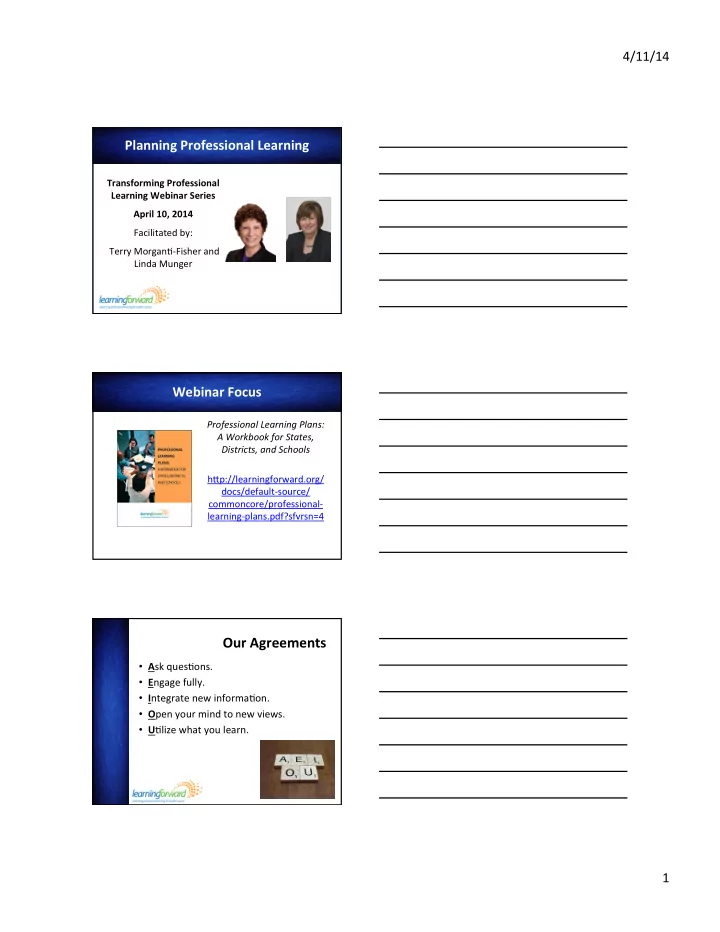
4/11/14 Planning Professional Learning Transforming Professional Learning Webinar Series April 10, 2014 Facilitated by: Terry Morgan6-Fisher and Linda


slide-1
SLIDE 1

4/11/14 ¡ 1 ¡

Transforming ¡Professional ¡ Learning ¡Webinar ¡Series ¡ April ¡10, ¡2014 ¡ Facilitated ¡by: ¡ ¡Terry ¡Morgan6-­‑Fisher ¡and ¡ Linda ¡Munger ¡ ¡

Planning ¡Professional ¡Learning ¡ Webinar ¡Focus ¡

Professional ¡Learning ¡Plans: ¡ A ¡Workbook ¡for ¡States, ¡ Districts, ¡and ¡Schools ¡ ¡ h<p://learningforward.org/ docs/default-­‑source/ commoncore/professional-­‑ learning-­‑plans.pdf?sfvrsn=4 ¡ ¡

Our ¡Agreements ¡

3 ¡

  • Ask ¡ques6ons. ¡
  • Engage ¡fully. ¡
  • Integrate ¡new ¡informa6on. ¡ ¡
  • Open ¡your ¡mind ¡to ¡new ¡views. ¡
  • U6lize ¡what ¡you ¡learn. ¡ ¡
slide-2
SLIDE 2

4/11/14 ¡ 2 ¡

Today’s ¡Outcomes ¡

4 ¡

  • Gain ¡a ¡deeper ¡understanding ¡of ¡the ¡steps ¡and ¡tasks ¡

for ¡developing ¡short-­‑ ¡and ¡long-­‑term ¡professional ¡ learning ¡plans. ¡

  • Explore ¡tools ¡to ¡use ¡in ¡developing ¡a ¡professional ¡

learning ¡plan ¡focused ¡on ¡specific ¡content, ¡learning ¡ designs, ¡implementa6on ¡support, ¡and ¡evalua6on ¡of ¡ professional ¡learning. ¡

Backmapping ¡Model ¡

5 ¡

Develop ¡Short-­‑ ¡and ¡Long-­‑term ¡Professional ¡ Learning ¡Plans ¡ Task ¡ Step ¡1. ¡ ¡Analyze ¡student ¡learning ¡needs. ¡

  • Gather ¡mul6ple ¡forms ¡of ¡student ¡data. ¡

Step ¡2. ¡ ¡Iden6fy ¡characteris6cs ¡of ¡ community, ¡district, ¡school, ¡department, ¡ and ¡staff. ¡

  • Analyze ¡the ¡data ¡to ¡iden6fy ¡trends, ¡

pa<erns, ¡and ¡areas ¡of ¡needed ¡

  • improvement. ¡
  • Gather ¡data ¡about ¡the ¡learning ¡context. ¡
  • Iden6fy ¡the ¡features ¡of ¡the ¡context ¡that ¡

influence ¡student ¡and ¡educator ¡learning. ¡

  • Iden6fy ¡poten6al ¡contributors ¡to ¡the ¡

current ¡state ¡of ¡student ¡learning. ¡

  • Write ¡SMART ¡goals ¡for ¡student ¡learning. ¡
  • Gather ¡data ¡about ¡educators. ¡

Developing ¡Professional ¡Learning ¡Plans ¡

Killion, ¡J. ¡(2013). ¡Professional ¡learning ¡plans: ¡A ¡workbook ¡for ¡states, ¡districts, ¡and ¡

  • schools. ¡Oxford, ¡OH: ¡Learning ¡Forward, ¡p. ¡6. ¡
slide-3
SLIDE 3

4/11/14 ¡ 3 ¡ Developing ¡Professional ¡Learning ¡Plans ¡

Killion, ¡J. ¡(2013). ¡Professional ¡learning ¡plans: ¡A ¡workbook ¡for ¡states, ¡districts, ¡and ¡

  • schools. ¡Oxford, ¡OH: ¡Learning ¡Forward, ¡p. ¡6. ¡

Develop ¡Short-­‑ ¡and ¡Long-­‑term ¡Professional ¡ Learning ¡Plans ¡ Task ¡ Step ¡3. ¡ ¡Develop ¡improvement ¡goals ¡and ¡ specific ¡student ¡outcomes. ¡

  • Review ¡research ¡and ¡evidence ¡on ¡

successful ¡professional ¡learning ¡ programs ¡or ¡prac6ces. ¡

  • Iden6fy ¡those ¡relevant ¡to ¡the ¡current ¡

goals ¡and ¡objec6ves. ¡ Step ¡4. ¡ ¡Iden6fy ¡educator ¡learning ¡needs ¡ and ¡develop ¡goals ¡and ¡objec6ves. ¡

  • Develop ¡educator ¡SMART ¡objec6ves. ¡
  • Develop ¡KASABs. ¡
  • Develop ¡logic ¡model. ¡

Step ¡5. ¡ ¡Study ¡research ¡for ¡specific ¡ professional ¡learning ¡programs, ¡strategies, ¡

  • r ¡interven6ons. ¡
  • Study ¡professional ¡learning ¡research ¡

related ¡to ¡goal ¡area ¡and ¡context ¡

  • features. ¡
  • Iden6fy ¡research-­‑ ¡or ¡evidence-­‑based ¡
  • prac6ces. ¡

Developing ¡Professional ¡Learning ¡Plans ¡

Killion, ¡J. ¡(2013). ¡Professional ¡learning ¡plans: ¡A ¡workbook ¡for ¡states, ¡districts, ¡and ¡

  • schools. ¡Oxford, ¡OH: ¡Learning ¡Forward, ¡p. ¡6. ¡

Develop ¡Short-­‑ ¡and ¡Long-­‑term ¡Professional ¡ Learning ¡Plans ¡ Task ¡ Step ¡6. ¡ ¡Plan ¡professional ¡learning ¡ implementa6on ¡and ¡evalua6on, ¡including ¡ establishing ¡a ¡logic ¡model ¡for ¡specific ¡ professional ¡learning ¡programs. ¡

  • Develop ¡theory ¡of ¡change ¡with ¡
  • assump6ons. ¡
  • Develop ¡logic ¡model. ¡

Step ¡7. ¡ ¡Implement, ¡evaluate, ¡and ¡sustain ¡ the ¡professional ¡learning. ¡

  • Enact ¡the ¡plan. ¡
  • Monitor ¡progress ¡and ¡adjust ¡as ¡needed. ¡
  • Evaluate ¡progress ¡and ¡results. ¡
  • Sustain ¡support ¡to ¡achieve ¡deep ¡

implementa6on ¡over ¡6me. ¡

Poll ¡QuesQons ¡

  • 1. Do ¡you ¡have ¡a ¡current ¡professional ¡learning ¡

plan ¡focused ¡on ¡specific ¡content, ¡learning ¡ designs, ¡implementa6on ¡support, ¡and ¡ evalua6on ¡of ¡professional ¡learning? ¡(yes/no) ¡

  • 2. On ¡which ¡of ¡the ¡seven ¡steps ¡of ¡the ¡

backmapping ¡model ¡do ¡you ¡feel ¡you ¡need ¡the ¡ most ¡support? ¡(Chat ¡response) ¡

slide-4
SLIDE 4

4/11/14 ¡ 4 ¡

PL ¡Plans ¡ ¡– ¡Core ¡Elements ¡

  • Needs ¡analysis ¡
  • Goal(s) ¡
  • Objec6ves ¡
  • Strategic ¡ac6ons/interven6ons ¡
  • Timeline ¡
  • Responsible ¡person(s) ¡
  • Indicators ¡of ¡success ¡
  • Measures ¡of ¡success ¡
  • Evalua6on ¡plan ¡
  • Resources ¡needed ¡

Killion, ¡J. ¡(2013). ¡Professional ¡learning ¡plans: ¡A ¡workbook ¡for ¡states, ¡ districts, ¡and ¡schools. ¡Oxford, ¡OH: ¡Learning ¡Forward, ¡pp. ¡7-­‑8. ¡ ¡

Tool ¡i ¡

Websites ¡to ¡sample ¡professional ¡learning ¡plans ¡

– Pages ¡51-­‑54 ¡ – Use ¡list ¡to ¡inves6gate ¡core ¡elements, ¡organiza6on, ¡ and ¡layout ¡of ¡professional ¡learning ¡plans ¡

Killion, ¡J. ¡(2013). ¡Professional ¡learning ¡plans: ¡A ¡workbook ¡for ¡ states, ¡districts, ¡and ¡schools. ¡Oxford, ¡OH: ¡Learning ¡Forward. ¡

Poll ¡QuesQons ¡

  • 1. To ¡what ¡degree ¡do ¡you ¡currently ¡iden6fy ¡needs ¡

based ¡on ¡data ¡to ¡study ¡what ¡might ¡be ¡causing ¡or ¡ contribu6ng ¡to ¡the ¡needs? ¡

  • 2. To ¡what ¡degree ¡do ¡you ¡currently ¡iden6fy ¡what ¡

changes ¡in ¡educators ¡need ¡to ¡occur ¡to ¡achieve ¡the ¡ goal(s) ¡stated ¡for ¡students? ¡

slide-5
SLIDE 5

4/11/14 ¡ 5 ¡

Poll ¡QuesQons ¡

  • 3. To ¡what ¡degree ¡do ¡you ¡currently ¡iden6fy ¡how ¡the ¡

data ¡or ¡evidence ¡will ¡be ¡collected ¡to ¡demonstrate ¡ the ¡indicators ¡of ¡success? ¡

  • 4. To ¡what ¡degree ¡do ¡you ¡currently ¡have ¡an ¡

evalua6on ¡plan ¡in ¡place ¡to ¡guide ¡data ¡collec6on ¡to ¡ determine ¡if ¡the ¡goals ¡and ¡objec6ves ¡were ¡ achieved, ¡if ¡the ¡strategic ¡ac6ons ¡and ¡interven6ons ¡ were ¡appropriate, ¡and ¡what ¡ ¡ ¡ ¡ ¡ ¡ ¡ ¡ ¡ ¡ ¡ ¡ ¡ ¡ ¡ ¡ ¡ ¡ improvements ¡are ¡needed? ¡

Seven ¡Step ¡Planning ¡Process ¡

  • Step ¡4 ¡– ¡Iden6fy ¡educator ¡learning ¡needs ¡and ¡

develop ¡goals ¡and ¡objec6ves ¡

  • Step ¡5 ¡– ¡Study ¡research ¡for ¡specific ¡professional ¡

learning ¡programs, ¡strategies, ¡or ¡interven6ons ¡

  • Step ¡6 ¡– ¡Plan ¡professional ¡learning ¡implementa6on ¡

and ¡evalua6on, ¡including ¡establishing ¡a ¡logic ¡model ¡ for ¡specific ¡professional ¡learning ¡programs ¡

Tool ¡4.1 ¡– ¡Sample ¡Educator ¡Learning ¡Goals ¡

Killion, ¡J. ¡(2013). ¡Professional ¡learning ¡plans: ¡A ¡workbook ¡for ¡states, ¡districts, ¡and ¡

  • schools. ¡Oxford, ¡OH: ¡Learning ¡Forward, ¡p. ¡81. ¡

Goal ¡

Improve ¡student ¡achievement ¡in ¡ra6onal ¡numbers ¡by ¡15% ¡on ¡annual ¡ mathema6cs ¡assessments ¡through ¡professional ¡learning ¡focused ¡on ¡ increasing ¡teachers’ ¡content ¡knowledge ¡and ¡content-­‑specific ¡

  • pedagogy. ¡

Type ¡of ¡Change ¡

Example ¡

Knowledge ¡

Understands ¡ra6onal ¡numbers ¡and ¡content-­‑specific ¡vocabulary ¡

Aktudes ¡

Believes ¡that ¡developing ¡students’ ¡understanding ¡of ¡ra6onal ¡ numbers ¡contributes ¡to ¡their ¡success ¡in ¡higher-­‑level ¡math, ¡high ¡ school ¡gradua6on, ¡and ¡college ¡and ¡career ¡readiness. ¡

Skill ¡

Uses ¡higher-­‑order ¡thinking ¡skills ¡to ¡elicit ¡students’ ¡understanding ¡of ¡ ra6onal ¡numbers ¡and ¡thinking ¡during ¡problem ¡solving. ¡

Aspira6on ¡

Desires ¡to ¡teach ¡all ¡students ¡to ¡succeed ¡in ¡higher-­‑level ¡math. ¡

Behavior ¡

Applies ¡effec6ve ¡ques6oning ¡skills ¡in ¡math ¡instruc6on ¡to ¡elicit ¡ student ¡thinking ¡during ¡problem ¡solving. ¡

slide-6
SLIDE 6

4/11/14 ¡ 6 ¡

Tool ¡4.1 ¡– ¡Sample ¡Educator ¡Learning ¡Goals ¡

Killion, ¡J. ¡(2013). ¡Professional ¡learning ¡plans: ¡A ¡workbook ¡for ¡states, ¡districts, ¡and ¡

  • schools. ¡Oxford, ¡OH: ¡Learning ¡Forward, ¡p. ¡6. ¡

Student ¡Learning ¡Goal: ¡Improve ¡student ¡achievement ¡in ¡ra6onal ¡numbers ¡by ¡ 15% ¡on ¡annual ¡mathema6cs ¡assessments ¡through ¡professional ¡learning ¡ focused ¡on ¡increasing ¡teachers’ ¡content ¡knowledge ¡and ¡content-­‑specific ¡

  • pedagogy. ¡

¡ Educator ¡Learning ¡Goals/ObjecQves: ¡ ¡ – Increase ¡teachers’ ¡content ¡knowledge ¡and ¡precision ¡in ¡content ¡ vocabulary ¡related ¡to ¡ra6onal ¡numbers ¡as ¡evident ¡in ¡lesson ¡plans ¡and ¡ instruc6onal ¡materials. ¡KNOWLEDGE ¡ – Increase ¡teachers’ ¡accuracy ¡and ¡frequency ¡of ¡use ¡of ¡ques6oning ¡ strategies ¡in ¡math ¡instruc6on ¡by ¡at ¡least ¡two ¡levels ¡as ¡described ¡in ¡the ¡ Innova6on ¡Configura6on ¡(IC) ¡maps. ¡SKILLS, ¡ATTITUDES, ¡ASPIRATIONS, ¡ AND ¡BEHAVIOR ¡

Let’s ¡Discuss! ¡

To ¡what ¡degree ¡do ¡you ¡currently ¡iden6fy ¡ educator ¡needs ¡and ¡goals ¡to ¡focus ¡educator ¡ learning ¡to ¡achieve ¡student ¡learning ¡goal(s)? ¡

Step ¡5: ¡Study ¡Research ¡and ¡Evidence ¡for ¡ Guidance ¡About ¡Professional ¡Learning ¡ ¡ ¡

Learning ¡Designs ¡Standard: ¡Professional ¡ learning ¡that ¡increases ¡educator ¡ effec6veness ¡and ¡results ¡for ¡all ¡students ¡ integrates ¡theories, ¡research, ¡and ¡models ¡of ¡ human ¡learning ¡to ¡achieve ¡its ¡intended ¡

  • utcomes. ¡

Killion, ¡J. ¡(2013). ¡Professional ¡learning ¡plans: ¡A ¡workbook ¡for ¡ states, ¡districts, ¡and ¡schools. ¡Oxford, ¡OH: ¡Learning ¡Forward, ¡p. ¡23. ¡

slide-7
SLIDE 7

4/11/14 ¡ 7 ¡ QuesQons ¡to ¡Guide ¡SelecQng ¡ Learning ¡Designs ¡

  • What ¡factors ¡are ¡important ¡to ¡consider ¡when ¡selec6ng ¡

learning ¡designs? ¡

  • Which ¡learning ¡designs ¡require ¡ac6ve ¡engagement? ¡
  • How ¡will ¡the ¡selec6on ¡of ¡learning ¡designs ¡influence ¡the ¡

degree ¡of ¡implementa6on? ¡

  • Which ¡learning ¡designs ¡are ¡more ¡likely ¡to ¡promote ¡

implementa6on ¡in ¡which ¡contexts? ¡

  • Which ¡learning ¡designs ¡are ¡more ¡appropriate ¡for ¡various ¡

levels ¡of ¡use ¡(i.e. ¡nonuser, ¡novice, ¡proficient, ¡expert)? ¡

E-­‑Learning ¡Program ¡– ¡Standards ¡into ¡Prac6ce: ¡IC ¡Maps, ¡Spring ¡2013 ¡

Tool ¡5.2 ¡– ¡SelecQng ¡the ¡Design ¡That ¡Works ¡

Killion, ¡J. ¡(2013). ¡Professional ¡learning ¡plans: ¡A ¡workbook ¡for ¡states, ¡districts, ¡and ¡

  • schools. ¡Oxford, ¡OH: ¡Learning ¡Forward, ¡p. ¡89 ¡

Tool ¡5.2 ¡– ¡SelecQng ¡the ¡Design ¡That ¡Works ¡

Killion, ¡J. ¡(2013). ¡Professional ¡learning ¡plans: ¡A ¡workbook ¡for ¡states, ¡districts, ¡and ¡

  • schools. ¡Oxford, ¡OH: ¡Learning ¡Forward, ¡p. ¡90. ¡
slide-8
SLIDE 8

4/11/14 ¡ 8 ¡

Let’s ¡Discuss! ¡

To ¡what ¡degree ¡do ¡you ¡currently ¡study ¡poten6al ¡ professional ¡learning ¡programs ¡or ¡learning ¡ designs ¡before ¡launching ¡a ¡new ¡ini6a6ve? ¡

Plan ¡Professional ¡Learning: ¡ ImplementaQon ¡and ¡EvaluaQon ¡

  • The ¡theory ¡of ¡change ¡maps ¡how ¡change ¡will ¡
  • ccur ¡over ¡Bme. ¡. ¡. ¡. ¡It ¡is ¡an ¡if-­‑then ¡thinking ¡

process ¡that ¡shows ¡the ¡logic ¡behind ¡the ¡ acBons ¡planned. ¡

  • A ¡logic ¡model ¡maps ¡and ¡predicts ¡the ¡intended ¡

changes ¡that ¡occur ¡over ¡Bme ¡from ¡outputs ¡to ¡ short-­‑ ¡and ¡long-­‑term ¡outcomes ¡for ¡educators ¡ and ¡results ¡for ¡students. ¡

Killion, ¡J. ¡(2013). ¡Professional ¡learning ¡plans: ¡A ¡workbook ¡for ¡states, ¡districts, ¡and ¡

  • schools. ¡Oxford, ¡OH: ¡Learning ¡Forward, ¡p. ¡26. ¡

General ¡Theory ¡of ¡Change ¡

Killion, ¡J. ¡(2013). ¡Professional ¡learning ¡plans: ¡A ¡workbook ¡for ¡states, ¡districts, ¡and ¡

  • schools. ¡Oxford, ¡OH: ¡Learning ¡Forward, ¡p. ¡26 ¡

Teachers ¡ engage ¡in ¡ standards-­‑ based ¡ professional ¡

  • learning. ¡

Teachers ¡ apply ¡their ¡ learning ¡and ¡ receive ¡ feedback ¡and ¡ support ¡to ¡ refine ¡and ¡ strengthen ¡ their ¡pracQce. ¡ Teacher ¡ applicaQon ¡of ¡ pracQce ¡ changes ¡ student ¡ learning ¡

  • experiences. ¡

¡ ¡ ¡ Changes ¡in ¡ student ¡ learning ¡ experiences ¡ posiQvely ¡ impact ¡ student ¡

  • learning. ¡

¡ ¡ ¡

slide-9
SLIDE 9

4/11/14 ¡ 9 ¡

Logic ¡Model ¡

Killion, ¡J. ¡(2013). ¡Professional ¡learning ¡plans: ¡A ¡workbook ¡for ¡states, ¡districts, ¡and ¡

  • schools. ¡Oxford, ¡OH: ¡Learning ¡Forward, ¡p. ¡27 ¡

Killion, ¡J. ¡(2013). ¡Professional ¡learning ¡plans: ¡A ¡workbook ¡for ¡ states, ¡districts, ¡and ¡schools. ¡Oxford, ¡OH: ¡Learning ¡Forward, ¡p. ¡32. ¡

EsQmated ¡Percentage ¡of ¡Achievement ¡of ¡Various ¡ Professional ¡Learning ¡Associated ¡with ¡Learning ¡Designs ¡

Professional ¡Learning ¡ Designs ¡ Knowledge ¡Level ¡ (understand ¡the ¡ content) ¡ Skill ¡Abainment ¡ (demonstrate ¡ proficiency ¡in ¡prac6ce) ¡ Presenta6on ¡of ¡theory ¡ 10 ¡ 5 ¡ Demonstra6on ¡of ¡ learning ¡ 30 ¡ 20 ¡ Prac6ce ¡of ¡learning ¡ 60 ¡ 60 ¡ Coaching ¡and ¡other ¡ forms ¡of ¡workplace-­‑ specific ¡support ¡ 80 ¡ 95 ¡

Source: ¡Student ¡achievement ¡through ¡staff ¡development ¡(3rd ¡edi6on) ¡by ¡B. ¡Joyce ¡& ¡B. ¡Showers, ¡p. ¡78. ¡

Tool ¡6.6 ¡– ¡Sample ¡EvaluaQon ¡QuesQons ¡& ¡Evidence ¡

Goals/ObjecQves ¡ EvaluaQon ¡QuesQons ¡ Evidence ¡

Student ¡Learning ¡Goal: ¡Improve ¡ student ¡achievement ¡in ¡ra6onal ¡ numbers ¡by ¡15% ¡on ¡annual ¡ mathema6cs ¡assessments ¡ through ¡professional ¡learning ¡ focused ¡on ¡increasing ¡teachers’ ¡ content ¡knowledge ¡and ¡content-­‑ specific ¡pedagogy. ¡

  • Did ¡student ¡achievement ¡in ¡

ra6onal ¡numbers ¡increase ¡by ¡15% ¡ from ¡the ¡previous ¡year’s ¡scores ¡on ¡ the ¡annual ¡mathema6cs ¡ assessment? ¡

  • Did ¡achievement ¡for ¡all ¡student ¡

subgroups ¡increase ¡by ¡15% ¡or ¡ more? ¡

  • Aggregated ¡and ¡disaggregated ¡

student ¡scores ¡on ¡the ¡previous ¡ and ¡current ¡year’s ¡annual ¡ mathema6cs ¡assessment. ¡ Educator ¡Learning ¡Goal: ¡Increase ¡ teachers’ ¡content ¡knowledge ¡and ¡ precision ¡in ¡content ¡vocabulary ¡ related ¡to ¡ra6onal ¡numbers ¡as ¡ evident ¡in ¡lesson ¡plans ¡and ¡ instruc6onal ¡materials. ¡

  • Did ¡teachers’ ¡understanding ¡of ¡

ra6onal ¡numbers ¡increase ¡by ¡at ¡ least ¡20% ¡as ¡measured ¡by ¡an ¡ analysis ¡of ¡lesson ¡plans ¡and ¡ instruc6onal ¡materials? ¡

  • Pre-­‑ ¡and ¡post-­‑lesson ¡plans ¡and ¡

instruc6onal ¡materials ¡(student ¡ assignments, ¡forma6ve ¡ assessments, ¡displays, ¡etc.) ¡ analyzed ¡using ¡a ¡rubric. ¡ Educator ¡Learning ¡Goal: ¡Increase ¡ teachers’ ¡accuracy ¡and ¡frequency ¡

  • f ¡use ¡of ¡ques6oning ¡strategies ¡in ¡

math ¡instruc6on ¡by ¡at ¡least ¡two ¡ levels ¡as ¡described ¡in ¡the ¡IC ¡

  • maps. ¡
  • Are ¡teachers ¡demonstra6ng ¡

accurate ¡and ¡frequent ¡use ¡of ¡ ques6oning ¡techniques ¡in ¡their ¡ daily ¡instruc6on ¡as ¡described ¡in ¡the ¡ IC ¡maps? ¡

  • Trend ¡analysis ¡of ¡principal ¡walk-­‑

through, ¡peer ¡observa6on, ¡and ¡ coaching ¡observa6on ¡data ¡using ¡ the ¡IC ¡maps ¡as ¡the ¡criteria ¡for ¡

  • bserva6ons ¡
  • Teacher ¡pre-­‑ ¡and ¡post-­‑self-­‑

assessments ¡using ¡the ¡IC ¡map. ¡ Killion, ¡J. ¡(2013). ¡Professional ¡learning ¡plans: ¡A ¡workbook ¡for ¡states, ¡districts, ¡ and ¡schools. ¡Oxford, ¡OH: ¡Learning ¡Forward, ¡p. ¡118. ¡
slide-10
SLIDE 10

4/11/14 ¡ 10 ¡ ReflecQon ¡– ¡Say ¡Something ¡Protocol ¡

  • Something ¡I ¡agree ¡with ¡. ¡. ¡. ¡
  • Something ¡that ¡puzzles ¡me ¡. ¡. ¡. ¡
  • A ¡new ¡idea ¡. ¡. ¡. ¡
  • Something ¡I ¡disagree ¡with ¡. ¡. ¡. ¡
  • Something ¡I ¡want ¡to ¡talk ¡more ¡about ¡with ¡
  • thers ¡. ¡. ¡. ¡ ¡

¡

¡Munger, ¡L. ¡& ¡von ¡Frank,V. ¡(2010). ¡Change, ¡Lead, ¡Succeed, ¡p. ¡96. ¡

Next ¡Steps ¡

  • Con6nue ¡the ¡conversa6on ¡
  • h<p://community.learningforward.org ¡
  • Email ¡us! ¡

– terry.morgan6-­‑fisher@learningforward.org ¡ – linda.munger@learningforward.org ¡

¡