Optimizing the Management of Acute Myeloid Leukemia: Individualized - - PDF document

optimizing the management of acute myeloid leukemia
SMART_READER_LITE
LIVE PREVIEW

Optimizing the Management of Acute Myeloid Leukemia: Individualized - - PDF document

Optimizing the Management of Acute Myeloid Leukemia: Individualized Therapy Optimizing the Management of Acute Myeloid Leukemia: Individualized Therapy 1 Learning Objectives Describe diagnostic testing for risk stratification in AML and


slide-1
SLIDE 1

Optimizing the Management of Acute Myeloid Leukemia: Individualized Therapy

1 2020 Spring PCE Oncology Series

Optimizing the Management

  • f Acute Myeloid Leukemia:

Individualized Therapy

2

  • Describe diagnostic testing for risk stratification in AML and the role of cytogenetic

and molecular factors in treatment selection

  • Identify individualized AML treatment approaches based on efficacy and safety

data, as well as patient- and disease-related characteristics

  • Implement strategies to recognize, monitor, and manage toxicities associated with

new agents used in the treatment of AML

Learning Objectives

AML = acute myeloid leukemia. 3

  • Heterogeneous hematologic malignancy

‒ Accounts for largest number of annual deaths from leukemia in the United States ‒ Survival influenced by biological features of the disease and patient age

AML: Most Common Form of Acute Leukemia in Adults

American Cancer Society. www.cancer.org/cancer/acute-myeloid-leukemia/about/key-statistics.html. Accessed Mar 20, 2020; National Cancer

  • Institute. seer.cancer.gov/statfacts/html/amyl.html. Accessed Mar 20, 2020; NCCN Guidelines. Acute myeloid leukemia.

www.nccn.org/professionals/physician_gls/pdf/aml.pdf. Accessed Mar 20, 2020.

5

1992 2003 2016

Year New cases Deaths Number per 100,000 Persons

Estimated New Cases in 2020 % of All New Cancer Cases Estimated Deaths in 2020 % of All Cancer Deaths 19,940 1.2% 11,180 1.8% 5-Year Survival (2009-2015)

28.3%

1 2 3

slide-2
SLIDE 2

Optimizing the Management of Acute Myeloid Leukemia: Individualized Therapy

2 2020 Spring PCE Oncology Series

4

  • Most frequently diagnosed in people aged 65 to 74

years ‒ Median age at diagnosis: 68 years ‒ ~1/3 of patients with newly diagnosed AML are ≥75 years of age

  • Slightly more common in men than in women
  • Lifetime risk: ~0.5% in both sexes

‒ De novo ‒ Secondary

  • AML-MRC
  • Therapy-related
  • Poor prognosis in people aged 75 to 84 years due

to adverse patient characteristics and comorbidities

AML Incidence Increases With Age

AML-MRC = AML with myelodysplasia-related changes. Granfeldt Østgård LS, et al. J Clin Oncol. 2015;31:3641-3649; Klepin HD, et al. Am Soc Clin Oncol Educ Book. 2019;39:421-432; National Cancer

  • Institute. seer.cancer.gov/statfacts/html/amyl.html. Accessed Mar 20, 2020; Vardiman JW, et al. Blood. 2009;114:937-951.

<20 20-34 35-44 45-54 55-64 65-74 75-84 >84 Age, Years 30 25 20 15 10 5 New Cases (%) 5.3%

New AML Cases by Age Group

5.7% 4.5% 9.1% 16.8% 25.1% 22.7% 11.0%

5 CR = complete response; R/R = relapsed or refractory. NCCN Guidelines. Acute myeloid leukemia. www.nccn.org/professionals/physician_gls/pdf/aml.pdf. Accessed Mar 20, 2020.

AML Treatment Paradigm and Goals

Risk Stratify

  • Performance

status, age, comorbidities

  • Preexisting

myelodysplasia

  • Prior cytotoxic

therapy

  • Cytogenetics
  • Genomic mutations

Induction Therapy Goal:

  • Achieve CR

Consolidation Chemotherapy Goals:

  • Prevent recurrence
  • Bridge to transplant

R/R Therapy/Clinical Trial Goal: Achieve CR Nonintensive Therapy Goals:

  • Stable disease
  • Slow disease progression

Relapse Risk Stratify

  • Performance status,

age, comorbidities

  • Cytogenetics
  • Genomic mutations

Allogeneic HSCT Goal

  • Cure

Relapse (6-9 months)

  • r Refractory

Low Intensity Therapy Goal:

  • Achieve CR or

stable disease

6 Lipof JJ, et al. Cancers. 2018;10:179.

Allogeneic HSCT

  • Allogeneic HSCT is a potentially curative therapy that may be used in patients with

intermediate- or high-risk AML who have a suitable donor source and are considered to be good candidates

  • Historically, older patients with AML have not been considered for allogeneic HSCT

due to the presence of comorbidities and the perceived risk of increased mortality

  • Reduced intensity and non-myeloablative conditioning regimens have enabled the

use of allogeneic HSCT in a greater number of older patients with AML

  • Recent data support the use of allogeneic HSCT in selected, fit, older patients with

AML after intensive chemotherapy; however, the number of older patients who receive allogeneic HSCT remains low

4 5 6

slide-3
SLIDE 3

Optimizing the Management of Acute Myeloid Leukemia: Individualized Therapy

3 2020 Spring PCE Oncology Series

7

Individualizing Treatment Goals in AML

EXAMPLE:

  • Novel low-intensity induction regimens may provide patients ≥75 years old and those who

have comorbidities with the goal of a complete response BUT:

  • Stable disease may be a reasonable therapeutic goal for some patients such as those

who are elderly and/or frail BUT:

  • Patients may request high-intensity induction regimens and/or potentially curative,

allogeneic HSCT regardless of age, performance status, and comorbidities

NCCN Guidelines. Acute myeloid leukemia. www.nccn.org/professionals/physician_gls/pdf/aml.pdf. Accessed Mar 20, 2020. 8

Recently Approved Targeted Therapy for AML

Drug Description Indication Midostaurin Multikinase inhibitor with inhibitory activity against FLT3-ITD and FLT3- TKD mutations

  • Adults with newly diagnosed FLT3-mutated AML

in combination with standard cytarabine and daunorubicin induction therapy and cytarabine consolidation therapy Gilteritinib Inhibitor of multiple receptor tyrosine kinases, including FLT3

  • Adults with R/R FLT3-mutated AML

Enasidenib Oral IDH2 inhibitor

  • Adults with R/R IDH2-mutated AML

Ivosidenib Oral IDH1 inhibitor

  • AML with a susceptible IDH1 mutation in:

⎻ Adults with newly diagnosed AML who are aged ≥75 years or who have comorbidities that preclude the use of intensive induction chemotherapy ⎻ Adults with R/R AML

TKD = tyrosine kinase domain. Idhifa [prescribing information]. Celgene Corporation; 2019; Rydapt [prescribing information]. Novartis Pharmaceuticals; 2019; Tibsovo [prescribing information]. Agios Pharmaceuticals, Inc; 2019; Xospata [prescribing information]. Astellas Pharma US, Inc.;2019. 9

Recently Approved Novel Agents for AML

Drug Description Indication Gemtuzumab

  • zogamicin

CD33-directed antibody- drug conjugate

  • Adults with newly diagnosed CD33-positive AML (in combination with

daunorubicin and cytarabine or as a single-agent regimen)

  • R/R CD33-positive AML in adults and in pediatric patients aged ≥2

years Glasdegib Hedgehog pathway inhibitor

  • Newly diagnosed AML in combination with LDAC in adults who are

aged ≥75 years or who have comorbidities that preclude the use of intensive induction chemotherapy Venetoclax BCL-2 inhibitor

  • Newly diagnosed AML in combination with azacitidine, decitabine, or

LDAC in adults who are aged ≥75 years or who have comorbidities that preclude intensive induction chemotherapy CPX-351 Liposomal combination of daunorubicin and cytarabine

  • Adults with newly diagnosed therapy-related AML or AML-MRC

BCL-2 = B-cell lymphoma 2; LDAC = low-dose cytarabine. Daurismo [prescribing information]. Pfizer Inc; 2020; Mylotarg [prescribing information]. Pfizer Inc; 2018; Venclexta [prescribing information]. AbbVie Inc; 2019; Vyxeos [prescribing information]. Jazz Pharmaceuticals; 2019.

7 8 9

slide-4
SLIDE 4

Optimizing the Management of Acute Myeloid Leukemia: Individualized Therapy

4 2020 Spring PCE Oncology Series

10

  • Presents to ED complaining of

extreme fatigue and abrupt onset of shortness of breath

  • 2-week history of worsening exercise

tolerance

  • No significant past medical history
  • Enjoys bicycling, swimming, and

painting

Case Study 1: Tom, 58 Years Old

Hgb = hemoglobin.

  • Laboratory results:

– WBCs: 120,000 cells/mm3 – Hgb: 6.9 g/dL – Platelets: 27,000/mm3 – Blasts: 47%

  • Admitted to hospital for further

testing

11

Diagnostic Testing and Karyotyping for Risk Stratification

  • Bone marrow core biopsy and aspirate analysis, including immunophenotyping and cytochemistry
  • Molecular analyses: FLT3 (ITD and TKD), NPM1, CEBPA, IDH1, IDH2, TP53, c-KIT, RUNX1, ASXL1
  • Karyotyping is an important prognostic factor for predicting remission rates, relapse risk, and OS

‒ Complex karyotype: independent unfavorable risk factor

  • With each additional karyotype abnormality, the risk of failing to achieve CR increases
  • SWOG analysis:
  • Complex cytogenetics without involvement of chromosome 5 or 7:

CR 50%; OS 20%

  • Complex cytogenetics + involvement of chromosome 5 or 7:

CR 37%; OS 3% ‒ Monosomal karyotype: very poor prognosis

  • 4-year OS 4%

OS = overall survival; SWOG = Southwest Oncology Group. NCCN Guidelines. Acute myeloid leukemia. www.nccn.org/professionals/physician_gls/pdf/aml.pdf. Accessed Mar 20, 2020; Orozco JJ, et al. Oncology (Williston Park). 2012;26:706-712; Slovak ML, et al. Blood. 2000;96:4075-4083; Xu J, et al. Turk J Haematol. 2017;34:126-130. 12

AML Disease Prognosis Influenced by Genetic Abnormalities

NCCN Guidelines. Acute myeloid leukemia. www.nccn.org/professionals/physician_gls/pdf/aml.pdf. Accessed Mar 20, 2020. Risk Category Genetic Abnormality 5-Year Survival Favorable

  • t(8;21)(q22;q22.1); RUNX1-RUNX1T1
  • inv(16)(p13.1q22) or t(16;16)(p13.1;q22); CBFB-MYH11
  • Mutated NPM1 without FLT3-ITD or with FLT3-ITDlow
  • Biallelic mutated CEBPA

34% to 65% Intermediate

  • Mutated NPM1 and FLT3-ITDhigh
  • Wild-type NPM1 without FLT3-ITD or with FLT3-ITDlow (without adverse-risk genetic lesions)
  • t(9;11)(p21.3;q23.3); MLLT3-KMT2A
  • Cytogenetic abnormalities not classified as favorable or adverse

13% to 41% Poor/Adverse

  • t(6;9)(p23;q34.1); DEK-NUP214
  • t(9;22)(q34.1;q11.2); BCR-ABL1
  • inv(3)(q21.3q26.2) or t(3;3)(q21.3;q26.2);

GATA2,MECOM(EVI1)

  • –5 or del(5q); –7; –17/abn(17p)
  • Complex karyotype, monosomal karyotype
  • t(v;11q23.3); KMT2A rearranged
  • Wild-type NPM1 and FLT3-ITDhigh
  • Mutated RUNX1
  • Mutated ASXL1

Mutated TP53 2% to 14%

10 11 12

slide-5
SLIDE 5

Optimizing the Management of Acute Myeloid Leukemia: Individualized Therapy

5 2020 Spring PCE Oncology Series

13

  • MRCs are characterized by a history of myelodysplastic syndrome (MDS),

significant morphologic dysplasia, or MDS-related cytogenetic features

  • Patients with MRCs have a worse prognosis
  • Can occur in patients with or without a history of MDS or myeloproliferative

neoplasms (MPN)

  • Also includes AML with morphologic features or cytogenetic abnormalities

characteristic of MDS

MRCs in AML

National Cancer Institute. www.cancer.gov/publications/dictionaries/cancer-terms/def/aml-mrc. Accessed Mar 20, 2020; NCCN Guidelines. Acute myeloid leukemia. www.nccn.org/professionals/physician_gls/pdf/aml.pdf. Accessed Mar 20, 2020. 14

Optimizing Testing

  • Communication between clinician and pathologist ensures necessary testing

‒ Pertinent patient history

  • Prior hematologic disorder or known predisposing conditions
  • Prior malignancy
  • Exposure to cytotoxic therapy, immunotherapy, radiotherapy, or other

possibly toxic substances

  • Presence or absence of MRC

‒ Comprehensive genomic profiling at diagnosis for disease classification, risk stratification, prognosis, and treatment selection

NCCN Guidelines. Acute myeloid leukemia. www.nccn.org/professionals/physician_gls/pdf/aml.pdf. Accessed Mar 20, 2020. Waterhouse M, et al. Biol Blood Marrow Transplant. 2011;17:1450-1459. 15

  • ECOG PS: 1
  • Cytogenetics: diploid karyotype 46,XY[20]
  • Bone marrow core biopsy: hypercellular marrow (90% cellularity)

with 56% myeloblasts

  • Flow cytometry: CD33+/CD117+/HLA-DR+/MPO+/CD34−
  • Molecular studies:

‒ Wild-type CEBPA and NPM1 ‒ FLT3-ITD/wildtype allelic ratio of 0.55

Case Study (cont’d): Tom’s Test Results

ECOG PS = Eastern Cooperative Oncology Group performance status.

13 14 15

slide-6
SLIDE 6

Optimizing the Management of Acute Myeloid Leukemia: Individualized Therapy

6 2020 Spring PCE Oncology Series

16

RATIFY: Frontline Standard 7+3 ± Midostaurin in FLT3-ITD and FLT3-TKD Mutated Disease

CI = confidence interval; NR = not reported. Rydapt [prescribing information]. Novartis Pharmaceuticals; 2019; Stone RM, et al. N Engl J Med. 2017;377:454-464.

Median OS: Months (95% CI)

100 80 60 40 20 Probability of Survival (%) 24 12 48 36 72 60 90 84 Midostaurin Placebo 74.7 (31.5-NR) 25.6 (18.6-42.9) 1-sided P = .009 by stratified log-rank test Months Midostaurin Placebo 360 357 269 221 208 163 181 147 151 129 97 80 37 30 1 1 Patients at Risk, n Midostaurin Placebo Complete remission by day 60 59% 53% Event-free survival (EFS) 8 months 3 months 4-year OS 51% 44%

Midostaurin is indicated for use in patients with FLT3-mutated AML in combination with standard cytarabine and daunorubicin induction therapy and cytarabine consolidation therapy.

17

  • Because Tom has a FLT3-ITD mutation, induction chemotherapy is initiated

with 7+3 (daunorubicin 60 mg/m2) and midostaurin 50 mg orally twice a day

  • n days 8 to 21

Case Study (cont’d)

18

  • No statistically significant differences in grade 5 AEs between midostaurin and placebo

‒ Significantly more grade ≥3 anemia and rash vs placebo ‒ Significantly more nausea with placebo

  • AEs with 7+3 and midostaurin: febrile neutropenia, nausea, mucositis, vomiting, headache,

petechiae, musculoskeletal pain, epistaxis, device-related infection, hyperglycemia, and upper respiratory tract infection

  • Administer prophylactic antiemetics before treatment with midostaurin
  • Instruct patients to take with food; do not open or crush capsules
  • Consider interval assessments of QT if taken concurrently with medications that can prolong

the QT interval

Standard 7+3 ± Midostaurin: AEs

AE = adverse event. Cessna MH, et al. www.hematology.org/Clinicians/Guidelines-Quality/Quick-Reference.aspx. Accessed Mar 20, 2020; NCCN Guidelines. Acute myeloid leukemia. www.nccn.org/professionals/physician_gls/pdf/aml.pdf. Accessed Mar 20, 2020; Rydapt [prescribing Information]. Novartis; 2019; Stone RM, et al. Blood. 2015;126:6; Stone RM, et al. N Engl J Med. 2017;377:454-464.

16 17 18

slide-7
SLIDE 7

Optimizing the Management of Acute Myeloid Leukemia: Individualized Therapy

7 2020 Spring PCE Oncology Series

19

  • Approved for newly diagnosed and R/R

CD33+ AML ‒ May be used in combination with 7+3

  • r as monotherapy in certain patients
  • Meta-analysis of 5 randomized

controlled trials (N = 3325)

  • Absolute survival benefit at 6 years

especially apparent in patients with favorable cytogenetic characteristics

Gemtuzumab Ozogamicin + Chemotherapy: OS by Risk Category

GO = gemtuzumab ozogamicin; SD = standard deviation. Hill RK, et al. Lancet Oncol. 2014;15:986-996; Mylotarg [prescribing information]. Pfizer Inc; 2018. 77.5% Annual event rates: GO No GO Years 1 to 5 5.8% SD 1.1 14.1% SD 1.9 Years 6+ 2.3% SD 1.3 0.0% SD 0.0 Estimated % Still Alive Years 100 80 60 40 20 1 2 3 4 5 6+

Deaths/person-years: Favorable cytogenics GO No GO 12/117 20/109 7/104 18/93 6/93 10/76 1/81 5/61 1/70 1/45 3/129 0/84

20.7% SD 6.5 (log-rank P = .0006) – allocated GO (% ± SD) – allocated No GO (% ± SD) 75.5% 55.0% 54.8% 20

  • Prescribing information carries a boxed warning for hepatotoxicity, including severe or fatal VOD,

also known as sinusoidal obstruction syndrome

  • VOD risk higher in patients:

‒ With moderate or severe hepatic impairment prior to receiving gemtuzumab ozogamicin ‒ Treated with gemtuzumab ozogamicin before or after HSCT

  • Assess ALT, AST, total bilirubin, and alkaline phosphatase prior to each dose
  • After treatment, monitor frequently for VOD signs/symptoms

‒ Elevations in ALT, AST, and total bilirubin ‒ Hepatomegaly ‒ Rapid weight gain ‒ Ascites

Gemtuzumab Ozogamicin: AEs

ALT = alanine transaminase; AST = aspartate aminotransferase; VOD = veno-occlusive disease. Hill RK, et al. Lancet Oncol. 2014;15:986-996; Mylotarg [prescribing information]. Pfizer Inc; 2018. 21

CPX-351: Median OS in Newly Diagnosed Older Patients With High-risk Secondary AML

Lancet JE, et al. J Clin Oncol. 2018;36:2684-2692.

  • Approved for newly diagnosed, therapy-

related, or AML-MRC

  • Improved OS vs standard 7+3 in older

patients with high-risk secondary AML

  • Better outcomes after allogeneic HSCT

in older patients with high-risk AML, including 53% fewer deaths within 100 days of transplant

OS (%) Time Since Random Assignment (months)

  • No. at risk

CPX-351 153 122 92 79 62 46 34 21 16 11 5 1 7+3 156 110 77 56 43 31 20 12 7 3 2 0 Events/No.

  • f patients

Median survival (95% Cl), months CPX-351 104/153 9.56 (6.60 to 11.86) 7+3 132/156 5.95 (4.99 to 7.75) HR, 0.69 One-sided P = .003 0 3 6 9 12 15 18 21 24 27 30 33 36 100 80 60 40 20

19 20 21

slide-8
SLIDE 8

Optimizing the Management of Acute Myeloid Leukemia: Individualized Therapy

8 2020 Spring PCE Oncology Series

22

  • Reported AEs are generally consistent with the known safety profile of

cytarabine and daunorubicin therapy

  • Boxed warning against interchanging with other products containing

daunorubicin or cytarabine

  • Associated with delayed neutrophil and platelet count recovery of

6 to 7 days

  • Administered as 90-minute infusion; potential to be given in outpatient

setting

CPX-351: AEs

Lancet JE, et al. Blood. 2016;128:906; Lancet JE, et al. J Clin Oncol. 2016;34(15 Suppl):7000. US Food and Drug Administration. www.fda.gov/newsevents/newsroom/pressannouncements/ucm569883.htm. Accessed March 20, 2020; Vyxeos [prescribing information]. Jazz Pharmaceuticals; 2019. 23

  • After treatment with 7+3 and midostaurin, Tom achieves a CR as assessed

by repeat bone marrow biopsy following recovery of blood count

  • Manageable side effects

− Myelosuppression managed with transfusions, growth factors − Nausea and vomiting managed with antiemetic combinations

  • Tom is sent for allogeneic HSCT

Case Conclusion

24

  • History of AML

‒ CR 4 months ago following 1 cycle of cytarabine with idarubicin and 3 cycles of intermediate-dose cytarabine for consolidation

  • Presents with extreme fatigue and pallor, sudden onset of shortness of breath

‒ ECOG PS: 2 ‒ Comorbid COPD

  • Complete blood count:

‒ WBCs: 1300 cells/mm3; absolute neutrophils: 570 cells/mcL; Hgb: 8.3 g/dL; platelets: 95,000/mm3

  • Bone marrow biopsy consistent with relapse

‒ 80% cellular with 16% myeloblasts

Case Study 2: Edith, 68 Years Old

22 23 24

slide-9
SLIDE 9

Optimizing the Management of Acute Myeloid Leukemia: Individualized Therapy

9 2020 Spring PCE Oncology Series

25

  • Molecular studies:

‒ IDH1 mutation-positive ‒ FLT3 negative ‒ NPM1 negative

  • Cytogenetics: 46,XX[20]

Case Study (cont’d): Edith’s Test Results

26

Ivosidenib

  • First-in-class oral targeted IDH1 inhibitor for R/R AML
  • Also approved for newly diagnosed adults aged ≥75 years or

with comorbidities precluding intensive induction chemotherapy

  • Single-arm trial in adult patients with R/R AML and

IDH1 mutation

  • 24.7% of 174 patients achieved CR

‒ 8.0% experienced CRh

  • Boxed warning: IDH-DS
  • Most common AEs of any grade:

‒ Fatigue, leukocytosis, arthralgia, diarrhea, dyspnea, edema, nausea, mucositis, ECG QT prolongation, rash, pyrexia, cough, constipation

Targeting IDH Mutations: Ivosidenib and Enasidenib in R/R AML

CRh = complete remission with partial hematologic recovery; CRi = complete remission with incomplete hematologic recovery; CRp = complete remission with incomplete platelet recovery. DiNardo CD, et al. N Engl J Med. 2018;378:2386-2398; Idhifa [prescribing information]. Celgene Corporation; 2019; Stein EM, et al. Blood. 2017;130:722-731; Tibsovo [prescribing information]. Agios Pharmaceuticals; 2019.

Enasidenib

  • First-in-class oral targeted IDH2 inhibitor for R/R AML
  • Single-arm trial in adult patients with R/R AML and

IDH2 mutation

  • 19.3% of 176 patients achieved CR

− 6.8% experienced CRp/CRi

  • Boxed warning: IDH-DS
  • Most common AEs of any grade:

− Nausea, vomiting, diarrhea, elevated bilirubin, decreased appetite

27

  • You start Edith on ivosidenib for her relapsed AML
  • 4 weeks later, she is admitted to the hospital with shortness of breath,

cough, diarrhea, and rapid weight gain despite loss of appetite

  • She believes the therapy is making her sicker and asks to discontinue

treatment

Case Study (cont’d): Edith’s Second-line Therapy

25 26 27

slide-10
SLIDE 10

Optimizing the Management of Acute Myeloid Leukemia: Individualized Therapy

10 2020 Spring PCE Oncology Series

28

  • Leukocytosis, lung infiltrates, pleural or pericardial effusions, rapid

weight gain, edema, azotemia

  • Monitor closely when diagnosis is uncertain, as patients can rapidly

deteriorate

  • For severe or rapidly progressing IDH-DS, hospitalize patient for

management

IDH-DS: Signs and Symptoms

DiNardo CD, et al. N Engl J Med. 2018;378:2386-2398; Stein EM, et al. Blood. 2017;130:722-731. 29

  • Promptly initiate corticosteroids when IDH-DS is first suspected; upon improvement,

progressively reduce steroid dose ‒ Interrupt IDH inhibitor therapy at clinician’s discretion or if severe pulmonary symptoms and/or renal dysfunction persist after 48 hours of treatment ‒ Resume therapy when symptoms improve

  • In patients with elevated WBC count, promptly initiate hydroxyurea
  • Furosemide may be used for substantial fluid accumulations
  • Monitor patients with rapidly increasing peripheral blood cells for disseminated

intravascular coagulopathy and hemorrhage

Clinical Management of IDH-DS

DiNardo CD, et al. N Engl J Med. 2018;378:2386-2398; Fathi AT. ASCO 2017; Stein EM, et al. Blood. 2017;130:722-731. 30

  • Dexamethasone 10 mg is initiated
  • Differentiation syndrome resolves after 48 hours of therapy
  • Edith agrees to continue ivosidenib
  • CR is achieved after 5 months of treatment

Case Study (cont’d)

28 29 30

slide-11
SLIDE 11

Optimizing the Management of Acute Myeloid Leukemia: Individualized Therapy

11 2020 Spring PCE Oncology Series

31

Multicenter, Phase 1b Dose-escalation and Expansion Study

Venetoclax: CR/CRi and OS in Elderly or Frail Patients

HMA = hypomethylating agent; VEN = venetoclax. DiNardo CD, et al. Blood. 2019;133:7-17; US Food and Drug Administration. www.fda.gov/Drugs/DrugSafety/ucm634120.htm. Accessed Mar 20, 2020.

BCL-2 inhibitor for newly diagnosed AML in adults age ≥75 or with comorbidities that preclude intensive induction therapy in combination with azacitidine, decitabine, or LDAC

Cohort N Composite Response Rate, (CR + CRi) n (%) Overall Response Rate (CR + CRi + PR) n (%) Median Duration of CR + CRi (95% CI) Median OS (95% CI) All patients 145 97 (67) 99 (68) 11.3 (8.9-NR) 17.5 (12.3-NR) VEN 400 mg + HMA 60 44 (73) 44 (73) 12.5 (7.8-NR) NR (11.0-NR) VEN 800 mg + HMA 74 48 (65) 50 (68) 11.0 (6.5-12.9) 17.5 (10.3-NR)

  • Common AEs (>30%): nausea, diarrhea, constipation, febrile neutropenia, fatigue, hypokalemia, decreased

appetite, and decreased WBC count

  • FDA warning of increased risk of death in investigational use in R/R multiple myeloma but not in approved

indications

32

  • Median OS = 10.1 months
  • Median DOR = 8.1 months
  • 54% of patients achieved CR/CRi
  • Patients without prior HMA exposure

– CR/CRi = 62% – Median DOR = 14.8 months – Median OS = 13.5 months

Phase 1b/2 Study: Venetoclax + Low-dose Cytarabine in Previously Untreated Patients With AML

DOR = duration of response. Wei AH, et al. J Clin Oncol. 2019;37:1277-1284.

  • Common grade ≥3 AEs:

– Febrile neutropenia (42%) – Thrombocytopenia (38%) – Decreased WBC count (34%)

33

BRIGHT: Glasdegib in Elderly or Frail Newly Diagnosed Patients

HR = hazard ratio. Cortes JE, et al. Leukemia. 2019;33:379-389.

  • CR

− Glasdegib/LDAC: 17.0% (15/88) of patients vs LDAC: 2.3% (1/44 ) of patients (P <.05)

  • Most common AEs (>20%)

− Anemia, fatigue, hemorrhage, febrile neutropenia, musculoskeletal pain, nausea, edema, thrombocytopenia, dyspnea, decreased appetite, dysgeusia, mucositis, constipation, rash

  • Boxed warning

− Embryo-fetal death or severe birth defects when administered to pregnant women

5 10 15 20 25 30 35 40 Time (months) 1.0 0.8 0.6 0.4 0.2 0.0 Survival Probability Median OS, months (80%) Glasdegib/LDAC 8.8 (6.9-9.9) LDAC 4.9 (3.5-6.0) HR = 0.513 80% CI: 0.394-0.666, P = .0004 Glasdegib/LDAC LDAC

Randomized, International, Phase 2 BRIGHT 1003 Trial Hedgehog pathway inhibitor; for newly diagnosed AML in adults aged ≥75 years or with comorbidities that preclude intensive induction therapy

  • In combination with LDAC

31 32 33

slide-12
SLIDE 12

Optimizing the Management of Acute Myeloid Leukemia: Individualized Therapy

12 2020 Spring PCE Oncology Series

34

ADMIRAL: Gilteritinib vs Salvage Chemotherapy

GIL = gilteritinib; SC = salvage chemotherapy (LDAC, azacitidine, mitoxantrone/etoposide/cytarabine, or fludarabine/cytarabine/GCSF/idarubicin). Perl AE, et al. AACR 2019. Abstract CT184; Xospata [prescribing information]. Astellas Pharma US, Inc; 2019.

  • Efficacy:

‒ OS: 9.3 months GIL; 5.6 SC (HR for death = 0.637; P = .0007) ‒ CR/CRh rate: 34.0% GIL; 15.3% SC (P = .0001) ‒ Median EFS: 2.8 months GIL; 0.7 months SC (HR 0.793; P = .0830)

  • Common grade ≥3 AEs for GIL: anemia (19.5%), febrile neutropenia (15.4%), thrombocytopenia (12.2%),

decreased platelet count (12.2%) ‒ Serious treatment-emergent AEs less common with GIL (7.1%) vs SC (9.2%)

  • Boxed warning for GIL: differentiation syndrome

Phase 3, open-label, multicenter, randomized trial Patients with FLT3-ITD or -TKD mutations randomized to gilteritinib (n = 347) or SC (n = 124) Kinase inhibitor for R/R FLT3+ AML

35

AML and Patient Counseling

  • In one survey, 67% of patients aged ≥60 years did not realize that there was more than one

treatment option ‒ Respondents failed to understand their chances of cure, 1-year survival, or treatment-related mortality, regardless of final treatment choice

  • Educate patients and families on all appropriate treatments: risks and benefits, length of

treatment, AE management, treatment expectations and perceptions ‒ Compared with chemotherapy, patients take longer to achieve CR on biologics such as enasidenib

  • Address any misconceptions and specific needs

‒ Financial assistance available for many therapies ‒ Current evidence on allogeneic HSCT in elderly patients with AML

Devillier R. https://ashpublications.org/blood/article/132/Supplement%201/209/261662/Allogeneic-Hematopoietic-Stem-Cell-Transplantation. Accessed March 20, 2020; LeBlanc TW, et al. J Clin Oncol. 2019;37(suppl):7040; Sekeres MA, et al. Leukemia. 2004;18:809-816; Stein EM, et al. Blood. 2017;130:722-731. 36

  • Edith continues ivosidenib
  • Following blood count recovery, she proceeds to allogeneic HSCT

Case Conclusion

34 35 36

slide-13
SLIDE 13

Optimizing the Management of Acute Myeloid Leukemia: Individualized Therapy

13 2020 Spring PCE Oncology Series

37

  • Second-generation FLT3 inhibitors

− Crenolanib − Quizartinib − CG-806

Investigational Treatment Approaches in AML

PD-1 = programmed cell death protein 1. Broderick JM. www.onclive.com/web-exclusives/fda-panel-votes-against-quizartinib-approval-for-aml. Accessed Mar 20, 2020; Cortes JE, et al.

  • Leukemia. 2019;33:379-389; Lichtenegger FS, et al. J Hematol Oncol. 2017;10:142; Liu H, et al. Front Immunol. 2017;8:38; Montesinos P, et al.

J Clin Oncol. 2019;37(15 suppl):TPS7063. Papayannidis C, et al. Int J Mol Sci. 2019;20:e2721; Ternyila D. www.targetedonc.com/news/daver- investigates-combination-therapy-in-tp53-flt3mutated-aml. Accessed Mar 20, 2019; Zhang H, et al. AACR 2019.

  • Immunotherapeutic agents

‒ Bispecific T-cell engager ‒ Dual affinity retargeting ‒ PD-1 inhibitors ‒ CTLA-4 inhibitors ‒ Chimeric antigen receptor therapies

38

  • Randomized, double-blind, placebo-controlled trial investigating the epigenetic modifier

CC-486 (oral formulation of azacitidine) in patients aged ≥55 years with AML in first remission following induction chemotherapy

  • Primary endpoint

‒ OS

  • Secondary endpoints

‒ RFS, health-related quality of life, safety

  • Patients randomized to receive CC-486 300 mg or placebo once daily on days 1 to 14 of

repeated 28-day treatment cycles

QUAZAR AML Maintenance Trial: Design and Methods

RFS = relapse-free survival. Roboz GJ, et al. Future Oncol. 2016;12(3):293-301; Wei AH, et al. Blood. 2019;134(suppl 2):LBA-3. 39

  • 472 patients (median age, 68 years) were randomized to receive CC-486

(n = 238) or placebo (n = 234) ‒ At median follow-up of 42 months, median OS from time of randomization with CC-486 and placebo was 24.7 months vs 14.8 months, respectively ‒ Median RFS with CC-486 and placebo was 10.2 months vs 4.8 months, respectively ‒ Most common grade 3/4 AEs: neutropenia (CC-486, 41%; placebo, 24%), thrombocytopenia (23% and 22%, respectively), and anemia (14% and 13%, respectively)

QUAZAR AML Maintenance Trial: Results

Roboz GJ, et al. Future Oncol. 2016;12(3):293-301; Wei AH, et al. Blood. 2019;134(suppl 2):LBA3.

37 38 39

slide-14
SLIDE 14

Optimizing the Management of Acute Myeloid Leukemia: Individualized Therapy

14 2020 Spring PCE Oncology Series

40

  • Phase 1/2 dose-finding study of CC-486 maintenance therapy after

allogeneic HSCT in patients with AML or MDS who were in morphologic CR at the time of treatment initiation

  • Patients received 1 of 4 CC-486 dosing schedules per 28-day cycle for

up to 12 cycles

  • Endpoints: safety, pharmacokinetics, incidence of graft-versus-host

disease, relapse/progression rate, and survival

CC-486 Maintenance Trial After Allogeneic HSCT: Design and Methods

de Lima M, et al. Biol Blood Marrow Transplant. 2018;24:2017-2024. 41

  • The intention-to-treat population consisted of 30 patients (median age, 64.5 years) who received ≥1

dose of CC-486 between July 2013 and November 2015

CC-486 Maintenance Trial After Allogeneic HSCT: Results

de Lima M, et al. Biol Blood Marrow Transplant. 2018;24:2017-2024.

  • At 19-month follow-up, median OS was not reached

in any dosing cohort; the range for all patients was 86 to 1324 days

  • Rate of relapse or progressive disease during

treatment in 28 assessable patients: 21%

  • 1-year cumulative incidence of acute or chronic

graft-versus-host disease: 50%

  • Grade 3/4 AEs were uncommon and occurred with

similar frequency across the dosing regimens

1.0 0.9 0.8 0.7 0.6 0.5 0.4 0.3 0.2 0.1 0.0

Survival Probability

Median OS was not reached (NR, 95% CI 15.1 months, NR) Censored Time (months) 6 12 18 24 30 36 42 48 30 25 23 19 12 5 3 1 Patients at Risk 42

PCE Action Plan

 Consider patient factors and preferences when establishing treatment goals for AML  Risk-stratify patients by karyotype and genetic abnormalities in order to help predict remission, relapse, and OS  Order comprehensive genomic profiling at both diagnosis and relapse, as genomic alterations can evolve throughout the disease course  Enhance shared decision-making by addressing patient and family perceptions and knowledge of all appropriate treatments

PCE Promotes Practice Change

40 41 42

slide-15
SLIDE 15

New Treatment Paradigms in Relapsed/Refractory Multiple Myeloma: Integrating Novel Agents Into Clinical Practice

2020 PCE Spring Oncology Series 1

New Treatment Paradigms in Relapsed/Refractory Multiple Myeloma: Integrating Novel Agents Into Clinical Practice

2

  • Identify novel agents used in the treatment of relapsed/refractory (RR) multiple

myeloma (MM) and guideline recommendations for their use

  • Apply established criteria to identify patients who have developed RRMM and

individualize therapy based on relevant patient- and disease-related characteristics

  • Use current recommendations for monitoring and managing treatment-related AEs

in patients with RRMM

Learning Objectives

AE = adverse event. 3

  • B-cell–derived plasma cell disorder

‒ Clonal proliferation of immunoglobulin (Ig)-secreting malignant plasma cells in bone marrow ‒ Secretion of M-protein into blood or urine

  • Abnormal Ig or Ig fragment; also called monoclonal protein, myeloma protein, or paraprotein

‒ Associated end-organ dysfunction

  • 32,270 new cases expected in the United States in 2020
  • Median age at diagnosis is ~69 years, but 37% of patients are aged <65 years
  • Novel treatments have improved survival for newly diagnosed MM, but relapse is still expected

‒ 2-year survival rate (all patients): 87.1% in 2012, up from 69.9% in 2006 ‒ 5-year survival rate (all patients): 54% in 2009-2015, up from 27% in 1987-1989

  • Important to use the best therapies in front-line treatment: treatment-free intervals are shorter with each

subsequent line of therapy

Multiple Myeloma

American Cancer Society. www.cancer.org/research/cancer-facts-statistics/all-cancer-facts-figures/cancer-facts-figures-2020.html. Accessed Mar 23, 2020; Durie BGM. www.myeloma.org/sites/default/files/images/publications/UnderstandingPDF/concisereview.pdf. Accessed Mar 23, 2020; Fonseca R, et al. Leukemia. 2017;31:1915-1921; NCCN Guidelines. Multiple myeloma. www.nccn.org/professionals/physician_gls/default.aspx. Accessed Mar 23, 2020; Palumbo A, Anderson K. N Engl J Med. 2011;364:1046-1060; Yong K, et al. Br J Haematol. 2016;175:252-254.

1 2 3

slide-16
SLIDE 16

New Treatment Paradigms in Relapsed/Refractory Multiple Myeloma: Integrating Novel Agents Into Clinical Practice

2020 PCE Spring Oncology Series 2

4

Progress in Treating Multiple Myeloma

OS = overall survival; XPO1 = exportin 1. Adapted with permission from Anderson KC. Clin Cancer Res. 2016;22:5419-5427.

Improvement in OS From Median

  • f 3 to 8 to 10 Years

Preclinical and Clinical Studies Leading to FDA Approvals in MM Proportion Surviving Follow-up From Diagnosis (years)

2005 2010 2015 2003, 2005, 2008 Bortezomib (BTZ) 2012, 2015 Carfilzomib

2015 Ixazomib

1960-65 1965-70 1970-75 1975-80 1980-85 1985-90 1990-95 1995-00 2000-05 2005-10 1.0 0.9 0.8 0.7 0.6 0.5 0.4 0.3 0.2 0.1 0.0 2020 0 2 4 6 8 10 12 14 16 18 20 2006 Thalidomide 2013, 2015 Pomalidomide 2006, 2014 Lenalidomide Immunomodulatory agent Proteasome inhibitor 2012, 2015 Carfilzomib 2015 Ixazomib 2003, 2005, 2008 Bortezomib (BTZ) 2007 Doxil + BTZ 2019 Selinexor XPO1 inhibitor 2015 Panobinostat HDAC inhibitor 2020 Isatuximab 2015 Elotuzumab 2015 Daratumumab Monoclonal antibody 5

M-Protein Level →

Asymptomatic Symptomatic Relapsing Refractory ← 2-3 years → ← 1-2 years → ← 1-2 years → ← 6 months-1 year → MGUS or indolent myeloma Active myeloma Remission Relapse 1st-line therapy 2nd- or 3rd- line therapy 4th-line therapy

Disease may respond or become refractory at any point

4th-20th-line therapy

Myeloma Can Be Treated, But Not Cured

MGUS = monoclonal gammopathy of unknown significance. Adapted from: Durie BGM. www.myeloma.org/sites/default/files/images/publications/UnderstandingPDF/concisereview.pdf. Accessed Mar 23, 2020.

Relapse

6

Response Duration With Subsequent Lines of Treatment

12

Response and Survival in RRMM

EFS = event-free survival. Kumar SK, et al. Leukemia. 2012;26:149-157; Kumar SK, et al. Mayo Clin Proc. 2004;79:867-874.

Patients (%)

12 24 36 48 60

Months

10 8 2 First Second Third Fourth Fifth Sixth

Treatment Regimen Median Response Duration (months)

4 OS EFS Events, n/N 170/286 217/286 Median, Months (range) 9 (7-11) 5 (4-6)

Survival Outcomes

100 80 60 40 20 6

4 5 6

slide-17
SLIDE 17

New Treatment Paradigms in Relapsed/Refractory Multiple Myeloma: Integrating Novel Agents Into Clinical Practice

2020 PCE Spring Oncology Series 3

7

International Myeloma Working Group: Standard Response Criteria

CR = complete response; FDG PET/CT = fluorodeoxyglucose positron emission tomography-computed tomography; FLC = free light chain; IHC = immunohistochemistry; MRD = minimal residual disease; NGS = next-generation sequencing; PR = partial response; VGPR = very good partial response. Kumar S, et al. Lancet Oncol. 2016;17:e328-e346.

Criteria Definition MRD-negative In patients who have achieved ≥CR, MRD negative in bone marrow by NGS plus disappearance of areas

  • f disease previously seen on FPG-PET/CT

Stringent CR CR and normal FLC ratio, absence of clonal cells in bone marrow biopsy by IHC CR Negative immunofixation on serum and urine, and disappearance of any soft tissue plasmacytomas, and <5% plasma cells in bone marrow aspirate VGPR Serum and urine M-protein detectable on immunofixation but not on electrophoresis, or ≥90% reduction in serum M-protein plus urine M-protein <100 mg/24 h PR ≥50% reduction of serum M-protein plus ≥90% reduction in urine M-protein or to <200 mg/24 h Minimal response ≥25% but ≤49% reduction in serum M-protein and reduction in 24 h urine M-protein of 50% to 89% Stable disease No evidence of disease response or progression

8

Major Classes of Treatment Used in Multiple Myeloma

HDI = histone deacetylase inhibitor; mAbs = monoclonal antibodies; NK = natural killer; PI = protease inhibitor; SLAMF7 = signaling activation molecule F7. Bahlis NJ, et al. Blood. 2018;132:2546-2554; Cook G, et al. Crit Rev Oncol Hematol. 2018;121:74-89; Palumbo A, Anderson K. N Engl J Med. 2011;364:1046-1060.

IMiDs PIs mAbs Others Agents in class (abbreviation)

  • Lenalidomide (R)
  • Pomalidomide (P)
  • Thalidomide (T)
  • Bortezomib (V)
  • Carfilzomib (K)
  • Ixazomib (N, I)
  • Daratumumab (D)
  • Isatuximab
  • Elotuzumab (E)
  • HDI: Panobinostat (F)
  • XPO1: Selinexor

Mechanism of action

  • Antiangiogenic and

anti-inflammatory properties

  • CD-4+/CD-8+ T-cell

enhancement

  • NK cell

augmentation

  • Promote apoptosis
  • Inhibit osteoclast

formation

  • Increase osteoblast

creation and function

  • Daratumumab

and Isatuximab: CD38-mediated apoptosis

  • Elotuzumab:

SLAMF7-mediated NK cell enhancement

  • Panobinostat:

Damages DNA and upregulates apoptosis- promoting proteins

  • Selinexor: Inhibits

growth and promotes apoptosis by blocking actions of XPO1

9

Current Treatment Paradigm for Active Myeloma

SCT = stem-cell transplant.

Tumor Burden Maintenance SCT Eligible SCT Ineligible

Diagnosis and Risk Stratification

Induction Followed by Continuous Maintenance Therapy Managing Relapse SCT/Consolidation Induction

7 8 9

slide-18
SLIDE 18

New Treatment Paradigms in Relapsed/Refractory Multiple Myeloma: Integrating Novel Agents Into Clinical Practice

2020 PCE Spring Oncology Series 4

10

Case Study 1: Jean, 68 Years Old

History

  • Diagnosed with MM 4 years ago
  • Standard-risk cytogenetics: t(6;14)
  • Front-line treatment

‒ Bortezomib/lenalidomide/low-dose dexamethasone (VRd): achieved VGPR ‒ Successful ASCT with melphalan 200 mg/m2: achieved CR ‒ Lenalidomide 10 mg maintenance treatment

ASCT = autologous stem-cell transplant; Hgb = hemoglobin.

Finding 4 Months Ago 2 Months Ago Serum M-protein 0.1 g/dL 0.2 g/dL Serum creatinine 0.7 mg/dL 1.2 mg/dL Hgb 12.5 g/dL 10.9 g/dL Bone lesions None None

11

Case Study (cont’d): Today’s Visit

  • 20 months after starting lenalidomide maintenance, Jean presents with pain in her ribs

and back

  • Otherwise good health, but has residual PN from VRd; Jean says it is still slowly improving
  • Bone marrow biopsy: 14% bone marrow plasma cells, 50% increase over last biopsy
  • ECOG PS = 1

ECOG PS = Eastern Cooperative Oncology Group performance status; PN = peripheral neuropathy.

Finding 4 Months Ago 2 Months Ago Today Serum M-protein 0.1 g/dL 0.2 g/dL 0.9 g/dL Serum creatinine 0.7 mg/dL 1.2 mg/dL 2.0 mg/dL Hgb 12.5 g/dL 10.9 g/dL 9.5 g/dL Bone lesions None None Osteolytic lesions on X-ray

12

  • Myeloma evolves over time in response to treatment, epigenetics, and other factors
  • Presence of high-risk cytogenetics at diagnosis is associated with higher rates of

clonal evolution

  • High-risk clones can develop de novo after successful front-line therapy and ASCT

‒ High-risk deletion 17p and gain 1q21 mutations

  • Development of high-risk mutations associated with poor prognosis
  • Acquired del17p associated with significantly shorter PFS and OS

‒ Lower-risk translocations; eg, t(11;14) or t(6;14) (rare)

MM Cytogenetic Changes Over Time May Impact Prognosis

PFS = progression-free survival. Bianchi G, Ghobrial M. Curr Cancer Ther Rev. 2014;10:70-79; Lakshman A, et al. Blood Adv. 2019;3:1930-1938; Merz M, et al. Haematologica. 2017;102:1432-1438.

10 11 12

slide-19
SLIDE 19

New Treatment Paradigms in Relapsed/Refractory Multiple Myeloma: Integrating Novel Agents Into Clinical Practice

2020 PCE Spring Oncology Series 5

13

Standard Risk High Risk**

  • All others, including:

– Trisomies – t(11:14)* – t(6:14) High-risk genetic abnormalities by FISH or equivalent

  • t(4:14)
  • t(14:16)
  • t(14:20)
  • del(17p)
  • p53 mutation
  • 1q gain
  • RISS stage 3
  • High plasma-cell S phase
  • Gene expression profiling:

High-risk signature

  • Double-hit: any 2 high-risk

genetic abnormalities

  • Triple-hit: ≥3 high-risk

genetic abnormalities

mSMART: Risk Classification of MM

*t(11;14) may be associated with plasma cell leukemia; **Trisomies may ameliorate risk. FISH = fluorescent in situ hybridization; mSMART = Mayo Stratification of Myeloma and Risk-Adapted Therapy; RISS = Revised International Staging System. Mayo Clinic.static1.squarespace.com/static/5b44f08ac258b493a25098a3/t/5b802d8270a6adbc6a79a678/ 1535126914646/Risk+Strat+3.0rev_svr.pdf. Accessed Mar 23, 2020.

Jean at diagnosis Jean now

14

Relapse Patterns in Multiple Myeloma

Alegre, et al. Haemotologica. 2002; 87:609-614.

Clinically symptomatic disease with increase in M-protein Extramedullary disease Plasma cell leukemia Asymptomatic disease characterized by increase in M-protein Four patterns

  • f relapse

15

  • 25% increase from the lowest response value in ≥1of the following:

‒ Serum M-protein

  • Absolute increase ≥0.5 g/dL or
  • Increase ≥1 g/dL if the lowest M-protein level was ≥5 g/dL

‒ Urine M-protein: absolute increase ≥200 mg/24 hours ‒ For patients without measurable serum or urine M-protein levels

  • Difference between involved and uninvolved FLC levels: absolute increase >10 mg/dL
  • Absolute increase >10% in percentage of bone marrow plasma cells
  • Development of new lesions, increase in size of existing lesions,* or ≥50% increase in circulating

plasma cells (minimum 200 cells/mcL) if only measure of disease

Biochemical Relapse: IMWG Criteria

*50% increase from nadir in SPD of >1 lesion, or ≥50% increase in the longest diameter of a previous lesion >1 cm in the short axis. IMWG = International Myeloma Working Group; SPD = sum of the products of the maximal perpendicular diameters. Kumar S, et al. Lancet Oncol. 2016;17:e328-e346.

Biochemical relapse identified due to improved monitoring can catch progression before development of clinical symptoms

13 14 15

slide-20
SLIDE 20

New Treatment Paradigms in Relapsed/Refractory Multiple Myeloma: Integrating Novel Agents Into Clinical Practice

2020 PCE Spring Oncology Series 6

16

≥1 of the following:

  • CRAB features
  • Size* increase in existing (or development
  • f new) soft tissue plasmacytomas or

bone lesions (not new osteoporotic fractures)

  • Hgb reduction ≥2 g/dL unrelated to MM

therapy or other conditions

  • Serum creatinine increase ≥2 mg/dL

attributable to MM

  • Hyperviscosity related to serum paraprotein

Clinical Relapse: IMWG Criteria

*50% (and ≥1 cm) increase as measured serially by the SPD of the measurable lesion. Kumar S, et al. Lancet Oncol. 2016;17:e328-e346.

CRAB criteria: a mnemonic for myeloma-related organ dysfunction: C = calcium elevation: >11.5 mg/dL R = renal disease: serum Cr >2 mg/dL A = anemia: Hgb <10 g/dL or >2 g/dL below LLN B = bone lesions: ≥1 osteolytic lesion

17

  • Adverse cytogenetic features
  • Complex karyotypes
  • High β2 microglobulin (>5.5 mg/L) or low albumin (<3.5 mg/dL)
  • LDH above normal
  • Circulating plasma cells
  • Extramedullary disease
  • Short duration of response (DOR) to prior therapy or progression on

current therapy

  • Aggressive clinical features: rapid symptom onset, extensive disease,

CRAB features

IMWG: High-Risk Disease Characteristics in Relapsed or Relapsed/Refractory Disease

LDH = lactate dehydrogenase. Dingli D, et al. Mayo Clin Proc. 2017;92:578-598; Laubach J, et al. Leukemia. 2016;30:1005-1017. 18

When to Treat

  • Clinical (symptomatic) relapse: CRAB criteria
  • Rapidly rising M-protein levels (eg, monoclonal peak

doubling time ≤3 months)

  • Extramedullary disease
  • Early relapse, high-risk cytogenetics
  • Threatened organ function (ie, renal dysfunction)

IMWG: Principles of Treating Progressive Disease

Laubach L, et. al Leukemia. 2016;30:1005-1017.

16 17 18

slide-21
SLIDE 21

New Treatment Paradigms in Relapsed/Refractory Multiple Myeloma: Integrating Novel Agents Into Clinical Practice

2020 PCE Spring Oncology Series 7

19

Before Changing or Initiating Therapy

  • Make sure the patient has actually progressed

− Repeat myeloma lab tests − Don’t compare results from different labs

  • Characterize the relapse

− Asymptomatic biochemical (indolent) vs symptomatic clinical − Slow vs rapid − Early vs late

20

  • Duration of initial response informs the biology of RRMM
  • Regimen: triplet* (eg, KRd) is preferred over doublet

‒ Include ≥1 agent from a new or non-refractory class ‒ Previously used agents may be effective in different combinations

  • When selecting therapy and optimal doses, consider

‒ Disease risk, ECOG PS, age, comorbidities ‒ Bone marrow biopsy at each relapse to reassess risk ‒ Prior and residual toxicities

  • Treat to maximum response and maintain on ≥1 agent until progression
  • r intolerability

Selecting Treatment for RRMM: General Principles

*Two active classes plus dexamethasone. Laubach L, et al. Leukemia. 2016;30:1005-1017; NCCN Guidelines. Multiple myeloma. www.nccn.org/professionals/physician_gls/default.aspx. Accessed Mar 23, 2020; Sonneveld P, Broijl A. Haematologica. 2016;101:396-406. 21

Establish the Goals of Treatment for the Patient

  • Balance treatment efficacy with

impact on QoL − May not need a regimen with a high CR rate − Stable disease is an excellent goal of therapy for many patients with RRMM ‒ Little difference in clinical consequences between stable disease and CR

QoL = quality of life. Disease characteristics

  • Cytogenetics
  • CRAB present
  • Extramedullary disease
  • Aggressive features
  • Short DOR

Patient characteristics

  • Goals of treatment
  • Age/frailty
  • Performance status
  • Lifestyle/mobility
  • Comorbidities

Prior therapy

  • Prior ASCT?
  • Prior IMiDs? PIs?
  • Depth/DOR
  • Time to progression?
  • Toxicities

19 20 21

slide-22
SLIDE 22

New Treatment Paradigms in Relapsed/Refractory Multiple Myeloma: Integrating Novel Agents Into Clinical Practice

2020 PCE Spring Oncology Series 8

22

≥1 or 1 to 3 Prior Courses ≥1: Carfilzomib monotherapy (PX-171–003; FOCUS) 1-3: Carfilzomib + lenalidomide + dexamethasone (ASPIRE) 1-3: Carfilzomib, dexamethasone (ENDEAVOR) ≥1: Daratumumab + either lenalidomide or bortezomib + dexamethasone (POLLUX & CASTOR) ≥1: Ixazomib + lenalidomide + dexamethasone (TOURMALINE-MM1) 1-3: Elotuzumab + lenalidomide + dexamethasone (ELOQUENT- 2)

Recent FDA Approved Agents and Combinations

Attal M, et al. Lancet. 2019;394:2096-2107; Chari A, et al. Blood. 2017;130:974-981; Chari A, et al. ASH 2018. Abstract 598; Dimopoulos MA, et al. Lancet Oncol. 2016;17:27-38; Dimopoulos MA, et al. N Engl J Med. 2016;375:1319-1331; Dimopoulos MA, et al. N Engl J Med 2018; 379:1811-1822; Hájek, et al. Leukemia. 2017;31:107-114; Lonial S, et al. Lancet. 2016;387:1551-1560; Lonial S, et al. N Engl J Med 2015; 373:621-631; Moreau P, et

  • al. N Engl J Med. 2016; 374:1621-1634; Palumbo A, et al. N Engl J Med. 2016; 375:754-766; San-Miguel, et al. Lancet Haematol. 2016;3:e506-e515;

Stewart K, et al. N Engl J Med. 2015; 372:142-152; Vij, et al. Br J Haematol. 2012;158:739–748.

≥2 Prior Courses Daratumumab + pomalidomide + dexamethasone Isatuximab + pomalidomide + dexamethsone Elotuzumab + pomalidomide + dexamethasone (ELOQUENT-3) Pomalidomide + dexamethasone Panobinostat + bortezomib + dexamethasone (PANORAMA-1) ≥3 or ≥4 Prior Courses ≥3: Daratumumab monotherapy (SIRIUS) ≥4: Selinexor + dexamethasone (STORM)

23

Summary: mSMART Recommended Approaches After First Relapse

*Consider salvage ASCT in eligible patients who have not had a previous ASCT. Consider second ASCT in eligible patients if response has been >18 months (unmaintained) or >36 months (maintained). DaraRd = daratumumab, lenalidomide, dexamethasone; DaraVd = daratumumab, bortezomib, dexamethasone; EloRd = elotuzumab, lenalidomide, dexamethasone; Id = isatuximab, dexamethasone; IRd = isatuximab, lenalidomide, dexamethasone; K/PomD = carfilzomib, pomalidomide, dexamethasone; PomD = pomalidomide, dexamethasone. Dingli D, et al. Mayo Clin Proc. 2018;92:578-598.

On Maintenance* Triplet Preferred: Add ≥1 New Agent, or Next Generation Agent From Same Class Fit Patients Indolent Relapse

  • r Frail Patients

If lenalidomide maintenance:

  • KPomD
  • DaraVd

If bortezomib maintenance:

  • DaraRd

If lenalidomide maintenance:

  • DaraVd
  • Id + cyclophosphamide

If bortezomib maintenance:

  • IRd
  • DaraRd

Off Therapy/Unmaintained* Fit Patients Indolent Relapse

  • r Frail Patients
  • KRd
  • DaraRd
  • IRd
  • EloRd
  • PomD

24

Ranking of Treatments Based on Meta-analysis Results

Botta C, et al. Blood Adv. 2017;1:455-466.

22 23 24

slide-23
SLIDE 23

New Treatment Paradigms in Relapsed/Refractory Multiple Myeloma: Integrating Novel Agents Into Clinical Practice

2020 PCE Spring Oncology Series 9

25

Case Study (cont’d)

  • Jean was retreated with VRd and achieved a partial response at 6 months; she

presents now with complaints of persistent fatigue, shortness of breath, swelling

  • f ankles, and bone pain in lower legs
  • Updated cytogenetics: unchanged—still high-risk del(17p)
  • Current laboratory measurements

Finding At Diagnosis 6 Months Ago Today Serum M-protein 0.9 g/dL 0.6 g/dL 1.2 g/dL Serum creatinine 2.0 mg/dL 1.6 mg/dL 2.1 mg/dL Serum calcium — 10.2 mg/dL 11.6 mg/dL Hgb 11.0 g/dL 11.0 g/dL 10.2 g/dL Bone marrow — <10% plasma cells 16% plasma cells

26

  • Relapsed/refractory MM: progression on therapy after achieving at least minor

response or progression within 60 days of most recent therapy

  • Primary refractory MM: progression on therapy without achieving at least minor

response

  • Relapsed MM: meets IMWG criteria for progressive disease but does not fit

definition of RR or primary refractory

Relapsed vs Refractory Disease

Nooka AK, et al. Blood. 2015;125:3085-3099. 27

Administration Considerations for PIs

*Recommended dose and schedules vary depending on regimen and patient factors. Check prescribing information; **An IV formulation is available but is not recommended for use. AE = adverse event; CBC = complete blood count; Rd = lenalidomide/low-dose dexamethasone. Kyprolis [prescribing information]. Amgen; 2019; NCCN Guidelines. Multiple myeloma. www.nccn.org/professionals/physician_gls/default.aspx. Accessed Mar 23, 2020; Ninlaro [prescribing information]. Takeda; 2020; Velcade [prescribing information]. Millennium Pharmaceuticals, Inc; 2019.

Bortezomib (V) Carfilzomib (K) Ixazomib (N, I) Route* SC** IV Oral Select AEs to assess PN Hypotension Cardiac toxicity Pulmonary toxicity GI toxicity Thrombocytopenia Neutropenia Cardiac failure Renal insufficiency Pulmonary toxicity, dyspnea Hypertension Venous thrombosis Hemorrhage Thrombocytopenia Hepatic toxicity Thrombocytopenia GI toxicity Peripheral neuropathy Rash Hepatotoxicity Rate of PN with PI + Rd Any grade: 35% Grade 3 or 4: 8% Any grade: 11% Grade ≥3: 2% Any grade: 28% Grade ≥3: 2% Management considerations Monitor CBC; safe in renal failure, herpes prophylaxis Monitor hydration, cardiopulmonary toxicities, herpes prophylaxis Reduce dose for hepatic/renal disease, herpes prophylaxis

25 26 27

slide-24
SLIDE 24

New Treatment Paradigms in Relapsed/Refractory Multiple Myeloma: Integrating Novel Agents Into Clinical Practice

2020 PCE Spring Oncology Series 10

28

Administration Considerations for mAbs

*Recommended dose and schedules vary depending on regimen and patient factors. Check prescribing information; **Patients should receive varicella zoster virus prophylaxis when receiving daratumumab or elotuzumab. Darzalex [prescribing information]. Janssen; 2019; Empliciti [prescribing information]. Bristol-Myers Squibb; 2019; Sarclisa [prescribing information]. Sanofi-aventis US; 2020.

Daratumumab (D, Dara) and Isatuximab (Isa) Elotuzumab (E, Elo) Route* IV IV AE prophylaxis Pre/post medication with corticosteroids, antipyretics, and antihistamines; oral steroid may not be needed after infusion if used in combinations that include dexamethasone ± Inhaled steroids for patients with COPD (Dara) 60 to 90 min before infusion, administer corticosteroids, H1 blocker, H2 blocker, acetaminophen Select AEs to assess Infusion reactions Interference with cross-matching, red blood cell antibody screening, and determination of CR Infection** Neutropenia, thrombocytopenia Infusion reactions Infection** Second primary malignancy Hepatotoxicity Interference with determination of CR Management considerations For infusion reaction risk, pre/post medicate as directed; interrupt infusion if reaction occurs Monitor CBC periodically during treatment with Dara and Isa; monitor during neutropenia for infection; dose delay with Dara or Isa may be required to allow neutrophil recovery Monitor patients during treatment for second primary malignancies, per IMWG guidelines (lsa, Elo)

29

Administration Considerations for XPO1 Inhibitor

URI = upper respiratory infection. Xpovio [prescribing information]. Karyopharm Therapeutics; 2019. Selinexor Route and dosage Oral, 80 mg days 1 and 3 of each week when combined with dexamethasone Frequent AEs (>20%) Thrombocytopenia, fatigue, nausea, anemia, decreased appetite/weight, diarrhea, vomiting, hyponatremia, neutropenia, leukopenia, constipation, dyspnea, and URI Select AEs to assess Thrombocytopenia Neutropenia Considered highly emetogenic; GI adverse reactions, especially nausea Hyponatremia Infections Management considerations Monitor patients for cytopenia, neutropenia, hyponatremia, infections Provide antiemetic prophylaxis May cause dizziness or confusion; optimize hydration, blood counts, and concomitant medications to minimize risk Dose reductions (if needed for hematologic/non-hematologic toxicity)

  • First: 100 mg once weekly
  • Second: 80 mg once weekly
  • Third: 60 mg once weekly (discontinue after third reduction)

30

  • Patients with MM are at increased risk for CV complications due to disease factors and comorbidity
  • Cardiotoxicity increased with irreversible inhibition of ubiquitin-proteasome system

‒ Pre-existing uncontrolled hypertension or left ventricular hypertrophy increase risk for CVAE with carfilzomib

  • Note: PIs often are used in combination with other agents that also may affect CV function (eg, IMiDs)

Cardiotoxicity With PIs: Is This a Class Effect?

CV = cardiovascular; CVAE = cardiovascular adverse event (heart failure, hypertension, ischemia, arrhythmia); HD = heart disease; HF = heart failure; MI = myocardial infarction; MoA = mechanism of action; RCT = randomized controlled trial; RR = relative risk of CVAE for patients receiving carfilzomib compared with non–carfilzomib-receiving control patients. Bruno G, et al. Cancers (Basel). 2019;11:pii E622; Dimopoulos MA, et al. Lancet Oncol. 2016;17:27-38; Laubach JP, et al. Br J Haematol. 2017;178:547- 560; Li W, et al. JAMA Oncol. 2017;3:980-988; Moreau P, et al. N Engl J Med. 2016;374:1621-1634; Plummer C, et al. Blood Cancer J. 2019;9:26; Waxman AJ, et al. JAMA Oncol. 2018;4:e174519.

Bortezomib Carfilzomib Ixazomib

  • MoA: Reversible PI inhibition

Analysis of 8 myeloma studies (N = 3954), Grade ≥3 with bortezomib:

  • HF: 1.3% to 4.7%
  • Arrhythmia: 0.6% to 4.1%
  • Ischemic HD: 0.4% to 2.7%
  • Cardiac death: 0 to 1.4%
  • No significant differences between

bortezomib and placebo patients

  • MoA: Irreversible PI inhibition

ENDEAVOR (phase 3, N = 929)

  • Grade ≥3 hypertension
  • 9% carfilzomib, 3% bortezomib
  • Any grade hypertension
  • 20.3% carfilzomib, 8.1% bortezomib
  • MoA: Reversible PI inhibition

TOURMALINE Grade ≥3 CVAE:

  • N = 361 IRd; 359 Rd patients
  • Arrhythmia: 6%; 4%
  • Thromboembolism: <3%; <4%
  • HF: 3%; 2%
  • MI: <1%; <2%

28 29 30

slide-25
SLIDE 25

New Treatment Paradigms in Relapsed/Refractory Multiple Myeloma: Integrating Novel Agents Into Clinical Practice

2020 PCE Spring Oncology Series 11

31

Strategy Suggestions Baseline CV risk assessment and

  • ngoing

monitoring

  • Assess risk, obtain ECG, and determine need for cardiology consultation
  • Control hypertension
  • Review prior history of anthracyclines or other cardiotoxic agents
  • Consider reduced fluid volume in cycle 1 if high CV risk, and adjust in subsequent cycles

Intervention

  • Withhold carfilzomib for grade 3/4 CVAE until resolved or improved to baseline
  • Consider restarting carfilzomib therapy at 1 dose level reduction based on a benefit-risk

assessment after consulting a cardiologist

  • When resuming therapy, consider follow-up echocardiograms and/or biomarkers

(eg, BNP or NT-proBNP) based on cardiologist recommendations Patient education

  • Encourage recognition and prompt reporting of symptoms of CV decompensation
  • Recommend routine BP monitoring, keeping a daily record

Assessing for Cardiotoxicity: Proactive Monitoring and Clinical Management of CV Events With Carfilzomib

BNP = B-type natriuretic peptide; NT-proBNP = N-terminal pro hormone BNP. Jakubowiak AJ, et al. Hematology. 2017;22:585-591; Plummer C, et al. Blood Cancer J. 2019;9:26. 32

Factor Patient’s Treatment History and Comorbid Conditions Into Treatment Decisions

  • Most patients are older and have preexisting comorbid conditions:

up to 69% have preexisting CV disease

  • Consider response and toxicity with previous lines of therapy
  • Consider disease factors that increase risk of CV complications, including

renal impairment and anemia

  • Factor possible CV and other toxicities with recommended treatments into

treatment decisions

Plummer C, et al. Blood Cancer J. 2019;9:26. 33

Case Study (cont’d)

  • Jean expresses a preference for oral treatment over repeated infusions

‒ You explain that ixazomib carries a small risk for grade 3 PN that carfilzomib does not have ‒ Jean still would prefer an all-oral regimen

  • She is prescribed ixazomib + PomD

‒ You recommend loperamide OTC to minimize diarrhea with treatment ‒ You and Jean create a dosing calendar to aid adherence with the dosing schedule of her different medications

31 32 33

slide-26
SLIDE 26

New Treatment Paradigms in Relapsed/Refractory Multiple Myeloma: Integrating Novel Agents Into Clinical Practice

2020 PCE Spring Oncology Series 12

34

28-Day Cycle (4-Week Cycle)

Treatment Week 1 Week 2 Week 3 Week 4

Day 1 Days 2-7 Day 8 Days 9-14 Day 15 Days 16-21 Day 22 Days 23-28

Ixazomib Yes ✓ No Yes ✓ No Yes ✓ No No No Pomalidomide Yes ✓ Daily ✓ Yes ✓ Daily ✓ Yes ✓ Daily ✓ No No Dexamethasone Yes ✓ No Yes ✓ No Yes ✓ No Yes ✓ No

Example of Calendar for All-Oral Regimen

Ninlaro [prescribing information]. Takeda; 2020; Pomalyst [prescribing information]. Celgene; 2019. 35

  • Expect cytopenia to occur and manage patient expectations
  • Increased risk of infection, poorer QoL, and treatment interruption
  • Use transfusions and growth factors as appropriate

Myelosuppression: Frequent With IMiDs and mAbs*

*Dose modifications for myelosuppression are not indicated with mAbs; **Do not use dose <2.5 mg/day. Darzalex [prescribing information]. Janssen; 2019; Empliciti [prescribing information]. Bristol-Myers Squibb; 2019; Pomalyst [prescribing information]. Celgene; 2019; Revlimid [prescribing information]. Celgene; 2019.

Criteria Lenalidomide

  • Platelets <30K/mcL
  • Recovery ≥30K/mcL
  • Interrupt treatment;

follow CBC weekly

  • Resume at next lower

dose**

  • ANC <1K/mcL
  • Recovery ≥1K/mcL
  • Interrupt treatment;

follow CBC weekly

  • Resume at 25 mg or

starting dose**

  • Subsequent drops in

platelets or ANC

  • Interrupt; with recovery

resume next lower dose Criteria Pomalidomide

  • Platelets <25K/mcL
  • Recovery >50K/mcL
  • Interrupt treatment;

follow CBC weekly

  • Resume at 3 mg/day
  • ANC <500/mcL or

febrile neutropenia

  • Recovery ≥500/mcL
  • Interrupt treatment;

follow CBC weekly

  • Resume at 3 mg/day
  • Subsequent drops in

platelets or ANC

  • Interrupt; with recovery

resume at 1 mg less than previous dose

36

Side Effect Clinical Management Cardiopulmonary

  • Assess risk at baseline
  • Provide patients/caregivers with contact info and guidelines for reportable

signs/symptoms, along with prevention and treatment strategies Constipation

  • Hydration, diet, stool softeners/laxatives

Diarrhea

  • Hydration, diet, antidiarrheal agents, dose modify if needed

Fatigue

  • Counsel patients on exercise, sleep, stress reduction; assess and treat for depression, if

indicated; review concurrent meds Rash

  • Treat symptoms with topical agents and antihistamines
  • Discontinue drug for rare severe drug reactions

Peripheral neuropathy

  • Educate patients on early symptoms and reporting to medical staff
  • Modify bortezomib dose per prescribing information for peripheral neuropathy grade ≥2

Toxicity Management

Brigle K, et al. Clin J Oncol Nurs. 2017;21(5 Suppl):60-76; Catamero D, et al. Clin J Oncol Nurs. 2017;21(5 Suppl):7-18; Faiman B, et al. Clin J Oncol Nurs. 2017;21(5 Suppl):19-36; Kurtin SE, Bilotti E. J Adv Pract Oncol. 2013;4:307-321; Noonan K, et al. Clin J Oncol Nurs. 2017;21(5 Suppl):37-46; Velcade [prescribing information]. Millennium Pharmaceuticals; 2019.

34 35 36

slide-27
SLIDE 27

New Treatment Paradigms in Relapsed/Refractory Multiple Myeloma: Integrating Novel Agents Into Clinical Practice

2020 PCE Spring Oncology Series 13

37

Toxicity Management (cont’d)

DOAC = direct oral anticoagulants; INR = international normalized ratio; LMWH = low-molecular-weight heparin. Gleason C, et al. J Adv Pract Oncol. 2016;7(suppl 1):53-57; Kurtin SE, Bilotti E. J Adv Pract Oncol. 2013;4:307-321; NCCN Guidelines. Cancer-associated venous thromboembolic disease. www.nccn.org. Accessed Mar 24, 2020; NCCN Guidelines. Multiple myeloma. www.nccn.org/professionals/physician_gls/default.aspx. Accessed Mar 24, 2020; Noonan K, et al. Clin J Oncol Nurs. 2017;21(5 Suppl):37-46.

Side Effect Clinical Management Thromboembolic events Risk factors:

  • Older age
  • History of thrombotic event
  • Obese
  • Immobilized
  • CV/renal disease
  • Diabetes
  • Baseline risk assessment, including personal and family history
  • For patients receiving IMiDs:

− Low risk (<2 risk factors): full-dose aspirin − High risk (≥2 risk factors) or IMiD combined with high-dose dexamethasone: LMWH or full-dose warfarin (target INR 2-3)

  • Educate patients on preventive strategies and early detection
  • Can consider DOACs, although not well studied in this population

Infusion reactions

  • Premedicate according to prescribing information
  • Ensure a hypersensitivity reaction protocol is in place

38

Patient Population Considerations Frail, elderly patients

  • Standard 3-drug regimens; use dose reductions to improve tolerability
  • Alternate: doublet therapy with Rd or use melphalan/bortezomib/prednisone

Renal dysfunction

  • Bortezomib + IMiD: no dose adjustment needed with pomalidomide; adjust lenalidomide based
  • n CrCl
  • Other options: bortezomib/daratumumab with high-dose dexamethasone or

melphalan/bortezomib/prednisone Cardiac dysfunction

  • Avoid carfilzomib with preexisting uncontrolled hypertension or advanced HF
  • Use thromboprophylaxis with IMiD-based therapy

Aggressive, high-risk disease

  • Consider induction with carfilzomib/Rd
  • Consider VTD-PACE and ASCT for extramedullary disease or PCL

Peripheral neuropathy

  • Administer bortezomib SC using weekly dosing
  • Treatment with carfilzomib or ixazomib plus Rd

Treatment Considerations: Special Populations

CrCl = creatinine clearance; VTD-PACE = bortezomib, thalidomide, dexamethasone, cisplatin, doxorubicin, cyclophosphamide, and etoposide; PCL = plasma cell leukemia. NCCN Guidelines. Multiple myeloma. www.nccn.org/professionals/physician_gls/default.aspx. Accessed Mar 24, 2020; Richter J, et al. Hematol

  • Oncol. 2017;35:246-251.

39

  • Keep current on appropriate vaccinations, including annual flu vaccine

̶ Inactivated vaccines are safe for use

  • Herpes prophylaxis when receiving PIs or mAbs: acyclovir, famciclovir, valacyclovir

‒ HSV: consider during active therapy, possibly longer ‒ Herpes zoster (VZV): at least 6 to 12 months after ASCT; safe to use inactivated vaccine (Shingrix) in patients with MM

  • PJP/herpes/antifungal prophylaxis if using high-dose dexamethasone
  • Pneumococcal vaccine: PCV13, then PPV23 1 year later
  • IVIG in setting of recurrent, life-threatening infections
  • Counsel patients to alert treating clinicians to potential infection symptoms, to reduce unnecessary

antibiotics

Infection Prophylaxis

HSV = herpes simplex virus; IVIG = intravenous immunoglobulin; PCV = pneumococcal conjugate vaccine; PJP = Pneumocystis jiroveci pneumonia; PPV = pneumococcal polysaccharide vaccine; VZV = varicella zoster virus. Delforge M, et al. Blood. 2017;129:2359-2367; NCCN Guidelines. Multiple myeloma. www.nccn.org/professionals/physician_gls/default.aspx. Accessed Mar 24, 2020; NCCN Guidelines. Infection prevention. www.nccn.org/professionals/physician_gls/default.aspx. Accessed Mar 24, 2020.

37 38 39

slide-28
SLIDE 28

New Treatment Paradigms in Relapsed/Refractory Multiple Myeloma: Integrating Novel Agents Into Clinical Practice

2020 PCE Spring Oncology Series 14

40

  • Bisphosphonates: pamidronate and zoledronic acid

‒ Similar efficacy, greater ONJ risk with zoledronic acid ‒ Monitor for renal impairment on bisphosphonates

  • SC denosumab preferred when renal disease is present

‒ May be given monthly; efficacy similar to zoledronic acid

  • Other supportive care

‒ Baseline dental exam and ONJ monitoring for all patients using a bone-modifying therapy ‒ Orthopedic consult if long-bone fracture present or imminent; consider vertebroplasty or kyphoplasty for vertebral compression fracture

Supportive Care for Bone Disease

ONJ = osteonecrosis of the jaw. NCCN Guidelines. Multiple myeloma. www.nccn.org/professionals/physician_gls/default.aspx. Accessed Mar 23, 2020

NCCN: All patients should receive bisphosphonates or denosumab

41

Condition Adjunctive Treatment Hypercalcemia

  • Hydration, bisphosphonates (zoledronic acid preferred), denosumab, steroids,

and/or calcitonin Anemia

  • Perform type and screen before using daratumumab if transfusions indicated

Liver function

  • Monitor for hepatotoxicity with PIs, IMiDs, daratumumab

Renal dysfunction

  • Monitor patients on carfilzomib for acute renal failure
  • Monitor renal function in patients on bisphosphonates
  • Adequate hydration
  • Plasmapheresis (although not generally useful)
  • Avoid NSAIDs, intravenous contrast

Other Supportive Care Recommendations

NSAIDs = nonsteroidal anti-inflammatory drugs. NCCN Guidelines. Multiple myeloma. www.nccn.org/professionals/physician_gls/default.aspx. Accessed Mar 24, 2020 42

Assess Toxicity Risk and Implement Management Strategies

  • Evaluate patient for unresolved toxicities
  • Evaluate risk for new or progressive toxicities with continued treatment
  • Incorporate recommended prophylaxis

– Low-dose aspirin for thromboprophylaxis with IMiDs – Herpes prophylaxis prior to PIs or mAbs

  • Manage and minimize the severity of toxicities as appropriate
  • Use supportive care for myeloma-related conditions
  • Educate patients and caregivers about how they can take an active role in

managing potential toxicities

Kurtin SE, Bilotti E. J Adv Pract Oncol. 2013;4:307-321; NCCN Guidelines. Multiple myeloma. www.nccn.org/professionals/physician_gls/default.aspx. Accessed Mar 24, 2020; Trudel S, et al. OncoTargets Ther. 2019;12:5813-5822.

40 41 42

slide-29
SLIDE 29

New Treatment Paradigms in Relapsed/Refractory Multiple Myeloma: Integrating Novel Agents Into Clinical Practice

2020 PCE Spring Oncology Series 15

43

At Each Step, Consider All Possible Treatment Strategies

  • Repeat previously effective drugs in new combinations and/or consider totally

new combinations

  • Triple regimens preferred; consider doublets for frail patients
  • Include next-generation agent from same class or ≥1 new class

‒ Progression on a combination does not necessarily mean the individual drugs will be ineffective in combination with other agents ‒ Treatments that are ineffective alone are often effective when combined

  • Use drugs to which the patient has not been exposed
  • Refer patients for clinical trials where appropriate

44

Drug Description FDA Status Clinical Trials Results in RRMM Selinexor Oral nuclear export protein XPO1 inhibitor Accelerated approval for RRMM after ≥4 prior lines

  • f therapy (incl. 2 PIs, 2

IMiDs, and an anti-CD38 mAB) Phase 2B trial (STORM): selinexor 80 mg plus dex

  • N = 123 patients refractory to ≥3 prior therapies
  • ORR (≥PR) = 26% (including 2 stringent CR)
  • AE: fatigue, nausea, grade 3-4 thrombocytopenia

Venetoclax for t(11,14) translocation BCL-2 inhibitor Approved in other cancers Phase 3 RCT (BELLINI): venetoclax + Vd vs Vd

  • N = 291; ≤3 prior therapies
  • All patients: 61% ≥VGPR (vs 40%), MRD– :13% vs 1%
  • t(11,14)+ patients: 75% ≥VGPR (vs 27%); MRD– : 25% vs 0
  • Grade ≥3 AEs: thrombocytopenia, anemia

Isatuximab Anti-CD38 mAb Approved for patients with ≥2 prior lines of therapy, including lenalidomide and a PI Phase 3 RCT (ICARIA-MM): Isatuximab + PomD vs PomD

  • N = 307; ≥2 prior therapies
  • Improved PFS (primary end point): 11.5 months vs 6.5 months
  • Other phase 3 RCT with Kd and VRd ongoing

Novel Approaches for RRMM

ORR = overall response rate Attal M. et al. Lancet. 2019;394:2096-2107; Chari A, et al. N Engl J Med. 2019;381:727-738; Kumar S, et al. Blood. 2017;130:2401-2409; Mikhael J, et al. Blood. 2019;134:123-133; Moreau P, et al. ASH 2019: Abstract 653; Richardson PG, et al. Future Oncol. 2018;14:1035-1047; Sarclisa. [prescribing information]. Sanofi-aventis US; 2020; Xpovio [prescribing information]. Karyopharm Therapeutics; 2019. 45 Drug Description FDA Status Current Research Results in RRMM Belantamab mafodotin Immunoconjugate targeting BCMA Investigational, granted priority review Jan 2020 Phase 2 (DREAMM-2): dose-ranging (2.5 & 3.4 mg), single agent

  • N = 196; RRMM after ≥3 prior therapies; triple refractory
  • Overall RR: 31% with 3.4 mg, 34% with 2.5 mg
  • Grade ≥3 AE: keratopathy, thrombocytopenia, anemia

Phase 1 (DREAMM-1): ≥PR: 60%; median PFS = 12 mo T

  • xicities: Thrombocytopenia, corneal events: manage with supportive care

Idecabtagene vicleucel (ide-cel) BCMA CAR T cell Investigational, has breakthrough therapy designation Nov 2017 Phase 2 (KarMMa): dose-ranging study

  • N = 128; RRMM after ≥3 prior therapies; 84% triple-refractory
  • Overall RR (all patients) = 73.4% (31.3% CR); 81.5% at highest dose
  • Grade ≥3 AEs: CRS (5.5%), neurotoxicity (3.1%)

Phase 1: ORR = 85% (45% CR); median PFS = 11.8 mo T

  • xicities:
  • CRS: manage with antipyretics, hydration, tocilizumab +/- dex
  • ICANS: manage with seizure prophylaxis or treatment; monitor for severe

symptom development

On the Horizon: BCMA-Targeted Agents in RRMM

BCMA = B cell maturation antigen; CAR = chimeric antigen receptor; CRS = cytokine release syndrome; ICANS = immune-effector cell neurotoxicity syndrome. Bristol-Myers Squibb. news.bms.com/press-release/corporatefinancial-news/bristol-myers-squibb-and-bluebird-bio-announce-positive-top-li. Accessed Mar 24, 2020; Lonial S, et al. Lancet Oncol. 2020;21:207-221; Mikhael J. Clin Lymphoma Myeloma Leuk. 2019;1:1-7; Raje N, et al. N Engl J Med. 2019;380:1726-1737; Trudel S, et al. Blood Cancer J. 2019;9:37; Wang BY , et al. ASH 2019: Abstract 579; Zhao WH, et al. J Hematol Oncol. 2018;11:141.

43 44 45

slide-30
SLIDE 30

New Treatment Paradigms in Relapsed/Refractory Multiple Myeloma: Integrating Novel Agents Into Clinical Practice

2020 PCE Spring Oncology Series 16

46

  • Relapse is still inevitable in MM
  • Current treatment strategies prolong DOR/PFS at each step of care

‒ Triplet therapies: PI + IMiD + Dex; combinations with PomD and/or mAbs ‒ ASCT for eligible patients, front-line or delayed ‒ Maintenance therapy after consolidation with lenalidomide or bortezomib

  • Longer survival underscores need to proactively manage disease- and treatment-

related toxicities

  • For patients using oral agents, institute strategies to maintain adherence with

sometimes complicated dosing schedules

Relapsed/Refractory Multiple Myeloma: Summary

47

PCE Action Plan

 Confirm and characterize a relapse before changing or reinitiating therapy  Choose a regimen based on patient goals as well as balancing efficacy and safety  Consider previous history and be proactive in anticipating issues with subsequent lines of treatment  Evaluate toxicity risk and implement clinical management strategies  Consider all possible treatment strategies, using patient and disease factors to guide subsequent lines of treatment PCE Promotes Practice Change

46 47

slide-31
SLIDE 31

Triple-Negative Breast Cancer: Fitting New and Emerging Strategies Into Patient Care

2020 PCE Spring Oncology Series 1 Triple-Negative Breast Cancer: Fitting New and Emerging Strategies Into Patient Care

2

  • Summarize the mechanisms of action of available and emerging therapies for

TNBC within the context of the underlying tumor biology

  • Identify the role of new and emerging therapies in the treatment of TNBC
  • Formulate strategies for the identification and management of toxicities of novel

therapies in TNBC

Learning Objectives

TNBC = triple-negative breast cancer. 3

Common Features Lacks ER, PR, and HER2 Subtypes include “basal-like” (>75% of TNBC), immunomodulatory, mesenchymal, mesenchymal stem-like, and luminal androgen receptor More aggressive clinical course in metastatic setting Tends to be higher grade vs other types of breast cancer More responsive to chemotherapy vs other types of breast cancer Rapid progression from onset of metastasis to death Most deaths occur in first 5 years

Features of TNBC

ER = estrogen receptor; HER2 = human epidermal growth factor receptor 2; PR = progesterone receptor. Audeh MW. Pharmgenomics Pers Med. 2014;7:307-316; Brookes L. www.medscape.com/viewarticle/871606. Accessed Mar 23, 2020; Ismail-Khan R, Bui MM. Cancer Control. 2010;17:173-176; Mustacchi G, De Laurentiis M. Drug Des Devel Ther. 2015;9:4303-4318; Phipps AI, et al. Cancer Epidemiol Biomarkers Prev. 2011;20:454-463; Phipps AI, et al. J Natl Cancer Inst. 2011;103:470-477.

Risk Factors Younger age Family history of breast cancer African American and Hispanic women High BMI Underlying BRCA1 mutation Low levels of physical activity Higher parity (≥3 children) Low socioeconomic conditions

1 2 3

slide-32
SLIDE 32

Triple-Negative Breast Cancer: Fitting New and Emerging Strategies Into Patient Care

2020 PCE Spring Oncology Series 2

4

Case Study: Carol, 56 Years Old

  • Carol reported nodules in her right breast to her gynecologist

‒ No family history of breast or ovarian cancer ‒ Core biopsy: 2-cm high-grade infiltrating ductal carcinoma ‒ Immunohistochemistry: ER/PR/HER2-negative tumor

  • Carol is diagnosed with TNBC

5

  • Testing recommendations include:

‒ Individuals from families with a known BRCA1/2 mutation ‒ Patients with a personal history of breast cancer plus one or more of the following:

  • Diagnosed ≤45 years of age
  • Diagnosed between 46 and 50 years with:

‒ An unknown or limited family history

  • Diagnosed ≤60 years of age with TNBC
  • Diagnosed at any age with:

‒ An additional primary breast cancer ‒ ≥1 close blood relative with breast cancer ‒ ≥1 close blood relative with high-grade prostate cancer ‒ Male relative with breast cancer ‒ Ashkenazi Jewish ancestry

  • In metastatic breast cancer:

‒ Assess germline BRCA1/2 mutations to identify candidates for PARP inhibitor monotherapy NCCN.org. www.nccn.org/professionals/physician_gls/pdf/genetics_bop.pdf. Accessed Mar 23, 2020; NCCN Guidelines. Breast cancer. www.nccn.org/professionals/physician_gls/pdf/breast.pdf. Accessed Mar 23, 2020

BRCA Testing in Breast Cancer

6

Case Study (cont’d)

  • Immunohistochemistry: ER/PR/HER2-negative tumor with BRCA1 mutation
  • Staging studies: right breast mass with possible lymph node involvement; no other

areas of disease

  • After neoadjuvant dose dense AC-T chemotherapy, Carol underwent a lumpectomy

and was found to have residual disease in her breast and one lymph node with malignant cells, RCB-II

  • She is treated with adjuvant capecitabine for 6 months
  • Two years later, Carol comes to see you complaining of intermittent right-upper

quadrant pain, fatigue, and unexplained weight loss

  • A scan shows liver metastases; biopsy confirms mTNBC

AC-T = doxorubicin and cyclophosphamide followed by paclitaxel; mTNBC = metastatic triple-negative breast cancer; RCB = residual cancer burden.

4 5 6

slide-33
SLIDE 33

Triple-Negative Breast Cancer: Fitting New and Emerging Strategies Into Patient Care

2020 PCE Spring Oncology Series 3

7 Keytruda [prescribing information]. Merck & Co, Inc; 2020; NCCN Guidelines. Breast cancer. www.nccn.org/professionals/physician_gls/pdf/breast.pdf. Accessed Mar 23, 2020; Schmid P, et al. N Engl J Med. 2018;379:2108-2121; Tecentriq [prescribing information]. Genentech, Inc; 2019; Vennapusa B, et al. Appl Immunohistochem Mol Morphol. 2019;27:92-100.

PD-L1 Biomarker Testing in TNBC

  • PD-L1 expression: status can currently help identify patients most likely to

benefit from atezolizumab plus nab-paclitaxel ‒ PD-L1 expression occurs mainly on tumor-infiltrating immune cells

  • Can inhibit anticancer immune responses

‒ PD-L1 expression is defined as negative or positive

8

  • SP142 assay: only validated test to predict benefit with atezolizumab

plus nab-paclitaxel ⎻ PD-L1 expression: <1% or ≥1%

  • 22C3 assay: used to select patients for therapy with pembrolizumab

⎻ PD-L1 expression: calculated using CPS

  • Other assays used for different cancers/immunotherapies

PD-L1 Biomarker Testing: Available Assays

CPS = combined positive score. Keytruda [prescribing information]. Merck & Co, Inc; 2020; NCCN Guidelines. Breast cancer. www.nccn.org/professionals/physician_gls/pdf/breast.pdf. Accessed Mar 23, 2020; Schmid P, et al. N Engl J Med. 2018;379:2108-2121; Tecentriq [prescribing information]. Genentech, Inc; 2019; Vennapusa B, et al. Appl Immunohistochem Mol Morphol. 2019;27:92-100. 9

  • Stage I-III:

Neoadjuvant or adjuvant chemotherapy + surgery

  • Stage IV:

chemotherapy alone

  • Choice and order
  • f chemotherapy

depends on multiple factors

Overview: Chemotherapy Options for mTNBC

Ehab M, Elbaz M. Breast Cancer (Dove Med Press). 2016;8:83-91; NCCN Guidelines. Breast cancer. www.nccn.org/ professionals/physician_gls/pdf/breast.pdf. Accessed Mar 23, 2020; Schwartz KL, et al. Cancer. 2018;124:2104-2114. HER2-Negative Preferred regimens Anthracyclines

  • Doxorubicin, liposomal doxorubicin

Taxanes

  • Paclitaxel

Antimetabolites

  • Capecitabine, gemcitabine

Microtubule inhibitors

  • Vinorelbine, eribulin

PARP inhibitors (for HER2-negative tumors and germline BRCA1/2 mutation)

  • Olaparib
  • Talazoparib

Platinum (for triple-negative tumors and germline BRCA1/2 mutation)

  • Carboplatin
  • Cisplatin

Atezolizumab + albumin-bound paclitaxel (for PD-L1-positive TNBC) Other recommended regimens Cyclophosphamide Docetaxel Albumin-bound paclitaxel Epirubicin Ixabepilone Useful in certain circumstances Doxorubicin/cyclophosphamide Epirubicin/cyclophosphamide Cyclophosphamide/methotrexate/ fluorouracil Docetaxel/capecitabine Gemcitabine/paclitaxel Gemcitabine/carboplatin Paclitaxel/bevacizumab Carboplatin/albumin-bound paclitaxel Carboplatin/paclitaxel

7 8 9

slide-34
SLIDE 34

Triple-Negative Breast Cancer: Fitting New and Emerging Strategies Into Patient Care

2020 PCE Spring Oncology Series 4

10

  • Taxane therapy indicated in the adjuvant and metastatic setting
  • Paclitaxel is a poorly water soluble, potent microtubule inhibitor that is a taxane

derivative

  • Nab-paclitaxel: nanoparticle, albumin-bound injectable version of paclitaxel

‒ Eliminates use of polyoxyethylated castor oil (Cremophor EL), a cause of toxicity in patients receiving taxane therapy ‒ Shorter infusion time ‒ Does not require premedication with corticosteroids for hypersensivity reactions ‒ Uses albumin transport mechanisms to form concentrations within the tumor

Paclitaxel vs Nab-Paclitaxel: Taxane Derivatives

Abraxane [prescribing information]. Celgene Corporation; 2018; Al-Hajeili M, et al. Oncol Targets Ther. 2014;7:187-192; Taxol [prescribing information]. Bristol-Myers Squibb Company; 2011; Waks AG. www.lbbc.org/learn/treatments-and-research/chemotherapy/types-chemotherapy/nab-

  • paclitaxel. Accessed Mar 23, 2020.

11

  • Compared with other subtypes, TNBC is associated with higher prevalence of tumor

infiltrating lymphocytes and higher rates of PD-L1 positivity

  • Checkpoint pathways regulate the immune system and help prevent autoimmune responses

‒ Cancers may evade destruction by the immune system by co-opting the CTLA-4 and PD-1 immune checkpoint pathways

  • Immune checkpoint inhibitors:

‒ Target CTLA-4, PD-1, PD-L1 ‒ Block cancer cells from using the checkpoint pathway ‒ Allow re-establishment of the immune response

Immune Checkpoint Inhibitors: Mechanism of Action

Brahmer JR, et al. J Clin Oncol. 2018;36:1714-1768; Buchbinder EI, Desai A. Am J Clin Oncol. 2016;39:98-106; Dine J, et al. Asia Pac J Oncol

  • Nurs. 2017;4:127-135; Katz H, Alsharedi M. Med Oncol. 2017;35:13; Shimelis H, et al. J Natl Cancer Inst. 2018;110:855-862.

12

IMpassion130: Atezolizumab + Nab-Paclitaxel in PD-L1 + mTNBC

  • Improved OS in

PD-L1–positive patients

Population Median OS, mo HR (95% CI) A + nab-P P + nab-P PD-L1 IC+ 25.0 18.0 0.71 (0.54, 0.94) PD-L1 IC− 19.6 19.6 0.99 (0.80, 1.23) 3 6 9 12 15 18 21 24 27 30 33 36 39 42 Time (months) 100 90 80 70 60 50 40 30 20 10 OS (%)

A + nab-P (PD-L1+ n = 185) P + nab-P (PD-L1+ n = 184) A + nab-P (PD-L1− n = 266) P + nab-P (PD-L1− n = 267)

Clinical cutoff date: January 2, 2019. A = Atezolizumab; CI = confidence interval; IC = immune cell; HR = hazard ratio; ITT = intent to treat; nab-P = nab-paclitaxel; OS = overall survival; P = placebo. Schmid P, et al. Lancet Oncol. 2020;21:44-59.

10 11 12

slide-35
SLIDE 35

Triple-Negative Breast Cancer: Fitting New and Emerging Strategies Into Patient Care

2020 PCE Spring Oncology Series 5

13

IMpassion130: Progression-free Survival in PD-L1 + mTNBC

PFS = progression-free survival. Schmid P, et al. Lancet Oncol. 2020;21:44-59. 3 6 9 12 15 18 21 24 27 30 33 36 39 42 100 90 80 70 60 50 40 30 20 10 PFS (%) Months

A + nab-P (PD-L1+ n = 185) P + nab-P (PD-L1+ n = 184) A + nab-P (PD-L1− n = 266) P + nab-P (PD-L1− n = 267)

Population Median OS, mo HR (95% CI) A + nab-P P + nab-P PD-L1+ (41%) 7.5 mo 5.3 mo 0.63 (0.50, 0.80) PD-L1- (59%) 5.6 mo 5.6 mo 0.93 (0.77, 1.11) 14

Type of AE Advice to Patients Alopecia

  • Hair loss is common and may begin within a few days or weeks of treatment
  • Usually grows back once treatments are over and sometimes between treatments
  • Color and texture may change

Hematologic effects

  • Low blood cell counts increase risk of severe and life-threatening infections
  • Wash hands often and avoid crowds and people who are sick
  • Report fever or evidence of infection to healthcare provider immediately

Nervous system

  • Sensory neuropathy frequently occurs
  • Report numbness, tingling, pain, or weakness involving the extremities to

healthcare provider

  • Should resolve slowly after end of treatment

Pneumonitis

  • Indicated by sudden onset of dry persistent cough or shortness of breath
  • May overlap with atezolizumab-related pneumonitis when used in combination
  • Contact healthcare provider immediately

Patient Counseling: Nab-Paclitaxel AEs

Abraxane [prescribing information]. Celgene Corporation; 2018; BC Cancer. www.bccancer.bc.ca/drug-database-site/Drug%20Index/nab%20paclitaxel_ handout.pdf. Accessed Mar 23, 2020; Schmid P, et al. N Engl J Med. 2018;379:2108-2121; Tecentriq [prescribing information]. Genentech, Inc; 2019. 15

Type of AE Advice to Patients Hypersensitivity

  • Could be severe and sometimes fatal
  • Contact healthcare provider for any signs of an allergic reaction that occur

soon after treatment Common adverse reactions

  • Fatigue/asthenia and myalgia/arthralgia occur frequently with

nab-paclitaxel

  • Contact healthcare provider for persistent nausea and vomiting,

diarrhea or constipation, or signs of dehydration Embryo-fetal toxicity

  • Women should use effective contraception during treatment and for at

least 6 months after the last dose

  • Males with female partners should use effective contraception during

treatment and for 3 months after the last dose

Patient Counseling: Nab-Paclitaxel AEs (cont’d)

Abraxane [prescribing information]. Celgene Corporation; 2019; BC Cancer. www.bccancer.bc.ca/drug-database-site/Drug%20Index/nab%20 paclitaxel_handout.pdf. Accessed Mar 23, 2020.

13 14 15

slide-36
SLIDE 36

Triple-Negative Breast Cancer: Fitting New and Emerging Strategies Into Patient Care

2020 PCE Spring Oncology Series 6

16

Setting Trial Name Regimen Neoadjuvant/ Adjuvant KEYNOTE-522 Carboplatin + paclitaxel + (anthracycline) + cyclophosphamide ± pembrolizumab➔ pembrolizumab NCT03281954 Doxorubicin + cyclophosphamide + paclitaxel + carboplatin ± atezolizumab ➔ atezolizumab IMpassion031 Doxorubicin + cyclophosphamide + nab-paclitaxel ± atezolizumab ➔ atezolizumab NeoTRIPaPDL1 Michelangelo Atezolizumab + carboplatin + nab-paclitaxel Adjuvant IMpassion030 Paclitaxel ➔ dose-dense doxorubicin/epirubicin + cyclophosphamide ± atezolizumab Locally advanced

  • r mTNBC

KEYNOTE-355 Abraxane or paclitaxel or carboplatin/gemcitabine ± pembrolizumab IMpassion131 Paclitaxel ± atezolizumab

Select Ongoing Immunotherapy Trials in TNBC

➔ = followed by. Marra A, et al. BMC Med. 2019;17:90; Gianni L, et al. 2019 San Antonio Breast Cancer Symposium; Abstract GS3-04. 17

  • Greater increase in pCR in patients with

lymph node-positive vs lymph node- negative disease

  • Improvement in pCR rates occurred

regardless of PD-L1 status

  • In the preoperative TNBC setting with

pembrolizumab plus chemotherapy, PD-L1 does not seem to be a predictive biomarker

KEYNOTE-522: Neoadjuvant Pembrolizumab Plus Chemotherapy in Early TNBC

pCR = pathological complete response. Schmid P, et al. N Engl J Med. 2020;382:810-821. 10 20 30 40 50 60 70 80 90 100 Negative Positive pCR, % (95% CI) 64.8% 44.1% Δ 6.3 (95% CI,

  • 5.3 to 18.2)

Δ 20.6 (95% CI, 8.9 to 31.9) 58/99 64.9% 58.6% 136/210 45/102 124/191 Pembrolizumab + Chemo Placebo + Chemo

Nodal Status

18

KEYNOTE-522: Event-free Survival

Schmid P, et al. N Engl J Med. 2020;382:810-821. 3 6 9 12 15 18 21 24 27 100 90 80 70 60 50 40 30 20 10 Patients Without an Event or Death (%) Months 784 780 765 666 519 376 242 73 2 390 386 380 337 264 186 116 35 1

  • No. at risk

Pembrolizumab-chemotherapy Placebo-chemotherapy Pembrolizumab-chemotherapy Placebo-chemotherapy

91.3% 85.3%

16 17 18

slide-37
SLIDE 37

Triple-Negative Breast Cancer: Fitting New and Emerging Strategies Into Patient Care

2020 PCE Spring Oncology Series 7

19

  • Early, high-risk and locally advanced TNBC treated with:

‒ Atezolizumab plus carboplatin and nab-paclitaxel ‒ Compared with carboplatin and nab-paclitaxel

  • pCR rates did not improve in atezolizumab group
  • PD-L1 expression most significant factor for influencing pCR, regardless of

treatment regimen

  • TRAEs similar for both regimens except:

‒ Significantly higher overall incidence of serious AEs and liver function test abnormalities with atezolizumab

NeoTRIPaPDL1 Michelangelo Study

TRAEs = treatment-related adverse events. Gianni L, et al. 2019 San Antonio Breast Cancer Symposium; Abstract GS3-04. 20

  • Phase 3 trial; chemotherapy (nab-paclitaxel, paclitaxel, or gemcitabine/carboplatin)

with or without pembrolizumab

  • Primary endpoint: PFS and OS in the overall population vs PD-L1-positive

‒ PD-L1 status defined by 22C3 assay with CPS

  • Interim analysis: in patients with PD-L1 CPS >10, first-line pembrolizumab +

chemotherapy demonstrated statistically significant and clinically meaningful improvement in PFS compared with chemotherapy alone ‒ No new safety signals observed with pembrolizumab

KEYNOTE-355: First-line Pembrolizumab in PD-L1+ Patients With mTNBC

Tucker N. www.targetedonc.com/news/keynote355-meets-a-coprimary-end-point-for-treatment-of-patients-with-mtnbc. Accessed Mar 23, 2020. 21

Case Study (cont’d)

  • After her second treatment with atezolizumab plus nab-paclitaxel, Carol

returns to your office with a rash on her chest and back ‒ She says she is very uncomfortable ‒ She has tried to treat the rash with high-potency topical corticosteroids with no relief

  • You diagnose inflammatory dermatitis

19 20 21

slide-38
SLIDE 38

Triple-Negative Breast Cancer: Fitting New and Emerging Strategies Into Patient Care

2020 PCE Spring Oncology Series 8

22

System irAEs Ocular Uveitis, episcleritis Pulmonary Pneumonitis Hepatic Increased liver function enzymes Pancreatic Elevated lipase levels Infusion-related Infusion-related reaction or hypersensitivity Endocrine Hypothyroidism, hyperthyroidism, hypopituitarism, hypophysitis, adrenal insufficiency

  • Testing for TSH and FT4 every 4 to 6 weeks should be part of routine clinical monitoring on therapy

Dermatologic Pruritus, rash, vitiligo, alopecia Gastrointestinal Diarrhea, colitis, nausea General Fatigue, headache, decreased appetite, arthralgia

Potential irAEs With Immune Checkpoint Inhibitors

irAEs = immune-related adverse events; FT4 = free thyroxine 4; TSH = thyroid stimulating hormone. Brahmer JR, et al. J Clin Oncol. 2018;36:1714-1768; Cancer Council Victoria. www.cancervic.org.au/cancer-information/treatments/treatments- types/immunotherapy. Accessed Mar 23, 2020; Postow MA, et al. N Engl J Med. 2018;378:158-168. 23

Toxicity Grade Recommendation Grade 1 Continue checkpoint inhibitors with close monitoring, with the exception of some neurologic, hematologic, and cardiac toxicities Grade 2 Hold for most grade 2 toxicities and consider resuming when symptoms and/or laboratory values return to grade 1 or less Corticosteroids (initial dose of 0.5-1 mg/kg/d of prednisone or equivalent) may be given

  • For pneumonitis, corticosteroids need to be tapered slowly over at least 4 weeks to prevent flare-up

Grade 3 Hold checkpoint inhibitors; initiate high-dose corticosteroids (prednisone 1-2 mg/kg/d or methylprednisolone IV 1-2 mg/kg/d)

  • Taper corticosteroids over course of at least 4 to 6 weeks
  • If symptoms do not improve with 48 to 72 hours of high-dose corticosteroid, infliximab may be offered for

some toxicities

  • Consider resuming checkpoint inhibitors when symptoms and/or laboratory values return to grade 1,

after discussion of risk/benefits with patients Grade 4 Warrants permanent discontinuation of checkpoint inhibitors, with exception of endocrinopathies controlled by hormone replacement

Current Recommendations: Managing irAEs With Immune Checkpoint Inhibitors

Brahmer JR, et al. J Clin Oncol. 2018;36:1714-1768; Postow MA, et al. N Engl J Med. 2018;378:158-168. 24

  • Immunotherapy may take longer to work than other cancer treatments

‒ Disease may progress before patients experience improvement

  • Most irAEs occur within 2 to 3 treatment cycles, but can occur any time—even

after therapy is discontinued ‒ Typically mild, but can be severe, irreversible, or life-threatening ‒ Do not occur in all patients for unknown reasons

  • Need for management of side effects throughout the continuum of cancer care

Brahmer JR, et al. J Clin Oncol. 2018;36:1714-1768; Cancer Council Victoria. www.cancervic.org.au/cancer-information/treatments/treatments- types/immunotherapy. Accessed Mar 23, 2020; Postow MA, et al. N Engl J Med. 2018;378:158-168.

Immune Checkpoint Inhibitors: Patient and Caregiver Education

22 23 24

slide-39
SLIDE 39

Triple-Negative Breast Cancer: Fitting New and Emerging Strategies Into Patient Care

2020 PCE Spring Oncology Series 9

25

Case Study (cont’d)

  • 14 months after treatment with atezolizumab and nab-paclitaxel, Carol

develops shortness of breath

  • A scan shows multiple bilateral pulmonary nodules

‒ Biopsy of one of the nodules showed it to be consistent with the primary cancer

26

  • PARP — enzymes that help maintain DNA integrity during replication
  • When cells lack BRCA1 or 2—proteins involved in homologous-directed repairs of DNA—PARP

inhibitors disrupt DNA damage repair mechanisms of tumor cells ‒ May lead to cell death and potentially reduction or stoppage of tumor growth ‒ May play a role in treatment of TNBC: BRCA mutations often associated with TNBC

PARP Inhibition in TNBC

BER = base excision repair; NAD = nicotinamide adenine dinucleotide. Benafif S, Hall M. Onco Targets Ther. 2015;8:519-528; Livraghi L, Garber JE. BMC Med. 2015;13:188; Okuma HS, Yonemori K. Adv Exp Med Biol. 2017;1026:271-286. DNA Repair DNA Damage BER Pathway NAD+ PARP Inhibition DNA Collapse Cell PARP Apoptosis PARP BER indicates base excision repair Inactivated Survival 27

100 90 80 70 60 50 40 30 20 10

OlympiAD: Olaparib Therapy Significantly Improved PFS

TPC = treatment of physician’s choice. Lynparza [prescribing information]. AstraZeneca Pharmaceuticals LP; 2019; Robson M, et al. N Engl J Med. 2017;377:523-533.

  • Olaparib vs chemotherapy evaluated in BRCA-mutated, high-risk, HER2-negative primary breast

cancer previously treated with two lines of chemotherapy

Olaparib (n = 205) Chemotherapy TPC (n = 97) Events (%) 163 (79.5) 71 (73.2) Median PFS, months 7.0 4.2 Olaparib Standard therapy

Time From Randomization (months) PFS (%)

2 4 6 8 10 12 14 16 18 20 22 24 26 28 30

25 26 27

slide-40
SLIDE 40

Triple-Negative Breast Cancer: Fitting New and Emerging Strategies Into Patient Care

2020 PCE Spring Oncology Series 10

28 1.0 0.9 0.8 0.7 0.6 0.5 0.4 0.3 0.2 0.1 0.0

OlympiAD: Overall Survival Analysis

Robson ME, et al. Annals Oncol. 2019;30:558-566. Olaparib TPC 4 8 12 16 20 24 28 32 36 40

No prior chemotherapy

Olaparib TPC Deaths, n (%) 30 (50.8) 21 (75.0) Median OS, mo 22.6 14.7

Time From Randomization (months)

  • No. at risk

Olaparib 59 57 53 44 40 32 17 7 5 4 TPC 28 25 20 17 12 9 7 4 1

Probability of OS TPC

4 8 12 16 20 24 28 32 36 40 1.0 0.9 0.8 0.7 0.6 0.5 0.4 0.3 0.2 0.1 0.0 Olaparib TPC Deaths, n (%) 130 (63) 62 (64) Median OS, mo 19.3 17.1

  • No. at risk

Olaparib 205 199 178 146 124 92 55 23 11 6 TPC 97 85 74 62 48 40 30 15 5 2

Time From Randomization (months) Probability of OS Olaparib

  • No significant OS benefit at 64% data maturity: olaparib 19.3 vs TPC 17.1 months
  • Possible meaningful OS benefit among chemotherapy-naïve patients

Overall population

29

EMBRACA: Talazoparib Significantly Improved PFS

Litton JK, et al. N Engl J Med. 2018;379:753-763; Talzenna [prescribing information]. Pfizer Inc.; 2019.

  • Talazoparib vs standard chemotherapy for

locally advanced or metastatic breast cancer with a germline BRCA1/2 mutation

Talazoparib (n = 287) Standard Therapy (n = 144) Events (%) 186 (65) 83 (58) Median, months (95% CI) 8.6 (7.2, 9.3) 5.6 (4.2, 6.7) T alazoparib Standard therapy PFS (%) Months

3 6 9 12 15 18 21 24 27 30 33 36 39 42 100 90 80 70 60 50 40 30 20 10 30

Talazoparib and the EMBRACA Trial: No Significant Improvement in OS*

*These findings represent immature interim data. Litton JK, et al. N Engl J Med. 2018;379:753-763. Talazoparib (n = 287) Standard Therapy (n = 144) Events (%) 108 (38) 55 (38) Median, months (95% CI) 22.3 (18.1-26.2) 19.5 (16.3-22.4)

3 6 9 12 15 18 21 24 27 30 33 36 39 42 100 90 80 70 60 50 40 30 20 10

Talazoparib Standard therapy Months OS (%)

28 29 30

slide-41
SLIDE 41

Triple-Negative Breast Cancer: Fitting New and Emerging Strategies Into Patient Care

2020 PCE Spring Oncology Series 11

31

Toxicity Management Strategy Hematologic

  • Common class effect, particularly anemia
  • Monitor CBC with differential monthly in patients starting a PARP inhibitor or undergoing

dose modification

  • Transfusions recommended for symptomatic anemia and for hemoglobin <7 g/dL

Gastrointestinal

  • Common for all PARP inhibitors, especially nausea
  • Mostly based on expert opinion; similar to management of chemotherapy-induced GI toxicities

Renal

  • Elevated serum creatinine might not reflect a true decline in GFR or kidney insufficiency
  • If GFR is appropriate, avoid dose reductions or interruptions

Fatigue

  • Universal toxicity for all PARP inhibitors
  • Consider nonpharmacologic treatments: exercise, massage therapy, cognitive behavioral

therapy

  • For more symptomatic patients, consider pharmacologic interventions with psychostimulants,

such as methylphenidate and ginseng

Management of Toxicities Associated With PARP Inhibitors

CBC = complete blood count; GFR = glomerular filtration rate. LaFargue CJ, et al. Lancet Oncol. 2019;20:e15-e28.

  • Majority of AEs typically occur during first cycles of treatment

32

Toxicity Management Strategy Laboratory abnormalities

  • Increased cholesterol and serum aminotransferase common
  • Manage persistent hypercholesterolemia with appropriate statin therapy, with careful

attention to elevated liver enzymes Less Common Toxicities Neurologic

  • Headache, insomnia
  • Offer symptomatic therapies

Respiratory

  • Most involve dyspnea, cough, nasopharyngitis, and upper respiratory tract infection
  • With new or worsening respiratory symptoms, hold PARP inhibitor and rule out cause

Cutaneous

  • Mostly mild and consist of photosensitivity reactions, pruritus, rash, and peripheral edema
  • Counsel patients to use sun protection measures and skin moisturizers

LaFargue CJ, et al. Lancet Oncol. 2019;20:e15-e28.

Management of Toxicities Associated With PARP Inhibitors (cont’d)

33

Grade Management Strategies 1

  • Continue PARP inhibitor
  • Symptomatic treatment if necessary

2

  • Continue PARP inhibitor
  • Consider dose interruption, reduction, or both, if toxicity remains uncontrolled

despite symptomatic or prophylactic therapies 3 or 4

  • Withhold until resolution of AE: for olaparib, ≤grade 1
  • Might continue treatment if AE is nausea, vomiting, or diarrhea, and controlled on

medication

  • If treatment was interrupted, consider dose reduction upon resumption

(particularly if after second time withholding) 3 or 4 lasting more than 28 days with the lowest dose of PARP inhibitor

  • Discontinue PARP inhibitor

Management of Nonhematologic AEs for PARP Inhibitors by Grade

LaFargue CJ, et al. Lancet Oncol. 2019;20:e15-e28.

31 32 33

slide-42
SLIDE 42

Triple-Negative Breast Cancer: Fitting New and Emerging Strategies Into Patient Care

2020 PCE Spring Oncology Series 12

34

Case Conclusion

  • Carol’s pulmonary nodules show minor response for 6 months,

then progress

  • She is started on eribulin

35

  • Options include carboplatin, gemcitabine, eribulin, vinorelbine
  • Best supportive care is also an option
  • Newly approved therapy:

‒ Sacituzumab govitecan-hziy; first-in-class ADC in mTNBC:

  • In third line or later therapy: response rate 33.3%; clinical benefit rate

(including stable disease for at least 6 months), 45.4%

  • Phase 3 trial in mTNBC refractory or relapsing after at least 2 prior

chemotherapies (including a taxane) compared with TPC currently under way

Later-line Therapy

ADC = antibody-drug conjugate. Bardia A, et al. N Engl J Med. 2019;380:741-751; ClinicalTrials.gov. clinicaltrials.gov/ct2/show/NCT02574455?term=eribulin&cond= Triple+Negative+Breast+Cancer&phase=2&draw=2&rank=3. Accessed Mar 23, 2020. 36

 Test all patients with metastatic breast cancer for BRCA1/2 mutations  Test all patients with mTNBC for PD-L1  Consider rechallenge with checkpoint inhibitor therapy with caution in patients whose irAE symptoms and/or laboratory values revert to grade 1 after higher grade toxicity and drug holding  Initiate a discussion with patients and caregivers on how checkpoint inhibitor therapy differs from chemotherapy  Closely monitor patients for AEs during the first cycles of treatment with PARP inhibitors

PCE Action Plan

PCE Promotes Practice Change

34 35 36

slide-43
SLIDE 43

Key Updates in the Treatment of HER2-Positive Breast Cancer

PCE 2020 Spring Oncology Series 1 Key Updates in the Treatment of HER2-Positive Breast Cancer

2

  • Apply current evidence and guideline recommendations to identify the appropriate

use of and optimally sequence HER2-targeted agents in the treatment of HER2- positive metastatic breast cancer

  • Evaluate emerging research, the mechanisms of action, and the role of novel

HER2-targeted therapies in clinical investigation for patients with HER2-positive metastatic breast cancer

  • Implement best practices for the management of HER2-positive breast cancer

brain metastases

  • Develop strategies to effectively manage adverse events associated with

treatments for HER2-positive breast cancer

Learning Objectives

HER2 = human epidermal growth factor receptor 2. 3

Targeted Therapies for HER2+ Breast Cancer

ADC = antibody–drug conjugate; mAb = monoclonal antibody; TKI = tyrosine kinase inhibitor.

  • Gajria. Expert Rev Anticancer Ther. 2011;11:263. Pernas. Ther Adv Med Oncol. 2019;11:1758835919833519.

Tucatinib T-DM1 T-DXd T-DM1 T-DXd HER2-Targeted ADCs HER2-Targeted mAbs Trastuzumab Pertuzumab Lapatinib Neratinib HER2-Targeted TKIs

Proteasome HER2 HER2 HER2 HER2 HER3 P P P P P

P13K AKT mTOR MK-2206 BKM120 BEZ235 Everolimus Temsirolimus hsp90 inhibitor hsp90 Breakdown

  • f HER2

P

Endosome T-DM1 T-DXd

1 2 3

slide-44
SLIDE 44

Key Updates in the Treatment of HER2-Positive Breast Cancer

PCE 2020 Spring Oncology Series 2

4

Preferred regimens*

  • Taxane + trastuzumab + pertuzumab (THP)†

Guideline-Recommended Regimens for HER2-Positive Recurrent or Stage IV Breast Cancer

Other Recommended Regimens*

  • Ado-trastuzumab emtansine (T-DM1)
  • Trastuzumab deruxtecan (T-DXd)
  • Trastuzumab + chemotherapy‡§
  • Trastuzumab + lapatinib (without cytotoxic

therapy)

  • Trastuzumab + other agents§
  • Lapatinib + capecitabine
  • Neratinib + capecitabine
  • Trastuzumab + capecitabine + tucatinib

*An FDA-approved biosimilar is an acceptable substitute for trastuzumab. †Docetaxel or paclitaxel. ‡Paclitaxel ± carboplatin, docetaxel, vinorelbine,

  • capecitabine. §Anthracyclines should be avoided due to significant cardiotoxicity.
  • Wang. Signal Transduct Target Ther. 2019;4:34. Pernas. Ther Adv Med Oncol. 2019:11:1758835919833519.

5

10 20 30 40 50 60 70 80 90 100 110 120

CLEOPATRA: Standard First-line Treatment for HER2+ MBC With Docetaxel/Trastuzumab/Pertuzumab

H = trastuzumab; HR = hazard ratio; ITT = intention-to-treat; OS = overall survival; P = pertuzumab; Pbo = placebo; T = docetaxel.

  • Swain. ASCO 2019. Abstr 1020.

*Crossover patients were analyzed in the placebo arm. 57.1 40.8 Median OS, Mos HR: 0.69 (95% CI: 0.58-0.82) 100 80 60 40 20 130

OS (%) Mos

Patients at Risk, n THP TH + Pbo 402 406 371 350 318 289 269 230 228 181 188 149 165 115 150 96 137 88 120 75 71 44 20 11 1 THP TH + Pbo

End of Study OS in ITT Population* 8 yrs

Landmark OS: 37% Events: 235 (58.5%)

Landmark OS: 23% Events: 280 (69.0%)

6

MARIANNE: First-line T-DM1 ± Pertuzumab versus Docetaxel/Trastuzumab in HER2+ MBC

T-DM1 = trastuzumab emtansine.

  • Perez. Cancer. 2019;125:3974.

TH (n = 365) T-DM1 (n = 367) T-DM1 + P (n = 363) Median OS, mos 50.9 53.7 51.8 Events, n 169 175 168 Stratified HR vs HT (97.5% CI)

  • 0.93 (0.73-1.20)

0.86 (0.67-1.11) Stratified HR vs T-DM1 (97.5% CI)

  • 1.00 (0.78-1.28)

100

80 60 40 20 Day 1

OS (%)

12 Mos 24 Mos 36 Mos 48 Mos 60 Mos 72 Mos

TH T-DM1 T-DM1 + P

Patients at Risk, n TH T-DM1 T-DM1 + P 365 367 363 303 322 309 251 264 257 197 216 217 155 176 172 28 37 41

4 5 6

slide-45
SLIDE 45

Key Updates in the Treatment of HER2-Positive Breast Cancer

PCE 2020 Spring Oncology Series 3

7

MARIANNE: Grade ≥ 3 AEs

Grade ≥ 3 AE, % Trastuzumab + Taxane (n = 353) T-DM1 (n = 361) T-DM1 + Pertuzumab (n = 366) Any 55.8 47.1 48.6 Alopecia 60.1 7.2 9.0 Neutropenia 19.3 4.4 3.8 Febrile neutropenia 6.5 Diarrhea 4.2 0.3 2.7 Hypertension 3.1 4.7 5.5 Anemia 2.8 5.0 7.1 ALT increase 0.8 4.4 6.0 AST increase 0.3 6.9 3.3 GGT increase 0.3 3.3 2.5 Thrombocytopenia 6.6 9.0

AE = adverse event; ALT = alanine aminotransferase; AST = aspartate aminotransferase; CT = chemotherapy; GGT = gamma-glutamyl transferase.

  • Perez. Cancer. 2019;125:3974.

Greater incidence with trastuzumab + CT Greater incidence with T-DM1

8 100 80 60 40 20 Physician’s choice T-DM1

HR: 0.68 (95% CI: 0.54-0.85; P = .0007) 22.7 15.8 Median OS, mos T-DM1 Physician’s choice 2 4 6 8 10 12 14 16 18 20 22 24 26 OS (%) Mos 28 30 32 34 36

198 (0) 404 (0)

38 40

150 (28) 368 (17) 122 (31) 321 (29) 107 (33) 280 (35) 80 (34) 226 (43) 66 (36) 192 (44) 59 (37) 167 (45) 39 (45) 132 (66) 16 (68) 54 (138) 1 (80) 12 (172)

EMILIA[1]: Randomized phase III study of T-DM1 vs lapatinib + capecitabine for HER2+ MBC with progression on trastuzumab + taxane (N = 991)

EMILIA and TH3RESA: Standard Second-line Therapy for HER2+ MBC With T-DM1 After Progression on HER2-Targeted Agents

TH3RESA[2]: Randomized phase III study of T-DM1 vs physician’s choice for HER2+ MBC with progression on a taxane, lapatinib, and ≥2 HER2-targeted regimens including trastuzumab (N = 602) Cape = capecitabine; MBC = metastatic breast cancer; T-DM1 = trastuzumab emtansine.

  • 1. Verma. NEJM. 2012;367:1783. 2. Krop. Lancet Oncol. 2017;18:743.

30.9 25.1 Median OS, mos T-DM1 Lapatinib + Cape HR: 0.68 (95% CI: 0.55-0.85; P < .001) Efficacy stopping boundary: HR of 0.73 or P = .0037 100 80 60 40 20 2 4 6 8 10 12 14 16 18 20 22 24 26 OS (%) Mos 28 30 32 34 36 Patients at Risk, n

496 495 471 485 453 474 435 457 403 439 368 418 297 349 240 293 204 242 159 197 133 164 110 136 86 111 63 86 45 62 27 38 17 28 7 13 4 5

85.2% 64.7% 78.4% 51.8%

Lapatinib + cape T-DM1 Patients at Risk, n (censored) 9

  • HER2 TKIs

‒ Neratinib ‒ Tucatinib (FDA approved 4/2020)

  • HER2 ADCs

‒ Trastuzumab deruxtecan (T-DXd; approved 12/2019) ‒ Trastuzumab duocarmazine/trastuzumab-vc-seco-DUBA (SYD985)

What’s New in HER2-Targeted Agents?

ADC = antibody–drug conjugate; mAb = monoclonal antibody; TKI = tyrosine kinase inhibitor.

7 8 9

slide-46
SLIDE 46

Key Updates in the Treatment of HER2-Positive Breast Cancer

PCE 2020 Spring Oncology Series 4

10

Case Study: Sonia

  • 49-yr-old woman presents with back pain and left breast mass (4 cm)

‒ She has no significant family history or past medical history ‒ Core biopsy of breast mass: invasive ductal carcinoma; ER: 0%, PgR: 0%, HER2: 3+ ‒ PET/CT: 3 liver lesions (largest 2 cm); several vertebral lesions in the thoracic and lower spine

  • She receives docetaxel/trastuzumab/pertuzumab (THP) and achieves PR in liver after 3 mos
  • n therapy

‒ 18 mos later, progression is noted in liver (new 3-cm lesion, other lesions stable)

  • Receives T-DM1 and achieves PR in liver, with stable bone lesions

‒ 10 mos later, she complains of headache ‒ MRI of the brain: 3 lesions (1 cm) in the left frontal lobe with minimal edema ‒ PET/CT: liver lesions remain unchanged, no new liver lesions; bone lesions stable

ER = estrogen receptor, PgR = progesterone receptor, PR = partial response; T-DM1 = trastuzumab emtansine. 11

Optimal Sequence of HER2-Targeted Agents for Patients With HER2-Positive MBC

  • Multiple treatment options are available for patients with HER2-positive MBC
  • Clinicians should reassess risks and benefits of additional lines of therapy

based on patient’s fitness, comorbidities, and preferences at progression

  • If additional treatment is indicated, select therapy based on disease features as

well as patient’s fitness, comorbidities, and preferences

12

  • ≥ 50% of patients with HER2+ MBC will develop

brain metastases[1]

  • Lapatinib + capecitabine approved in this

setting but few patients respond ‒ In a pooled analysis, CNS ORR was 21.4%, median PFS was 4.1 mos, median OS was 11.2 mos[1]

  • Neratinib + capecitabine approved in this

setting in Feb 2020

  • Trastuzumab + capecitabine + tucatinib

approved in this setting in April 2020

  • T-DM1, trastuzumab, and pertuzumab do not

penetrate the CNS under normal conditions

In HER2+ MBC, CNS Disease Remains Incurable Despite Current Treatment Options

CNS = central nervous system; ECOG = Eastern Cooperative Oncology Group; MBC = metastatic breast cancer; OR = odds ratio; PS = performance status; T-DM1 = trastuzumab emtansine.

  • 1. Petrelli. Eur J Cancer. 2017;84:141. 2. Hurvitz. Clin Cancer Res. 2019;25:2433.

Risk of CNS Metastasis in HER2+ MBC by Subgroup[2]

Ethnicity: Hispanic/Latino No vs Yes Race Other vs black/African American White vs black/African American Age at MBC diagnosis 50-69 vs ≥ 70 years < 50 vs ≥ 70 years ECOG PS 1 vs 0 ≥ 2 vs 0 MBC diagnosis type Recurrent vs de novo Hormone receptor status Negative vs positive 1.181 (0.718-1.943) 1.268 (0.580-2.769) 1.619 (1.072-2.444) 2.042 (1.248-3.341) 3.128 (1.852-5.284) 1.192 (0.876-1.622) 1.900 (1.125-3.201) 1.650 (1.239-2.196) 1.841 (1.359-2.494) 1 2 3 4 5 Higher Risk of CNS Metastasis Lower Risk of CNS Metastasis OR (95% CI)

10 11 12

slide-47
SLIDE 47

Key Updates in the Treatment of HER2-Positive Breast Cancer

PCE 2020 Spring Oncology Series 5

13

OS

No CNS Mets (n = 678) CNS Mets at Dx (n = 87) CNS Mets After Dx (n = 212) Median OS, mos NE 30.2 38.3 HR(95% CI) vs no CNS mets

  • 2.86

(2.05-4.00) P < .0001 1.94 (1.52-2.49) P < .0001

SystHERs Registry Analysis: PFS and OS by CNS Metastasis in HER2+ MBC

CNS = central nervous system; Dx = diagnosis; MBC = metastatic breast cancer; mets = metastases; NE = not estimable.

  • Hurvitz. Clin Cancer Res. 2019;25:2433.

PFS

No CNS Mets (n = 678) CNS Mets at Dx (n = 87) CNS Mets After Dx (n = 212) Median PFS, mos 19.1 9.2 9.9 HR (95% CI) vs no CNS mets

  • 2.49

(1.93-3.20) P < .0001 2.52 (2.13-2.99) P < .0001 1.0 0.6 0.8 0.2 0.4 Mos on Study Since MBC Diagnosis 4 8 12 16 20 24 28 56 32 36 40 44 48 52 68 60 64 1.0 0.6 0.8 0.2 0.4 Mos on Study Since MBC Diagnosis 4 8 12 16 20 24 28 56 32 36 40 44 48 52 68 60 64 Proportion With PFS Proportion Surviving 14

  • Randomized phase III study
  • Primary endpoint: CNS as first site of relapse
  • Secondary endpoints: PFS, OS

Lapatinib 1250 mg/day + Capecitabine 2000 mg/m2/day

  • n Days 1-14

CEREBEL: CNS Metastasis at First Relapse in HER2+ MBC With Lapatinib/Cape vs Trastuzumab/Cape

  • Trial closed early for futility in lapatinib

+ capecitabine arm

Patients with HER2+ MBC, any line of tx, including prior anthracyclines or taxanes; no CNS metastasis (N = 540) Endpoint L + Cape (n = 251) T + Cape (n = 250) P Value CNS as first site of progression, n (%) 8 (3) 12 (5) .360 Incidence of CNS progression at any time, n (%) 17 (7) 15 (6) .865 Median time to first CNS progression, mos (range) 5.7 (2-17) 4.4 (2-27) NR Median PFS, mos

  • Trastuzumab naive

6.6 6.3 8.1 10.9 .021 NR Median OS, mos 22.7 27.3 .095 ORR, % 27 32 NR Cape = capecitabine; CNS = central nervous system; L = lapatinib; MBC = metastatic breast cancer; NR = not reported; T = trastuzumab; tx = therapy.

  • Pivot. JCO. 2015;33:1564.

Stratified by prior trastuzumab, lines of prior tx for MBC (0 vs ≥ 1) *Loading dose of 8 mg/kg. 21-day cycle Trastuzumab* 6 mg/kg Q3W + Capecitabine 2500 mg/m2/day

  • n Days 1-14

15

  • Pan-HER TKI
  • Irreversible inhibition
  • Different MoA than trastuzumab

and pertuzumab

Neratinib: Mechanism of Action

HER1 (EGFR) HER2 HER3 HER4 Trastuzumab T-DM1 Pertuzumab MoA = mechanism of action; T-DM1 = trastuzumab emtansine; TKI = tyrosine kinase inhibitor.

  • Baselga. Crit Rev Oncol Hematol. 2017;119:113.

Lapatinib Neratinib

13 14 15

slide-48
SLIDE 48

Key Updates in the Treatment of HER2-Positive Breast Cancer

PCE 2020 Spring Oncology Series 6

16

Neratinib + paclitaxel Trastuzumab + paclitaxel TBCRC 022 Cohort 3[2]: Single-arm 2-stage phase II study of neratinib/capecitabine in HER2+ MBC with CNS disease (n = 49)

NEfERT-T and TBCRC 022: Neratinib in HER2+ MBC

NEfERT-T[1]: Randomized phase III study of neratinib/paclitaxel vs trastuzumab/paclitaxel in previously untreated, HER2+ locally recurrent or MBC (N = 479) Cape = capecitabine; CNS = central nervous system; MBC = metastatic breast cancer; N = neratinib; NE = not estimable; P = paclitaxel; RANO-BM = Response Assessment in Neuro-Oncology Brain Metastases criteria; T = trastuzumab.

  • 1. Awada. JAMA Oncol. 2016;2:1557. 2. Freedman. JCO. 2019;13:1081.

Events Median Time to CNS Progression N + P (n = 242) 20 NE T + P (n = 237) 41 NE 18 responses by volumetric criteria; CNS ORR: 49% (95% CI: 32-66) Best CNS Volumetric Response With Neratinib + Cape in Lapatinib-Naive Patients (n = 37*) *n = 6 who did not reach first reimaging assigned 0.

†CNS response by RANO-BM criteria.

CNS ORR with prior lapatinib: 33% (95% CI: 10-65) 4 8 12 16 20 24 28 56 32 36 40 44 48 52 1.0 0.6 0.8 0.2 0.4 HR:0.449 (95% CI: 0.259-0.780; log-rank P = .0036) No CNS Progression (%) Mos 100 60 80 20 40 Change From Baseline (%)

†† † †††† †

  • 20
  • 60
  • 40
  • 100
  • 80

17

  • International, open-label, randomized phase III trial

NALA: Neratinib/Cape vs Lapatinib/Cape in HER2+ MBC With ≥ 2 Prior Lines of HER2-Targeted Agents

Cape = capecitabine; CBR = clinical benefit rate; CNS = central nervous system; DoR = duration of response; MBC = metastatic breast cancer; PD = progressive disease; PRO = patient-reported outcomes.

  • Saura. ASCO 2019. Abstr 1002. NCT01808573.

Patients with centrally confirmed HER2+ MBC; previously treated with ≥ 2 lines of HER2-targeted agents for MBC; asymptomatic, stable brain metastases allowed (N = 621)

Until PD Survival follow-up Stratified by no. prior HER2-targeted therapies, disease location, hormone receptor status, geographic location

  • Coprimary endpoints: OS, PFS (centrally confirmed)

̶ Study positive if either endpoint statistically significant (OS, P < .04; PFS, P < .01)

  • Secondary endpoints: PFS (locally determined), ORR,

DoR, CBR, intervention for CNS metastases, safety, PRO

  • No endocrine therapy permitted

*BID in 2 evenly divided doses. †Loperamide administered at 4 mg with first neratinib dose followed by 2 mg Q4H for first 3 days, followed by 2 mg every 6-8 hrs through end of cycle 1; as needed thereafter. 21-day cycle

Lapatinib 1250 mg/day PO continuously + Capecitabine* 2000 mg/m2 PO on Days 1-14 (n = 314) Neratinib 240 mg/day PO continuously + Capecitabine* 1500 mg/m2 PO on Days 1-14† (n = 307)

18

NALA: Baseline Characteristics

MBC = metastatic breast cancer; T-DM1 = trastuzumab emtansine.

  • Saura. ASCO 2019. Abstr 1002.

Characteristic, n (%) Neratinib + Capecitabine (n = 307) Lapatinib + Capecitabine (n = 314) Age < 65 yrs 244 (79) 248 (79) Geographic region

  • Europe
  • North America
  • Rest of world

121 (39) 59 (19) 127 (41) 123 (39) 65 (21) 126 (40) Hormone receptor+ (ER+ and/or PgR+) 181 (59) 186 (59) Visceral disease at enrollment 247 (80) 253 (81) De novo metastatic disease 139 (45) 136 (43)

  • No. prior HER2-targeted therapies for MBC
  • 2
  • ≥ 3

215 (70) 92 (30) 215 (68) 99 (32) Prior HER2-targeted therapies for MBC

  • Trastuzumab only
  • Trastuzumab + pertuzumab
  • Trastuzumab + T-DM1
  • Trastuzumab + pertuzumab + T-DM1

124 (40) 24 (8) 58 (19) 101 (33) 113 (36) 23 (7) 64 (20) 114 (36)

16 17 18

slide-49
SLIDE 49

Key Updates in the Treatment of HER2-Positive Breast Cancer

PCE 2020 Spring Oncology Series 7

19 3 6 9 12 15 18 21 24 27 30 33

NALA: Survival

Cape = capecitabine; L = lapatinib; N = neratinib.

  • Saura. ASCO 2019. Abstr 1002.

PFS (Prespecified Means Analysis) OS (Coprimary Endpoint)

Probability of PFS Mos Since Randomization Neratinib + capecitabine Lapatinib + capecitabine Restriction: 24 mos 307 314 183 183 113 82 69 39 54 24 35 9 20 8 13 3 9 2 7 2 3 2 2 2 2 1 Patients at Risk, n N + Cape L + Cape HR (95% CI) 0.88 (0.72-1.07) Log-Rank P Value .2086 24.0 22.2 Probability of OS Mos Since Randomization 1.0 0.8 0.6 0.4 0.2 3 6 9 12 15 18 21 24 27 30 36 39 42 45 48 51 54 Restriction: 48 mos Mean OS, Mos Neratinib + capecitabine Lapatinib + capecitabine

307 314 294 303 275 273 244 240 220 208 182 170 142 132 112 107 82 84 64 67 47 47 34 36 28 27 Patients at Risk, n N + Cape L + Cape 18 22 15 17 13 12 6 8 4 4 2 3 1 1

8.8 6.6 Mean PFS, Mos

1.7 mos

2.2 mos Restricted mean analysis P = .0003 57 33 36 1.0 0.8 0.6 0.4 0.2 20

NALA: Time to Intervention for CNS Metastases

CNS = central nervous system.

  • Saura. ASCO 2019. Abstr 1002.

Intervention, % Radiation therapy Surgery/procedure Anticancer medication Neratinib + Capecitabine (n = 55/307) 11 2 1 Lapatinib + Capecitabine (n = 75/314) 15 3 1 100 80 60 40

Cumulative incidence (%)

6 12 18 24 30 36 42 48 54 60

Mos Since Randomization Neratinib + capecitabine Lapatinib + capecitabine Overall cumulative incidence (Gray’s test): 22.8% vs 29.2%; P = .043

20

21

NALA: Safety

*No grade 4 diarrhea observed. AE = adverse event.

  • Saura. ASCO 2019. Abstr 1002.

Treatment-Emergent AE, % Neratinib + Capecitabine (n = 303) Lapatinib + Capecitabine (n = 311) All Grade Grade 3/4 All Grade Grade 3/4 Overall 100 61 99 60

  • Diarrhea

83 24* 66 13*

  • Hand–foot syndrome

46 10 56 11

  • Hypokalemia

12 5 14 6

  • Nausea

53 4 42 3

  • Vomiting

46 4 31 2

  • Fatigue

34 3 31 3

  • Neutropenia

7 3 5 2

  • Asthenia

12 3 12 2

  • Decreased appetite

35 3 22 2

  • Dehydration

6 2 6 2

  • Median duration of treatment numerically longer with

neratinib vs lapatinib (5.7 vs 4.4 mos)

  • Discontinuation due to treatment-emergent AEs:

neratinib arm, 10.9%; lapatinib arm, 14.5%

19 20 21

slide-50
SLIDE 50

Key Updates in the Treatment of HER2-Positive Breast Cancer

PCE 2020 Spring Oncology Series 8

22 1 2 3 4 5 6 7 8 9 10 11 12 13 1 2 3 4 5 6 7 8 9 10 11 12 13

Loperamide (LPM)

LPM 4 mg TID D1-14, then BID D15-56

  • Open-label phase II trial enrolled adults with stage I-IIIC HER2+ BC who completed trastuzumab-

based adjuvant therapy* within 1 yr or who d/c due to AE (N = 501)

Phase II CONTROL Trial: Antidiarrheal Prophylaxis for Neratinib- Associated Diarrhea in Early HER2+ BC

All prophylaxis cohorts Neratinib 240 mg/day (13 cycles) LPM + Budesonide

LPM 4 mg TID D1-14, then BID D15-56 Budesonide 9 mg QD for 1 cycle

LPM + Colestipol

LPM 4 mg TID D1-14, then BID D15-28 Colestipol 2 g BID for 1 cycle

Colestipol + LPM prn

Colestipol 2 g BID for 1 cycle; LPM as needed (16 mg/day max)

Neratinib dose-escalation cohorts Neratinib 120 mg/day D1-7  160 mg/day D8-14  240 mg/day (13 cycles) Neratinib 160 mg/day D1-14  200 mg/day D15-28  240 mg/day (13 cycles) LPM as needed (16 mg/day max) LPM as needed (16 mg/day max)

*28-day cycles. Treatment-emergent diarrhea also managed with neratinib interruption/reduction, BSC. Data cutoff: August 26, 2019.; *Includes trastuzumab, trastuzumab + pertuzumab, and T-DM1. BC = breast cancer; AE = adverse event; d/c = discontinued; LPM = loperamide; tx = treatment.

  • Chan. SABCS 2019. Abstr P5-14-03. Chan. Lancet Oncol. 2016;17:367. Hurvitz. SABCS 2017. P3-14-01.

23

  • All preventive strategies in CONTROL reduced incidence of grade ≥ 3 diarrhea compared

with phase III ExteNET trial as historical control (40%)

*n = 1 grade 4 diarrhea on ExteNET, none on CONTROL. Adj = adjuvant; EBC = early breast cancer.

  • Chan. SABCS 2019. Abstr P5-14-03. Chan. Lancet Oncol. 2016;17:367. Hurvitz. SABCS 2017. P3-14-01.

20.4% 10.9% 3.7% Discontinuation rate due to diarrhea:

CONTROL*

Loperamide (n = 137) LPM + Budesonide (n = 64) LPM + Colestipol (n = 136) 40% 32% 23% 5% 31% 25% 24% 20% 28% 33% 25% 14%

None Grade 1 Grade 2 Grade 3

35% 28% 17% 21% 3.3% Neratinib Dose Escalation + LPM prn (n = 60) 15% 42% 40% 3%

ExteNET vs CONTROL: Antidiarrheal Prophylaxis Reduces Incidence, Severity of Diarrhea With Neratinib

ExteNET*: Adj Neratinib in Trastuzumab-Treated HER2+ EBC (N = 1408)

24

60

  • Less EGFR-associated toxicity than other

HER2-targeted TKIs

  • CNS penetration
  • Well tolerated and active in combinations (eg,

with T-DM1, capecitabine, or trastuzumab)

Tucatinib: HER2-Selective TKI

Agent Cellular Selectivity, IC50 (nM) HER2 EGFR Tucatinib 8 4000 Neratinib 7 8 Lapatinib 49 31

CNS = central nervous system; MBC = metastatic breast cancer; T-DM1 = trastuzumab emtansine; TKI = tyrosine kinase inhibitor.

  • Borges. ASCO 2016. Abstr 513. Borges. JAMA Oncol. 2018;4:1214-1220.

Phase Ib: Tucatinib + T-DM1 in HER2+ MBC Overall Response in Patients with Measurable Disease 40 20

  • 20
  • 40
  • 60
  • 80
  • 100

O N NH N N H N O N N N

1 prior HER2 agent ≥ 2 prior HER2 agents Max change in sum of diameter of target lesions (%)

22 23 24

slide-51
SLIDE 51

Key Updates in the Treatment of HER2-Positive Breast Cancer

PCE 2020 Spring Oncology Series 9

25

Phase Ib Study: Tucatinib + Capecitabine/Trastuzumab in HER2+ MBC

Cape = capecitabine; CNS = central nervous system; mDoR = median duration of response; MBC = metastatic breast cancer; mets = metastases; RP2D = recommended phase II dose; Tz = trastuzumab.

  • Hamilton. SABCS 2016. Abstr P24-21-01. Murthy. Lancet Oncol. 2018;19:880.

No brain mets (n = 14) Brain mets (n = 9) P Prior pertuzumab (n = 18)

Tucatinib + Capecitabine/Trastuzumab (n = 23)

ORR: 61% (14/23) mDoR: 10 mos (95% CI: 2.8-19.3) Bars represent change in measurable lesions, but some patients also have nonmeasurable lesions. n = 4 patients with nonmeasurable lesions only not included here.

Tucatinib at RP2D in Evaluable Patients With Measurable CNS Disease (n = 12)

CNS ORR: 42% (5/12) n = 29 of 52 patients had brain mets at baseline, 17 with nonmeasuarable lesions only n = 1 patient did not have follow-up scan

  • 100

40 20

  • 20
  • 40
  • 60
  • 80

Max Change in Sum of Tumor Diameters (%) P P P P P P P P P P P P P P P P P P

  • 100

40 20

  • 20
  • 40
  • 60
  • 80

Tucatinib + cape Tucatinib + Tz Tucatinib + cape + Tz Screening Post Cycle 6 (Images selected to demonstrate longest axis of lesions) Max Change in Sum of Tumor Diameters (%) 26

  • Randomized, double-blind, placebo-controlled, active comparator phase II trial at 155 sites in 15

countries (February 2016 to May 2019); data cutoff: September 4, 2019; median f/u: 14.0 mos

HER2CLIMB: Phase II Study Design

Patients with HER2+ MBC; prior trastuzumab, pertuzumab, and T-DM1; ECOG PS 0/1; brain mets allowed* (N = 612) Tucatinib 300 mg PO BID + Trastuzumab 6 mg/kg Q3W (loading dose: 8 mg/kg C1D1) + Capecitabine 1000 mg/m2 PO BID on Days 1-14 (n = 410) Placebo PO BID + Trastuzumab 6 mg/kg Q3W (loading dose: 8 mg/kg C1D1) + Capecitabine 1000 mg/m2 PO BID on Days 1-14 (n = 202) *Including previously treated stable mets, untreated mets not needing immediate local therapy, and previously treated progressing mets not needing immediate local tx. 21-day cycles Stratified by brain mets (yes vs no), ECOG PS (0 vs 1), and region (US or Canada vs rest of world) BICR = blinded independent central review; ECOG = Eastern Cooperative Oncology Group; f/u = follow-up; MBC = metastatic breast cancer; mets = metastases; RECIST = Response Evaluation Criteria in Solid Tumors; PS = performance status; T-DM1 = trastuzumab emtansine; tx = treatment.

  • Murthy. SABCS 2019. Abstr GS1-01. Murthy. NEJM. 2019;382:597.
  • Primary endpoint: PFS (RECIST v 1.1 by BICR) among

first 480 randomized patients ̶ 90% power with 288 events at α = 5%, HR: 0.67

  • Secondary endpoints (total population): OS, PFS in

patients with brain mets, ORR in patients with measurable disease, safety in patients who received ≥ 1 dose of study tx

27

HER2CLIMB: Baseline Characteristics (Total Population)

ECOG = Eastern Cooperative Oncology Group; PS = performance status.

  • Murthy. SABCS 2019. Abstr GS1-01. Murthy. NEJM. 2019;382:597.

Characteristic Tucatinib + Trastuzumab/Capecitabine (n = 410) Placebo + Trastuzumab/Capecitabine (n = 202) Female, n (%) 407 (99) 200 (99) Median age, yrs (range) 55.0 (22-80) 54.0 (25-82) ECOG PS 0/1, n (%) 204 (50)/206 (50) 94 (47)/108 (54) Stage IV at initial diagnosis, n (%) 143 (35) 77 (39) Hormone receptor status, n (%)

  • ER and/or PgR positive
  • ER and PgR negative

243 (60) 161 (40) 127 (63) 75 (37) Median prior lines of therapy, n (range)

  • Overall
  • Metastatic setting

4.0 (2-14) 3.0 (1-14) 4.0 (2-17) 3.0 (1-13) Presence or history of brain metastases, n (%)

  • Treated, stable
  • Untreated
  • Treated, progressing

198 (48) 118 (59.6) 44 (22.2) 36 (18.2) 93 (46) 55 (59.1) 22 (23.7) 16 (17.2)

  • Baseline characteristics balanced between endpoint populations and treatment arms

25 26 27

slide-52
SLIDE 52

Key Updates in the Treatment of HER2-Positive Breast Cancer

PCE 2020 Spring Oncology Series 10

28

46.3

HER2CLIMB: PFS (Primary Endpoint Population)

Cape = capecitabine.

  • Murthy. SABCS 2019. Abstr GS1-01. Murthy. NEJM. 2019;382:597.

Events, n/N 7.8 (7.5-9.6) 5.6 (4.2-7.1) Median PFS, Mos (95% CI) Tucatinib + Trastuzumab/Cape Placebo + Trastuzumab/Cape 178/320 97/160 33 (27-40) 12 (8-21) 1-Yr PFS, % (95% CI) 46% reduction in risk of disease progression HR: 0.54 (95% CI: 0.42-0.71; P < .00001)

100 80 60 40 20 3 6 9 12 15 18 21 24 27 30 36

Patients Alive and Free From Disease Progression (%) Mos Since Randomization

Patients at Risk, n Tucatinib arm Placebo arm 320 160 235 94 152 45 98 27 40 6 29 4 15 2 10 1 8 1 4 2 1 62.9 12.3 33.1 33

29

HER2CLIMB: PFS in Patients With Brain Metastases (Total Population)

Cape = capecitabine.

  • Murthy. SABCS 2019. Abstr GS1-01. Murthy. NEJM. 2019;382:597.

Events, n/N 7.6 (6.2-9.5) 5.4 (4.1-5.7) Median PFS, Mos (95% CI) Tucatinib + Trastuzumab/Cape Placebo + Trastuzumab/Cape 106/198 51/93 25 (17-34) 1-Yr PFS, % (95% CI) 52% reduction in risk of disease progression HR: 0.48 (95% CI: 0.34-0.69; P < .00001)

100 60 40 20 3 6 9 12 18 21 24 27 30 33 36

Patients Alive and Free From Disease Progression (%) Mos Since Randomization

Patients at Risk, n Tucatinib arm Placebo arm 60.4 33.9 24.9 198 93 144 49 78 12 45 4 14 8 2 1 1 1 1 1 80 15

30

100 80 60 40 20 3 6 9 12 15 18 21 24 27 30 33 36

26.6

HER2CLIMB: OS (Total Population)

Cape = capecitabine.

  • Murthy. SABCS 2019. Abstr GS1-01. Murthy. NEJM. 2019;382:597.

21.9 (18.3-31.0) 17.4 (13.6-19.9) Median OS, Mos (95% CI) Tucatinib + trastuzumab/cape Placebo + trastuzumab/cape 130/410 85/202 45 (37-53) 27 (16-39) 2-Yr OS, % (95% CI) HR: 0.66 (95% CI: 0.50-0.88); P = .0048) 34% reduction in risk of death Events, n/N Patients Alive (%) Mos Since Randomization

410 202 388 191 322 160 245 119 178 77 123 48 80 32 51 19 34 7 20 5 10 2 4 1

44.9 75.5 62.4

Patients at Risk, n Tucatinib Arm Placebo Arm

28 29 30

slide-53
SLIDE 53

Key Updates in the Treatment of HER2-Positive Breast Cancer

PCE 2020 Spring Oncology Series 11

31

Favors Tucatinib Arm Favors Placebo Arm

HER2CLIMB: OS Subgroup Analysis

Subgroup Total Age ≥ 65 yrs < 65 yrs Race White Nonwhite Hormone receptor status Positive for ER, PgR, or both Negative for ER and PgR Baseline brain metastasis Yes No ECOG PS 1 Geographic region United States and Canada Rest of world

0.1 1.0 10.0

Event/N 215/612 53/116 162/496 160/444 55/168 128/370 87/242 114/291 101/319 81/298 134/314 148/369 67/243 OS in Total Population 0.66 (0.50-0.88) 0.58 (0.32-1.06) 0.69 (0.50-0.95) 0.69 (0.50-0.96) 0.51 (0.28-0.93) 0.85 (0.59-1.23) 0.50 (0.31-0.80) 0.58 (0.40-0.85) 0.72 (0.48-1.08) 0.51 (0.33-0.80) 0.84 (0.59-1.20) 0.68 (0.48-0.95) 0.63 (0.39-1.03)

HR for Death (95% CI) ECOG = Eastern Cooperative Oncology Group; PS = performance status.

  • Murthy. SABCS 2019. Abstr GS1-01. Murthy. NEJM. 2019;382:597.

32

100

HER2CLIMB: Most Common Adverse Events (≥ 20% in Tucatinib Arm)

ALT = alanine aminotransferase; AST = aspartate aminotransferase; Cape = capecitabine; PPE = palmar–plantar erythrodysesthesia.

  • Murthy. SABCS 2019. Abstr GS1-01.

Grade 1 Grade ≥ 3

Tucatinib + trastuzumab/cape Placebo + trastuzumab/cape

Grade 2

Frequency (%)

80 60 40 20

33

Optimal Use of HER2-Targeted TKI for Patients With HER2- Positive MBC and Brain Metastases

  • HER2 TKIs known to have CNS penetration, data from clinical trials show systemic benefit as

well as CNS benefit

  • Standard of care for patients with single or limited brain metastases continues to be

radiotherapy of CNS lesions followed by continuation of current systemic therapy

  • For patients with progressive brain metastases despite initial radiotherapy, consider switching

to systemic therapy with HER2 TKI

  • HER2 TKIs may also be an option for patients without brain lesions due to overall systemic

benefit observed in clinical trials

  • On April 17, 2020, the FDA approved tucatinib in combination with trastuzumab/capecitabine

for treatment of advanced, unresectable or metastatic HER2+ BC, including patients with brain metastases, who have received ≥ 1 previous HER2-targeted therapy in the metastatic setting

CNS = central nervous system; MBC = metastatic breast cancer; TKI = tyrosine kinase inhibitor.

31 32 33

slide-54
SLIDE 54

Key Updates in the Treatment of HER2-Positive Breast Cancer

PCE 2020 Spring Oncology Series 12

34

  • On April 17, 2020, the FDA approved tucatinib in combination with trastuzumab/capecitabine

for treatment of advanced, unresectable or metastatic HER2+ BC, including patients with brain metastases, who have received ≥ 1 previous HER2-targeted therapy in the metastatic setting ‒ Administration: 300 mg taken orally twice daily with or without food

  • Reduce dose to 200 mg orally twice daily for patients with severe hepatic impairment

‒ Tucatinib can cause severe diarrhea; administer antidiarrheal treatment as clinically indicated ‒ Tucatinib can cause severe hepatotoxicity; monitor ALT, AST, and bilirubin prior to starting tucatinib, every 3 weeks during treatment, and as clinically indicated ‒ Management of AEs may require temporary interruption, dose reduction, or discontinuation

  • Approval based on efficacy data from randomized phase II HER2CLIMB trial

Tucatinib Approval

AEs = adverse events; ALT = alanine aminotransferase; AST = Aspartate transaminase; BC = breast cancer. Tucatinib PI. 35

Case Study: May

  • 60-yr-old woman presents with back pain and right breast mass (2 cm)

‒ She has no significant family history or past medical history ‒ Core biopsy of breast mass: invasive ductal carcinoma; ER: 0%, PgR: 0%, HER2: 2+; FISH ratio: 3.4 with copy number of 7 ‒ PET/CT: 3 liver lesions (largest 3 cm); several vertebral lesions in the thoracic and lumbar spine

  • She receives docetaxel/trastuzumab/pertuzumab (THP) and achieves PR in liver after 4 mos
  • 16 mos later, she experiences progression in liver (new 2.5-cm lesion, other lesions stable)
  • She receives T-DM1 and achieves PR in liver, with stable bone lesions
  • 12 mos later PET/CT shows increase in liver lesions to 3 cm, no new liver lesions, and bone

lesions remain stable ‒ No brain lesions on MRI

RCB = residual cancer burden; T-DM1 = trastuzumab emtansine. 36

Optimal Sequence of HER2-Targeted Agents for Patients With HER2-Positive MBC

  • For patients who have received multiple lines of therapy including

trastuzumab, pertuzumab, and T-DM1, consider treatment with next- generation ADC T-DXd ‒ T-DXd was granted accelerated FDA approval in Dec 2019 for treatment of unresectable or metastatic HER2-positive breast cancer after ≥ 2 previous lines of anti–HER2-based regimens for metastatic disease

ADC = antibody–drug conjugate; MBC = metastatic breast cancer; T-DM1 = trastuzumab emtansine; T-DXd = trastuzumab deruxtecan.

34 35 36

slide-55
SLIDE 55

Key Updates in the Treatment of HER2-Positive Breast Cancer

PCE 2020 Spring Oncology Series 13

37

  • Tumor antigen: abundant in tumors,

minimal in normal tissues; internalized upon ADC binding

  • Antibody: high affinity, avidity for

antigen; optimal PK; internalized

  • Linker: stable in plasma; efficient

release of cytotoxic agent inside tumor cells

  • Payload: drug cytotoxic to targeted

tumor cells; not hydrophobic; must be potent since limited number of molecules can be attached to antibody

Structure of Antibody–Drug Conjugates

ADC = antibody–drug conjugate; mAb = monoclonal antibody; PK = pharmacokinetics.

  • Thomas. Lancet Oncol. 2016;17:e254.

Antigen- binding Site mAb that targets tumor-specific or tumor-associated antigens Potent cytotoxic payload Stable linker releases payload only in target cell Tumor antigen

38

Mechanism of Action of HER2-Directed ADCs

ADC = antibody–drug conjugate. Image from Rinnerthaler. Int J Mol Sci. 2019;20:1115. HER2 directed antibody-drug-conjugates beyond T-DM1 in breast cancer. Licensed under Creative Commons Attribution 3.0 Unported License (CC BY 3.0). 39

  • Early generation

‒ Mouse antibodies; immunogenic ‒ Unstable in circulation ‒ Unable to release cytotoxic drug within tumor cell ‒ Cytotoxic payload: chemotherapy drugs such as doxorubicin, vinca alkaloids (eg, vinblastine), or methotrexate

Early- vs New-Generation Antibody–Drug Conjugates

  • New generation

— Chimeric or humanized antibodies; reduced immunogenicity — Stable in circulation — Efficient linker technology able to release cytotoxic drug within tumor cell (eg, disulfide, dipeptide, or hydrazone linkage) — Cytotoxic payload: highly potent agents with subnanomolar IC50 such as calicheamicin, maytansine derivative (eg, DM1, DM4), or auristatin (eg, MMAE, MMAF)

  • Thomas. Lancet Oncol. 2016;17:e254.

37 38 39

slide-56
SLIDE 56

Key Updates in the Treatment of HER2-Positive Breast Cancer

PCE 2020 Spring Oncology Series 14

40

  • Tumor antigen: HER2
  • Antibody: monoclonal antibody

trastuzumab

  • Linker: systemically stable thioether,

not cleavable

  • Cytotoxic drug payload: Emtansine

(DM1), a highly potent tubulin destabilizer

Structure of ado-Trastuzumab-Emtansine (T-DM1), a HER2-Targeted ADC

ADC = antibody–drug conjugate. Lewis Phillips et al. Cancer Res. 2008;68:9280.

Trastuzumab (HER2-targeted mAb) Cytotoxic agent: DM1 Thioether linker

41

  • High drug:antibody

ratio: ~ 8

  • Stable linker-payload
  • Tumor-selectable

cleavable linker

  • High potency,

membrane-permeable payload with short systemic half-life

  • Bystander killing effect

HER2-Targeted ADC: Trastuzumab Deruxtecan (DS-8201)

ADC = antibody–drug conjugate; mAb = monoclonal antibody.

  • Nakada. Chem Pharm Bull (Tokyo). 2019;67:173. Trail. Pharmacol Ther. 2018;181:126. Ogitani. Cancer Sci. 2016;107:1039.

Humanized anti-HER2 IgG1 mAb with same amino acid sequence as trastuzumab

Tetrapeptide-based cleavable linker Cysteine residue Drug/linker

Topoisomerase I inhibitor (DXd) payload (exatecan derivative)

HO O F NH O O O N N OH OH H N O O O O O O O O O O O O H N N H N H N H N N N F H N

Cys

42

  • Open-label, multicenter, 2-part phase II study

DESTINY-Breast01: Trastuzumab Deruxtecan (T-DXd) in Advanced HER2+ Breast Cancer

CBR = clinical benefit rate; d/c = discontinuation; DCR = disease control rate; DoR = duration of response; ECOG = Eastern Cooperative Oncology Group; ICR = independent central review; ILD = interstitial lung disease; PD = progressive disease; PK = pharmacokinetics; PS = performance status; RP2D = recommended phase II dose; RECIST = Response Evaluation Criteria in Solid Tumors; R/R = resistant/refractory.

  • Krop. SABCS 2019. Abstr GS1-03. Modi. NEJM. 2020;382:610-621.

Adult patients with HER2+ unresectable and/or metastatic BC; prior T-DM1; ECOG PS 0/1; stable, treated brain metastases allowed; history of significant ILD excluded

Newly enrolled patients Pharmacokinetics (n = 65)

  • Primary endpoint: ORR by ICR (RECIST v1.1)
  • Secondary endpoints: investigator-assessed ORR,

DCR, DoR, CBR, PFS, OS, PK, safety

*5.4 mg/kg confirmed as RP2D. Dose Finding* (n = 54) Continuation (n = 134)

Part 1 Part 2

Total enrolled at 5.4 mg/kg: n = 184

T-DM1 Intolerant (n = 4) T-DM1 R/R (n = 249)

  • Data cutoff: August 1, 2019

‒ 79 (42%) continuing treatment ‒ 105 (57.1%) d/c (mostly for PD, 28.8%)

T-DXd 6.4 mg/kg (n = 22) T-DXd 7.4 mg/kg (n = 23) T-DXd 5.4 mg/kg (n = 22) T-DXd 5.4 mg/kg (n = 28) T-DXd 6.4 mg/kg (n = 26) T-DXd 5.4 mg/kg (n = 130) T-DXd 5.4 mg/kg (n = 4)

40 41 42

slide-57
SLIDE 57

Key Updates in the Treatment of HER2-Positive Breast Cancer

PCE 2020 Spring Oncology Series 15

43

DESTINY-Breast01: Baseline Characteristics

ECOG = Eastern Cooperative Oncology Group; PS = performance status; T-DM1 = trastuzumab emtansine; T-DXd = trastuzumab deruxtecan.

  • Krop. SABCS 2019. Abstr GS1-03. Modi. NEJM. 2020;382:610.

Characteristic T-DXd 5.4 mg/kg (N = 184) Median age, yrs (range) 55 (28-96) Female, % 100 Region, %

  • Asia
  • North America
  • Europe

34.2 28.8 37.0 ECOG PS, %

  • 0/1
  • 2

55.4/44.0 0.5 Hormone receptor status, %

  • Positive
  • Negative
  • Unknown

52.7 45.1 2.2 Characteristic T-DXd 5.4 mg/kg (N = 184) Median prior lines of treatment, n (range)

  • Trastuzumab, %
  • T-DM1, %
  • Pertuzumab, %
  • Other anti-HER2 therapy, %
  • Hormone therapy, %
  • Other systemic therapy, %

6 (2-27) 100 100 65.8 54.3 48.9 99.5 Visceral disease, % 91.8 History of brain metastases, % 13.0 HER2 expression, %

  • IHC 3+
  • IHC 2+, ISH+
  • IHC 1+, ISH+

83.7 15.2 1.1

44 100 80 60 40 20

  • 100
  • 80
  • 60
  • 40
  • 20

DESTINY-Breast01: Response

CBR = clinical benefit rate; DCR = disease control rate; DoR = duration of response; ICR = independent central review; ITT = intention-to-treat; PD = progressive disease; SD = stable disease; T-DXd = trastuzumab deruxtecan.

  • Krop. SABCS 2019. Abstr GS1-03. Modi. NEJM. 2020;382:610.

Response (ITT) T-DXd 5.4 mg/kg (N = 184) ORR* (by ICR; n = 112), % (95% CI) 60.9 (53.4-68.0)

  • CR (n = 11)

6.0

  • PR (n = 101)

54.9

  • SD (n = 67)

36.4

  • PD (n = 3)

1.6

  • Not evaluable (n = 2)

1.1 DCR, % (95% CI) 97.3 (93.8-99.1) 6-mo CBR, % (95% CI) 76.1 (69.3-82.1) Median DoR, mos (95% CI) 14.8 (13.8-16.9) Median time to response, mos (95% CI) 1.6 (1.4-2.6)

Best Change in Tumor Size (by ICR; n = 168)

Line at 20% indicates PD; line at −30% indicates PR. Patients (N = 168) Best Percentage Change From Baseline in Sum of Diameters *Patients who received T-DXd 5.4 mg/kg. 45 100 80 60 40 20 70 50 30 10 90

DESTINY-Breast01: ORR by Subgroup

ECOG = Eastern Cooperative Oncology group; HT = hormone therapy; PS = performance status; tx = therapy.

  • Modi. NEJM. 2020;382:610.

Yes No Positive Negative ≥ 3 < 3 Yes No Yes No Asia North America Europe 1 Yes No IHC 3+ IHC 1+ or 2+, ISH positive 112/184 78/121 34/63 56/97 55/83 99/167 13/17 14/24 98/160 102/169 10/15 37/63 33/53 42/68 67/102 45/81 36/56 76/128 97/154 13/28 Objective Response, % (95% CI) 61 (53-68) 64 (55-73) 54 (41-67) 58 (47-68) 66 (55-76) 59 (51-67) 76 (50-93) 58 (37-78) 61 (53-69) 60 (53-68) 67 (38-88) 59 (46-71) 62 (48-75) 62 (49-73) 66 (56-75) 56 (44-67) 64 (50-77) 59 (50-68) 63 (55-71) 46 (28-66) Subgroup Events/ Total Patients, n/N All patients Previous pertuzumab use Hormone receptor

  • No. of regimens excluding HT

Brain metastasis Presence of visceral disease Geographic region ECOG PS T-DXd tx immediately after T-DM1 HER2-positive tumor

43 44 45

slide-58
SLIDE 58

Key Updates in the Treatment of HER2-Positive Breast Cancer

PCE 2020 Spring Oncology Series 16

46

1.0 0.8 0.6 0.4 0.2 0 1 2 0.4

DESTINY-Breast01: Survival

Mets = metastases; mPFS = median PFS; NR = not reached; T-DXd = trastuzumab deruxtecan.

  • Modi. NEJM. 2020;382:610.

mPFS: 16.4 mos (95% CI: 12.7-NR) mPFS in 24 patients with brain mets: 18.1 mos (95% CI: 6.7-18.1)

PFS OS

mOS: NR Censored: 68.5% Events: 31.5%

Probability of PFS Mos

184 182 174 155 153 135 121 107 103 94 69 54 38 17 1 1 10 9 4 3 1 0 3 4 5 6 7 8 9 1011121314151617181920 Patients at Risk, n 10 Censored: 86.4% Events: 13.6% 184 183 182 179 174 171 167 161 155 147 133 101 66 36 21 16 12 9 8 4 0 1.0 0.8 0.6 0.2 1 2 3 4 5 6 7 8 9 11121314151617181920

Mos Probability of OS

Patients at Risk, n

  • Median follow-up: 11.1 mos (range: 0.7-19.9)

47

Cough

DESTINY-Breast01: AEs in Overall Population

AE = adverse events; WBC = white blood cell count.

  • Krop. SABCS 2019. Abstr GS1-03. Modi. NEJM. 2020;382:610.

Nausea Fatigue Alopecia Vomiting Constipation Neutropenia Decreased appetite Anemia Diarrhea Decreased WBC count Thrombocytopenia Headache 10 20 40 30 50 60 70 90 80 100 Grade 1/2 Grade ≥ 3

48

Case Study: May

  • After progressing on THP and T-DM1, she begins therapy with trastuzumab

deruxtecan (T-DXd) 5.4 mg IV Q3W ‒ Treatment is generally tolerated well with minimal diarrhea and alopecia

  • At 3 months, PET/CT shows PR in liver, stable bone lesions
  • At 6 months, PET/CT shows continued PR but hazy infiltrates in upper lobes of both

lungs ‒ She has no apparent symptoms and reports no shortness of breath or dyspnea on exertion

T-DM1 = trastuzumab emtansine; THP = docetaxel/trastuzumab/pertuzumab, Q3W = every 3 weeks.

46 47 48

slide-59
SLIDE 59

Key Updates in the Treatment of HER2-Positive Breast Cancer

PCE 2020 Spring Oncology Series 17

49

  • Among the 25 ILD events:

‒ Median time to investigator-reported onset: 193 days (range: 42-535) ‒ 17/20 patients with grade ≥ 2 ILD received glucocorticoids ‒ 7 patients recovered, 2 were recovering, 12 were unknown/not followed to ILD resolution, 4 had died

  • For 4 fatal cases, onset was from 63-148 days and death 9-60 days after ILD diagnosis (3

received steroids)

  • Recommendation: monitor for symptoms; hold T-DXd and re-image for grade 1 ILD; discontinue T-

DXd and start steroids immediately upon suspecting grade 2 or greater ILD

DESTINY-Breast01: Interstitial Lung Disease

AE, n (%) T-DXd 5.4 mg/kg (N = 184) Grade 1 Grade 2 Grade 3 Grade 4 Grade 5 Any Grade ILD 5 (2.7) 15 (8.2) 1 (0.5) 4 (2.2) 25 (13.6)

AE = adverse events; ILD = interstitial lung disease; T-DXd = trastuzumab deruxtecan.

  • Krop. SABCS 2019. Abstr GS1-03.

50

Strategies to Manage ILD Associated with T-DXd Therapy in HER2-Positive MBC

  • Monitor for ILD and promptly investigate signs and symptoms including cough,

dyspnea, fever, and other new or worsening respiratory symptoms ‒ Evaluate with imaging and consider pulmonology consult

  • For patients with asymptomatic ILD, hold T-DXd and re-image in 4 wks

‒ Consider corticosteroid treatment, if necessary ‒ If resolved, restart T-DXd with dose reduction

  • For patients with symptomatic ILD, discontinue T-DXd and initiate steroids

‒ Consider pulmonary consult

ILD = interstitial lung disease; MBC = metastatic breast cancer; T-DXd = trastuzumab deruxtecan. 51 Grade 1 Grade 2 Grade 3/4

  • Monitor with close follow-up in 2-7 days for
  • nset of clinical symptoms, pulse oximetry
  • Consider follow-up imaging in 1-2 wks (or as

clinically indicated)

  • Consider initiating systemic steroids (≥ 0.5

mg/kg/day prednisone or equivalent) until improvement, followed by gradual taper over at least 4 wks

  • If ILD worsens despite initiation of

corticosteroids, follow grade 2 guidelines

  • Restart T-DXd if ILD resolves within 28 days

after onset

  • Restart T-DXd at reduced dose if ILD resolves

> 28 days after onset

  • Permanently discontinue T-DXd if grade 1 ILD
  • ccurs beyond cycle Day 22 and has not

resolved within 49 days from last infusion

  • Immediately begin systemic steroids (≥ 1

mg/kg/day prednisone or equivalent) until clinical improvement, followed by gradual taper over at least 4 wks

  • Monitor symptoms closely
  • Re-image as clinically indicated
  • For worsening symptoms or no improvement

within 5 days: ⎻ Consider increasing dose of steroids to 2 mg/kg/day prednisone or equivalent and/or switch to IV administration with methylprednisolone ⎻ Reconsider additional workup for alternative etiologies as described above ⎻ Escalate care as clinically indicated

  • Permanently discontinue T-DXd
  • Hospitalization required
  • Immediately begin empiric high-dose

methylprednisolone IV (500-1000 mg/day for 3 days), followed by ≥ 1 mg/kg/day of prednisone (or equivalent) until clinical improvement, followed by gradual taper over at least 4 wks

  • Re-image as clinically indicated
  • For no improvement within 3-5 days:

⎻ Reconsider additional workup for alternative etiologies as described above ⎻ Consider other immunosuppressants and/or treat per local practice

  • Permanently discontinue T-DXd

Guidelines for the Management of Trastuzumab Deruxtecan–Induced Interstitial Lung Disease

ILD = interstitial lung disease; T-DXd = trastuzumab deruxtecan.

  • Krop. SABCS 2019. Abstr GS1-03.

49 50 51

slide-60
SLIDE 60

Key Updates in the Treatment of HER2-Positive Breast Cancer

PCE 2020 Spring Oncology Series 18

52

  • On December 20, 2019, the FDA approved fam-trastuzumab deruxtecan-nxki for treatment
  • f patients with unresectable or metastatic HER2+ BC who have received ≥ 2 previous

HER2-targeted therapies in the metastatic setting ‒ Administration/dose: IV 5.4 mg/kg QW3 ‒ Monitor CBC prior to each administration; assess LVEF prior to initiation and at regular intervals during treatment as clinically indicated; monitor for ILD and pneumonitis during treatment ‒ Management of AEs may require temporary interruption, dose reduction, or discontinuation

  • Based on ORR and DoR data from randomized phase II DESTINY-Breast01 trial

Trastuzumab Deruxtecan Approval

AE = adverse event; BC = breast cancer; CBC = complete blood count; DoR = duration of response; ILD = interstitial lung disease; LVEF = left ventricle ejection fraction. Trastuzumab deruxtecan PI.

Future Directions in HER2+ MBC

54

  • Randomized, double-blind, phase III trial

HER2CLIMB-02: Tucatinib or Placebo + T-DM1 in Unresectable HER2-Positive Breast Cancer

Patients with HER2+ unresectable LA

  • r metastatic BC; previous treatment

with trastuzumab and a taxane; previous pertuzumab permitted but not required; untreated brain mets not requiring immediate therapy or previously treated and stable brain mets permitted (planned N = 460) Placebo 300 mg PO BID + T-DM1 3.6 mg/kg IV Q3W

AE = adverse event; BC = breast cancer; BICR = blinded independent central review; CBR = clinical benefit rate; DoR = duration of response; LA = locally advanced; mets = metastases; RECIST = Response Evaluation Criteria in Solid Tumors; T-DM1 = trastuzumab emtansine. NCT03975647.

  • Primary endpoint: PFS (RECIST v 1.1 by investigator assessment)
  • Secondary endpoints: OS, PFS (BICR), ORR, DoR, CBR, rate of AEs

Placebo 300 mg PO BID + T-DM1 3.6 mg/kg IV Q3W Tucatinib 300 mg PO BID + T-DM1 3.6 mg/kg IV Q3W

52 53 54

slide-61
SLIDE 61

Key Updates in the Treatment of HER2-Positive Breast Cancer

PCE 2020 Spring Oncology Series 19

55

  • Randomized, open-label, active-controlled phase III trial

Investigator’s Choice of Trastuzumab/Cape

  • r Lapatinib/Cape

(planned n = 200) Trastuzumab Deruxtecan 5.4 mg/kg IV Q3W (planned n = 400)

DESTINY-Breast02: T-DXd vs Trastuzumab/Cape or Lapatinib/Cape in HER2+ MBC With Prior T-DM1

Patients with HER2+, unresectable and/or metastatic BC; at least third line; progression on prior HER2- targeted agents including T-DM1; no prior capecitabine; no CNS metastases (planned N = 600)

BC = breast cancer; BICR = blinded independent central review; Cape = capecitabine; CBR = clinical benefit rate; CNS = central nervous system; DoR = duration of response; MBC = metastatic breast cancer; RECIST = Response Evaluation Criteria in Solid Tumors; T-DM1 = trastuzumab emtansine. NCT03523585.

  • Primary endpoint: PFS (RECIST v 1.1 by BICR)
  • Secondary endpoints: OS, PFS by investigator assessment, ORR, DoR, CBR

Stratified by hormone receptor status, prior pertuzumab, history of visceral disease

56

  • Primary endpoint: PFS (RECIST v 1.1 by BICR)
  • Secondary endpoints: OS, ORR, DoR, CBR, PFS (investigator assessment)
  • Randomized, open-label phase III trial at ~160 sites in North America and Europe

DESTINY-Breast03: Second-line T-DXd vs T-DM1 in HER2+ MBC After Progression on Trastuzumab/Taxane

Patients with HER2+, unresectable and/or metastatic BC; previous treatment with trastuzumab and a taxane; no prior HER2-targeted ADC; CNS metastases allowed (planned N = 500)

ADC = antibody–drug conjugate; BC = breast cancer; BICR = blinded independent central review; CBR = clinical benefit rate; CNS = central nervous system; DoR = duration of response; MBC = metastatic breast cancer; RECIST = Response Evaluation Criteria in Solid Tumors; T-DM1 = trastuzumab emtansine; T-DXd = trastuzumab deruxtecan. NCT03529110. Stratified by hormone receptor status, prior pertuzumab, history of visceral disease

T-DM1 3.6 mg/kg IV Q3W (Planned n = 250) Trastuzumab Deruxtecan 5.4 mg/kg IV Q3W (Planned n = 250)

57

Efficacy of Trastuzumab Deruxtecan in HER2-Low MBC

BL = baseline; DoR = duration of response; ILD = interstitial lung disease; MBC = metastatic breast cancer; NR = not reported; PD = progressive disease.

  • Modi. JCO. 2020: JCO1902318.

Efficacy in HER2-Low MBC Confirmed ORR, % Median DoR, Mos Median PFS, Mos All (N = 54) 37.0 10.4 11.1 IHC 2+ (n = 26) 38.5

  • IHC 1+ (n = 28)

35.7

  • HR+ (n = 47)

40.4

  • Prior CDK4/6 inhibitor (n = 16)

43.8

  • Best % Change in

Tumor Size From BL Change in Tumor Size From BL (%)

% Change in Tumor Size by HER2 IHC Status

Line at 20% indicates PD; line at -30% indicates PR.

Best % Change in Tumor Size by HER2 IHC Status

*Hormone receptor negative n = 48

* * * * * *

80 60 40 20

  • 20
  • 40
  • 60
  • 80
  • 100

IHC 2+ IHC 1+ 100 80 60 40 20

  • 20
  • 40
  • 60
  • 80
  • 100

10 20 30 40 50 60 70 80 90 120 110 100 IHC 2+ IHC 1+ Time (weeks)

* * * *

x

*

55 56 57

slide-62
SLIDE 62

Key Updates in the Treatment of HER2-Positive Breast Cancer

PCE 2020 Spring Oncology Series 20

58

  • Randomized, open-label, active-controlled phase III trial

Physician’s Choice of CT: Capecitabine, Eribulin, Gemcitabine, Paclitaxel or nab-Paclitaxel (planned n = 180) Trastuzumab Deruxtecan 5.4 mg/kg IV Q3W (planned n = 360)

DESTINY-Breast04: T-DXd vs Chemotherapy in Unresectable HER2- Low Breast Cancer

Patients with HER2-low (IHC1+ or IHC2+/ISH-), unresectable and/or metastatic BC; previous treatment with trastuzumab and a taxane; progression on endocrine therapy; no prior HER2 positivity (planned N = 540) BC = breast cancer; BICR = blinded independent central review; CT = chemotherapy; DoR = duration of response; HR = hormone receptor; RECIST = Response Evaluation Criteria in Solid Tumors; T-DM1 = trastuzumab emtansine; T-DXd = trastuzumab deruxtecan. NCT03734029.

  • Primary endpoint: PFS (RECIST v 1.1 by BICR)
  • Secondary endpoints: OS, PFS (investigator assessment), ORR, DoR

Stratified by HER2 IHC status, no. of prior lines of CT, HR status (HR+ without previous CDK4/6i vs HR+ with previous CDKi vs HR-) 59

  • HER2 antibody with same amino

acid sequence as trastuzumab

  • Proteolytic cleavage of linker in

tumor microenvironment leads to activation of prodrug payload

  • Active toxin (DUBA) alkylates

DNA, kills dividing and nondividing cells

  • Bystander killing effect

HER2-Targeted ADC: Trastuzumab Duocarmazine (SYD985)

ADC = antibody–drug conjugate.

  • Dokter. Mol Cancer Ther. 2014;13:2618. Elgersma. Mol Pharm. 2015;12:1813.

Trastuzumab-vc-seco-duocarmycin-hydroxybenzamide-azaindole

O HN O N OH OH H N O O O O O O O O O O O O H N N H N N N S O NH2 N N H N ~2.8 CI SYD985

Antibody Linker Prodrug Trastuzumab Maleimide linker Protease- cleavable linker Self- elimination spacers Seco-duocarmycin progrug Valine Citrulline PABC Cyclization spacer

60

  • Most drug-related TEAEs mild to moderate

⎻ Ocular toxicity reported in 2/3 of patients; most common reason for treatment discontinuation ⎻ Ocular toxicity, neutropenia most common reason for dose modifications

ORR: 33% (95% CI: 20.4-48.4)

Phase I Study: Trastuzumab Duocarmazine in Locally Advanced or Metastatic HER2+ Breast Cancer

AE = adverse event; BL = baseline; TEAE = treatment-emergent adverse event.

  • Banerji. Lancet Oncol. 2019;20:1124.

Best Change in Tumor Size From BL (%) *Dose-expansion phase. n = 5 patients with 0% best percentage change. Drug-Related AE, n (%) Dose-Expansion Cohorts (n = 146) Grade 1/2 Grade 3 Fatigue 43 (29) 5 (3) Conjunctivitis 41 (28) 4 (3) Dry eye 44 (30) 1 (1) Increased lacrimation 29 (20) Dry skin 26 (18) Decreased appetite 27 (18) 2 (1) Alopecia 26 (18) Nausea 27 (18) Stomatitis 24 (16) Neutropenia 14 (10) 9 (6) Vomiting 17 (12) Anemia 13 (9) 2 (1) Pyrexia 9 (6) Best % Change in Tumor Size in HER2+ Cohort

* * * * * 80 60 40 20

  • 20
  • 100
  • 80
  • 60
  • 40

100

58 59 60

slide-63
SLIDE 63

Key Updates in the Treatment of HER2-Positive Breast Cancer

PCE 2020 Spring Oncology Series 21

61

  • Randomized, active-controlled phase III trial

TULIP: Trastuzumab Duocarmazine vs Physician’s Choice of Tx in Locally Advanced or Metastatic Breast Cancer

Patients with HER2+, unresectable, locally advanced and/or metastatic BC; progression on or after ≥ 2 HER2-targeted regimens or after T-DM1; ECOG PS 0-2 (planned N = 345) BC = breast cancer; ECOG = Eastern Cooperative Oncology Group; f/u = follow-up; PD = progressive disease; PRO = patient-reported outcomes; PS = performance status; QoL = quality of life; RECIST = Response Evaluation Criteria in Solid Tumors; T-DM1 = trastuzumab emtansine. NCT03262935.

  • Primary endpoint: PFS (RECIST v 1.1)
  • Secondary endpoints: OS, PFS (investigator assessment), ORR, PROs/QoL

Until PD, toxicity, or withdrawal Survival f/u Q3M

Tumor evaluation Q6W Physician’s Choice: Lapatinib/Capecitabine, Trastuzumab/Capecitabine, Trastuzumab/Vinorelbine, Trastuzumab/Eribulin (planned n = 115)

Trastuzumab Duocarmazine Q3W (planned n = 230)

62

  • Margetuximab has the same specificity,

affinity to HER2 as trastuzumab with similar ability to disrupt signaling

  • However, via Fc engineering with intent to

activate immune responses, margetuximab has altered Fc receptor affinity ‒ Trastuzumab: WT IgG1 effector domains; binds and activates immune cells ‒ Margetuximab: Increased affinity for activating Fcγ RIIIA (CD16A) and decreased affinity for inhibitory Fcγ RIIB (CD32B)

Margetuximab: Novel HER2-Targeted Monoclonal Antibody

ADCC = Antibody-dependent cellular cytotoxicity; APC, antigen presenting cell; WT = wildtype.

  • Nordstrom. Breast Cancer Res. 2011;13:R123. Stavenhagen. Cancer Res. 2007;67:8882.
  • Nordstrom. ASCO 2019. Abstr 1030. Clynes. Nat Med. 2000;6:443.

HER2-specific Lymphocyte Proliferation CD32B TAA CD16A Cancer Cell Destruction HER2

Increased CD16A Affinity: Enhance Innate Immunity/More Potent ADCC Stimulation

Perforins Granzymes

Decreased CD32B Affinity: Enhance Adaptive Immunity/Increase Immune Activation

HER2+ Cancer Cell

T-cell APC NK Cell

63

  • Sequential primary endpoint: PFS, OS
  • Secondary endpoints: ORR by central blinded analysis, investigator-assessed PFS
  • Tertiary and exploratory endpoints: investigator-assessed CBR, DoR, safety, and effect of

CD16A, CD32A, and CD32B alleles on margetuximab efficacy

  • Randomized, open-label phase III trial (data cutoff: September 30, 2019)

SOPHIA: Margetuximab vs Trastuzumab in HER2+ Advanced Breast Cancer After ≥ 2 HER2 Therapies

BC = breast cancer; CBR = clinical benefit rate; CT = chemotherapy; DoR = duration of response; tx = treatment.

  • Rugo. SABCS 2019. Abstr GS1-02.

Patients with HER2+ advanced BC with ≥ 2 previous anti-HER2 therapies, including pertuzumab; 1-3 prior lines of tx for metastatic disease; prior brain metastasis allowed if treated/stable (N = 536)

Stratified by CT, no. of prior lines of tx (> 2 vs ≤ 2),

  • no. of metastatic sites (> 2 vs ≤ 2)

*Investigators choice of CT: capecitabine, eribulin, gemcitabine, or vinorelbine.

Trastuzumab 8 mg/kg loading  6 mg/kg Q3W + CT* in 3-wk cycles (n = 270) Margetuximab 15 mg/kg Q3W + CT* in 3 wk cycles (n = 266)

61 62 63

slide-64
SLIDE 64

Key Updates in the Treatment of HER2-Positive Breast Cancer

PCE 2020 Spring Oncology Series 22

64 30 20 10 100 80 60 40 20

+ + + + +

SOPHIA: Investigator-Assessed PFS

CT = chemotherapy.

  • Rugo. SABCS 2019. Abstr GS1-02.

Mos From Randomization PFS (%)

Margetuximab + CT Trastuzumab + CT 266 270 210 192 137 108 100 72 62 42 36 20 25 8 14 4 11 3 6 2 5 2 3 1 2 2

+ + + + + + + + + + + + + + + + + + + + + + + + + ++ + + + + ++ + + + + + + + + + + + + + + ++ + +

5.7 (5.22-6.97) 4.4 (4.14-5.45) Median PFS, Mos (95% CI) 208 222 HR: 0.71 (95% CI: 0.58-0.86; P = .0006) 29% reduction in risk of disease progression Events, n Margetuximab + CT (n = 266) Trastuzumab + CT (n = 270)

Mos From Randomization PFS (%)

Margetuximab + CT Trastuzumab + CT 266 270 206 184 155 130 112 87 72 59 61 45 33 25 32 21 13 5 16 10 8 4 7 3 3 1 2 1 2 1

+ + + + + + + + + + + + + + + + + + + + + + + + ++ + + + + + + + + + + + + + + + + + + + +

5.6 (5.06-6.67) 4.2 (3.98-5.39) Median PFS, Mos (95% CI) 160 177 HR: 0.70 (95% CI: 0.56-0.87; P = .001) 30% reduction in risk of disease progression Events, n Margetuximab + CT (n = 266) Trastuzumab + CT (n = 270)

Investigator-Assessed PFS (Sep 2019 Cutoff) Investigator-Assessed PFS (Oct 2018 Cutoff)

1 1

+ + + + + + + + + + + + ++ + + + + + + + + + + + + + + + + ++ + + + + + + + 100 5 20 10 80 60 40 20 15 25

65

OS (%) 30 20 10 Mos From Randomization 100 80 60 40 20 40 Median difference: 1.8 mos Median follow-up: 15.6 mos +

SOPHIA: Interim OS Analyses (ITT)

266 270 Margetuximab + CT Trastuzumab + CT

+ + + + + + + + + + + + ++ + + + ++ + + + + + + + ++ + + + + + + + + + + + + + + + + + + + + + + + + + + + + + + + + + + + + + +

259 260 249 246 230 218 214 205 159 160 131 126 107 102 64 57 47 43 35 30 22 16 14 10 9 6 1 3 2 2 2 2 2 239 235 186 183 80 74 31 22 21.6 (18.86-24.05) 19.8 (17.54-22.28) Median OS, Mos (95% CI) Margetuximab + CT (n = 266) Trastuzumab + CT (n = 270) 131 139 Events, n HR: 0.89 (95% CI: 0.69-1.13; P = .326)

Second Interim OS Analysis (Sep 2019 Cutoff) First Interim OS Analysis (Oct 2018 Cutoff)

OS (%) Mos From Randomization 20 30 20 10 100 80 60 40

266 270 Margetuximab + CT Trastuzumab + CT

Median difference: 1.7 mos ++ + + + + + + + + + + + + + + + + + + + + + + + + + + + + + + +

241 237 174 163 85 92 57 63 42 37 29 24 8 6 3 3 2 2 1 209 194 125 122 17 14 18.9 (16.16-25.07) 17.2 (15.80-33.31) Median OS, Mos (95% CI) Margetuximab + CT (n = 266) Trastuzumab + CT (n = 270) 78 80 Events, n HR: 0.95 (95% CI: 0.69-1.31; P = .758)

+ + + + + ++ + + + + + + + + + + + + + + + + + + ++ + + + + ++ + + + ++ ++ + + + + ++ + + + +

Median follow-up: 9.2 mos

+ + ++ + + + + + ++ + + + + + + + + + + + + + + + + + ++ + ++ ++ + + + + + + + + + + + + + + + + ++ + + + + + + + + + + ++ + CT = chemotherapy; ITT = intention-to-treat.

  • Rugo. SABCS 2019. Abstr GS1-02.

66

100 80 60 40 20 30 20 10 40

SOPHIA: Prespecified Exploratory OS in CD16A-158F Carriers

CT = chemotherapy.

  • Rugo. SABCS 2019. Abstr GS1-02.

23.7 (18.89-28.32) 19.4 (16.85-22.28) Median OS, Mos (95% CI) Margetuximab + CT (n = 221) Trastuzumab + CT (n = 216) 103 114 HR: 0.79 (95% CI: 0.61-1.04; P = .087) Median follow-up: 15.6 mos Events, n Mos From Randomization OS (%)

221 216 219 210 212 201 204 192 196 176 157 145 135 123 111 98 91 81 68 57 42 30 31 21 27 16 19 11 1 13 9 8 6 1 2 1 2 2 2

+ + + + ++ + + + + + + + + +++ + + + + + + + + + + + + + + + ++ + +++ + + + + + + + + + + ++ + + + + + + ++ + + + + + + + + + + + + + + + + + Median difference: 4.3 mos

Margetuximab + CT Trastuzumab + CT

+ + + + + + + + + + + + + + + + + + + + + + + + + + +

181 165 55 43

Data Cutoff: September 2019.

  • CD16A-158F carriers (FF or FV): 437/506 (86%) of genotyped patients

64 65 66
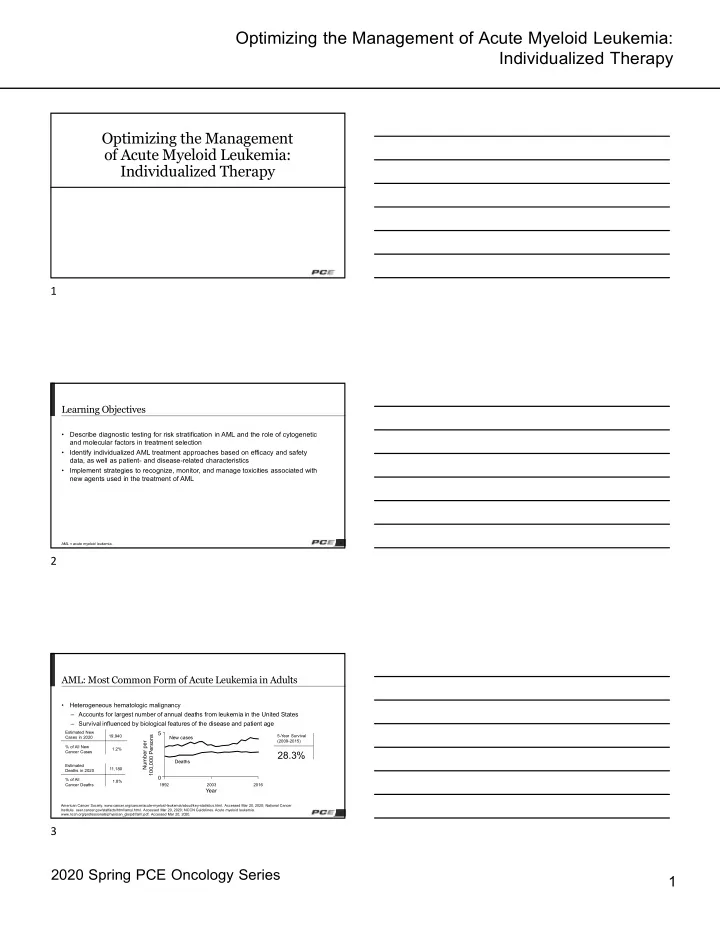
slide-65
SLIDE 65

Key Updates in the Treatment of HER2-Positive Breast Cancer

PCE 2020 Spring Oncology Series 23

67

SOPHIA: Safety

AEs, n (%) Margetuximab + CT (n = 264) Trastuzumab + CT (n = 265) Any grade 260 (98.5) 261 (98.1) Any margetuximab- or trastuzumab-related AE 160 (60.6) 132 (49.6) Grade ≥ 3 AE 142 (53.8) 140 (52.6) Grade ≥ 3 margetuximab- or trastuzumab-related AE 34 (12.9) 22 (8.3) Any serious AE 43 (16.3) 49 (18.4) Any margetuximab- or trastuzumab-related serious AE 5 (1.9) 4 (1.5) AE leading to treatment discontinuation 8 (3.0) 7 (2.6) AE resulting in death* 3 (1.1) 2 (0.8) AEs of special interest

  • IRR
  • Discontinuation due to IRR
  • LV dysfunction resulting in delayed dosing or discontinuation

All Grade 35 (13.3) 2 (0.6) 4 (1.5) Grade ≥ 3 4 (1.5) All Grade 9 (3.4) 6 (2.3) Grade ≥ 3 *Deaths due to pneumonia (n = 2), pneumonia aspiration (n = 1) in margetuximab arm; pneumonia (n = 1), acute kidney injury (n =1) in trastuzumab

  • arm. None related to study treatments. Data cutoff: April 2019.

AE = adverse event; CT = chemotherapy; IRR = infusion-related reaction; LV = left ventricle.

  • Rugo. SABCS 2019. Abstr GS1-02.

68

  • HER2-targeted TKIs are a reasonable therapy for HER2+ MBC in the third-line

setting and beyond ‒ Tucatinib data are particularly strong and may be a good option for patients with progressive brain metastases

  • Trastuzumab deruxtecan is a major new therapy approved for HER2+ MBC in the

third-line setting, likely to move to earlier settings ‒ Post neoadjuvant therapy ‒ Second-line T-DXd vs T-DM1 (DESTINY-Breast03) ‒ Also being looked at for HER2-low disease (DESTINY-Breast04)

  • Margetuximab is of unclear benefit (perhaps in CD16A-F allele carriers?)

Implications for Practice

MBC = metastatic breast cancer; T-DM1 = trastuzumab emtansine; T-DXd = trastuzumab deruxtecan; TKI = tyrosine kinase inhibitor. 69

PCE Action Plan

 Clinicians should reassess risks and benefits of additional lines of therapy based on patient’s fitness, comorbidities, and preferences at progression  If additional treatment is indicated, select therapy based on disease features as well as patient’s fitness, comorbidities, and preferences  For patients with brain metastases, consider treatment with HER2 TKI-based therapy  After ≥ 2 previous lines of anti–HER2-based therapy, consider T-DXd for eligible patients  For patients receiving T-DXd, monitor for signs of interstitial lung disease and manage ILD using recommended guidelines PCE Promotes Practice Change

ILD = interstitial lung disease; T-DXd = trastuzumab deruxtecan; TKI = tyrosine kinase inhibitor.

67 68 69

slide-66
SLIDE 66

2020 PCE Spring Oncology Series 1

Raising the Bar for the Standard of Care: Advances in the Management of Advanced Renal Cell Carcinoma

Raising the Bar for the Standard of Care: Advances in the Management of Advanced Renal Cell Carcinoma

2

  • Formulate treatment strategies for advanced renal cell carcinoma (RCC) based on

current evidence and patient/disease factors

  • Identify potential immune-related adverse events (AEs) and their onset during and

after therapy

  • Implement strategies to recognize and appropriately manage side effects

associated with tyrosine kinase inhibitors (TKIs) for advanced RCC

Learning Objectives

3

  • More than 50% of patients with RCC have no symptoms

‒ Diagnosis is through incidental imaging of the abdomen or chest ordered for unrelated symptoms

  • Hematuria serves as a warning sign: necessitates further evaluation and imaging leading

to a diagnosis and treatment plan

  • Solid tumors are managed by size

‒ 20% of tumors >3 cm discovered incidentally will be benign ‒ Tumors ≥4 cm have metastatic potential

  • Treatment options include active surveillance, ablation, nephron-sparing tumor excision,

nephrectomy, and systemic treatment

  • Predictors of a poor prognosis include poor functional status and metastasis

Overview of RCC

Gray RE, Harris GT. Am Fam Physician. 2019;99:179-184.

1 2 3

slide-67
SLIDE 67

2020 PCE Spring Oncology Series 2

Raising the Bar for the Standard of Care: Advances in the Management of Advanced Renal Cell Carcinoma

4

RCC Statistics

National Cancer Institute Surveillance, Epidemiology, and End Results Program. seer.cancer.gov/statfacts/html/kidrp.html; Accessed Mar 26, 2020.

  • 8th most common cancer – more common in men than women – representing 4.2% of all new cancers in the US
  • In 2019, there were ~73,820 new cases of kidney and renal pelvis cancer and ~14,770 deaths from this disease

65% 17% 16% 3%

Percent of Cases by Stage

Localized (Confined to Primary Site) Regional (Spread to Regional Lymph Nodes) Distant (Cancer Has Metastasized) Unknown (Unstaged) 92.5% 69.6% 12.0% 41.9% 0% 20% 40% 60% 80% 100% Percent Surviving Stage

5-Year Relative Survival

Localized Regional Distant Unknown 5

  • Hereditary factors include familial syndromes, including:

‒ von Hippel-Lindau syndrome ‒ Hereditary type 1 papillary renal carcinoma ‒ Familial renal oncocytoma ‒ Birt-Hogg-Dube syndrome

  • Few risk factors for RCC have been established

‒ Nonhereditary risk factors that possibly contribute to RCC include:

  • Cigarette smoking (increases in a dose-dependent fashion)
  • Obesity, particularly in women (as weight increases, risk of RCC increases)
  • Older age (median age at diagnosis: 64 years)

Risk Factors for RCC

Chow WH, et al. Nat Rev Urol. 2010;7:245-257; Sachdeva K, et al. emedicine.medscape.com/article/281340-overview#showall. Accessed Mar 26, 2020. 6

  • Clear-cell RCC is the most common variety: 70% to 90%
  • Non−clear-cell RCC includes:

‒ Papillary: 10% to 15% ‒ Chromophobe: 3% to 5% ‒ Collecting duct: 1% to 2% ‒ Unclassified: 4% to 6%

  • In one study of 254 patients with advanced RCC, 16.1% harbored pathogenic germline

mutations ‒ More than 20% of patients with non−clear-cell RCC had germline mutations

  • Sarcomatoid or rhabdoid features can be associated with any histology

‒ Harbinger of a poor prognosis in the VEGF TKI era

Histology of RCC

VEGF = vascular endothelial growth factor. Carlo MI, et al. JAMA Oncol. 2018;4:1228-1235; Muglia VF, Prando A. Radiol Bras. 2015;48:166-174; Warren AY , Harrison D. World J Urol. 2018;36:1913-1926.

4 5 6

slide-68
SLIDE 68

2020 PCE Spring Oncology Series 3

Raising the Bar for the Standard of Care: Advances in the Management of Advanced Renal Cell Carcinoma

7

Patient Factors to Consider When Selecting Therapy

  • Comorbidities, especially conditions that affect a patient’s immune status
  • Symptoms of disease
  • Sites of disease
  • ECOG PS
  • Histology
  • Risk stratification
  • Medication history, including use of steroids

ECOG PS = Eastern Cooperative Oncology Group performance status. Heng DY , et al. J Clin Oncol. 2009;27:5794-5799; Heng DY , et al. Lancet Oncol. 2013;14:141-148; van der Zanden LF, et al. Urol Oncol. 2017;35:e9-e16. 8

IMDC Criteria Risk Factors Yes (1)/ No (0) KPS <80% 1/0 Time from diagnosis <12 months 1/0 Hemoglobin <LLN 1/0 Neutrophil count >ULN 1/0 Platelet count >ULN 1/0 Corrected serum calcium >ULN 1/0

Risk Stratification: Laboratory and Clinical

KPS = Karnofsky Performance Status; LLN = lower limit of normal; ULN = upper limit of normal. IMDC, International Metastatic RCC Database Consortium. Heng DY , et al. J Clin Oncol. 2009;27:5794-5799; Heng DY , et al. Lancet Oncol. 2013;14:141-148.

Risk Group by Number of Risk Factors Favorable Intermediate 1-2 Poor 3-6

  • Current FDA indications restrict certain treatments based on these risk categories

9

  • Goal of therapy is different for each patient

‒ May be curative vs improvement in length and/or quality of life, depending on staging

  • For active sites of disease

‒ Medical treatments aim to shrink and destroy the cancer ‒ Surgical treatment aims to remove the cancer ‒ Ablative treatments (eg, radiation or thermal) aim to destroy local disease

  • For patients with multiple sites of disease, the mainstay treatment has been

medical/systemic therapy

Goals of Treatment

Choueiri TK, et al. J Urol. 2011;185:60-66; NCCN Guidelines. Kidney cancer. www.nccn.org/professionals/physician_gls/pdf/kidney.pdf. Accessed Mar 26, 2020.

7 8 9

slide-69
SLIDE 69

2020 PCE Spring Oncology Series 4

Raising the Bar for the Standard of Care: Advances in the Management of Advanced Renal Cell Carcinoma

10

Changing Treatment Landscape for Metastatic RCC

mRCC = metastatic renal cell carcinoma. Klaassen Z. www.urotoday.com/conference-highlights/asco-2019-annual-meeting/asco-2019-kidney-cancer/113076-asco-2019-evolving-front-line- therapy-in-metastatic-renal-cell-carcinoma.html. Accessed Mar 26, 2020.

  • In the last 15 years, the landscape of treatment for clear-cell mRCC has changed immensely

2005 2006 2007 2008 2009 2010 2011 2012 2013 2014 2015 2016 2017 2018 2019

Sorafenib Temsirolimus Axitinib Nivolumab + Ipilimumab Sunitinib Bevacizumab + IFN-⍺ Everolimus Pazopanib Nivolumab Cabozantinib Everolimus + Levatinib Pembrolizumab +Axitinib Avelumab + Axitinib Targeted Therapy Era Immunotherapy Combination Era

11

  • T-cell activation is required for

effective antitumor response

  • PD-1 and CTLA-4 expressed on

T cells act as “off” switches to down- regulate the immune response

  • Tumor cells can masquerade as

normal cells by expressing PD-L1

  • Blockade of PD-1 and PD-L1

and CTLA-4 ultimately allow up-regulation of immune responses targeting the tumor

Immunotherapy Mechanism of Action

CTLA-4 = cytotoxic T-lymphocyte antigen 4; PD-1 = programmed cell death protein; PD-L1 = programmed death-ligand 1. Buchbinder EI, Desai A. Am J Clin Oncol. 2016;39:98-106; Institute for Clinical Immuno-Oncology. www.accc-cancer.org/docs/immuno-

  • ncology/iclio-webinar-new-mechanisms-of-action-v3-final. Accessed Mar 26, 2020; Tarhini A, et al. Cancer Biother Radiopharm. 2010;25:601-613.

Activated T cell Tumor cell death PD-L1 Anti-PD-1 PD-1 TCR MHC TCR MHC CD28 B7 Anti- CTLA-4 CTLA-4 Renal cancer cell Antigen-presenting cell T cell 12

  • Boosts the RCC armamentarium
  • VEGF inhibitors infiltrate T cells into

tumors and enhance antitumor immunity

  • Adding PD-1 inhibitors may augment

these effects

  • Standard of care has shifted to

immunotherapy-based combination regimens in the 1st-line setting

Targeted Therapy Plus Immunotherapy in Advanced RCC

Garje R, et al. Cancers (Basel). 2020;12:143.

Anticancer Immunity

Anti-VEGF

VEGF TKI Anti-PD-1 Anti-PD-L1 VEGF/R Myeloid DCs PD-1 PD-L1

CD3 CD3 CD4 CD3 APC Treg MDSCs Macrophage (M2 phenotype) Tumor

10 11 12

slide-70
SLIDE 70

2020 PCE Spring Oncology Series 5

Raising the Bar for the Standard of Care: Advances in the Management of Advanced Renal Cell Carcinoma

13

Case Study 1: Oliver

  • 63-year-old African American man presented for evaluation of hematuria and

urinary obstruction

  • Medical history notable for hypertension and ongoing smoking
  • CT scan showed a left renal mass: 13.3 x 12.3 x 10 cm
  • Imaging revealed multiple lung nodules measuring up to 1.5 cm, consistent with

metastatic disease

  • Oliver underwent biopsy of a lung nodule

‒ Pathology revealed metastatic clear-cell RCC with no sarcomatoid features

  • Oliver has a good PS and no additional IMDC risk factors other than needing

systemic therapy within a year of diagnosis

PS = performance status. 14

Risk Status First-line Therapy Preferred regimens Favorable risk Poor/intermediate risk

  • Axitinib + pembrolizumab
  • Pazopanib
  • Sunitinib
  • Axitinib + pembrolizumab
  • Ipilimumab + nivolumab
  • Cabozantinib

Other recommended regimens Favorable risk Poor/intermediate risk

  • Ipilimumab + nivolumab
  • Cabozantinib
  • Axitinib + avelumab
  • Pazopanib
  • Sunitinib
  • Axitinib + avelumab

Guidelines for Recurrent or Advanced Clear-Cell RCC: First-line Therapy

NCCN Guidelines. Kidney cancer. www.nccn.org/professionals/physician_gls/pdf/kidney.pdf. Accessed Mar 26, 2020. 15 4 8 12 16 18 24

KEYNOTE-426: Pembrolizumab + Axitinib in Treatment-naïve Advanced RCC

CR = complete response; ITT = intent to treat; ORR = overall response rate; OS = overall survival; PFS = progression-free survival; VEGFR = vascular endothelial growth factor receptor. Rini BI, et al. N Engl J Med. 2019;380:1116-1127.

  • Pembrolizumab is an anti–PD-1 antibody that

has shown antitumor activity

  • Axitinib is a highly potent VEGFR-TKI

approved in the 2nd-line setting and has shown antitumor activity in the 1st-line setting

  • Combination pembrolizumab + axitinib

demonstrated high PFS, ORR, and OS vs sunitinib ‒ OS in the ITT population at 12 months: 89.9% vs 78.3%

  • Benefit observed in all IMDC subgroups

and PD-L1 expression categories ‒ PFS: 15.1 vs 11.1 months ‒ ORR: 59.3% vs 35.7% (CR: 5.8% vs 1.9%) OS in ITT Population

Patients Who Were Alive (%) Months Pembrolizumab + axitinib Sunitinib 100 90 80 70 60 50 40 30 20 10 Hazard ratio for death, 0.53 (95% CI, 0.38-0.74) P <0.0001

13 14 15

slide-71
SLIDE 71

2020 PCE Spring Oncology Series 6

Raising the Bar for the Standard of Care: Advances in the Management of Advanced Renal Cell Carcinoma

16

  • PD-L1 inhibitor avelumab was studied in

combination with axitinib (VEGFR-TKI) vs sunitinib

  • Patients stratified by ECOG PS and

geographic region

  • Improvements seen in patients with PD-L1–

positive tumors ‒ Median PFS: 13.8 vs 7.2 months ‒ ORR: 55.2% vs 25.5% ‒ Median OS: 11.6 vs 10.7 months (NS); longer follow-up needed

  • PFS benefit maintained in overall population

as well, regardless of PD-L1 status

JAVELIN Renal 101: Avelumab + Axitinib vs Sunitinib as First-line Treatment

Motzer RJ, et al. N Engl J Med. 2019;380:1103-1115.

PFS in Patients With PD-L1-Positive Tumors

Avelumab + axitinib Sunitinib 100 90 80 70 60 50 40 30 20 10 PFS (%) 2 4 6 8 10 12 14 16 18 20 22 24 Months 17

  • Combination of checkpoint inhibitors

nivolumab + ipilimumab was studied in patients with intermediate- or poor-risk advanced RCC

  • Extended follow-up (minimum 42

months) showed superiority of nivolumab + ipilimumab vs sunitinib: ‒ OS: 47.0 vs 26.6 months ‒ ORR: 42% vs 29% (CR: 12% vs 1%)

  • In ITT patients, nivolumab + ipilimumab

showed improved efficacy compared with sunitinib

CheckMate 214: Nivolumab + Ipilimumab vs Sunitinib as First-line Treatment

Tannir NM, et al. 2020 ASCO GU; Abstract 609.

OS in Intermediate-/Poor-Risk Disease v

1.0 0.9 0.8 0.7 0.6 0.5 0.4 0.3 0.2 0.1 0.0 OS (probability) Months 3 6 9 12 15 18 21 24 27 30 33 36 39 42 45 48 51 54 57 74% 60% 60% 47% 52% 39%

  • No. at risk

Nivolumab + ipilimumab Sunitinib 18

Case Study (cont’d): Oliver

  • Oliver agrees to begin axitinib and pembrolizumab for his advanced RCC
  • Both Oliver and his family are educated on the treatment plan, mechanisms of

action of the drugs, and potential adverse effects of therapy

  • He is instructed to take daily BP assessments at home and to call the office if he

develops hypertension, defined for this patient as 150/90 mm Hg

  • He is to call the oncology provider if he develops any new symptoms

16 17 18

slide-72
SLIDE 72

2020 PCE Spring Oncology Series 7

Raising the Bar for the Standard of Care: Advances in the Management of Advanced Renal Cell Carcinoma

19

  • Checkpoint inhibitors stimulate the immune

environment and can cause irAEs

  • irAEs differ from AEs with chemotherapy and

targeted therapy ‒ Many occur within 2 to 3 treatment cycles, but can occur any time—even after therapy is discontinued ‒ Typically mild, but can be severe, irreversible,

  • r life-threatening
  • irAEs do not occur in all patients

‒ Reasons are unknown

irAEs and Their Toxicity Spectrum

Brahmer JR, et al. J Clin Oncol. 2018;36:1714-1768; Cancer Council Victoria. www.cancervic.org.au/cancer-information/treatments/treatments- types/immunotherapy. Accessed March 30, 2020; Postow MA, et al. N Engl J Med. 2018;378:158-168. 19

irAEs Can Affect Any Organ System

Encephalitis Aseptic meningitis Hypophysitis Thyroiditis Hypothyroidism Hyperthyroidism Pneumonitis Hepatitis Autoimmune Diabetes Pancreatitis Thrombocytopenia Anemia Vasculitis Neuropathy Uveitis Dry mouth Mucositis Myocarditis Colitis Enteritis Rash Vitiligo Arthralgia 20

AE, % Any Grade (n = 429) Grade 3, 4, or 5 (n = 425) AEs of any cause 98.4 75.8 Diarrhea 54.3 9.1 Hypertension 44.5 22.1 Fatigue 38.5 2.8 Hypothyroidism 35.4 0.2 Decreased appetite 29.6 2.8 Hand-foot-skin reaction 28.0 5.1 Nausea 27.7 0.9 ALT increased 26.8 13.3 AST increased 26.1 7.0 Dysphonia 25.4 0.2 Cough 21.2 0.2 Constipation 20.7

Most Common AEs (≥20%) Associated With Pembrolizumab + Axitinib Combination Treatment (n = 429)

ALT = alanine aminotransferase; AST = aspartate transaminase. Rini BI, et al. N Engl J Med. 2019;380:1116-1127. 21

  • Before starting treatment:

⎻ Educate patients about mechanisms of action and reasons for using combination treatment ⎻ Record all medications, including supplements and OTC medications ⎻ Provide patients with a wallet card outlining the type of treatments they are receiving, potential AEs, and their care team contact numbers ⎻ Educate patients/caregivers about potential toxicity profiles, presenting symptoms, and timing of their treatments ⎻ Inform patients of educational resources

  • Tell patients to notify the oncology healthcare team:

⎻ If any new signs or symptoms develop

  • Monitor symptoms for at least 2 years after treatment has concluded

‒ When admitted to the hospital ‒ If any new medications are prescribed or prior to receiving any immunizations/vaccines

NCCN Guidelines. Management of immunotherapy-related toxicities. www.nccn.org/professionals/physician_gls/pdf/immunotherapy.pdf. Accessed Mar 26, 2020.

Combination Therapy Patient Education

19 20 21

slide-73
SLIDE 73

2020 PCE Spring Oncology Series 8

Raising the Bar for the Standard of Care: Advances in the Management of Advanced Renal Cell Carcinoma

22

Case Study (cont’d): Oliver

  • Front-line treatment with pembrolizumab 200 mg IV every 3 weeks and axitinib

5 mg twice a day was initiated, and a follow-up call 2 days later revealed no adverse effects

  • 8 days after initiation of cycle 3 of axitinib and pembrolizumab, Oliver called

with complaints of increasing fatigue, loss of appetite, difficulty with fluid intake, and 5 loose stools in the past 24 hours (grade 2) despite maximum dosing of loperamide

23

  • Diarrhea is one of the most common side effects of axitinib

‒ For most cases, supportive care and use of antidiarrheals can control this toxicity ‒ For grade 3 or 4 diarrhea, reduce the axitinib dose or interrupt therapy until diarrhea improves to grade 1

  • When diarrhea occurs when axitinib is given in combination with pembrolizumab and can

be attributed to either drug, stop axitinib for a few days as an initial step ‒ Axitinib-induced toxicity should improve significantly with cessation of therapy due to its short half-life ‒ Pembrolizumab-induced toxicity would not improve after stopping axitinib

  • If diarrhea does not resolve with axitinib cessation and an irAE is suspected, follow the

appropriate guidelines

Managing Diarrhea Associated With Axitinib + Pembrolizumab

Greene HR. www.practiceupdate.com/content/management-of-diarrhea-associated-with-targeted-rcc-therapy/27360. Accessed Mar 26, 2020; Wood LS, Ornstein MC. JCO Oncology Practice. 2020;16(2 suppl):15s-19s. 24

Guidelines for Managing irAEs

Brahmer JR, et al. J Clin Oncol. 2018;36:1714-1768; Postow MA, et al. N Engl J Med. 2018;378:158-168.

Toxicity Grade Recommendation Grade 1 Continue checkpoint inhibitors with close monitoring, with exception of some neurologic, hematologic, and cardiac toxicities Grade 2 Hold for most grade 2 toxicities and consider resuming when symptoms and/or laboratory values return to grade 1 or less Corticosteroids (initial dose of 0.5 to 1 mg/kg/d of prednisone or equivalent) may be given Grade 3 Hold checkpoint inhibitors for grade 3 AEs and initiate high-dose corticosteroids (prednisone 1 to 2 mg/kg/d or methylprednisolone IV 1 to 2 mg/kg/d)

  • Taper corticosteroids over course of at least 4 to 6 weeks
  • If symptoms do not improve with 48 to 72 hours of high-dose corticosteroid, infliximab may be offered for

some toxicities Grade 4 Warrants permanent discontinuation of checkpoint inhibitors, with exception of endocrinopathies controlled by hormone replacement

  • When symptoms and/or lab values revert to grade 1 or less, rechallenging with checkpoint inhibitors may be offered. Use caution

when administering to patients with early-onset irAEs, and dose adjustments are not recommended.

22 23 24

slide-74
SLIDE 74

2020 PCE Spring Oncology Series 9

Raising the Bar for the Standard of Care: Advances in the Management of Advanced Renal Cell Carcinoma

25

  • Dealing with two different mechanisms of action with two sets of AE profiles is

challenging

  • Classical AEs of VEGF TKIs are fatigue, hypertension, diarrhea, oral pain, and

hand-foot-skin reaction

  • Classical AEs of immunotherapy involve organ inflammation
  • Notable crossover AEs: fatigue, diarrhea, hypothyroidism, LFT elevations

LFT = liver function test. Rini BI, et al. N Engl J Med. 2019;380:1116-1127.

Monitoring Patients on Drugs With Different Mechanisms of Action

26 TSH = thyroid stimulating hormone.

Case Conclusion: Oliver

  • Oliver’s TSH increased from 3.4 at baseline to 13.0, and he was put on

levothyroxine

  • Otherwise, he tolerated the combination of axitinib and pembrolizumab with no
  • ther AEs except occasional diarrhea
  • Imaging 3 months after start of treatment demonstrated regression of all lung

nodules and shrinkage of the primary renal mass

  • The plan is to continue treatment for up to 2 years and take a break

27

Case Study 2: Margaret

  • 72-year-old woman diagnosed with advanced clear-cell RCC and lung and liver

metastases

  • She was treated 1st-line with axitinib + pembrolizumab
  • After 3 months on treatment, her first follow-up scan showed marked progression

in her lung and local recurrence

  • Her KPS was 70 and her risk score was 2 (intermediate)

25 26 27

slide-75
SLIDE 75

2020 PCE Spring Oncology Series 10

Raising the Bar for the Standard of Care: Advances in the Management of Advanced Renal Cell Carcinoma

28

  • The novel multitargeted TKIs cabozantinib

and lenvatinib (combined with everolimus) have shown favorable data in advanced RCC ‒ Cabozantinib is an inhibitor of multiple receptor tyrosine kinases, including VEGFR, MET, the TAM kinases, KIT, FLT3, TRKB, and TIE2 ‒ Lenvatinib is an inhibitor of VEGFR1–3, FGFR1–4, PDGFRa, KIT, and RET

  • Inhibiting these signaling molecules

contributes to the antitumor immunomodulatory effect of these drugs

Tyrosine Kinase Inhibitors

Bergerot P, et al. Mol Cancer Ther. 2019;18:2185-2193; De Lisi D, et al. Expert Opin Drug Metab Toxicol. 2018;14:461-467.

Mechanism of Action of Multi-TKIs

Growth factor signals to make blood vessels Receptor Growth factor signals for the cell to divide Receptor Multi TKI blocks the signal TKI going into cell 29

Subsequent Therapy Preferred regimens

  • Cabozantinib (category 1)
  • Nivolumab (category 1)
  • Ipilimumab + nivolumab

Other recommended regimens

  • Axitinib (category 1)
  • Lenvatinib + everolimus (category 1)
  • Axitinib + pembrolizumab
  • Everolimus
  • Pazopanib
  • Sunitinib
  • Axitinib + avelumab (category 3)

Guidelines for Recurrent or Advanced Clear-Cell RCC: Subsequent Lines

NCCN Guidelines. Kidney cancer. www.nccn.org/professionals/physician_gls/pdf/kidney.pdf. Accessed Mar 26, 2020. 30 100 80 60 40 20

  • Multitargeted TKI lenvatinib was

approved in 2016 as combination therapy with the mTOR inhibitor everolimus for 2nd-line treatment of advanced RCC

  • Small randomized phase 2 study

with ~50 patients in each of 3 arms

  • Median PFS vs everolimus

monotherapy: 14.6 vs 5.5 months

  • Median OS vs everolimus: 25.5 vs

15.4 months

Lenvatinib + Everolimus

mTOR = mammalian target of rapamycin. Lenvima [prescribing information]. Eisai Inc; 2020; Motzer RJ, et al. Lancet Oncol. 2015;16:1473-1482. Progression-free Survival(%) Time (months) 3 6 9 12 15 18 21 24 Levatinib + everolimus Single-agent lenvatinib Single-agent everolimus

PFS by Treatment Group

28 29 30

slide-76
SLIDE 76

2020 PCE Spring Oncology Series 11

Raising the Bar for the Standard of Care: Advances in the Management of Advanced Renal Cell Carcinoma

31

  • Multitargeted TKI approved in 2017 for front-line use in previously untreated RCC in

patients with intermediate/poor risk ‒ Approval based on results from the phase 2 CABOSUN trial ‒ Compared with sunitinib, cabozantinib reduced risk of progression or death by 52% ‒ Median PFS: 8.6 months vs 5.3 months with sunitinib

  • Now approved for both 1st- and 2nd-line treatment of advanced RCC
  • Toxicity profile of cabozantinib similar to other VEGFR TKIs for the treatment of

advanced RCC ‒ Most common grade 3 or 4 side effects were hypertension, diarrhea, and fatigue

Cabozantinib

Cabometyx [prescribing information]. Exelixis, Inc; 2020; Choueiri TK, et al. 2017 ESMO Congress. LBA38; Choueiri TK, et al. J Clin Oncol. 2017;35:591-597; Martinez Chanza N, et al. Lancet Oncol. 2019;20:581-590; US Food and Drug Administration. www.fda.gov/drugs/informationondrugs/approveddrugs/ucm589842.htm. Accessed Mar 26, 2020 32

Case Study (cont’d): Margaret

  • After 2 months of treatment with combination lenvatinib and everolimus, Margaret

begins to experience extreme fatigue

33

  • Most common grade 1-2 TEAEs

reported in lenvatinib + everolimus group ‒ Diarrhea, decreased appetite, fatigue

  • Most common TEAEs of grade ≥3 in

the lenvatinib + everolimus group ‒ Constipation, diarrhea, fatigue

  • For toxicities thought to be related to everolimus alone, such as stomatitis and noninfectious

pneumonitis, the drug should be discontinued, interrupted, or used on alternate days, according to the label

  • For toxicities considered to be related to both lenvatinib and everolimus, the lenvatinib dose should

be reduced first

Toxicity Profile of Lenvatinib + Everolimus

TEAEs = treatment-emergent adverse events. Afinitor [prescribing information]. Novartis Pharmaceuticals Corporation; 2020; Motzer RJ, et al. Lancet Oncol. 2015;16:1473-1482; Stenger M. ascopost.com/issues/june-10-2016/lenvatinib-in-combination-with-everolimus-in-advanced-renal-cell-carcinoma/. Accessed Mar 26, 2020.

AE, % Lenvanitib + Everolimus Lenvanitib Everolimus Diarrhea 65 60 32 Decreased appetite 45 54 18 Fatigue 45 42 36

31 32 33

slide-77
SLIDE 77

2020 PCE Spring Oncology Series 12

Raising the Bar for the Standard of Care: Advances in the Management of Advanced Renal Cell Carcinoma

34

Case Conclusion

  • Eight months later, Margaret complained of fatigue, abdominal discomfort, and weight

loss; she subsequently developed back pain

  • CT scan of abdomen and chest showed new liver lesions and progression of

previously identified lesions

  • MRI of the spine showed multiple metastatic lesions of the thoracic and lumbar

vertebrae, with no evidence of cord compression

  • She was switched to cabozantinib 60 mg and her symptoms subsided within 4 weeks
  • She was maintained on cabozantinib for approximately 13 months until the disease

progressed

  • Margaret is being considered for enrollment into a clinical trial

MRI = magnetic resonance imaging. 35

PCE Action Plan

 Be aware of patient factors that help determine the most appropriate therapy

  • ptions

 Provide patients with resource materials, reminders, and other tools (eg, wallet

cards) to reinforce details about toxicities related to combination therapy

 Consider rechallenge with checkpoint inhibitor therapy with caution in patients

whose irAE symptoms and/or laboratory values revert to grade ≤1

 It is important to discern causative therapy, since management of AEs is

dependent on differentiation PCE Promotes Practice Change

34 35

slide-78
SLIDE 78

Evolving Options in Metastatic Prostate Cancer

2020 PCE Spring Oncology Series 1 Evolving Options in Metastatic Prostate Cancer

2

  • Implement guideline-recommended treatment strategies for patients with nonmetastatic

castrate-resistant prostate cancer (CRPC)

  • Formulate personalized management strategies for patients with metastatic CRPC based
  • n patient preferences and efficacy and safety of novel agents
  • Apply strategies to identify and manage AEs associated with novel therapies for CRPC

Learning Objectives

AE = adverse event. 3

  • Estimated for 2020

‒ 191,930 new cases ‒ 33,330 deaths ‒ Incidence and mortality rates have declined ‒ 10-year overall survival (OS): 98%

  • Risk factors

‒ Advancing age ‒ African ancestry ‒ Family history ‒ Genetic mutations

Prostate Cancer in 2020

American Cancer Society. www.cancer.org/content/dam/cancer-org/research/cancer-facts-and-statistics/annual-cancer-facts-and- figures/2020/cancer-facts-and-figures-2020.pdf. Accessed Mar 24, 2020. Image: Histology slide showing prostate cancer. Courtesy of the National Cancer Institute. Photographer: Otis Brawley,

1 2 3

slide-79
SLIDE 79

Evolving Options in Metastatic Prostate Cancer

2020 PCE Spring Oncology Series 2

4

Advances in Treatment Approvals

mHSPC = metastatic hormone-sensitive prostate cancer; nmCRPC = nonmetastatic castrate-resistant prostate cancer. Komura K, et al. Int J Urol. 2018;25:220-231; US Food and Drug Administration. www.fda.gov/newsevents/newsroom/pressannouncements/ucm596768.htm. Accessed Mar 24, 2020; US Food and Drug Administration. www.accessdata.fda.gov/scripts/cder/daf/index.cfm?event=overview.process&ApplNo=210951. Accessed Mar 24, 2020. US Food and Drug

  • Administration. www.fda.gov/drugs/resources-information-approved-drugs/fda-approves-darolutamide-non-metastatic-castration-resistant-prostate-cancer.

Accessed Mar 24, 2020; US Food and Drug Administration. www.fda.gov/drugs/resources-information-approved-drugs/fda-approves-enzalutamide- metastatic-castration-sensitive-prostate-cancer. Accessed Mar 24, 2020.

2004 2010 2011 2012 2013 2014 2018 2019 Docetaxel (taxane) Sipuleucel-T (immunotherapy) Cabazitaxel (novel taxane) Abiraterone (next- generation ARSI) postdocetaxel Enzalutamide (next- generation ARSI) postdocetaxel Radium-223 (radiopharmaceutical) Abiraterone predocetaxel Enzalutamide predocetaxel Apalutamide (next- generation ARSI) for nmCRPC Enzalutamide for nmCRPC Darolutamide (next-generation ARSI) for nmCRPC Enzalutamide for mHSPC

5

CHAARTED: ADT + Docetaxel in mHSPC

ADT = androgen deprivation therapy; CI = confidence interval; HR = hazard ratio; PSA = prostate-specific antigen. Sweeney CJ, et al. N Engl J Med. 2015;373:737-746. 12 24 36 48 60 72 Number at Risk ADT + docetaxel 397 333 189 89 46 5 2 ADT alone 393 318 168 71 27 3 1 84 100 80 60 40 20

OS (%)

ADT + docetaxel: (median OS, 57.6 months) ADT alone (n = 393): (median OS, 44.0 months) Death with ADT + docetaxel (n = 397): HR, 0.61 (95% CI, 0.47-0.80) P <.001

All Patients

OS Benefit by Volume of Disease

  • High volume: 17 months
  • Low volume: no benefit

Median follow-up: 28.9 months

6

STAMPEDE, Arm C: ADT and Docetaxel in HSPC

James ND, et al. Lancet. 2016;387:1163-1177. 10 20 30 40 50 60 70 80 90 Median OS Median OS Metastatic

Median OS (Months)

ADT Alone ADT + Docetaxel

71 Months 60 Months

0% 10% 20% 30% 40% 50% 60% 70% 5-Year Survival (Metastatic) 5-Year Survival

5-Year Survival (%)

ADT Alone ADT + Docetaxel

45 Months 81 Months 39% 55% 50% 63%

ADT alone: n = 1184 ADT + docetaxel: n = 592 Median follow-up: 43 months

4 5 6

slide-80
SLIDE 80

Evolving Options in Metastatic Prostate Cancer

2020 PCE Spring Oncology Series 3

7

Phase 3 Trials of ADT + Abiraterone in mHSPC

PFS = progression-free survival; rPFS = radiographic progression-free survival. Fizazi K, et al. N Engl J Med. 2017;377:352-360; James ND, et al. N Engl J Med. 2017;377:338-351. N = 1199: ADT + abiraterone + prednisone vs ADT + placebo

LATITUDE

ADT + abiraterone HR, 0.29 (95% CI, 0.25-0.34) P <.001 PFS (%) ADT Months 100 80 60 40 20 6 12 18 24 30 36 42 48 54

STAMPEDE, Arm G

N = 960: ADT + abiraterone + prednisolone vs ADT alone 8 16 24 32 40 100 80 60 40 20 Months Abiraterone Placebo HR, 0.47 (95% CI, 0.39-0.55) P <.001 rPFS (%)

8

Some Agents Used in Advanced Settings Are Now Being Used in Earlier Disease

Armstrong AJ, et al. J Clin Oncol. 2019;37(7 suppl):Abstract 687; Chi KN et al. J Clin Oncol. 2019;37(15 suppl):Abstract 5003; US Food and Drug

  • Administration. www.fda.gov/drugs/resources-information-approved-drugs/fda-approves-enzalutamide-metastatic-castration-sensitive-prostate-
  • cancer. Accessed Mar 24, 2020.

ADT + apalutamide vs ADT + placebo in mHSPC rPFS: significant improvement in both low- and high-volume disease (P <.001) with apalutamide ADT + enzalutamide vs ADT + placebo in mHSPC PFS: significant improvement in both low- and high-volume disease (P <.001) with enzalutamide TITAN Phase 3 Study (N >1050) ARCHES Phase 3 Study (N = 1150)

9 NCCN = National Comprehensive Cancer Network. NCCN Guidelines. Prostate cancer. www.nccn.org/professionals/physician_gls/pdf/prostate.pdf. Accessed Mar 24, 2020.

2019 NCCN Guidelines for mHSPC

  • Based on results of clinical trials, for patients with mHSPC, consider adding

to ADT: ‒ Docetaxel 75 mg/m2 every 3 weeks for 6 cycles

  • Patients with high-volume disease derive greater benefit

‒ Abiraterone acetate + steroid ‒ Apalutamide ‒ Enzalutamide

7 8 9

slide-81
SLIDE 81

Evolving Options in Metastatic Prostate Cancer

2020 PCE Spring Oncology Series 4

10

  • Disease progression despite castrate levels of testosterone (<50 ng/mL)
  • Heterogeneous—can be symptomatic or asymptomatic, with or without

metastases

  • Affects 10% to 20% of men with prostate cancer within 5 years of diagnosis

‒ Before recent therapeutic advances, ≥50% of these patients would have died within 3 years

  • Natural history can involve progressive decline in health-related QoL
  • Metastasis-free survival (MFS) is a new, reasonable endpoint for both

clinical trials and clinical discussions with patients

Castrate-Resistant Prostate Cancer

QoL = quality of life. Anantharaman A, et al. Expert Rev Anticancer Ther. 2017;17:625-633; Beaver JA, et al. N Engl J Med. 2018;378:2458-2460; Nussbaum N, et al. Prostate Cancer Prostatic Dis. 2016;19:111-121. 11

Typical Progression of CRPC

Adapted with permission from Anantharaman A, et al. Expert Rev Anticancer Ther. 2017;17:625-633.

Localized/locally advanced prostate cancer Definitive therapy Biochemical recurrence mHSPC mCRPC nmCRPC Rising PSA Start ADT Criterion 2: Rising PSA despite castrate levels of testosterone Criterion 1: Identification of metastases Rising PSA despite castrate levels of testosterone Identification of metastases Both criteria met

12

  • CRPC with no clinical or radiologic evidence of metastases
  • Newer imaging techniques have greater sensitivity (eg, 18F-fluorocholine
  • r PSMA-targeted PET)

‒ May reveal metastases earlier

  • PSA testing every 4 to 6 months is advised
  • Treatment is recommended for men with PSADT ≤10 months
  • Until recently, no approved drugs were available for nmCRPC

Nonmetastatic CRPC

Image from Singh A, et al. PET Clin. 2017;12:193-203. PET = positron emission tomography; PSADT = prostate-specific antigen doubling time; PSMA = prostate-specific membrane antigen. Anantaraman A, et al. Expert Rev Anticancer Ther. 2017;17:625-633; Virgo KS, et al. J Clin Oncol. 2017;35:1952-1964; Zimmerman ME, et al. Clin Adv Hematol Oncol. 2019;17:455-463.

10 11 12

slide-82
SLIDE 82

Evolving Options in Metastatic Prostate Cancer

2020 PCE Spring Oncology Series 5

13

Case Study 1: Earl, 69 Years Old

  • Earl has mild COPD and occasional arrhythmias

‒ No family history of cancer

  • He underwent radiotherapy for localized prostate cancer 4 years ago
  • Earl experienced biochemical recurrence as evidenced by increasing PSA
  • Because of previous radiotherapy, he was not considered a candidate for surgery
  • He was started on ADT 1 year ago

14

Case Study (cont’d): Earl’s Test Results

  • PSA increased from 6 ng/mL to 14 ng/mL, with PSADT of 8 months

‒ Testosterone level: 23 ng/dL ‒ No evidence of metastases on CT or bone scan, no bone pain ‒ No lymph node masses detected

  • Now diagnosed with nmCRPC

15

Patient Disease Treatment

  • Preferences
  • Medical history,

comorbidities, medications

  • Treatment and response

history

  • Symptoms
  • Overall condition and

performance status

  • Metastatic?

– To bone? – Visceral?

  • Disease volume

– Low or high?

  • Risk level/aggressiveness
  • Toxicity profile
  • Possible drug-drug

interactions

  • Effects on pain, QoL
  • Practitioner experience

and preference

Factors to Consider When Selecting Therapies

Basch E, et al. J Clin Oncol. 2014;32:3436-3448; Crawford ED, et al. J Urol. 2015;194:1537-1547; Nussbaum N, et al. Prostate Cancer Prostatic

  • Dis. 2016;19:111-121; Zarrabi K, et al. J Hematol Oncol. 2019;12:89.

13 14 15

slide-83
SLIDE 83

Evolving Options in Metastatic Prostate Cancer

2020 PCE Spring Oncology Series 6

16 Fennimore LA, Ginex PK. Nurs Clin North Am. 2017;52:115-131; Makarov DV, et al. www.auanet.org/guidelines/shared-decision-making. Accessed Mar 24, 2020.

Shared Decision-Making

  • Especially important for complex diseases such as CRPC
  • Endorsed by all major guidelines
  • Patients and clinicians collaborate on treatment selection
  • May enhance adherence to therapies
  • May improve outcomes: Greater adherence → better treatment responses

17

SPARTAN and PROSPER: Grade ≥3 AEs Occurring in >1% of Patients

NR = not reported. Hussain M, et al. N Engl J Med. 2018;378:2465-2474; Smith MR, et al. N Engl J Med. 2018;378:1408-1418.

AE SPARTAN PROSPER Apalutamide + ADT Placebo + ADT Enzalutamide + ADT Placebo + ADT Any grade ≥3 AE 362 (45.1%) 136 (34.2%) 292 (31%) 109 (23%) Hypertension 115 (14.3%) 47 (11.8%) 43 (5%) 10 (2%) Rash 42 (5.2%) 1 (0.3%) NR NR Fracture 22 (2.7%) 3 (0.8%) NR NR Falls 14 (1.7%) 3 (0.8%) 12 (1%) 3 (1%) Fatigue 7 (0.9%) 1 (0.3%) 27 (3%) 3 (1%) Hematuria NR NR 16 (2%) 13 (3%)

18

AEs (≥5% or grade ≥3) were similar between groups and included:

  • Fatigue
  • Back pain
  • Arthralgia
  • Diarrhea
  • Hypertension
  • Constipation

ARAMIS: Darolutamide in nmCRPC

Fizazi K, et al. N Engl J Med. 2019;380:1235-1246. HR, 0.41 (95% CI, 0.34-0.50) P <.001 Darolutamide: 40.4 months (median) Placebo: 18.4 months (median) Median follow-up time at primary analysis: 17.9 months Probability of Survival Without Metastasis Months

0 4 8 12 16 20 24 28 32 36 40 44 48 1.0 0.8 0.6 0.4 0.2 0.0

Phase 3, placebo-controlled trial; N = 1509 (PSADT ≤10 months)

Risk of metastasis or death from any cause was reduced by 59%

16 17 18

slide-84
SLIDE 84

Evolving Options in Metastatic Prostate Cancer

2020 PCE Spring Oncology Series 7

19

2019 NCCN Guidelines for nmCRPC

  • In addition to continuing ADT to maintain castrate serum levels of testosterone

(<50 ng/dL): ‒ For men whose PSADT is ≤10 months: apalutamide, darolutamide, enzalutamide, or other secondary hormone therapy ‒ For men whose PSADT is >10 months: observation or other secondary hormone therapy

NCCN Guidelines. Prostate cancer. www.nccn.org/professionals/physician_gls/pdf/prostate.pdf. Accessed Mar 24, 2020. 20

Case Conclusion

  • Earl is taking apalutamide 240 mg/day and continuing ADT
  • Bone health is being monitored closely
  • Disease progression has plateaued

‒ PSA = 3.5 ng/mL

  • Will continue serial PSA monitoring
  • Will undergo imaging only if new symptoms develop or PSA level increases

21

  • 72% increase from 2004 to 2013, even as incidence of low-risk prostate

cancer declined ‒ Trend started before USPSTF recommendation for reduced routine early screening so is not associated solely with that reduction

  • 5-year survival rate: ~30% vs nearly 100% for nonmetastatic disease
  • Approximately 90% of men with mCRPC have bone metastases
  • Treatment evolving rapidly

‒ Novel therapies improve outcomes but increase treatment complexity

Metastatic Prostate Cancer

USPSTF = United States Preventive Services Task Force. American Cancer Society. www.cancer.org/content/dam/cancer-org/research/cancer-facts-and-statistics/annual-cancer-facts-and- figures/2020/cancer-facts-and-figures-2020.pdf. Accessed Mar 24, 2020; NCCN Guidelines. Prostate cancer. www.nccn.org/professionals/physician_gls/default.aspx. Accessed Mar 24, 2020; Weiner AB, et al. Prostate Cancer Prostatic Dis. 2016;19:395-397; Vogelzang NJ et al. Clin Genitourin Cancer. 2017;15:42-52.

19 20 21

slide-85
SLIDE 85

Evolving Options in Metastatic Prostate Cancer

2020 PCE Spring Oncology Series 8

22

Case Study 2: Eli, 72 Years Old

  • Eli has prehypertension and well-controlled diabetes

‒ Family history: mother had breast cancer

  • Diagnosed 6 years ago with de novo metastatic prostate cancer, with a PSA level
  • f 45 ng/mL
  • Has high-volume disease: metastasis to multiple bone sites and to lymph nodes

23

Case Study (cont’d): Eli’s Initial Treatment

  • Started on ADT and received 6 cycles of docetaxel

‒ His PSA level became undetectable but began to increase 2 years after he started treatment

  • Presents with asymptomatic mCRPC

‒ Reports no pain ‒ Imaging unchanged since completion of chemotherapy

24

Sipuleucel-T

  • First FDA-approved

immunotherapy for prostate cancer

  • Shows OS benefit, even

without PSA response

  • Most beneficial in less

advanced disease → thus, early use recommended

Treatment Options: Immunotherapy

Gupta S et al. Onco Targets Ther. 2011;4:79-96; Hu R et al. Ther Adv Urol. 2016;8:272-278; Kantoff PW et al. N Engl J Med. 2010;363:411-422.

Day 1

Leukapheresis

Days 2-3

Sipuleucel-T is manufactured

Days 3-4

Patient receives infusion

Apheresis Center Central Processing Clinician’s Office COMPLETE COURSE OF THERAPY Weeks 0, 2, 4

22 23 24

slide-86
SLIDE 86

Evolving Options in Metastatic Prostate Cancer

2020 PCE Spring Oncology Series 9

25

  • AEs more frequent (≥20%) than

with placebo: chills, fatigue, pyrexia, nausea

  • Explain to patients that

benefits may not manifest as typical signs of improvement (eg, changes in PSA)

Sipuleucel-T: Randomized Phase 3 IMPACT Trial

Kantoff PW et al. N Engl J Med. 2010;363:411-422; Pieczonka CM et al. Rev Urol. 2015;17:203-210. Probability of Survival (%) 100 75 50 25 6 12 18 24 30 36 42 48 54 60 66

Sipuleucel-T: Survival Benefit in Phase 3 Trial

Placebo (n = 171) Median survival: 21.7 months Sipuleucel-T (n = 341) Median survival: 25.8 months P = .032 (Cox model) HR, 0.78 (95% CI, 0.61 – 0.98) Median survival benefit = 4.1 months Months Since Randomization

26

Case Study (cont’d)

  • Eli undergoes 3 sessions of sipuleucel-T infusion over 4 weeks
  • At interim assessment a few months later, his cancer has progressed, with

additional bone lesions revealed on scanning, but lymph node disease is stable

  • He reports back pain that is not debilitating, but he now requires

intermittent opioids

27

  • Both drugs are approved for use with or without prior docetaxel

Treatment Options for mCRPC: Newer ARSIs

CYP = cytochrome. Beer TM, et al. N Engl J Med. 2014;371:424-433; de Bono JS, et al. N Engl J Med. 2011;364:1995-2005; Gomez L, et al. Steroids. 2015;95:80-86; Ryan CJ, et al. N Engl J Med. 2013;368:138-148; Scher HI, et al. N Engl J Med; 2012;367:1187-1197.

Abiraterone

  • Inhibits CYP17, enzyme needed

for androgen synthesis

  • Administered with steroids

Enzalutamide

  • Androgen receptor (AR)

antagonist; binds competitively to ligand-binding domain of AR

  • Concomitant steroids not required

25 26 27

slide-87
SLIDE 87

Evolving Options in Metastatic Prostate Cancer

2020 PCE Spring Oncology Series 10

28

  • Abiraterone vs placebo:

1195 patients with mCRPC progressing after docetaxel

  • 2 prior chemo OS: 14.0 months

abiraterone vs 10.3 months placebo

  • 1 prior chemo OS: 15.4 months

abiraterone vs 11.5 months placebo

  • Most common AEs, grade ≥3:

‒ Fatigue (<9% vs 10%) ‒ Anemia (7% vs 8%) ‒ Back pain (<7% vs <10%)

COU-AA-301: Phase 3 Trial of Second-line Abiraterone in mCRPC

de Bono JS, et al. N Engl J Med. 2011;364:1995-2005. HR, 0.65 (95% CI, 0.54-0.77) P <.001 Abiraterone Acetate Median survival: 14.8 months (95% Cl, 14.1-15.4) Placebo Median survival: 10.9 months (95% Cl, 10.2-12.0) Months Survival (%) 100 80 60 40 20 0 3 6 9 12 15 18 21 29 6 12 18 24

Enzalutamide vs placebo for 1199 men with mCRPC after chemotherapy

Most common grade ≥3 AEs: fatigue (6% vs 7%), diarrhea (1% vs <1%), cardiac disorder (1% vs 2%)

AFFIRM: Phase 3 Trial of Second-line Enzalutamide in mCRPC

Scher HI, et al. N Engl J Med. 2012;367:1187-1197. 6 12 18 24 100 80 60 40 20 Months OS (%) Enzalutamide Placebo HR, 0.63 (95% CI, 0.53-0.75) P <.001 100 80 60 40 20 Months rPFS (%) Enzalutamide Placebo HR, 0.40 (95% CI, 0.35-0.47) P <.001 30

Phase 3 Trials in Chemotherapy-naïve mCRPC

Beer TM, et al. N Engl J Med. 2014;371:424-433; Ryan CJ, et al. Lancet Oncol. 2015;16:152-160; Ryan CJ, et al. N Engl J Med. 2013;368:138-148.

COU-302: Abiraterone + Prednisone PREVAIL: Enzalutamide

OS (Months) PFS (Months) OS (Months) PFS (Months) OS (%) PFS (%) OS (%) PFS (%) Abiraterone + prednisone Placebo + prednisone

HR, 0.81 (95% CI, 0.70-0.93) P = .0033 HR, 0.53 (95% CI, 0.45-0.93) P = .0033

Abiraterone + prednisone Placebo + prednisone

HR, 0.71 (95% CI, 0.60-0.84) P <.001

Enzalutamide Placebo Enzalutamide Placebo

HR, 0.19 (95% CI, 0.15-0.23) P <.001

Men with mild or no symptoms Primary endpoints: OS, rPFS No prior ketoconazole Men with liver metastases eligible in PREVAIL

100 80 60 40 20 6 12 13 24 30 36 42 43 54 60 100 80 60 40 20 3 6 9 12 15 18 21 24 27 30 100 80 60 40 20 3 6 9 12 15 18 100 80 60 40 20 3 6 9 12 18 21 24 27 33 15 30

28 29 30

slide-88
SLIDE 88

Evolving Options in Metastatic Prostate Cancer

2020 PCE Spring Oncology Series 11

31

Abiraterone Enzalutamide Dosage 1000 mg/day orally 160 mg/day orally Empty stomach required Yes No Prednisone required Yes No Drug interactions (CYP) Yes Yes Hypokalemia Yes No Lowers seizure threshold No Yes Potential liver toxicity Yes Less likely Hypertension Yes* Yes Fatigue Yes More likely Cardiac toxicity More likely Yes

Abiraterone and Enzalutamide: Drug Characteristics and Toxicities

*Risk of hypertension is increased by required coadministration of prednisone. Beer TM, et al. N Engl J Med. 2014;371:424-433; Mayo Clinic. www.mayoclinic.org/steroids/art-20045692. Accessed Mar 24, 2020; Moreira RB, et

  • al. Oncotarget. 2017;8:84572-84578; Ryan CJ, et al. Lancet Oncol. 2015;16:152-160; Ryan CJ, et al. N Engl J Med. 2013;368:138-148; Tonyali S,

et al. Curr Urol. 2017;10:169-173; Zytiga [prescribing information]. Janssen Biotech; 2018. 32

0 3 6 9 12 15 18 21 24 27 30

  • Unlike beta-emitting radioisotopes (eg, samarium-153), radium-223, an alpha-emitting isotope,

delivers less radiation to bone marrow, resulting in fewer effects of marrow suppression ALSYMPCA: randomized, placebo-controlled study of symptomatic mCRPC with bone metastases

Treatment Options: Radiopharmaceuticals ─Radium-223

Anderson M, Vogelzang N. pcri.org/insights-blog/2017/3/17/targeted-radiation-administered-by-injection. Accessed Mar 24, 2020; Parker C, et al. N Engl J Med. 2013;369:213-223; Parker C, et al. Prostate Cancer Prostatic Dis. 2018;21:37-47. Overall Survival Time to First Symptomatic Skeletal Event HR, 0.70 (95% Cl, 0.58-0.83) P <.001 HR, 0.66 (95% Cl, 0.52-0.83) P <.001 Radium-223 (median OS, 14.9 months) Placebo (median time to first symptomatic skeletal event, 9.8 months) Placebo (median OS, 11.3 months) Radium-223 (median time to first symptomatic skeletal event, 15.6 months) Survival (%) Patients Without Symptomatic Skeletal Event (%) Months Since Randomization Months Since Randomization

100 80 60 40 20 0 3 6 9 12 15 18 21 24 27 30 33 36 39 100 80 60 40 20

Most common AEs: bone pain, nausea, anemia; no clinically meaningful between-group differences

33

Case Study (cont’d)

  • Eli is treated with enzalutamide, which was chosen because of the extent of his

disease and to avoid steroids, which are necessary with abiraterone but are contraindicated for patients with diabetes

  • Subsequently treated with radium-223
  • After an initial decrease in PSA, his mCRPC progresses, with a PSA increase

to 38 ng/mL, and his use of opioids for pain has become more regular

31 32 33

slide-89
SLIDE 89

Evolving Options in Metastatic Prostate Cancer

2020 PCE Spring Oncology Series 12

34 Connors LM. Clin J Oncol Nurs. 2019;23:32-35; NCCN Guidelines. Prostate cancer. www.nccn.org/professionals/physician_gls/pdf/prostate.pdf. Accessed Mar 24, 2020.

Role of Genetic Testing

  • Germline mutations have raised the issue of inheritable cancer risk
  • No validated biomarkers available; several are being investigated
  • Every patient with prostate cancer should be considered for genetic testing

and possible genetic counseling

  • Patients should be counseled before genetic testing

35

  • PTEN loss may indicate increased risk of

disease progression

  • AR-V7 leads to loss of binding in the AR

‒ May indicate resistance to ARSIs but not to taxanes

  • DNA repair gene mutations

‒ Seen in approximately ¼ of patients with mCRPC ‒ Promising: BRCA1/BRCA2

Biomarkers: Examples of Potential Utility

AR-V7 = androgen receptor variant 7; PTEN = phosphatase and tensin homolog. Connors LM. Clin J Oncol Nurs. 2019;23:32-35; NCCN Guidelines. Prostate cancer. www.nccn.org/professionals/physician_gls/default.aspx. Accessed Mar 24, 2020.

Imaging Serum Tissue (biopsy) Urine

36

  • Docetaxel (first-generation taxane)

‒ Until 2010, only approved drug to improve OS for mCRPC ‒ Appropriate for castrate-sensitive disease in select patients

  • Cabazitaxel (next-generation taxane)

‒ Improves OS among docetaxel-pretreated patients with mCRPC ‒ Improves QoL; reduces pain through 10 treatment cycles ‒ Approved at lower dosage (20 mg/m2) in 2017 for patients with mCRPC previously treated with docetaxel ‒ Likely to move up in sequencing

Treatment Options: Chemotherapy

Bahl A, et al. BJU Int. 2015;116:880-887; de Wit R, et al. N Engl J Med. 2019;381:2506-2518; Eisenberger M, et al. J Clin Oncol. 2017;35:3198- 3206; Parimi S, et al. Int J Urol. 2016;23:726-733. Cabazitaxel 2010 Docetaxel 2004 Cyclophosphamide 1993 5-FU 1991 Mitoxantrone 1996

34 35 36

slide-90
SLIDE 90

Evolving Options in Metastatic Prostate Cancer

2020 PCE Spring Oncology Series 13

37

CARD Trial: Randomized, Open-label Study of Cabazitaxel vs Abiraterone or Enzalutamide in mCRPC

de Wit R, et al. N Engl J Med. 2019;381:2506-2518.

rPFS OS Cabazitaxel ARSI

Months Patients With PFS (%) 100 90 80 70 60 50 40 30 20 10 3 6 9 12 18 24 30 Patients Who Were Alive (%) 100 90 80 70 60 50 40 30 20 10

Cabazitaxel

Months 3 6 9 12 18 24 30

ARSI

rPFS, months (95% CI) Cabazitaxel: 8.0 (5.7-9.2) ARSI: 3.7 (2.8-5.1) HR for progression or death, 0.54 (95% CI, 0.40-0.73) P = .001 Median OS, months (95% CI) Cabazitaxel: 13.6 (11.5-17.5) ARSI: 11.0 (9.2-12.9) HR for death, 0.64 (95% CI, 0.46-0.89) P = .008

N = 255 men with mCRPC that progressed ≤12 months on prior alternative ARSI (before or after docetaxel)

38

  • Optimal sequencing not

established (sample shown)

  • Treatment pathway is

unique for each patient

  • Cross-resistance between

abiraterone and enzalutamide

  • Need to identify molecular

subtypes for more rational sequencing

Example of Therapy Sequencing for mCRPC

*All treatment options should include ADT (surgical/medical orchiectomy). PARP = poly (ADP-ribose) polymerase. Li Y , et al. Am J Hematol Oncol. 2017;13:26-31; Lorente D, et al. Lancet Oncol. 2015;16:e279-92; Parente P, et al. Asia Pac J Clin Oncol. 2014;10:205-215; Sartor O. Clin Adv Hematol Oncol. 2015;13:570-572; Sartor O, et al. N Engl J Med. 2018;378:645-657; Terada N, et al. Int J Urol. 2017;24:441-448. First Line* Sipuleucel-T (chemonaïve) Abiraterone

  • r

Enzalutamide

  • r

Docetaxel Abiraterone

  • r

Enzalutamide Docetaxel

  • r

Cabazitaxel Docetaxel

  • r

Radium-223 (bone metastases) Cabazitaxel

  • r

Radium-223 (bone metastases) Clinical Trials (eg, PARP inhibitors, immunotherapy) Second Line* Third Line* Treatment Exhaustion Asymptomatic Symptomatic mCRPC Patient

39

Several Novel Agents Are Under Study

MSI-H = microsatellite instability-high. ASCO Post Staff. ascopost.com/news/february-2020/talazoparib-for-pretreated-patients-with-metastatic-castration-resistant-prostate-cancer/. Accessed March 24, 2020; Boettcher AN et al. Front Oncol. 2019;9:884; Clarke N, et al. Lancet. 2018;19:975-986; Hansen AR, et al. Ann Oncol. 2018;29:1807- 1813; Hussain M, et al. ESMO 2019 Congress. Abstract LBA12_PR; Smith MR, et al. Ann Oncol. 2019;30(suppl 5):v884-v885; Zhu J. www.urotoday.com/conference-highlights/asco-2018/asco-2018-prostate-cancer/104947-asco-2018-keynote-199-pembrolizumab-for-docetaxel- refractory-metastatic-castration-resistant-prostate-cancer-mcrpc.html. Accessed Mar 24, 2020. Clinicaltrials.gov. NCT02975934. Accessed April 9, 2020.

Olaparib: Phase 3 study in mCRPC with homologous recombination repair (HRR) mutation granted FDA priority review Niraparib: Phase 2 study for BRCA1/BRCA2 gene-mutated mCRPC  breakthrough therapy designation Pembrolizumab: Tissue-agnostic approval (for MSI-H) Has shown promise in prostate cancer studies Ipilimumab: Being studied in phase 1, 2, and 3 trials in prostate cancer IMMUNE CHECKPOINT INHIBITORS PARP INHIBITORS Talazoparib: Promising interim results from phase 2 TALAPRO-1 study Rucaparib: Priority review for supplemental NDA granted from FDA based on phase 3 TRITON3 trial

37 38 39

slide-91
SLIDE 91

Evolving Options in Metastatic Prostate Cancer

2020 PCE Spring Oncology Series 14

40

PROfound Trial: Phase 3 Study of Olaparib vs Enzalutamide or Abiraterone for mCRPC With HRR Gene Alterations

ATM = ataxia-telangiectasia mutated gene product; BICR = blinded independent central radiology; NHA = new hormonal agent; ORR = objective response rate; TTPP = time to PSA progression. Hussain M, et al. ESMO 2019 Congress. Abstract LBA12_PR.

Key Eligibility Criteria mCRPC with disease progression on prior NHA, eg, abiraterone

  • r enzalutamide

Alterations in ≥1 of any qualifying gene with a direct or indirect role in HRR

2:1 Randomization Open Label Cohort A: BRCA1, BRCA2, or ATM N = 245 Cohort B: Other alterations N = 142

Upon BICR progression, physician’s choice patients were allowed to cross over to olaparib Physician’s Choice n = 83 Olaparib 300 mg bid n = 162 Physician’s Choice n = 48 Olaparib 300 mg bid n = 94 Endpoints Primary:

  • rPFS in Cohort A

Secondary:

  • rPFS in Cohorts

A & B

  • ORR in Cohort A
  • TTPP in

Cohort A

  • OS in Cohort A

41

  • Patients with mCRPC + HRR

alterations who progressed on prior abiraterone + prednisone and/or enzalutamide had significantly improved rPFS and ORR vs physician’s choice of either enzalutamide or abiraterone + prednisone

  • Favorable trend for OS was
  • bserved despite crossover by a

large proportion of patients initially treated with physician’s choice hormonal therapy

PROfound Trial: Results

Hussain M, et al. ESMO 2019 Congress. Abstract LBA12_PR.

Cohort A: rPFS by BICR Among Patients With Alterations in BRCA1, BRCA2, or A TM

Probability of rPFS Time From Randomization (months)

Prespecified sensitivity analysis based on investigator assessment: HR, 0.24% (95% Cl, 0.17-0.34); P <.0001

0 1 1.0 0.8 0.6 0.4 0.2 0.0 3 5 7 9 11 13 15 17 19 21 6-month rate 59.76% 22.63 12-month rate 28.11% 9.40% Olaparib Physician’s choice Events (%) Median PFS (months) HR (95% Cl) 106 (65.4) 7.39 68 (81.9) 3.55 0.34 (0.25-0.47) P <.0001 42

Oral PARP inhibitor for BRCA 1/2 gene-mutated mCRPC (prior taxane chemo and AR-targeted therapy)

Phase 2 GALAHAD Study: Breakthrough Therapy Designation for Niraparib for Treatment of mCRPC

Smith M, et al. oncologypro.esmo.org/Meeting-Resources/ESMO-2019-Congress/Pre-specified-interim-analysis-of-GALAHAD-A-phase-2-study-of- niraparib-in-patients-pts-with-metastatic-castration-resistant-prostate-cancer-mCRPC-and-biallelic-DNA-repair-gene-defects-DRD. Accessed Mar 24, 2020. Response BRCA1/2 (n = 46) n (%) (95% CI) Non-BRCA (n = 35) n (%) (95% CI) ORR 12/29 (41) (23.5-61.1) 2/22 (9) (1.1-29.2) ≥50% Decline in PSA 23/46 (50) (34.9-65.1) 1/35 (3) (0.1-14.9) Circulating Tumor Cells Conversion 18/38 (47) (31.0-64.2) 5/24 (21) (7.1-42.2) Composite Response Rate 29/46 (63) (47.6-76.8) 6/35 (17) (6.6-33.7) Months (95% CI) Months (95% CI) Median rPFS, months (95% CI) 8.2 (5.2-11.1) 5.3 (1.9-5.7) Median OS, months (95% CI) 12.6 (9.2-15.7) 14.0 (5.3-20.1)

40 41 42

slide-92
SLIDE 92

Evolving Options in Metastatic Prostate Cancer

2020 PCE Spring Oncology Series 15

43

Case Conclusion

  • Eli receives 20 mg/m2 of cabazitaxel every 3 weeks
  • His blood pressure and neutrophil count are monitored regularly
  • At the end of first treatment cycle:

‒ PSA has decreased to 7 ng/mL ‒ He reports decreased pain ‒ Bone scans show stable lesions and no new lesions ‒ Blood pressure has not increased

44

  • Patient and clinician perceptions of AEs may

differ: Communication is key

  • Monitor and manage AEs to optimize

adherence and treatment benefit

  • High costs of some treatments may make

them unattainable for some patients and/or affect adherence ‒ Investigate financial assistance programs

Overcoming Barriers to Effective Treatment

Bultijnck R, et al. Eur Urol Focus. 2016;2:514-521; Buonerba C, et al. J Cancer. 2017;8:2663-2668; Pollard ME, et al. Asian J Urol. 2017;4:37-43; Sartor O, et al. N Engl J Med. 2018;378:645-657. 45

  • Skeletal: resistance exercise; bone-protective agents
  • Metabolic: exercise (aerobic and resistance); diet;

treatment for dyslipidemia, hypertension; monitoring/treatment for diabetes

  • Fatigue: exercise (aerobic and resistance)
  • Hot flushes: medroxyprogesterone, venlafaxine,

gabapentin

  • Gynecomastia: prophylactic radiation, tamoxifen

Evidence-based Strategies to Reduce AEs of ADT and Other Treatments

Bultijnck R, et al. Eur Urol Focus. 2016;2:514-521; Buonerba C, et al. J Cancer. 2017;8:2663-2668; Pollard ME, et al. Asian J Urol. 2017;4:37-43; Sartor O, et al. N Engl J Med. 2018;378:645-657.

43 44 45

slide-93
SLIDE 93

Evolving Options in Metastatic Prostate Cancer

2020 PCE Spring Oncology Series 16

46

PCE Action Plan

 For patients with mHSPC, consider adding docetaxel (± prednisone), abiraterone + steroid, apalutamide, or enzalutamide to ADT  Implement shared decision-making to optimize treatment outcomes  Consider early use of approved agents for nmCRPC to improve MFS  Consider genetic testing and possible genetic counseling for all patients with prostate cancer PCE Promotes Practice Change

46

slide-94
SLIDE 94

Advances in Chronic Lymphocytic Leukemia: Key Elements for Today’s Clinic

2020 PCE Spring Oncology Series 1 Advances in CLL: Key Elements for Today’s Clinics

2

  • Analyze the efficacy and safety of treatment options as well as molecular features
  • f CLL and patient characteristics/preferences to aid in the successful delivery of

individualized therapy to patients with newly diagnosed and relapsed/refractory CLL

  • Consider the optimal treatment for patients with newly diagnosed and

relapsed/refractory CLL based on available clinical data, guidelines, and expert recommendations

  • Develop team-based strategies to address challenges to optimal treatment,

including the identification and management of AEs, to ensure treatment compliance as well as improved clinical outcomes and quality of life

Learning Objectives

AE = adverse event; CLL = chronic lymphocytic leukemia. 3

  • More than 21,000 estimated new cases in 2020 in the United States alone[1]

‒ Most common type of leukemia in adults (37%)

  • Median age at diagnosis: 70 years[2]
  • SLL and CLL considered the same B-cell malignancy[3]

‒ CLL: > 5000 clonal B cells in peripheral blood ‒ SLL: presence of lymphadenopathy and/or splenomegaly and < 5000 clonal B cells in peripheral blood

  • Historical 5-year survival: 66% (range: few mos to normal life span)[4]

‒ Current (2009-2015) 5-year survival: 85%[2]

CLL/SLL: Background

3 SLL = small lymphocytic lymphoma.

  • 1. Siegel. CA Cancer J Clin. 2020;70:7. 2. SEER Cancer Stat Facts. Chronic lymphocytic leukemia.
  • 3. American Cancer Society. Chronic lymphocytic leukemia. 4. Nabhan. JAMA. 2014;312:2265.

1 2 3

slide-95
SLIDE 95

Advances in Chronic Lymphocytic Leukemia: Key Elements for Today’s Clinic

2020 PCE Spring Oncology Series 2

4

CLL: Prognostic Value of FISH

  • Dohner. NEJM. 2000;343:1910. Dohner. Leukemia. 1997;11(suppl 2):S19. Oscier. Haematologica. 1999;84(suppl EHA-4):88.
  • Jarosova. Onkologie. 2001;24:60. Dewald. Br J Haematol. 2003;121:287. Sindelárová. Cancer Genet Cytogenet. 2005;160:27.

Probability of OS From Diagnosis, by Genetic Aberration

100 80 60 40 20 Patients Surviving (%) Months 17p deletion 11q deletion 12q trisomy Normal 13q deletion as sole abnormality FISH Lesion Patients With Abnormality (%) Dohner et al 1997 Oscier et al 1999 Jarosova et al 2001 Dewald et al 2003 Sindelarava et al 2005 del(13q) 45 36 18 47 54 Trisomy 12 15 15 13 25 16 del(17p) 10 8 11 8 16 del(11q) 20 17 11 15 12 FISH Abnormalities Present in 268/325 Patients (82%) Lesion % Median OS, Mos del(13q) 55 133 del(11q) 18 79 Trisomy 12 16 114 del(17p) 7 32 del(6q) 6 N/A Normal 18 111 5 9 8 7 6 5 4 3 2 1

  • OS effect of TP53 wild type:

‒ vs TP53 mut only: P = .013 ‒ vs TP53 del only: P = .006 ‒ vs TP53 mut + del: P < .001

  • Analysis based on cases referred to the Munich Leukemia Laboratory between August 2005 and May 2013

CLL: Impact of TP53 Mutations and TP53 Deletion on OS (N = 1148)

  • Stengel. Leukemia. 2017;31:705.

Frequency of TP53 Alterations in Relation to Total Size of Each Cohort (%) CLL TP53 mut only TP53 del only TP53 mut + del Years 100 OS (%) 80 60 40 20 TP53 wt TP53 alteration P < .001 10 1 2 3 4 5 6 7 8 9 Years 100 OS (%) 80 60 40 20 TP53 wt TP53 mut only 10 1 2 3 4 5 6 7 8 9 TP53 del only TP53 mut + del 6

Survival in CLL According to IGHV Mutational Status

All Patients (n = 84) Binet Stage A Patients (n = 62) Surviving (%) Surviving (%) P = .0008 P = .001 Mutated Unmutated Unmutated Mutated Months

50 100 150 200 250 300 20 40 60 80 100

Months

50 100 150 200 250 300 20 40 60 80 100

  • Hamblin. Blood. 1999;94:1848.

4 5 6

slide-96
SLIDE 96

Advances in Chronic Lymphocytic Leukemia: Key Elements for Today’s Clinic

2020 PCE Spring Oncology Series 3 Previously Untreated CLL

8

Case Study 1: An Elderly Patient With del(17p) and a TP53 Mutation

  • 75-year-old female patient who presented in 2013 with WBC 13K, ALC 9,

Hgb 13, PLTs 160K

  • Flow: typical CLL pattern
  • FISH: no mutations
  • She was observed for 5 years
  • In 2018, progressive weight loss, splenomegaly, bulky lymphadenopathy, WBC

310K, Hgb 9 ‒ IGHV unmutated, TP53 mutation ‒ FISH: del(17p)

9

  • An international, randomized phase III trial
  • Primary endpoint: PFS
  • Secondary endpoints: OS, ORR, EFS, rate of hematologic improvement, and safety

Phase III RESONATE-2: Ibrutinib vs Chlorambucil in Patients 65 Years of Age or Older With Untreated CLL/SLL

9

Ibrutinib 420 mg/day until PD or unacceptable toxicity (n = 136)

Patients 65 years of age

  • r older with treatment-

naive CLL/SLL; no del(17p); no warfarin use (N = 269)

Crossover upon PD (n = 43) Chlorambucil 0.5 mg/kg (up to maximum of 0.8 mg/kg)

  • n Days 1, 15 of 28-day cycle

for up to 12 cycles (n = 133)

  • Burger. NEJM. 2015;373:2425.

7 8 9

slide-97
SLIDE 97

Advances in Chronic Lymphocytic Leukemia: Key Elements for Today’s Clinic

2020 PCE Spring Oncology Series 4

10

RESONATE-2: 5-Year Follow-up Results

  • Burger. Leukemia. 2020;34:787.

Ibrutinib (n = 136) Chlorambucil (n = 133) mPFS, mos NE 15 HR (95% CI) 0.146 (0.098-0.218) 5-year PFS rate, % 70 12 Ibrutinib Chlorambucil mOS, mos NE NE HR (95% CI) 0.450 (0.266-0.761) 5-year OS rate, % 83 68 100 80 60 40 20 0 3 6 9 12 1518 2124 2730 3336 3942 45 48 5154 57 606366 69

PFS (%) Months Ibrutinib Chlorambucil 100 80 60 40 20 3 6 9 12 15 18 21 24 27 30 33 36 39 42 45 48 51 54 57 60 63 66 69 OS (%) Months Ibrutinib Chlorambucil

  • Ibrutinib was generally well tolerated with no new safety signals reported with long-term follow-up

(many AEs decreased over time)

  • More than one half (58%) of patients remained on ibrutinib at the 5-year follow-up

11

  • Primary analysis of randomized, open-label phase III trial (data cutoff: October 24, 2018)

Phase III E1912 Trial of Ibrutinib + Rituximab vs FCR in Patients ≤ 70 Years of Age With Previously Untreated CLL

11

  • Shanafelt. NEJM. 2019;381:432. Shanafelt. ASH 2019. Abstr 33.
  • Primary endpoint: PFS

⎻ Study has 80% power to detect PFS HR for IR vs FCR of 0.67 using stratified log-rank test, with prespecified boundary of 2.87 for first PFS interim analysis corresponding to 1-sided P = .0025

  • Secondary endpoints: OS, safety

Patients with previously untreated CLL requiring treatment per IWCLL 2008, ≤ 70 years of age, ECOG PS 0-2, CrCl > 40 mL/min, ability to tolerate FCR, no del(17p) by FISH (N = 529) Ibrutinib maintenance until PD Ibrutinib 420 mg PO daily for cycles 1-7 + Rituximab 50 mg/m2 IV on Day 1, cycle 2, then 325 mg/mg2 on Day 2, cycle 2, then 500 mg/m2 on Day 1, cycles 3-7 (n = 354) Fludarabine 25 mg/m2 IV on Days 1-3 for cycles 1-6 + Cyclophosphamide 250 mg/m2 IV on Days 1-3 for cycles 1-6 + Rituximab 50 mg/m2 IV on Day 1, cycle 1, then 325 mg/mg2 on Day 2, cycle 1, then 500 mg/m2 on Day 1, cycles 2-6 (n = 175) Stratified by age (< vs ≥ 60 yrs), ECOG PS (0/1 vs 2), stage (III-IV vs I-II), del(11q22.3) vs other 28-day cycles 12 1.0 0.8 0.6 0.4 0.2

E1912: PFS (Primary Endpoint)

  • Shanafelt. ASH 2019. Abstr 33.

1 2 3 4 5 Probability Years

Median follow-up: 48 months

Number at risk 175 354 145 338 123 321 82 280 31 121 8 HR: 0.39 (95% CI: 0.26-0.57) P < .0001 3-year rates: 89%, 71% FCR (52 events/175 cases) Ibrutinib + rituximab (58 events/354 cases) FCR Ibrutinib + R

10 11 12

slide-98
SLIDE 98

Advances in Chronic Lymphocytic Leukemia: Key Elements for Today’s Clinic

2020 PCE Spring Oncology Series 5

13

E1912: PFS by IGHV Status

  • Shanafelt. ASH 2019. Abstr 33.

Median follow-up: 48 months

1.0 0.8 0.6 0.4 0.2 1 2 3 4 5 Probability Years Number at risk 71 210 63 202 50 193 31 165 8 72 7 Ibrutinib + rituximab (36 events/210 cases) HR: 0.28 (95% CI: 0.17-0.48) P < .0001 3-year rates: 89%, 65%

IGHV Unmutated

1.0 0.8 0.6 0.4 0.2 1 2 3 4 5 Probability Years Number at risk 44 70 38 67 34 64 25 54 11 20 1 HR: 0.42 (95% CI: 0.16-1.16) P = .086 3-year rates: 88%, 82%

IGHV Mutated

FCR (8 events/44 cases) Ibrutinib + rituximab (10 events/70 cases) FCR (29 events/71 cases) FCR Ibrutinib + R FCR Ibrut + R 14

E1912: OS

  • Shanafelt. ASH 2019. Abstr 33.

1.0 0.8 0.6 0.4 0.2 1 2 3 4 5 Probability Years

Median follow-up: 48 months

Number at risk 175 354 155 347 143 343 131 355 69 193 9 37 Ibrutinib + rituximab (11 events/354 cases) HR: 0.34 (95% CI: 0.15-0.79) P = .009 3-year rates: 99%, 93% FCR (12 events/175 cases) FCR Ibrutinib + R

15

  • Multicenter, randomized, double-blind phase III study (data cutoff: October 4, 2018)

First-line Ibrutinib vs Ibrutinib + Rituximab vs Bendamustine + Rituximab in CLL/SLL (A041202): Study Design

  • Woyach. NEJM. 2018;379:2517.
  • Primary endpoint: PFS

‒ 2 primary comparisons of ibrutinib vs BR and ibrutinib + R vs BR with 90% power to detect HR of 0.586 (estimated 2-yr PFS rates: ibrutinib, 75%; BR, 61%) and overall 1-sided α = 0.025 for each comparison ‒ If both primary comparisons significant, third planned comparison of ibrutinib + R vs ibrutinib

Untreated patients with CLL meeting IWCLL 2008 criteria for tx initiation; ≥ 65 years of age; ECOG PS 0-2; ANC ≥ 1000 unless due to BM involvement; PLT ≥ 30; CrClCG ≥ 40; AST/ALT ≤ 2.5 x ULN; no heparin or warfarin (N = 547) Ibrutinib 420 mg daily (n = 182) Ibrutinib 420 mg daily + Rituximab 375 mg/m2 weekly x 4 weeks starting cycle 2 Day 1; cycles 3-6 Day 1* (n = 182) Bendamustine 90 mg/m2 on Days 1, 2 + Rituximab 375 mg/m2 on cycle 1 Day 1; 500 mg/m2 on cycles 2-6 Day 1* (n = 183) Stratified by Rai stage (high vs intermediate risk), del(11q22.3) or del(17p13.1) (presence vs absence), ZAP-70 methylation (< vs ≥ 20%) Until PD Crossover to ibrutinib within 1 year of PD allowed Ibrutinib until PD *28-day cycles.

13 14 15

slide-99
SLIDE 99

Advances in Chronic Lymphocytic Leukemia: Key Elements for Today’s Clinic

2020 PCE Spring Oncology Series 6

16

  • PFS significantly improved with

ibrutinib vs BR and ibrutinib + R vs BR (both 1-sided P < .001) ‒ HR for ibrutinib vs BR: 0.39 (95% CI: 0.26-0.58) ‒ HR for ibrutinib + R vs BR: 0.38 (95% CI: 0.25-0.59)

  • No significant difference for ibrutinib +

R vs ibrutinib only (1-sided P = .49) ‒ HR: 1.00 (95% CI: 0.62-1.62)

A041202: PFS of Eligible Patients* (Primary Endpoint)

  • Woyach. NEJM. 2018;379:2517.

*524 of 547 randomized patients. Events, n/N Median PFS, Mos (95% CI) 2-Yr PFS, % (95% CI) Ibrutinib 34/178 NR 87 (81-92) Ibrutinib + R 32/170 NR 88 (81-92) BR 68/176 43 (38-NR) 74 (66-80)

PFS (%)

Number at risk Ibrutinib Ibrutinib + R BR

Months

178 170 176 165 159 140 154 145 129 147 138 122 78 74 57 136 132 103 120 115 88 45 40 26 22 20 11 100 80 60 40 20 6 12 18 24 30 36 42 48 17

  • PFS benefit with ibrutinib-containing regimens vs BR observed in all cytogenetic factor–related subgroups, with

del(17p13.1) being most pronounced

A041202: PFS by del(17p) and del(11q) Status

Events, n/N Median PFS, Mos (95% CI) Ibrutinib 2/9 NE Ibrutinib + R 3/11 NE BR 10/14 7 (4-23) Events, n/N Median PFS, Mos (95% CI) Ibrutinib 4/35 NE Ibrutinib + R 7/37 NE BR 15/33 41 (36-NE) Events, n/N Median PFS, Mos (95% CI) Ibrutinib 27/137 NE Ibrutinib + R 25/132 NE BR 45/134 51 (43-NE)

  • Woyach. NEJM. 2018;379:2517.

del(17p) del(11q) Neither del(17p) or del(11q) PFS Probability 0.8 0.6 0.4 0.2 1.0 Months 6 12 18 24 30 36 42 48 52 0.8 0.6 1.0 Months 6 12 18 24 30 36 42 48 52 0.4 0.2 0.8 0.6 1.0 Months 6 12 18 24 30 36 42 48 52 0.4 0.2

18

A041202: PFS by IGHV Mutation Status

  • No significant interaction between IGHV mutation status and PFS benefit by regimen

‒ Increased PFS among patients with mutated vs unmutated IGHV disease (HR: 0.51; 95% CI: 0.32-0.81)

Events, n/N Median PFS, Mos (95% CI) Ibrutinib 7/45 NE Ibrutinib + R 6/45 NE BR 12/52 51 (51-NE) Events, n/N Median PFS, Mos (95% CI) Ibrutinib 16/77 NE Ibrutinib + R 20/70 NE (48-NE) BR 31/71 39 (32-NE)

Mutated IGHV PFS Probability 0.8

0.6 0.4 0.2 1.0

Months

6 12 18 24 30 36 42 48 52

Months Unmutated IGHV PFS Probability

0.8 0.6 0.4 0.2 1.0 6 12 18 24 30 36 42 48 52

  • Woyach. NEJM. 2018;379:2517.

16 17 18

slide-100
SLIDE 100

Advances in Chronic Lymphocytic Leukemia: Key Elements for Today’s Clinic

2020 PCE Spring Oncology Series 7

19

A041202: Safety

Grade 3-5 AEs During Treatment or Follow-up,* n (%) Ibrutinib (n = 180) Ibrutinib + R (n = 181) BR (n = 176) P Value Any hematologic

  • Anemia
  • Neutropenia
  • Thrombocytopenia

74 (41) 21 (12) 27 (15) 12 (7) 70 (38) 11 (6) 39 (22) 9 (5) 107 (61) 22 (13) 71 (40) 26 (15) < .001 .09 < .001 .008 Any nonhematologic

  • Bleeding
  • Infections
  • Febrile neutropenia
  • Atrial fibrillation
  • Hypertension

133 (74) 3 (2) 37 (21) 3 (2) 17 (9) 53 (29) 134 (74) 5 (3) 37 (20) 1 (1) 10 (6) 61 (34) 111 (63) 26 (15) 13 (7) 5 (3) 25 (14) .04 .46 .62 < .001 .05 < .001 Death

  • Unexplained/unwitnessed
  • During active treatment + 30 days
  • During active treatment + 30 days, up to 6 cycles

7 (4) 13 (7) 3 (2) 4 (2) 13 (7) 6 (3) 2 (1) 2 (1) 2 (1) .24

  • Woyach. ASH 2018. Abstr 6. Woyach. NEJM. 2018;379:2517.

*Excludes crossover. 20

  • Primary endpoint: PFS by IRC with acalabrutinib + obinutuzumab vs obinutuzumab + chlorambucil
  • Key secondary endpoints: PFS of acalabrutinib vs obinutuzumab + chlorambucil, ORR by IRC and investigators,

time to next treatment, OS, safety

Phase III ELEVATE TN (ACE-CL-007): Study Design

Patients with treatment- naive CLL who are ≥ 65 years or < 65 years with CIRS score > 6 or CrCl < 70 mL/min (N = 535) Acalabrutinib 100 mg PO BID + Obinutuzumab* (n = 179) Obinutuzumab† + Chlorambucil 0.5 mg/kg PO D1, 15 (n = 177) Acalabrutinib 100 mg PO BID (n = 179)

Crossover allowed to acalabrutinib after IRC- confirmed progression

  • Sharman. ASH 2019. Abstr 31.

*1000 mg IV on D1, 2, 8, 15 of 28-day cycle 2; Day 1 of subsequent cycles for total of 6 cycles.

†1000 mg IV on D1, 2, 8, 15 of 28-day cycle 1; Day 1 of cycles 2-6.

Stratified by del(17p) status, ECOG PS 0/1 vs 2, geographic region

21

ELEVATE TN: Progression-Free Survival (IRC Assessed)

  • Sharman. ASH 2019. Abstr 31.

Number at risk Acalabrutinib Acalabrutinib + O Chlorambucil-O

PFS (%) Months

179 179 177 176 166 162 170 161 157 168 157 151 159 148 102 163 153 136 160 150 113 46 43 13 41 40 13 4 4 3 100 80 60 40 20 6 12 18 24 30 36 42 155 147 86 109 103 46 104 94 41 2 3 2

Acalabrutinib + Obinutuzumab Acalabrutinib Chlorambucil + Obinutuzumab (Median PFS: 22.6 months; 95% CI: 20.2-27.6) HR (95% CI)

Acala-O vs Chl-O Acalabrutinib vs Chl-O Acala-O vs Acalabrutinib 0.10 (0.06-0.17) P < .0001 0.20 (0.13-0.30) P < .0001 0.49 (0.26-0.95)

93% 87% 47%

19 20 21

slide-101
SLIDE 101

Advances in Chronic Lymphocytic Leukemia: Key Elements for Today’s Clinic

2020 PCE Spring Oncology Series 8

22

ELEVATE TN: Progression-Free Survival Across Patient Subgroups

  • Sharman. ASH 2019. Abstr 31.
  • No. of Events/No. of Patients

Bulky disease < 10 cm ≥ 10 cm del(17)(p13.1) and/or TP53 mutation Yes No del(11)(q22.3) Yes No IGHV mutation status Unmutated Mutated Complex karyotype Yes No Acala-O Acala Acala-O Acala Acala-O Acala Acala-O Acala Acala-O Acala Acala-O Acala Acala-O Acala Acala-O Acala Acala-O Acala Acala-O Acala 14/173 0/4 3/25 11/154 4/31 10/146 11/103 3/74 3/29 9/126 Acala-O 21/160 4/15 6/23 20/156 3/31 23/148 16/119 10/58 3/31 20/117 Acala 81/167 81/167 11/14 11/14 16/25 16/25 77/152 77/152 26/33 26/33 66/143 66/143 78/116 78/116 14/59 14/59 20/32 20/32 59/121 59/121 Chl-O HR (95% CI) 0.11 (0.04-0.19) 0.18 (0.11-0.30) NE (NE-NE) 0.22 (0.07-0.71) 0.10 (0.03-0.34) 0.23 (0.09-0.61) 0.10 (0.05-0.18) 0.19 (0.11-0.31) 0.09 (0.03-0.26) 0.07 (0.02-0.22) 0.10 (0.05-0.20) 0.26 (0.16-0.41) 0.08 (0.04-0.16) 0.11 (0.07-0.19) 0.15 (0.04-0.52) 0.69 (0.31-1.56) 0.09 (0.03-0.29) 0.10 (0.03-0.33) 0.11 (0.05-0.21) 0.27 (0.15-0.46) 0.01 0.1 1 Favor Acala-O or acalabrutinib Favor Chl-O 23

ELEVATE TN: Safety (Most Common AEs)

  • Sharman. ASH 2019. Abstr 31.

AEs in ≥ 15% of Patients in Any Treatment Arm, % Acalabrutinib + Obinutuzumab (n = 178) Acalabrutinib (n = 179) Obinutuzumab + Chlorambucil (n = 169) Any Grade Grade ≥ 3 Any Grade Grade ≥ 3 Any Grade Grade ≥ 3 Any 96.1 70.2 95.0 49.7 98.8 69.8 Headache 39.9 1.1 36.9 1.1 11.8 Diarrhea 38.8 4.5 34.6 0.6 21.3 1.8 Neutropenia 31.5 29.8 10.6 9.5 45.0 41.4 Fatigue 28.1 1.7 18.4 1.1 17.2 0.6 Contusion 23.6 15.1 4.1 4.1 Arthralgia 21.9 1.1 15.6 0.6 4.7 1.2 Cough 21.9 18.4 0.6 8.9 URTI 21.3 2.2 18.4 8.3 0.6 Nausea 20.2 22.3 31.4 Dizziness 18.0 11.7 5.9 Infusion-related reaction 13.5 2.2 39.6 5.3 Pyrexia 12.9 6.7 0.6 20.7 0.6

24

ELEVATE TN: AEs of Clinical Interest for Acalabrutinib

  • Sharman. ASH 2019. Abstr 31.

AE, n (%) Acalabrutinib + Obinutuzumab (n = 178) Acalabrutinib (n = 179) Obinutuzumab + Chlorambucil (n = 169) Any Grade Grade ≥ 3 Any Grade Grade ≥ 3 Any Grade Grade ≥ 3 Atrial fibrillation 6 (3.4) 1 (0.6) 7 (3.9) 1 (0.6) Hypertension 13 (7.3) 5 (2.8) 8 (4.5) 4 (2.2) 6 (3.6) 5 (3.0) Bleeding

  • Major bleeding

76 (42.7) 5 (2.8) 3 (1.7) 3 (1.7) 70 (39.1) 3 (1.7) 3 (1.7) 3 (1.7) 20 (11.8) 2 (1.2) Infection 123 (69.1) 37 (20.8) 117 (65.4) 25 (14.0) 74 (43.8) 14 (8.3) Second primary malignancy* 10 (5.6) 6 (3.4) 5 (2.8) 2 (1.1) 3 (1.8) 2 (1.2) *Excluding non melanoma skin cancer.

22 23 24

slide-102
SLIDE 102

Advances in Chronic Lymphocytic Leukemia: Key Elements for Today’s Clinic

2020 PCE Spring Oncology Series 9

25

First-line Venetoclax + Obinutuzumab vs Chlorambucil + Obinutuzumab in CLL (CLL14): Study Design

  • Fischer. NEJM. 2019;380:2225. NCT02242942.

Patients with previously untreated CLL and coexisting medical conditions (CIRS > 6 and/or CrCl < 70 mL/min) (N = 432) Venetoclax PO 5-wk ramp up from 20 to 400 mg/day starting

  • n Day 22 of cycle 1, then 400 mg/day until end of cycle 12

+ Obinutuzumab IV 1000 mg Days 1, 8, 15 of cycle 1, then 1000 mg Day 1 of cycles 2-6 (n = 216) Chlorambucil PO 0.5 mg/kg Days 1, 15 of cycles 1-12 + Obinutuzumab IV 1000 mg Days 1-2, 8, 15 of cycle 1, then 1000 mg Day 1 in cycles 2-6 (n = 216)

  • Open-label, multicenter, randomized phase III trial
  • Primary endpoint: investigator-assessed PFS
  • Secondary endpoints: IRC-assessed PFS, ORR, MRD negativity, OS, safety

Total 28-day cycles

  • Venetoclax: 12
  • Chlorambucil: 12
  • Obinutuzumab: 6

26

CLL14: Investigator-Assessed PFS (Primary Endpoint)

26

  • Fischer. NEJM. 2019;380:2225.

100 PFS (%) HR: 0.35 (95% CI: 0.23-0.53; P < .001) 80 60 40 20 6 12 18 24 30 36 Months Venetoclax + obinutuzumab (n = 216) Chlorambucil + obinutuzumab (n = 216) 64% 88%

27

CLL14: PFS by IGHV Mutation and TP53 Status

27

  • Fischer. NEJM. 2019;380:2225.

PFS by IGHV Mutation PFS by TP53 Status

Venetoclax + obinutuzumab and IGHV mutated Venetoclax + obinutuzumab and IGHV unmutated Chlorambucil + obinutuzumab and IGHV mutated Chlorambucil + obinutuzumab and IGHV unmutated Venetoclax + obinutuzumab and TP53 deletion and/or mutation Venetoclax + obinutuzumab and wild-type TP53 Chlorambucil + obinutuzumab and TP53 deletion and/or mutation Chlorambucil + obinutuzumab and wild-type TP53

PFS (%) 100 80 60 40 20 6 12 18 24 30 36 Months PFS (%) 100 80 60 40 20 6 12 18 24 30 36 Months

25 26 27

slide-103
SLIDE 103

Advances in Chronic Lymphocytic Leukemia: Key Elements for Today’s Clinic

2020 PCE Spring Oncology Series 10

28

CLL14: Response and OS

  • Fischer. NEJM. 2019;380:2225.

HR: 1.24 (95% CI: 0.64-2.40; P = .52) OS (%) 100 80 60 40 20 6 12 18 24 30 36 Months Venetoclax + obinutuzumab Chlorambucil + obinutuzumab Patients With Response (%) 100 80 60 40 20 Chlorambucil + Obinutuzumab (n = 216) Venetoclax + Obinutuzumab (n = 216) P < .001 49.5 35.2 23.1 48.1 PR CR

29

CLL14: MRD Negativity

MRD Status, % Venetoclax + Obinutuzumab (n = 216) Chlorambucil + Obinutuzumab (n = 216) P Value Peripheral blood

  • Negative (< 10-4)*

76 35 < .001

  • Negative (< 10-6)†

42 7 Bone marrow

  • Negative (< 10-4)*

57 17 < .001

  • Fischer. NEJM. 2019;380:2225.

*MRD status assessed by ASO-PCR 3 months after completion of treatment.

†MRD status assessed by NGS 3 months after completion of treatment.

  • MRD negativity (< 10-4) with venetoclax + obinutuzumab occurred early and was

durable

30

CLL14: Safety

Grade 3/4 AE, % Venetoclax + Obinutuzumab (n = 212) Chlorambucil + Obinutuzumab (n = 214) Hematologic AEs 60 55

  • Neutropenia

53 48

  • Thrombocytopenia

14 15

  • Anemia

8 7

  • Febrile neutropenia

5 4 Injury, poisoning, procedural complications 12 14

  • Infusion-related reaction

9 10 Infections and infestations 18 15

  • Pneumonia

4 4 Metabolism, nutrition disorders* 12 6 Grade 5 AE, % Venetoclax + Obinutuzumab (n = 212) Chlorambucil + Obinutuzumab (n = 214) T

  • tal events

8 4 Events during therapy 2 2

  • Infections and

infestations 2 1

  • Neoplasms

< 1 < 1 Events after therapy completion 5 2

  • Cardiac disorders

1 < 1

  • Infections and

infestations 2

  • Neoplasms

< 1 < 1

  • Other reasons

< 1 < 1

  • Fischer. NEJM. 2019;380:2225.

*P = .02

28 29 30

slide-104
SLIDE 104

Advances in Chronic Lymphocytic Leukemia: Key Elements for Today’s Clinic

2020 PCE Spring Oncology Series 11 Previously Treated CLL

32

Case Study 2: A Normal-Risk Patient Relapsing on Chemoimmunotherapy

  • A 78-year-old female diagnosed with CLL (mutated IGHV and trisomy 12)

‒ Treated with obinutuzumab and chlorambucil ‒ She tolerated 4 cycles of treatment before developing prolonged cytopenias ‒ On exam, there was no adenopathy or splenomegaly

  • You chose to observe and initially cytopenias gradually resolved
  • However, over the next 12 months, the patient had a rising ALC and developed

progressive anemia and thrombocytopenia ‒ Repeat FISH showed trisomy 12; TP53 status was negative

33

  • At time of interim analysis, median time on study was 9.4 months

Phase III RESONATE: Ibrutinib vs Ofatumumab in Previously Treated CLL/SLL

Protocol amended for crossover with support of data monitoring committee and discussion with health authorities.

Enrollment dates: June 2012 - April 2013 Patients with CLL/SLL diagnosis; ≥ 1 prior therapy; ECOG PS 0/1; measurable nodal disease (N = 391) Ibrutinib 420 mg/day PO until PD or unacceptable toxicity (n = 195) Ofatumumab IV starting dose of 300 mg followed by 2000 mg x 11 doses for 24 weeks (n = 196) Crossover to Ibrutinib 420 mg/day following PD (n = 122)

Stratified by refractory to purine analogue chemoimmunotherapy (no response

  • r relapsed within 12 months); presence or absence of 17p13.1 (17p del)
  • Byrd. NEJM. 2014;371:213.

31 32 33

slide-105
SLIDE 105

Advances in Chronic Lymphocytic Leukemia: Key Elements for Today’s Clinic

2020 PCE Spring Oncology Series 12

34 142 121 105 5 110 5 131 115 Median OS, mo (95% CI) HR (95% CI) Ibrutinib (n = 195) 67.7 (61.0-NE) Ofatumumab (n = 196) 65.1 (50.6-NE) 0.810 (0.602-1.091)

RESONATE: Final Analysis of PFS (Primary Endpoint) and OS

  • Munir. Am J Hematol. 2019;94:1353.

Median follow-up: 65.3 months

20 40 60 80 100 3 6 9 12 15 Mos PFS (%)

Number at risk Ibrutinib Ofatumumab 195 196 189 159 179 120 171 67 161 34 18 21 24 27 30 33 36 39 42 45 48 51 54 57 60 63 66 69 72 154 22 149 19 146 14 138 10 123 9 115 6 99 4 92 4 84 4 82 4 80 4 77 3 70 3 65 3 56 3 33 5

Median PFS, mo 95% CI HR (95% CI) Ibrutinib (n = 195) 44.1 (38.5-55.2) Ofatumumab (n = 196) 8.1 (7.8-8.3) 0.148 (0.113-0.195) 20 40 60 80 100 3 6 9 12 15 Mos OS (%)

Number at risk Ibrutinib Ofatumumab 195 196 191 183 184 165 180 154 174 148 18 21 24 27 30 33 36 39 42 45 48 51 54 57 60 63 66 69 72 166 142 164 138 160 135 156 130 147 128 132 112 122 109 120 107 117 103 112 101 110 96 108 93 106 91 100 87 84 74 50 43 11 16

Ibrutinib Ofatumumab

75 1

Ibrutinib Ofatumumab

35

Most Common AEs (≥ 20% of Patients), % Any Grade Grade 3/4 Diarrhea 48 4 Fatigue 28 2 Nausea 26 2 Pyrexia 24 4

RESONATE Trials: Summary of AEs in the Ibrutinib Arm

AEs of Interest

  • Infection (all grade): 70%

̶ Grade ≥ 3: 24% (8% pneumonia)

  • Bleeding/bruising (all grade): 44%

̶ Grade ≥ 3: 1% (no grade 5)

  • Cardiac (all grade): 8%

̶ Grade ≥ 3 cardiac: 3% (afib) ̶ 5% atrial fibrillation (all grades)

Most Common Grade ≥ 3 Hematologic AEs, % Grade 3/4 Neutropenia 16 Thrombocytopenia 6 Anemia 5

  • Byrd. NEJM. 2014;371:213. Munir. Am J Hematol. 2019;94:1353.
  • Treatment-emergent AEs generally decreased over time (except HTN and bruising)

36

  • Multicenter, randomized, open-label phase III trial

Phase III Trial of Venetoclax + Rituximab vs BR in Previously Treated CLL/SLL (MURANO): Study Design

  • Seymour. NEJM. 2018;378:1107. NCT02005471.

Adult patients with R/R CLL, 1-3 prior tx lines (with ≥ 1 CT-containing regimen), prior bendamustine permitted if DoR ≥ 24 months (N = 389) Venetoclax monotherapy until PD, unacceptable toxicity, or maximum of 2 years from Day 1 of cycle 1 Venetoclax dose ramp-up 20-400 mg PO daily for 5 wks then 400 mg PO daily for cycles 1-6 + Rituximab 375 mg/m2 on Day 1 of cycle 1, then 500 mg/m2 Day 1 of cycles 2-6 (n = 194) Bendamustine 70 mg/m2 on Days 1, 2 of cycles 1- 6 + Rituximab 375 mg/m2 on Day 1 of cycle 1, then 500 mg/m2 Day 1 of cycles 2-6 (n = 195) Stratified by del(17p), prior tx response,* geographic region *High-risk CLL defined as: del(17p); no response to first-line CT-containing tx; or relapsed in ≤ 12 months after CT or in ≤ 24 months after chemoimmunotherapy.

  • Primary endpoint: investigator-assessed

PFS

  • Secondary endpoints: IRC-assessed PFS

and MRD negativity, IRC-assessed CR → ORR → OS (hierarchical testing), safety

28-day cycles

34 35 36

slide-106
SLIDE 106

Advances in Chronic Lymphocytic Leukemia: Key Elements for Today’s Clinic

2020 PCE Spring Oncology Series 13

37

MURANO: Four-Year Analysis of PFS (Primary Endpoint) and OS

  • Seymour. ASH 2019. Abstr 355.

20 40 60 80 100

Months PFS (%)

Number at risk BR VenR 195 194 178 190 165 185 143 179 129 176

0 3 6 9 12 15 1821 24 27 30 3336 39 42 4548 515457 60

104 174 85 170 80 167 66 161 56 150 45 141 40 134 32 130 23 118 14 101 9 55 3 40 2 14 7 2

EOCT EOT Treatment VenR (n = 194) BR (n = 195) 4-Year PFS, % (95% CI) 57.3 (49.4-65.3) 4.6 (0.1-9.2) Median follow-up: 48 months 20 40 60 80 100

Months OS (%)

Number at risk BR VenR 195 194 181 190 175 185 167 183 162 182

0 3 6 9 12 15 1821 24 27 30 3336 39 42 4548 515457 60

155 179 152 178 150 176 147 173 141 168 140 166 138 165 134 164 130 163 116 154 94 110 58 84 29 34 7 15 6

EOCT EOT Treatment VenR (n = 194) BR (n = 195) 4-Year OS, % 85.3 66.8 Median follow-up: 48 months

1 38

MURANO: Safety

Grade 3/4 AE With ≥ 2% Difference Between Arms, n (%) Venetoclax + Rituximab (n = 194) Bendamustine + Rituximab (n = 188) Neutropenia 114 (58.8) 75 (39.9) Anemia 22 (11.3) 26 (13.8) Thrombocytopenia 11 (5.7) 19 (10.1) Febrile neutropenia 7 (3.6) 18 (9.6) Pneumonia 10 (5.2) 15 (8.0) Infusion-related reaction 4 (2.1) 10 (5.3) TLS 6 (3.1) 2 (1.1) Hypotension 5 (2.7) Hyperglycemia 4 (2.1) Hypogammaglobulinemia 4 (2.1)

  • Seymour. ASH 2019. Abstr 355.

39

  • Phase III trial in patients with relapsed CLL after at least 1 prior line of tx

‒ Primary study 116 with idelalisib/rituximab followed by extension study 117 with single- agent idelalisib

Phase III Trial of Idelalisib + Rituximab in Relapsed CLL: Final Results of PFS (Primary Endpoint) and OS

  • Sharman. JCO. 2019;37:1391.

100 90 80 70 60 50 40 30 20 10 Probability of PFS (%) Months Since Treatment Assignment 24 2 4 6 8 10 12 14 16 18 20 22 IDELA/R Placebo/R PFS, median mos (95% CI) IDELA/R (n = 110) 19.4 (12.3-NR) Placebo/R (n = 110) 6.5 (4.0-7.3) 100 90 80 70 60 50 40 30 20 10 Probability of OS (%) Months Since Treatment Assignment 56 4 8 12 16 20 24 28 32 40 44 52 IDELA/R (to IDELA in the extension study) Placebo/R (to IDELA in the extension study) OS, median mos (95% CI) IDELA/R (n = 110) 40.6 (28.5-57.3) Placebo/R (n = 110) 34.6 (16.0-NR) 60 64 68

37 38 39

slide-107
SLIDE 107

Advances in Chronic Lymphocytic Leukemia: Key Elements for Today’s Clinic

2020 PCE Spring Oncology Series 14

40

  • Duvelisib is a dual inhibitor of

PI3K delta and PI3K gamma[1]

  • Administered orally twice daily[1]
  • Prolonged PFS compared with
  • fatumumab in the DUO study[2]
  • FDA approved for patients with

R/R CLL/SLL and ≥ 2 previous therapies in September 2018

Phase III DUO Trial of Duvelisib vs Ofatumumab in R/R CLL

  • 1. Flinn. Blood. 2018;131:877. 2. Flinn. Blood. 2018;132:2446.

DUV OFA Median PFS, mos (95% CI) 13.3 9.9 (12.1-16.8) (9.2-11.3) HR: 0.52; P < .0001

PFS by ICR (%) PFS[2] Months

20 40 60 80 100 3 6 9 12 15 18 21 24 27 30 Duvelisib 25 mg BID Ofatumumab 33 36 160 159 149 126 108 95 95 77 78 43 58 15 33 7 29 6 13 3 10 2 3 1 2 1 Number at risk Duvelisib Ofatumumab

41

  • Multicenter, randomized, open-label phase III trial

Phase III ASCEND Trial of Acalabrutinib vs Idelalisib + Rituximab or BR in Previously Treated CLL

  • Ghia. EHA 2019. Abstr LB2606. NCT02970318.

Adult patients with R/R CLL; ≥ 1 prior systemic therapies (no prior exposure to a BCL-2 inhibitor or B-cell receptor signaling inhibitor); ECOG PS 0-2 (N = 310) Acalabrutinib (n = 155) Idelalisib + Rituximab or Bendamustine + Rituximab (n =155)

  • Primary endpoint: IRC-assessed PFS

42

ASCEND: PFS (Primary Endpoint)

  • Ghia. EHA 2019. Abstr LB2606.

Patients, n Median PFS, Mos 12-Mo PFS, % Acalabrutinib 155 NR 88 IdR or BR 155 16.5 68 HR: 0.31 (95% CI: 0.20-0.49; P < .0001) 100 80 60 40 20 1 2 3 4 5 6 7 8 9 10 11 12 13 14 15 16 17 18 19 20 21 22 23

Months PFS (%)

Acalabrutinib Idelalisib + R or BR Number at risk 153 150 155 155 153 156 149 146 147 144 146 142 145 136 143 130 143 129 139 112 139 105 137 101 118 82 116 77 73 56 61 44 60 39 25 18 21 10 21 8 1 1 1

40 41 42

slide-108
SLIDE 108

Advances in Chronic Lymphocytic Leukemia: Key Elements for Today’s Clinic

2020 PCE Spring Oncology Series 15

43

ASCEND: AEs of Clinical Interest for Acalabrutinib

  • Ghia. EHA 2019. Abstr LB2606.

AEs, % Acalabrutinib (n = 154) Idelalisib + R (n = 118) BR (n = 35) Any Grade ≥ 3 Any Grade ≥ 3 Any Grade ≥ 3 Atrial fibrillation 5 1 3 1 3 3 Bleeding 26 2 8 3 6 3 Hypertension 3 2 4 1 SPM (no NMSC) 6 3 3 3 3

AEs and Targeted Therapies in CLL

45

Case Study 3: A Patient With Relapsed CLL Planning to Start Venetoclax Therapy

  • A 69-year-old male with CLL currently taking ibrutinib reports increasing fatigue during

routine follow up ‒ unmutated IGHV, trisomy 12

  • PE: axillary lymphadenopathy has increased from 2 cm to 6 cm
  • Normal cardiac and kidney function
  • Lab results:

‒ Hgb 13.6, WBC 14K, PLT 400K, ALC 10.5, LDH normal

  • CT imaging: generalized lymphadenopathy, largest 6 cm in maximal dimension.
  • PET imaging: lymphadenopathy with FDG uptake slightly above hepatic reference
  • After consultation, the patient decides on treatment with venetoclax

43 44 45

slide-109
SLIDE 109

Advances in Chronic Lymphocytic Leukemia: Key Elements for Today’s Clinic

2020 PCE Spring Oncology Series 16

46

Case Study 3 (cont’d): Patient Presents For Second Dose of Venetoclax

  • The patient presents on day 8 of cycle 2 to receive his next dose of venetoclax

(planned escalation to 100 mg)

  • Lab results show normal potassium, calcium, creatinine, uric acid, ANC 600/mL

(grade 3 neutropenia)

47

  • Stilgenbauer. Lancet Oncol. 2016;17:768. Venetoclax PI.

General Measures

  • Identify subjects at higher risk for TLS (see below)
  • Initiate prophylaxis with hydration and uric acid–reducing agent
  • Initiate venetoclax with 20-mg dose for 1 week, gradual stepwise ramp-up over 5 weeks to target dose of 400 mg/day

Low Risk: Nodal Mass < 5 cm and ALC ≤ 25,000/L

  • Outpatient dosing at all dose levels, if no indication to hospitalize
  • Post dose 8- and 24-hour lab monitoring following initial dose and at dose increase

Medium Risk: Nodal Mass ≥ 5 cm and < 10 cm or ALC > 25,000/L

  • Outpatient IV hydration at 20 and 50 mg
  • Inpatient if CrCl < 80 mL/min or high tumor burden
  • Post dose 8- and 24-hr lab monitoring following initial dose and at dose escalation

High Risk: Nodal Mass ≥ 10 cm or Nodal Mass ≥ 5 cm and ALC > 25,000/L

  • Inpatient dosing and monitoring (4, 8, 12, and 24 hours) at 20 and 50 mg
  • Outpatient IV hydration for high-risk subjects at 100 mg and above, if no indication to hospitalize
  • Post dose 8- and 24-hour laboratory monitoring at 100 mg and above

Venetoclax: TLS Prophylaxis and Monitoring

48

AEs of Available BTK Inhibitors

Ibrutinib PI. Acalabrutinib PI.

Ibrutinib Acalabrutinib Cytopenias (grade 3/4)

  • Neutropenia 13% to 29% (with risk of febrile neutropenia)
  • Thrombocytopenia 5% to 17%
  • Anemia 0% to 13%

Cytopenias (grade 3/4)

  • Neutropenia 10% to 23%
  • Thrombocytopenia 5% to 8%
  • Anemia 5% to 11%

Hold BTK inhibitor for grade 3 neutropenia with infection or fever or grade 4 cytopenia Infections (grade 3-5)

  • 14% to 29% of patients

Infections (grade 3-5)

  • 11% to 18% of patients

Consider prophylaxis in patients who are at increased risk for opportunistic infections Other notable AEs

  • Cardiac arrhythmia (5% in CLL)
  • Bleeding/bruising (grade 3 bleeding up to 6%)
  • Rash
  • Diarrhea, early self-limited, typically responds to loperamide
  • Muscle cramping, late, can be very bothersome
  • Pneumonitis, rare but serious, discontinue ibrutinib

Other notable AEs

  • Cardiac arrhythmia (3% in CLL)
  • Bleeding/bruising (grade 3 bleeding up to 3%)
  • Rash
  • Headaches
  • Diarrhea

46 47 48

slide-110
SLIDE 110

Advances in Chronic Lymphocytic Leukemia: Key Elements for Today’s Clinic

2020 PCE Spring Oncology Series 17 Future Directions in CLL

50

Select Phase III Trials in Previously Untreated CLL

Trial Phase Population Planned N Primary Endpoint Treatment Arm(s) CLL13 (NCT02950051) III Untreated CLL (no del[17p] or TP53 mutation) 920 PFS, MRD Venetoclax + rituximab vs venetoclax +

  • binutuzumab vs. venetoclax +
  • binutuzumab + ibrutinib vs standard

chemoimmunotherapy A041702 (NCT03737981) III Untreated CLL (≥ 70 years) 454 PFS Ibrutinib + obinutuzumab vs ibrutinib +

  • binutuzumab + venetoclax

EA9161 (NCT03701282) III Untreated CLL (< 70 years) 720 PFS Ibrutinib + obinutuzumab vs ibrutinib +

  • binutuzumab + venetoclax

FLAIR (ISRCTN0184415 2) III Untreated CLL (≤ 75 years) 1576 PFS, MRD FCR vs ibrutinib + rituximab vs ibrutinib vs ibrutinib + venetoclax

51

  • Investigator-initiated phase II trial

‒ Median follow-up: 14.8 months (range: 5.6-27.5)

Phase II Trial of Ibrutinib + Venetoclax in Previously Untreated High- Risk CLL: Study Design

  • Jain. NEJM. 2019;380:2095.
  • Primary endpoint: CR/CRi by 2008 IWCLL criteria

Patients ≥ 18 years of age with treatment- naive, high-risk CLL/SLL* and adequate

  • rgan function†

(N = 80) Ibrutinib 420 mg daily (n = 80) *Meeting 2008 IWCLL criteria; ≥ 1 high risk feature required: del(17p) or mutated TP53, del(11q), unmutated IGHV, or ≥ 65 years of age.

†GFR > 50 mL/min; ALT/AST ≤ 3.0 x ULN; total bilirubin ≤ 1.5 x ULN; platelets > 20 K/μL. ‡Ibrutinib stopped at cycle 24 if BM MRD negative (by flow cytometry at 10-4), or if BM MRD positive, until PD. §Week 1: 20 mg daily; Wk 2: 50 mg daily; Week 3: 100 mg daily; Week 4: 200 mg daily; Week 5-27: 400 mg daily.

Response evaluations Q3M in Yr 1, Q6M in Year 2. Any LN > 1.5 cm by CT considered PR.

Until PD

Ibrutinib‡ 420 mg daily + Venetoclax§ Dose-escalation to 400 mg daily (n = 75) 3 cycles 24 cycles

49 50 51

slide-111
SLIDE 111

Advances in Chronic Lymphocytic Leukemia: Key Elements for Today’s Clinic

2020 PCE Spring Oncology Series 18

52

  • Addition of venetoclax to

ibrutinib led to improved responses with ongoing therapy and rapid and deep reductions in CLL BM disease

Ibrutinib + Venetoclax in CLL: Response

3 Cycles IBR (n = 75) 3 Cycles VEN + IBR (n = 72) 6 Cycles VEN + IBR (n = 70) 9 Cycles VEN + IBR (n = 60) 12 Cycles VEN + IBR (n = 33) 18 Cycles VEN + IBR (n = 26)

Response (%)

20 40 60 80 100

PR CR/CRi BM MRD negative*

96 1 43 57 17 27 73 17 83 40 52 12 88 61 96 69 4 *By flow cytometry at 10-4 sensitivity.

  • Jain. NEJM. 2019;380:2095.

53

Ongoing Phase III Clinical Trials in R/R CLL

Trial Population N Status MRD Treatment Arms UTX-IB-301 (NCT02301156) del(17p), del(11q), and/or TP53 mutation 120 Enrolled No Ublituximab + ibrutinib vs ibrutinib ELEVATE-RR (NCT02477696) del(17p) and/or del(11q) 533 Enrolled No Acalabrutinib vs ibrutinib ALPINE (NCT03734016) All 400 Recruiting No Zanubrutinib vs ibrutinib

54

  • Resistance and intolerance can limit utility
  • f covalent BTK inhibitors (eg, ibrutinib,

acalabrutinib)[1]

‒ BTK C481 mutations predominant reason for CLL progression after approved BTKi[1,2]

  • Reversible, noncovalent BTK inhibitors in

development with activity against WT and C481-mutant BTK[2-4]

‒ LOXO-305 ‒ ARQ 531 ‒ Vecabrutinib

Overcoming Acquired Resistance With Reversible BTK Inhibitors

  • Dose-escalation phase I trial of LOXO-305

(N = 28, including 16 with CLL)[2]

— ≥ 2 lines of therapy, including BTKi intolerant — 25 mg up to 200 mg daily

  • Safety profile

— No DLTs reported, MTD not reached — No reported atrial fibrillation or major bleeding

  • ORR (in CLL): 77%

— Tumor shrinkage reported in all pts regardless of starting dose, previous therapy, or C481S mutation — Responses deepened over time

  • 1. Kipps. Nat Rev Dis Primers. 2017;3:16096. 2. Mato. ASH 2019. Abstr 501.
  • 3. Allan. ASH 2019. Abstr 3041. 4. Bond. Curr Hematol Malig Rep. 2019;14:197.

52 53 54

slide-112
SLIDE 112

Advances in Chronic Lymphocytic Leukemia: Key Elements for Today’s Clinic

2020 PCE Spring Oncology Series 19

55

Chimeric Antigen Receptor T-Cell Therapy

2011: first case report of successful CAR T-cell therapy in CLL[1]

Since then, multiple reports of sustained remissions after CAR T-cell therapy[2]

Ibrutinib + anti-CD19 CAR T-cell therapy associated with 89% CR rate in CLL[3]

In pts with R/R CLL previously treated with ibrutinib (> 50% received venetoclax), anti-CD19 CAR T-cell therapy induced rapid and durable responses[4] ‒ ORR: 82% (CR/CRi: 46%) ‒ MRD negativity rate (10-4): 75% in peripheral blood and 65% in bone marrow

  • 1. Porter. NEJM. 2011;365:725. 2. Turtle. JCO. 2017;35:3010.
  • 3. Gill. ASCO 2017. Abstr 7509. 4. Siddiqi. ASH 2019. Abstr 503.

Case Report: CAR T-Cell Therapy in CLL[1]

Bone Marrow Biopsy Specimens Day 1 (Baseline) Day 23 6 Mos Axial Coronal Before Therapy 1 Month of Treatment 3 Months of Treatment Contrast-Enhanced CT 56

PCE Action Plan

 Order karyotype and molecular analysis tests to identify prognostic and

predictive biomarkers that inform treatment decisions

 Consider targeted therapy options for all patients with newly diagnosed

  • r relapsed/refractory CLL

 Evaluate risk of and establish recommended monitoring practices for

tumor lysis syndrome in patients being treated with venetoclax

 Discuss clinical trial options for patients with progression following

treatment with currently available targeted therapies for CLL

PCE Promotes Practice Change

55 56