New York City GIS Utility Why GIS For NYC Data is key to using - - PowerPoint PPT Presentation

new york city gis utility why gis for nyc
SMART_READER_LITE
LIVE PREVIEW

New York City GIS Utility Why GIS For NYC Data is key to using - - PowerPoint PPT Presentation

New York City GIS Utility Why GIS For NYC Data is key to using information technology Almost all data has a geographic component Velcro: Address, Parcel, Building # connect data NYC has 50 agencies all using geodata Each


slide-1
SLIDE 1

New York City GIS Utility

slide-2
SLIDE 2

Why GIS For NYC

  • Data is key to using information technology
  • Almost all data has a geographic component
  • Velcro: Address, Parcel, Building # connect

data

  • NYC has 50 agencies all using geodata
  • Each agency with dozens of databases
  • Three unaligned digital maps: $30 M
slide-3
SLIDE 3

Data Discrepancies:

Problems using Multi-Datasets

♦ Mismatching Data- Data DO NOT Line- Up ♦Crisscrossing LION, Administrative Blocks (COGIS), &

  • Ortho. CL Photos.
slide-4
SLIDE 4

Modern History of GIS in NYC

  • 1995: Agreement to create basemap
  • 1996: Aerial photography flown
  • 1997: Compilation of basemap begins
  • 1999: Basemap completed
  • 2000: Creation of Citywide GIS Utility
  • 2000 - present: Implementation
slide-5
SLIDE 5

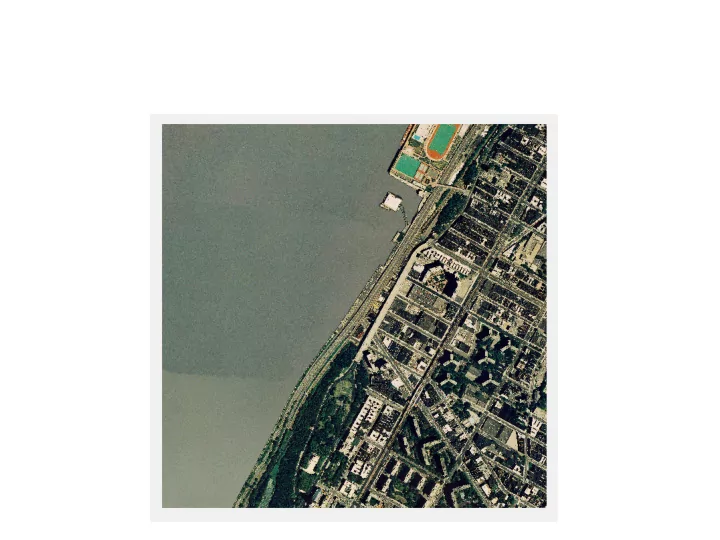
Ortho Photos for the City

slide-6
SLIDE 6

Current Planimetric Data Coverages

slide-7
SLIDE 7

Who We Learned From

  • Seattle
  • Philadelphia
  • Nassau County
  • Dade County
  • San Diego
  • Hennepin County
  • Ft Worth
  • Scottsdale
slide-8
SLIDE 8

Who We Learned From

  • Public Technology Inc.
  • FGDC (Framework Layers)
  • Plangraphics, ESRI, Oracle, Smallworld,

MapInfo, Integraph, Compaq, IBM, HP, etc.

  • LLGIS
  • Urban Logic
  • OGC
slide-9
SLIDE 9

Investment

  • $45 Million to date

– Watermain layer, basemap, parcel, street ctr

  • $25 Million in planning

– Sewer, building # ID, routing db, applications

slide-10
SLIDE 10

Major Applications

  • NYPD Comstat to Reduce Crime
  • OEM EMOLS: Hurricane, Heat Emerg.
  • Capital planning and coordination
  • CAD dispatch support
  • West Nile Fever and other Health apps
  • E-Gov Applications
  • Field inspections, vehicle routing, etc.
slide-11
SLIDE 11

CompStat

slide-12
SLIDE 12
slide-13
SLIDE 13
slide-14
SLIDE 14

September 11th: The EMDC

  • 20 GIS Workstation and 6 Plotters
  • 50 GIS Operators working 24x7
  • 6 Coordinated GIS Units: NYC OEM,

FDNY, FEMA, DOD, State Semo, Hunter

  • 2,600 requests, 75 agencies supported
  • 8 web maps and 1 interactive application
  • Also BT response and AA crash response
slide-15
SLIDE 15

Major Operational Components

  • Map and Data Requests
  • Deep Infrastructure
  • Internet Map Production
  • Field Computing With GPS
  • USAR/NYFD Field Mapping
  • Remote Sensing
  • Mayor’s Briefing
slide-16
SLIDE 16

Creating the EMDC

Volunteers from NYC’s GIS community join the EMDC staff to relieve (exhausted) City and consultant staff

AKRF, American Museum of Natural History, Baker Engineering, Columbia University, Community Cartography, Davis Associates, Hunter College, Malcolm Pirnie, NYPIRG, Parsons, Rockland County, SpaceTrack, Urban Logic, US Census Bureau, Verizon, Westchester County . . . . And many individuals

slide-17
SLIDE 17

Creating the EMDC

Map Production at the EMDC

slide-18
SLIDE 18

Top Users

  • NYPD:

313 requests

  • NYC OEM:

266 requests

  • US Army and Guard:

121 requests

  • FEMA:

106 requests

  • Port Authority:

90 requests

  • Coast Guard:

69 requests

  • FDNY:

58 requests

slide-19
SLIDE 19

Requests By Week

  • Week 1:

99 requests

  • Week 2:

973 requests

  • Week 3:

627 requests

  • Week 4:

365 requests

  • Week 5:

129 requests

  • Week 6:

138 requests

  • Week 7:

59 requests

slide-20
SLIDE 20

EOC Maps

EMOLS Application

slide-21
SLIDE 21

Technologies Used

LIDAR Imagery

slide-22
SLIDE 22
slide-23
SLIDE 23

EOC Maps

Safety Area

slide-24
SLIDE 24
slide-25
SLIDE 25

EOC Maps

Utility Outages

slide-26
SLIDE 26

EOC Maps

Subway Service Updates

slide-27
SLIDE 27

EOC Maps

Three Dimensional Visualization

Urban Data Solutions

slide-28
SLIDE 28

EOC Maps

Recconnaissance Photos

US Navy Combat Camera Crew

slide-29
SLIDE 29

Examples Of Collaboration

  • Military Units guarding vital facilities

– detailed mapping needs

  • FEMA USAR and Mapping Teams

– NYC basemap plus their know-how

  • State photos, Federal thermals, NYC

basemap, State fuel tank and freon data

slide-30
SLIDE 30
slide-31
SLIDE 31
slide-32
SLIDE 32

EOC Maps

Thermal Infrared and Digital Orthophotos

slide-33
SLIDE 33

Problems and Issues

  • Building inspections: 6 inspecting agencies

– $70 versus $2 for Building # ID

  • Environmental Testing

– Clashing data and collection techniques

  • Offer to sell vital infrastructure data

– Cost: $100K’s – Not registered to NYC basemap

slide-34
SLIDE 34

Special Projects

BIN Numbers

Matching Building Identification Numbers with Building Footprints Enables using tabular databases of inspection reports to thematically map structural damage around Ground Zero Requires verification using multiple sources including COGIS, GeoSupport, Sanborn maps, and sometimes field verification. BIN matching for Manhattan, south of Canal Street begins – will take 4+ weeks to complete and pass QA. BIN matching for midtown Manhattan begun in mid-October. Methodology developed at EOC will be applied to a citywide BIN matching project that is on-going at Hunter College.

slide-35
SLIDE 35

Major Lessons Learned

  • Everyone Must Contribute Their Strengths

– Local, State, Federal, Utilities, NGOs, etc.

  • Everything Created Beforehand Proved

Essential: What Wasn’t Hurt

  • In Importance, Information Resources Were

Second Only To The Courage Of First Responders and To Mature Leadership

slide-36
SLIDE 36

Things To Do

  • Register ID’s to building footprints
  • Build traffic routing DB
  • Acquire mobile data centers with telecom
  • Pre-arrange For aerial photography
  • Implement wireless, field units with GPS
  • “Deep” Infrastructure modeling capacity
slide-37
SLIDE 37

Things To Do

  • Strategic data survey
  • Examine options for preparing communities
  • Improve data liaison at EOC
  • Work collaborative with media
  • Table Top and simulation exercises
  • Create I-Team regional databases
slide-38
SLIDE 38

Beyond New York City

  • Let’s Really Collaborate
  • Establish a National GIS Website
  • I-Teams As Lego Pieces For NSDI
  • Local Data plus Federal Technology,

Standards and Architecture

  • Build Local Government Capacity