
SLIDE 1
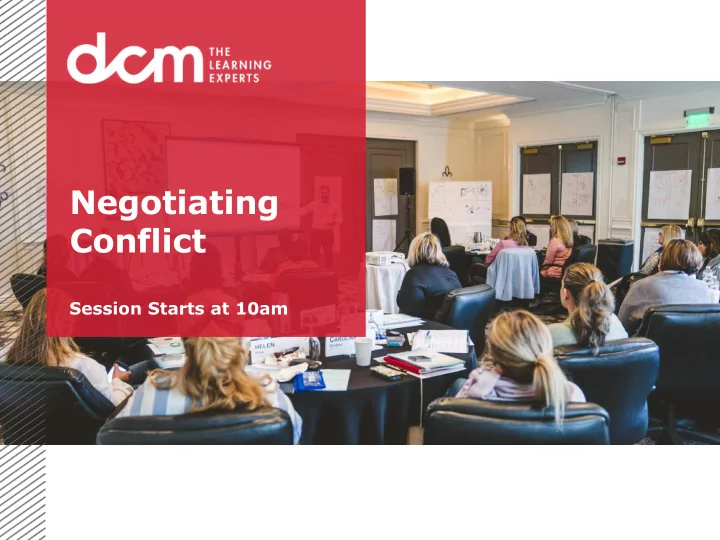
Negotiating Conflict
Session Starts at 10am
Negotiating Conflict Session Starts at 10am What is Negotiation? - - PowerPoint PPT Presentation
Negotiating Conflict Session Starts at 10am What is Negotiation? What skills does a negotiator need to have? Negotiation is a job, process, art. It evokes complex feelings for anyone faced with the prospect of having to negotiate an
Session Starts at 10am
for anyone faced with the prospect of having to negotiate an
prejudices, your need for fairness and your ego, you may start to realise the best possible outcomes in your negotiations.
be a better negotiator but motivating you to change the way you think about negotiations and yourself.
The gift of the gab is associated with the salesman who has an answer for everything. Negotiation does not! The behaviour of a competent negotiator involves silence, where appropriate. That means listening to everything the
saying and working out their true position.
Planning Questioning Listening Making Proposals But it also requires… That you recognise when the selling has effectively concluded and the negotiating has begun Once you start negotiating you STOP selling!
Just having a broad grasp of theoretical knowledge and having learned advanced negotiation skills is not enough! If you don’t click with people, you will never find much success as a negotiator! Why?
The importance of trust in this business cannot be overstated!
Robert Benjamin, Mediator
PE PEOPL PLE PR PROCESS PR PROBLEM
Past History
Values
Beha havio iour urs
Emoti tions
Abilities
Personalities
co communicat cate e is issue ues and nd fe feelings
Structures, , Sy Systems & & Pr Procedures
Role les & Jo Jobs
Conse sequences s of eve vents
Interests & n & needs ds
Conse sequences s of outcomes
You Will Learn: Skills Required by a Negotiator / Mediator Different Conflict Management Strategies, Theories, Models You Will Gain Experience: Team based Conflict Management Simulation, putting the learning into practice.
Challenge One: Its all about you… Negotiation is uncomfortable – silence, threats, consequences Negotiation can be learnt and applied, but you have to have self-motivation for change and the ability to be flexible Past performance is no indicator for future performance Its people that negotiate not machines or companies Any successful negotiator needs to have the ability to see the dynamic of a situation from inside the other persons head!
Challenge Two: There are no rules… Negotiation is often likened to a game of chess Although there are no rules, most negotiators have to work within parameters. Empowered by the boss to only negotiate at a certain level, beyond which discussions are escalated. Total power results in exposure and danger
Challenge Three: Knowing when you have performed well… How do you know how well you have negotiated? Its hard to tell because the other party is highly unlikely to tell you!!! With no feedback we have to rely on… previous precedents. Absolute measurements (profit and loss sheet) Humility to ask pointed questions
Challenge Four: Nothing happens by accident… Being in control of the following is critical… Yourself Your emotions Your relationship You must be conscious of everything which happens before, during and after your negotiation.