
SLIDE 1
3/6/10 1
Marquette Wine
Anna Katharine Mansfield
Enology Project Leader
University of Minnesota
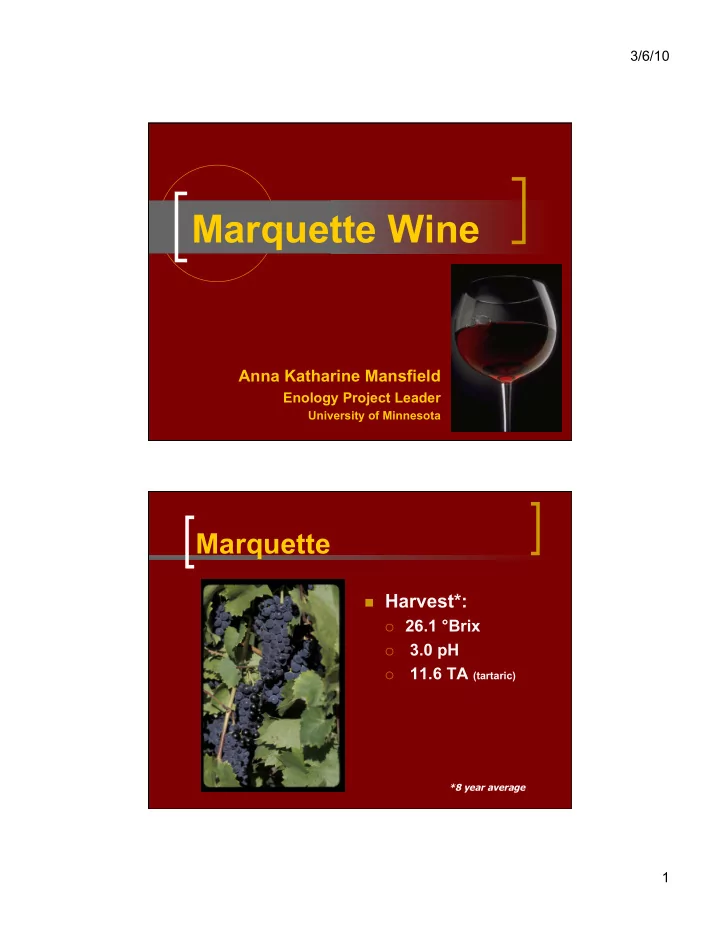
Marquette
Harvest*:
26.1 °Brix 3.0 pH 11.6 TA (tartaric)
*8 year average
Marquette Wine Anna Katharine Mansfield Enology Project Leader - - PDF document
3/6/10 Marquette Wine Anna Katharine Mansfield Enology Project Leader University of Minnesota Marquette Harvest*: 26.1 Brix 3.0 pH 11.6 TA (tartaric) *8 year average 1 3/6/10 Final Chemistry Cultivar % Alcohol pH TA
3/6/10 1
Anna Katharine Mansfield
Enology Project Leader
University of Minnesota
Harvest*:
26.1 °Brix 3.0 pH 11.6 TA (tartaric)
*8 year average
3/6/10 2
All cultivar data averaged over 4 years, 2003-2006
Cultivar % Alcohol pH TA (g/L) Marquette 14.6 3.3 8.2 Maréchal Foch 12.8 3.4 7.9 Frontenac 13.4 3.3 10.3 Merlot 12.4 3.4 7.2
Cultivar Total Visible Color Density Hue Marquette
12.0 5.6 6.5 1.0
Maréchal Foch
9.6 2.1 3.6 0.8
Frontenac
22.6 15.6 21.2 0.3
Merlot
1.5 0.8 1.5 0.8
All cultivar data averaged over 4 years, 2004-2007
3/6/10 3
Ruby
similar to V. vinifera
Complex, well-balanced palate
cherry black currant black pepper berry spice
Moderate tannins
Comparable to Pinot noir
Nutrients
Good N2 concentrations; ammonia may be low Further research needed
Fermentation: 7-10 days on skin
Optimal tannin extraction
Color rich but not inky; Vinifera-like
Extended maceration? Fermentation temperature
Moderate temps (70°F)
High temperature may suppress fruity notes
3/6/10 4
Yeast
Pasteur Red (Red Star) BM 45 (Lallemand)*
Jammy fruit, cedar, earthy notes; enhanced body
RC212 (Lallemand)*
Berry fruit, spice
Strains tolerant of moderate to high alcohols * Nutrient addition recommended with these yeasts
Malolactic fermentation
High malic acid content? As much as 3 g/L drop in TA Strains tolerant of higher alcohol, low pH
CH 11 (Chris Hansen)
3/6/10 5
Inoculation time
Sequential
Last third of AF, or a few days following Racking?
Co-inoculation
Addition 1 day following fermentation Quicker MLF, lower diacetyl ICVD 254 + VP41, Vitalactic H+, Enoferm beta
(Lallemand)
Alcohol content?
Can be as high as 14-15% Amelioration Blending
Maréchal Foch, St. Croix
3/6/10 6
Cold Stabilization
Highly recommended
Chemical Deacidification
Usually, only minor additions needed
Final TA: 6.5-7.5 g/L
Oak Aging
Highly recommended Barrels, beans, chips or spirals Heavy toast preferred over medium
in winemaker’s roundtables
Enological tannins
Generally not recommended
3/6/10 7
High alcohol
Amelioration
Seasonal variation
Tannins lower some seasons Overcropping?
Moderate acid
Potential pH/acid discrepancy
Continued co-inoculation research NOPA analysis Port production Rosé production
3/6/10 8