SLIDE 1
Long Term Effects of Drought: Planning for Recovery
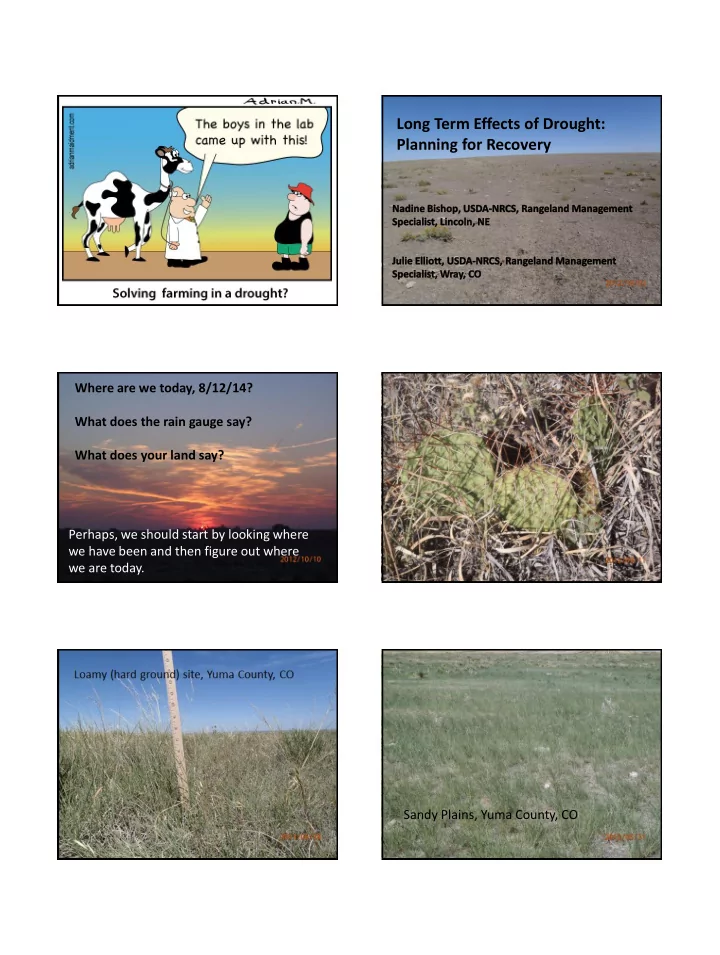
Where are we today, 8/12/14? What does the rain gauge say? What does your land say? Perhaps, we should start by looking where we have been and then figure out where we are today. Sandy Plains, Yuma County, CO
SLIDE 2
Loamy Plains (hard ground), Kit Carson County, Colorado
SLIDE 3 7 feet – typical of Wheat Grasses & Needle grasses
Photo of Kansas Native plants & roots by Jim Richardson
SLIDE 4 HWY 61 HWY 23 Grant HWY 61 RD 760 RD 767
Will this action:
new plants?
- Leave plants tall enough to:
- Capture snow?
- Slow wind at ground
surface?
- Increase litter cover?
- Decrease bare ground?
SLIDE 5
Forage Demand Forage Supply How did the pasture finish the growing season the last two years?
The Ranch Playbook Situation Questions
How much moisture is in the soil profile on April 15? June 1? July 1? August 1? How much standing grass is there on each of these days, in the grazed and ungrazed pastures? Critical to know: * when most of your annual ppt comes – look at long-term averages. (by ~ July 15) * when most of the plant growth occurs for the grasses on your ranch. (~July 15) Rain that comes after ~July 15 will result in big seed heads waving high in the breeze, not in leaves and forage for livestock.
May-June, "Two-thirds of our grass growth is here by mid-June…If you know you’re dry [in] April and May, you’ve already lost 2/3 of your growth." Stick to the plan; don’t second guess. Diversify enterprise mix: “….have a class of animal that you can sell or get rid of… " "When it’s dry,….start depopulating something. …..Sell some of those pairs…. get your stockers moving."
Forage Supply Forage Demand
SLIDE 6
Loamy (hard ground) site, Yuma County, Colorado (near Beecher Island)
www.ianrpubs.unl.edu
Questions?