Location of Critical Incident 60 50 40 # of CIs 30 (n=109) 20 - - PowerPoint PPT Presentation

location of critical incident
SMART_READER_LITE
LIVE PREVIEW

Location of Critical Incident 60 50 40 # of CIs 30 (n=109) 20 - - PowerPoint PPT Presentation

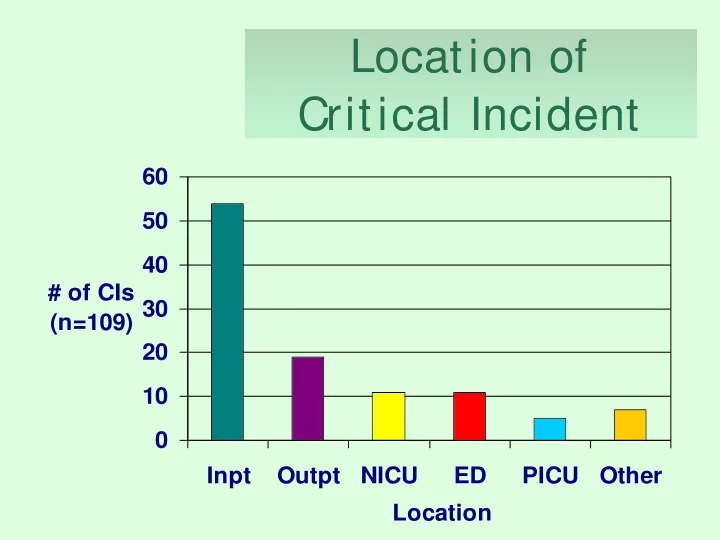
Location of Critical Incident 60 50 40 # of CIs 30 (n=109) 20 10 0 Inpt Outpt NICU ED PICU Other Location Initiating Incidents Many CIs involved a real or potential poor patient outcome Most common Medication error


slide-1
SLIDE 1

Location of Critical Incident

10 20 30 40 50 60 Inpt Outpt NICU ED PICU Other Location # of CIs (n=109)

slide-2
SLIDE 2

Initiating Incidents

  • Many CIs involved a real or potential poor

patient outcome

  • Most common

– Medication error – Mismanagement – Inaccurate patient assessment – Poor communication – S ystems failure

slide-3
SLIDE 3

Initiating Problems

5 10 15 20 25 30

Sign-off Procedure Discoordination System I ssue Documentation Knowledge gap Evaluation problem Med Error Management Error % of CI with problem

slide-4
SLIDE 4

Critical Incident Themes

5 10 15 20 Difficult patient Cultural Competence Delivering Bad News Listening Empathy Advocacy Family Communication Percent of CIs with Theme

slide-5
SLIDE 5

S kills/ Attributes Reinforced by CIs

  • CIs often reflect a resident’ s growing

appreciation of a specific professional skill or attribute, e.g.:

– S taying calm – Maintaining focus – Trusting self – Both feeling and controlling grief

slide-6
SLIDE 6

5 10 15 20 25

Asking for help Other-trust Persistence Vigilance Self-trust Clear Communication Diligence

Attribute Percent of CI s with attribute

S kills/ Attributes Reinforced by CIs

slide-7
SLIDE 7

S ummary: Most Common CI problems

Problem Percent

  • f CIs

Competency Domain(s)

Communication with team, families, or written in chart

59

Com

Patient management or evaluation

44

PC

Medication errors

21

S BP

Knowledge/ skill gap

18

MK

slide-8
SLIDE 8

Most Common Personal Themes

Personal Themes Percent

  • f CIs

Commitment to focus or persistence: vigilance, diligence, avoiding distraction

41

Balancing self-trust vs. trusting others

26

Managing stress or emotion to enhance patient care: grief, frustration, embarrassment, empathy

24