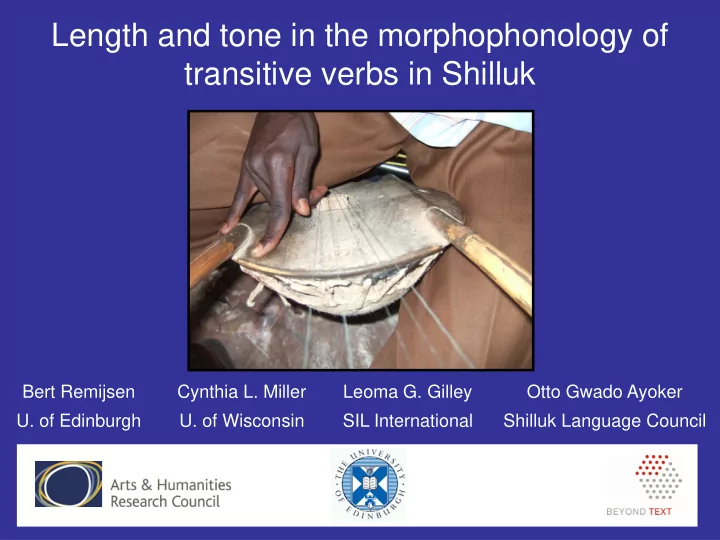
SLIDE 1 Length and tone in the morphophonology of transitive verbs in Shilluk
Bert Remijsen Cynthia L. Miller Leoma G. Gilley Otto Gwado Ayoker
- U. of Edinburgh
- U. of Wisconsin
SIL International Shilluk Language Council
SLIDE 2 Introduction
- Shilluk is part of the Western Nilotic subgroup of Nilo-
Saharan.
- Relatively well-studied (e.g. Westermann 1970, Gilley
1992, Miller & Gilley 2001), but nonetheless tone and length are not yet well understood.
- Tone and length in Shilluk can only be understood in
the context of Shilluk morphology. And vice versa.
- Here are the main results of our investigations into
the phonetics, phonology, and morphophonology of tone and length in Shilluk.
SLIDE 3
Vowel length in Shilluk
SLIDE 4
Vowel length Transcription and gloss Translation
CVC jāat á-k á-ḱâk
tree:S PAST-split ‘Somebody has split wood.’
CVVC bʊ̄ʊl á-k á-ḱâak ak
Bol PAST-givetodrink ‘Somebody gave to drink to Bol.’
CVVVC bʊ̄ʊl á-k á-ḱâaak aak
Bol PAST-givetodrink:FUG ‘Somebody went away to give to drink to Bol.’
Vowel length
An example of distinctive vowel length in Shilluk:
SLIDE 5 Vowel length
- We measured the durations of vowels in three-level
minimal sets for vowel length like this one.
- Data from 8 native speakers (6m, 2f)
- The sets are embedded in various contexts:
- sentence-final (11 sets)
- sentence-medial (3 sets)
- word-medial (suffixed) sentence-final (3 sets)
SLIDE 6
Vowel length
Figure 1. Means and standard deviations for vowel length (V, VV, VVV), across speakers and items, for forms without suffixes.
SLIDE 7
Vowel length
Figure 2. Means and standard deviations for vowel length (V, VV, VVV) in Shilluk and Dinka (Remijsen & Gilley 2008). Shilluk Luanyjang Dinka
SLIDE 8 Vowel length in Shilluk morphology
Where does the three-level vowel length distinction come from?
- In several Western Nilotic languages, suffixes have
been lost, but not without a trace – the quantity of the lost segmental material is transferred to the stem: *CVC-V > CVVC
- This general phonological process of compensatory
lengthening is familiar from many languages (e.g. Hayes 1989). It can create a vowel length contrast.
SLIDE 9 Vowel length in Shilluk morphology
- Interestingly, Western Nilotic already had a vowel
length distinction (V vs. VV).
- As a result of compensatory lengthening, some
daughter languages developed a three-level length distinction (Andersen 1990): *CVC > CVC *CVC-V > CVVC *CVVC > CVVC *CVVC-V > CVVVC
SLIDE 10 Vowel length in Shilluk morphology
- Interestingly, Western Nilotic already had a vowel
length distinction (V vs. VV).
- As a result of compensatory lengthening, some
daughter languages developed a three-level length distinction (Andersen 1990): *CVC > CVC *CVC-V > CVVC *CVVC > CVVC *CVVC-V > CVVVC
DINKA
SLIDE 11 Vowel length in Shilluk morphology
Phonology CVC CVVC CVVVC Lexicon / morphology Short stems Long grade of short stems Long stems Long grade
- f long stems
- The functions of vowel length in Dinka – summary:
SLIDE 12 Vowel length in Shilluk morphology
Phonology CVC CVVC CVVVC Lexicon / morphology Short stems Long grade of short stems Long stems Long grade
- f long stems
- The functions of vowel length in Dinka – summary:
?
SLIDE 13 Vowel length in Shilluk morphology
- In Shilluk, it works differently:
*CVC > CVC *CVC-V > CVC *CVC-V > CVVVC *CVVC > CVVC *CVVC-V > CVVVC
SLIDE 14
CVC CVVC CVVVC lwôol á-ḱʌ̂l
cup PAST-takeaway ‘Somebody took away the cup.’
lwôol á-kʌ̀ʌʌl
cup PAST-take:2S ‘You took away the cup.’
d̻jâŋ á-ḱɔ̂ɔl
‘Somebody herded the cow away.’
d̻jâŋ á-kɔ̂ɔɔl
‘You herded the cow away.’
kòot̻ á-ḱɔ̂l ‘Somebody took out the
thorn.’
kòot̻ á-kɔ̂l ‘You took out the thorn.’
SLIDE 15 Vowel length in Shilluk morphology
Conclusion
- Like Dinka, Shilluk has three-levels of vowel length.
- Vowel length plays a big role in verb paradigms.
- Not covered here: single consonants vs. geminates
in intervocalic position (cf. Gilley 1992).
SLIDE 16
And now tone
SLIDE 17 Tone
- We found 7 distinctive tone patterns at the syllable
level (hereafter tonemes) in verb inflections:
- High (cv́c)
- High Fall (ćv̂c)
- Low (cv̀c)
- Low Fall (cv̂c)
- Mid (cv̄c)
- Late (High) Fall (cv́c̀)
- Rise (cv̌c)
- Some additional tonemes may be involved in the
noun morphology (Reid 2009, work in progress).
SLIDE 18 High
1 2
dâa ŋɔ́l kì-kɛ̂ɲ
EXIST cut:DVN LOC-here
‘There is cutting here.’ Low
1 2
jāat á-ŋɔ̀l kì-kɛ̂ɲ
EXIST PAST-cut:2S LOC-here
‘You have cut the tree here.’ Mid
1 2
góoɟīi á-ŋɔ̄l jāat
machete:S PAST-cut:INST tree:S
‘Smb. used a machete to cut the tree.’ Rise
1 2
jāat á-ŋɔ̌l gʌ̀ʌt
tree:S PAST-cut:FUG:2S river:S
‘You went away to the river to cut the tree.’ High Fall
1 2
jāat á-ŋ́ɔ̂l kì-kɛ̂ɲ
tree:S PAST-cut LOC-here
‘Smb. has cut the tree here.’ Low Fall
1 2
jāat á-ŋɔ̂l kɪ̀-kɛ̂ɲ
tree:S PAST-cut:INTR LOC-here
‘The tree got cut here.’ (unaccusative) Late Fall
1 2
jāat á-ŋɔ́l ̀ gʌ̀ʌt
tree:S PAST-cut:FUG river:S
‘Smb. went away to the river to cut the tree.’
SLIDE 19 Tone
- We measured the fundamental frequency (f0) in 7-
member minimal sets for tone like /ŋɔl/.
- Data from 7 native speakers (5m, 2f).
- The sets are embedded in various contexts:
- sentence-medial (5 sets)
- sentence-final in statement & question (2 sets)
- We extracted the f0 trace over the voiced part of the
stem syllable (cf. display in Praat) and averaged the traces for each toneme in the set, across speakers.
SLIDE 20
Tone
Short vowel (/ŋɔl/) Long vowel (/lʊʊʊɲ/) Figure 3. F0 traces for the seven tonemes in medial position, averaged across speakers, for 2 verbs.
SLIDE 21 Tone in Shilluk verb morphology
OFFEND TAKE EAT HEAT SWITCH THROW PLUCK
- Seven classes of transitive verbs can be
distinguished on the basis of vowel length and tone:
SLIDE 22 Tone in Shilluk verb morphology
OFFEND TAKE EAT HEAT SWITCH THROW PLUCK PAST TENSE á-ḱɔ̂l á-ḱɔ̂l á-ćâm á-ḿʌ̂l á-ĺʊ̂ʊɲ á-ĺɛ̂ɛŋ á-ĺʊ̂ʊɲ
- Seven classes of transitive verbs can be
distinguished on the basis of vowel length and tone:
SLIDE 23 Tone in Shilluk verb morphology
OFFEND TAKE EAT HEAT SWITCH THROW PLUCK PAST TENSE CVC CVC CVC CVC CVVC CVVC CVVC á-ḱɔ̂l á-ḱɔ̂l á-ćâm á-ḿʌ̂l á-ĺʊ̂ʊɲ á-ĺɛ̂ɛŋ á-ĺʊ̂ʊɲ
- Seven classes of transitive verbs can be
distinguished on the basis of vowel length and tone:
SLIDE 24 Tone in Shilluk verb morphology
OFFEND TAKE EAT HEAT SWITCH THROW PLUCK PAST TENSE CVC CVC CVC CVC CVVC CVVC CVVC á-ḱɔ̂l á-ḱɔ̂l á-ćâm á-ḿʌ̂l á-ĺʊ̂ʊɲ á-ĺɛ̂ɛŋ á-ĺʊ̂ʊɲ PAST TENSE 2nd SINGULAR á-kɔ̀l á-kɔ̂l á-càaam á-mʌ̂ʌʌl á-lʊ̀ʊʊɲ á-lɛ̀ɛɛŋ á-lʊ̂ʊʊɲ
- Seven classes of transitive verbs can be
distinguished on the basis of vowel length and tone:
SLIDE 25 Tone in Shilluk verb morphology
OFFEND TAKE EAT HEAT SWITCH THROW PLUCK PAST TENSE CVC CVC CVC CVC CVVC CVVC CVVC á-ḱɔ̂l á-ḱɔ̂l á-ćâm á-ḿʌ̂l á-ĺʊ̂ʊɲ á-ĺɛ̂ɛŋ á-ĺʊ̂ʊɲ PAST TENSE 2nd SINGULAR CVC CVC CVVVC CVVVC CVVVC CVVVC CVVVC á-kɔ̀l á-kɔ̂l á-càaam á-mʌ̂ʌʌl á-lʊ̀ʊʊɲ á-lɛ̀ɛɛŋ á-lʊ̂ʊʊɲ
- Seven classes of transitive verbs can be
distinguished on the basis of vowel length and tone:
SLIDE 26 Tone in Shilluk verb morphology
OFFEND TAKE EAT HEAT SWITCH THROW PLUCK PAST TENSE CVC CVC CVC CVC CVVC CVVC CVVC á-ḱɔ̂l á-ḱɔ̂l á-ćâm á-ḿʌ̂l á-ĺʊ̂ʊɲ á-ĺɛ̂ɛŋ á-ĺʊ̂ʊɲ PAST TENSE 2nd SINGULAR CVC CVC CVVVC CVVVC CVVVC CVVVC CVVVC á-kɔ̀l á-kɔ̂l á-càaam á-mʌ̂ʌʌl á-lʊ̀ʊʊɲ á-lɛ̀ɛɛŋ á-lʊ̂ʊʊɲ
- Seven classes of transitive verbs can be
distinguished on the basis of vowel length and tone:
SLIDE 27 Tone in Shilluk verb morphology
OFFEND TAKE EAT HEAT SWITCH THROW PLUCK PAST TENSE CVC CVC CVC CVC CVVC CVVC CVVC á-ḱɔ̂l á-ḱɔ̂l á-ćâm á-ḿʌ̂l á-ĺʊ̂ʊɲ á-ĺɛ̂ɛŋ á-ĺʊ̂ʊɲ PAST TENSE 2nd SINGULAR CVC CVC CVVVC CVVVC CVVVC CVVVC CVVVC á-kɔ̀l á-kɔ̂l á-càaam á-mʌ̂ʌʌl á-lʊ̀ʊʊɲ á-lɛ̀ɛɛŋ á-lʊ̂ʊʊɲ
- Seven classes of transitive verbs can be
distinguished on the basis of vowel length and tone:
SLIDE 28 Tone in Shilluk verb morphology
OFFEND TAKE EAT HEAT SWITCH THROW PLUCK PAST TENSE CVC CVC CVC CVC CVVC CVVC CVVC á-ḱɔ̂l á-ḱɔ̂l á-ćâm á-ḿʌ̂l á-ĺʊ̂ʊɲ á-ĺɛ̂ɛŋ á-ĺʊ̂ʊɲ PAST TENSE 2nd SINGULAR CVC CVC CVVVC CVVVC CVVVC CVVVC CVVVC á-kɔ̀l á-kɔ̂l á-càaam á-mʌ̂ʌʌl á-lʊ̀ʊʊɲ á-lɛ̀ɛɛŋ á-lʊ̂ʊʊɲ
- Seven classes of transitive verbs can be
distinguished on the basis of vowel length and tone:
SLIDE 29 Tone in Shilluk verb morphology
OFFEND TAKE EAT HEAT SWITCH THROW PLUCK PAST TENSE CVC CVC CVC CVC CVVC CVVC CVVC á-ŋ́ɔ̂l á-ĺɛ̂ŋ á-ćâm á-ḿʌ̂l á-ĺʊ̂ʊɲ á-ĺɛ̂ɛŋ á-ĺʊ̂ʊɲ PAST TENSE 2nd SINGULAR CVC CVC CVVVC CVVVC CVVVC CVVVC CVVVC á-kɔ̀l á-kɔ̂l á-càaam á-mʌ̂ʌʌl á-lʊ̀ʊʊɲ á-lɛ̀ɛɛŋ á-lʊ̂ʊʊɲ PAST TENSE WITH DESTINATION á-kɔ́l̀ á-kɔ́l̀ á-cáaam̀ á-mʌ́ʌʌl̀ á-ĺʊ̂ʊʊɲ á-lɛ́ɛɛŋ̀ á-lʊ́ʊʊɲ̀
- Seven classes of transitive verbs can be
distinguished on the basis of vowel length and tone:
SLIDE 30 Tone in Shilluk verb morphology
OFFEND TAKE EAT HEAT SWITCH THROW PLUCK PAST TENSE CVC CVC CVC CVC CVVC CVVC CVVC á-ḱɔ̂l á-ḱɔ̂l á-ćâm á-ḿʌ̂l á-ĺʊ̂ʊɲ á-ĺɛ̂ɛŋ á-ĺʊ̂ʊɲ PAST TENSE 2nd SINGULAR CVC CVC CVVVC CVVVC CVVVC CVVVC CVVVC á-kɔ̀l á-kɔ̂l á-càaam á-mʌ̂ʌʌl á-lʊ̀ʊʊɲ á-lɛ̀ɛɛŋ á-lʊ̂ʊʊɲ PAST TENSE WITH DESTINATION á-kɔ́l̀ á-kɔ́l̀ á-cáaam̀ á-mʌ́ʌʌl̀ á-ĺʊ̂ʊʊɲ á-lɛ́ɛɛŋ̀ á-lʊ́ʊʊɲ̀
- Seven classes of transitive verbs can be
distinguished on the basis of vowel length and tone:
SLIDE 31 Tone in Shilluk verb morphology
- The distribution of tonemes does not interact with
phonological length – contour tones appear on V vowels just as they appear on VVV vowels.
- Consider the distribution of Late Fall and Rise:
CVC CVVC CVVVC Late Fall á-ŋɔ́l̀
PAST-cut:FUG
á-kɔ́ɔɔl̀
PAST-herd:FUG
Rise á-ŋɔ̌l
PAST-cut:FUG:2S
á-kɔ̌ɔɔl
PAST-herd:FUG:2S
SLIDE 32 Tone in Shilluk verb morphology
- However, tone does interact with morphological
length: the Rise and the Late Fall are only found
- n the synchronic reflexes of suffixed verb forms.
CVC CVVC CVVVC Late Fall á-ŋɔ́l̀
PAST-cut:FUG
á-kɔ́ɔɔl̀
PAST-herd:FUG
Rise á-ŋɔ̌l
PAST-cut:FUG:2S
á-kɔ̌ɔɔl
PAST-herd:FUG:2S
SLIDE 33 Tone in Shilluk verb morphology
- Instead, tone interacts with morphological length:
the Rise and the Late Fall are only found on the reflexes of historically suffixed verb forms: *CVC > CVC *CVC-V > CVC *CVC-V > CVVVC *CVVC > CVVC *CVVC-V > CVVVC
- This suggests that the late-aligned tone targets of
Late Fall and Rise reflect the tones of lost suffixes.
SLIDE 34 Tone in Shilluk verb morphology
- In summary, the association of Rise and Late Fall
with morphologically complex forms supports the compositional hypothesis as a diachronic scenario.
- In other words, Shilluk has at least seven tone
distinctive patterns because the tones of lost suffixes were added to the tone pattern of the stem syllable.
SLIDE 35 Tone in Shilluk verb morphology
- A related but separate question is the following –
does the compositional hypothesis still hold as a synchronic analysis?
- That is, does it make sense to postulate L,M,H as
distinctive elements, and derive the tone patterns of surface forms in a compositional fashion?
SLIDE 36 Tone in Shilluk verb morphology
- The following data are encouraging:
Low verbs Falling verbs Instrumental á-kɔ̄l á-ḱɔ̂l
- But other inflections show that more is involved
than putting tone targets together. Low verbs Falling verbs 2nd sg. á-kɔ̀l á-kɔ̂l
á-kɔ̌l á-kɔ́l
SLIDE 37 Conclusion
- Shilluk has a very rich system of suprasegmental
distinctions;
- These distinctions have a high functional load in the
morphosyntax;
- As a result the study of sound system and
morphosyntax are tightly connected.
- These findings will inform typological and
theoretical work on prosody in general, and will contribute the study of Shilluk grammar.
SLIDE 38 Thank you to…
- The Shilluk speakers: John Adwok Apar, Rhoda
Oman Nyibil, Daniel Thabo Nyibong, Onyoti Adigo Nyikwec, Maria Bocay Onak, Nyikwec Pakwan, Peter Mojwok Yor.
- Prof. Al-Amin Abu-Manga (U. of Khartoum) for
support during two data collection trips;
- The Arts & Humanities Research Council (UK), for
funding this research through two grants: Stress in Nilotic – a typological challenge (’05-’08) Metre and Melody in Dinka Speech and Song (’09- ’11 – Beyond Text programme)
SLIDE 39
On request
SLIDE 40 Vowel length by context
- Figure. Means and standard deviations for vowel
length (V, VV, VVV) by context: utterance-final (X%), medial followed by consonant (X#) and word-medial and utterance-final (Xa%).
SLIDE 41 Lexical/morphological tone and question intonation
- There is no boundary tone at the right edge of Shilluk
utterances that are statements.
- At the right edge of utterances that are questions,
there is a Low boundary tone, and the register is
- increased. These characteristics can be observed
from the f0 traces below. The Low boundary tone is salient when the lexical/morphological configuration ends high, (e.g. Rise [Fig. below, left]). The increase in range is salient when the lexical/morphological configuration ends low (cf. Low Fall [Fig. below, right]).
SLIDE 42 statement question
Lexical/morphological tone and question intonation
- Figure. F0 traces for the Rise and Late Fall on
/lʊʊʊɲ/, sentence-finally in statement (blue) and question (brown), averaged across speakers (7). Rise Low Fall