
SLIDE 1
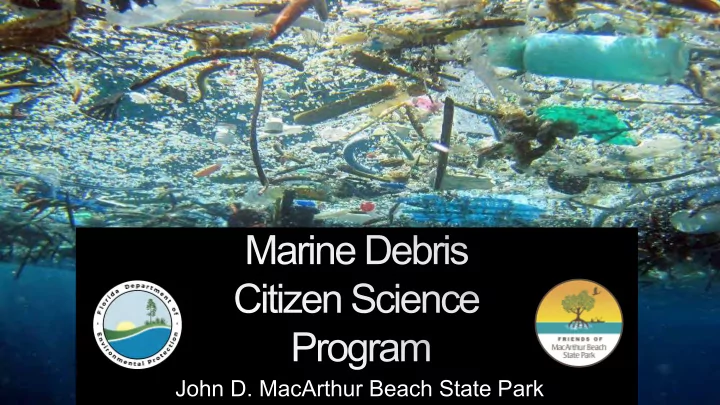
John D. MacArthur Beach State Park Definition: any man-made object - - PowerPoint PPT Presentation
John D. MacArthur Beach State Park Definition: any man-made object discarded, disposed of, or abandoned that enters the coastal or marine environment - National Oceanic and Atmospheric Administration (NOAA) Marine Debris can be floating
Marine Debris can be floating in the ocean or washed up on the beach.
Dorset Coast, UK Hawaii, USA
Marine Debris is not just in one place, it is all over the world.
Manila, Philippines Alaska, USA
Marine debris can be very dangerous - threatening
endangering marine animals and seabirds! It can affect their well-being and even our own health and safety. It also takes away from the beauty of our natural environment.
How does marine debris affect wildlife in the
One issue is entanglement. These are all examples of how this marine debris can entangle animals, making them unable to swim, fly, eat or breathe – ultimately bringing them to their death.
Another issue of marine debris is ingestion. Animals are eating plastics and other debris thinking that it is on their natural food chain. This causes huge issues for their digestive tracts.
Seabird stomach filled with plastic Marine life sometimes can’t tell the difference between jellyfish and plastic bags – can you?
When these plants are threatened, the entire food web is put at risk. Marine debris can prevent algae and plankton, the photosynthetic producers in the ocean from receiving enough sunlight to create nutrients.
The “Great Pacific Garbage Patch” is a collection of marine debris in the North Pacific Ocean. But, this is not the only area that is having this problem.
“Gyres” form with ocean currents, collecting marine debris into different areas around the world, making many “garbage patches”.
Most debris in these Garbage Patches is plastic. Plastic is not biodegradable, meaning it does not disintegrate—it simply breaks into tinier and tinier pieces, known as microplastics.
Microplastics are small pieces of plastic, less than 5 millimeters long.
microplastics
aquatic life
unknown
Marine debris from land-based sources washes, blows, or is released into the water from coastal or inland areas. Individuals can leave trash or toss it into the
trash on the streets or improperly manage their waste and garbage bins. The inland actions can lead to trash in storm drains, rivers, and other waterways. Once in these waterways, the trash can be carried to
Remember: We don’t want to collect the natural seaweed or anything else that belongs on the beach. This is the wrack line, made out of seaweed and other natural materials, like shells. Keep those items on the beach.
Before After