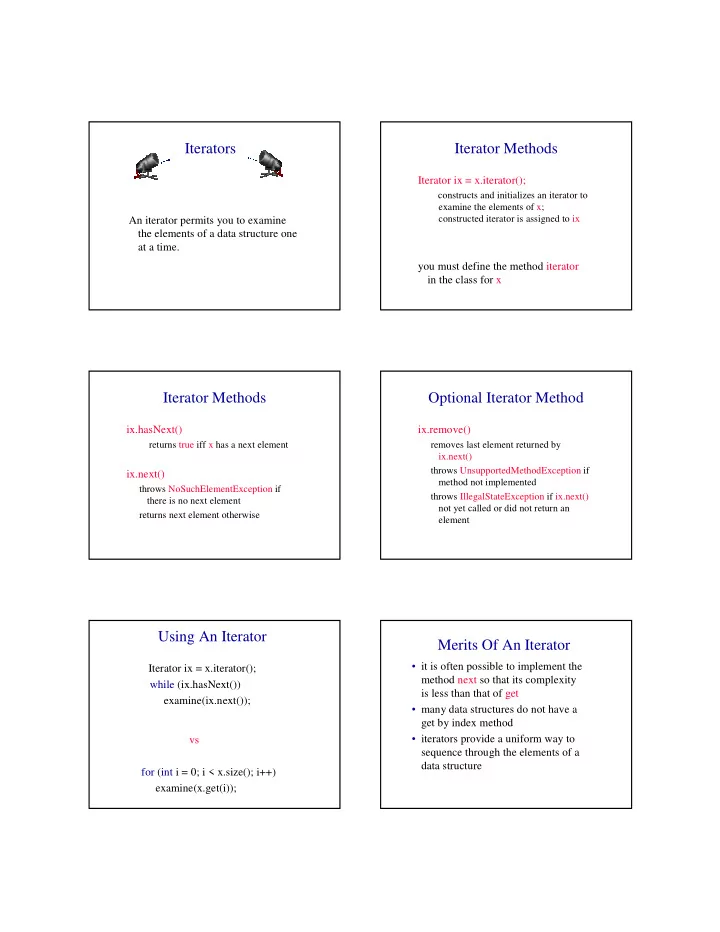

SLIDE 1
Iterators
An iterator permits you to examine the elements of a data structure one at a time.
Iterator Methods
Iterator ix = x.iterator();
constructs and initializes an iterator to examine the elements of x; constructed iterator is assigned to ix
you must define the method iterator in the class for x
Iterator Methods
ix.hasNext()
returns true iff x has a next element
ix.next()
throws NoSuchElementException if there is no next element returns next element otherwise
Optional Iterator Method
ix.remove()
removes last element returned by ix.next() throws UnsupportedMethodException if method not implemented throws IllegalStateException if ix.next() not yet called or did not return an element
Using An Iterator
Iterator ix = x.iterator(); while (ix.hasNext()) examine(ix.next()); vs for (int i = 0; i < x.size(); i++) examine(x.get(i));
Merits Of An Iterator
- it is often possible to implement the
method next so that its complexity is less than that of get
- many data structures do not have a
get by index method
- iterators provide a uniform way to