INFORMAL IS THE NEW NORMAL: ENGAGING YOUTH IN FRAGILE, INFORMAL - - PowerPoint PPT Presentation

informal is the new normal
SMART_READER_LITE
LIVE PREVIEW

INFORMAL IS THE NEW NORMAL: ENGAGING YOUTH IN FRAGILE, INFORMAL - - PowerPoint PPT Presentation

INFORMAL IS THE NEW NORMAL: ENGAGING YOUTH IN FRAGILE, INFORMAL ECONOMIES International Rescue Committee Mercy Corps Plan International Saving and improving lives in the worlds toughest places. INVESTING IN AFGHANISTANS GIRLS Saving and

slide-1
SLIDE 1

Saving and improving lives in the world’s toughest places.

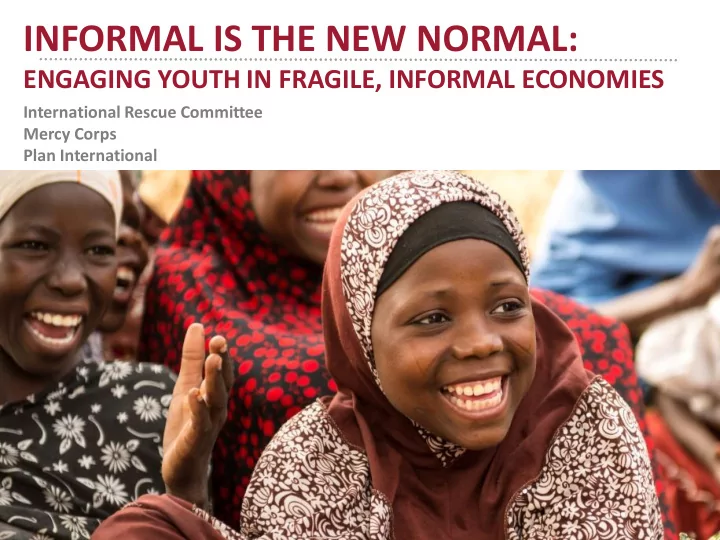
INFORMAL IS THE NEW NORMAL:

ENGAGING YOUTH IN FRAGILE, INFORMAL ECONOMIES

International Rescue Committee Mercy Corps Plan International

slide-2
SLIDE 2

Saving and improving lives in the world’s toughest places. Saving and improving lives in the world’s toughest places.

INVESTING IN AFGHANISTAN’S GIRLS

slide-3
SLIDE 3

Saving and improving lives in the world’s toughest places.

Youth-led Market Research

slide-4
SLIDE 4

Saving and improving lives in the world’s toughest places.

Youth-led Market Research

Formal employment for girls and women is nearly nonexistent in Helmand

slide-5
SLIDE 5

Saving and improving lives in the world’s toughest places.

slide-6
SLIDE 6

Saving and improving lives in the world’s toughest places.

  • RELEVANT SKILLS
  • HOME-BASED

BUSINESSES & NEW MARKETS

  • INCREASED INCOME
  • SOCIAL CAPITAL
  • RIPPLE EFFECT

GIRLS IN THE INFORMAL ECONOMY

Investing in Afghanistan's Girls

slide-7
SLIDE 7

From Harm to Home | Rescue.org

Creating a Dividend for Lasting Peace: Improving access to economic opportunities for vulnerable youth in post-conflict Burundi

Nadia-Elise Gateka, IRC Burundi Child and Youth Protection and Development Program

slide-8
SLIDE 8

8 From Harm to Home | Rescue.org

General overview

Beneficiaries: 1,800 rural vulnerable youth Goal: Improved livelihood

  • pportunities for youth in

post-conflict settings

slide-9
SLIDE 9

9 From Harm to Home | Rescue.org

Research

Evaluation question: What is the impact of a youth vocational training programme on social and economic wellbeing of vulnerable young people in post conflict Burundi? Methodology: Randomised Controlled Trial (blocked person) Sample size: +/- 1,000 youth

slide-10
SLIDE 10

10 From Harm to Home | Rescue.org

What did we achieve?

  • 1. Increased proportion of young people earning a

salary through stable paying jobs

  • 2. Diversification of the types of employment
  • 3. Improvement in economic status evident through

higher proportion of personal possession

slide-11
SLIDE 11

11 From Harm to Home | Rescue.org

What did we achieve?

  • 4. Improved wellbeing, self efficacy and self esteem

5 No improved economic status in terms of land

  • wnership for cultivation
  • 6. Nutritional situation not affected (further research

required to identify the reasons, also may have been influenced by timing of surveys)

slide-12
SLIDE 12

12 From Harm to Home | Rescue.org

  • 3. How did we achieve it?

Youth Apprenticeship model =

1. Entrepreneurship package (business skills, life skills, mentoring + savings led financial services + start up grants 2. Apprenticeship package = theoretical training + job placement

The 3 provinces targeted by the project

slide-13
SLIDE 13

Sewing Baking

13

Trades training

slide-14
SLIDE 14

14

Numeracy/literacy & Business skills

slide-15
SLIDE 15

Exhibit

15

Post-graduation services

Mentoring

slide-16
SLIDE 16

16 From Harm to Home | Rescue.org

What did we learn? Girls protection

1.Make everyone sign a code of conduct !

  • 2. Community validation
  • f trades trainers
slide-17
SLIDE 17

17 From Harm to Home | Rescue.org

What did we learn? Tips for Girls effective participation

slide-18
SLIDE 18

18 From Harm to Home | Rescue.org

What did we learn? Challenges for girls

  • Often parents/husbands want to

keep the girls at home to help them with house chores.

  • < 30% of trades women meet

criterias to be supported as trades trainers

  • Poor diversification of trades in

rural areas

slide-19
SLIDE 19

19 From Harm to Home | Rescue.org

What did we learn? On Start-up kit and graduate mentoring

Good:

  • Associations with more girls than boys are more

sustainable than those with many boys Pay attention:

  • Low appropriation of kits by graduates.
slide-20
SLIDE 20

20 From Harm to Home | Rescue.org

What did we learn? During research

  • Youth mobility
  • Reporting on assets

and earnings was biased during data collection

slide-21
SLIDE 21

Thank you!

MERCI! MURAKOZE!

21

slide-22
SLIDE 22

INFORMAL IS THE NEW NORMAL:ENGAGING YOUTH IN INFORMAL, FRAGILE ECONOMIES

By Enica- Plan Zambia Youth Leader 2014 Global Youth Economic Opportunities Summit

slide-23
SLIDE 23

Experience in the Youth Savings Group (OSAWE)

slide-24
SLIDE 24

Starting My Business

slide-25
SLIDE 25

Looking into the Future

slide-26
SLIDE 26

Recommendations on Engaging Young Women

slide-27
SLIDE 27

Thank you! Questions?

Please contact Diane Mukuka at Plan Zambia for more information: diane.mukuka@plan-international.org

slide-28
SLIDE 28

Saving and improving lives in the world’s toughest places.

QUESTIONS?

CONTACT

Mercy Corps tnoronha@mercycorps.org Ted Volchok Mercy Corps tvolchok@mercycorps.org Tara Noronha

slide-29
SLIDE 29

Saving and improving lives in the world’s toughest places.

THANK YOU

Tara Noronha Mercy Corps tnoronha@mercycorps.org Nadia-Elise Gateka IRC Nadia-Elise.Gateka@rescue.org Diane Mukuka Plan Zambia diane.mukuka@plan-international.org