
SLIDE 1
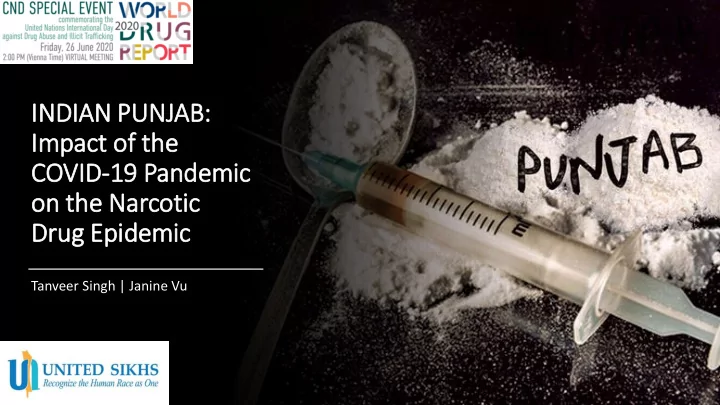
IN INDIAN PUNJAB: Im Impact of the COVID ID-19 Pandemic ic
- n the Narcotic
Drug Epid idemic
Tanveer Singh | Janine Vu
IN INDIAN PUNJAB: Im Impact of the COVID ID-19 Pandemic ic on - - PowerPoint PPT Presentation
IN INDIAN PUNJAB: Im Impact of the COVID ID-19 Pandemic ic on the Narcotic Drug Epid idemic Tanveer Singh | Janine Vu Background: Punjabs Narcotic Drug Epidemic Highest prevalence (2.5%) of non-tobacco, non-alcohol substance use
Tanveer Singh | Janine Vu
and morphine seized globally4
5
Detoxification Relapse Prevention
More difficult cases
Early identification
NGOs
Religious/spiritual groups Self-help groups
Figure 1: “Punjab Model”6
Rehabilitation Detoxification Relapse Prevention
More difficult cases
Early identification
NGOs
Religious/spiritual groups Self-help groups
Figure 1: “Punjab Model”6
Outreach programs linking rural communities7,8 Educational programs focused on reducing the stigma
1. Gururaj G, Varghese M, Benegal V et al. National Mental Health Survey of India, 2015-16: Prevalence, patterns and outcomes. Bengaluru, National Institute of Mental Health and Neuro Sciences, NIMHANS Publication No. 129, 2016. 2. Avasthi A, Basu D, Subodh BN, et al. Epidemiology of substance use and dependence in the state of Punjab, India: Results of a household survey on a statewide representative sample. Asian J Psychiatr. 2018;33:18-29. 3. Avasthi A, Basu D, Subodh BN, et al. Pattern and prevalence of substance use and dependence in the Union Territory of Chandigarh: Results of a rapid assessment survey. Indian J Psychiatry. 2017;59(3):284-292. 4. World Drug Report 2019 (United Nations publication, Sales No. E.19.XI.8) 5. COVID-19 blessings: Over 5 lakh drug addicts treated in Punjab [Internet]. Tribune India. 2020 [cited 23 June 2020]. Available from: https://www.tribuneindia.com/news/punjab/covid-19-blessings-over-5- lakh-drug-addicts-treated-in-punjab-83453 6. Basu D, Avasthi A. Strategy for the management of substance use disorders in the State of Punjab: Developing a structural model of state- level de-addiction services in the health sector (the "Punjab model"). Indian J Psychiatry. 2015;57(1):9-20. 7. Singh RR, Ambekar A. Opioid substitution treatment in a public health setting: a collaboration between hospitals and NGOs in the Punjab. Int J Drug Policy. 2012;23(2):170-171.