HUMBER RENEWABLES PROJECT A proposal for a biomass power station - - PowerPoint PPT Presentation

humber
SMART_READER_LITE
LIVE PREVIEW

HUMBER RENEWABLES PROJECT A proposal for a biomass power station - - PowerPoint PPT Presentation

HUMBER RENEWABLES PROJECT A proposal for a biomass power station on the Humber Estuary Agenda Background who is DONG Energy? what is the need for a new power station? why here? The Proposal whats involved? what


slide-1
SLIDE 1

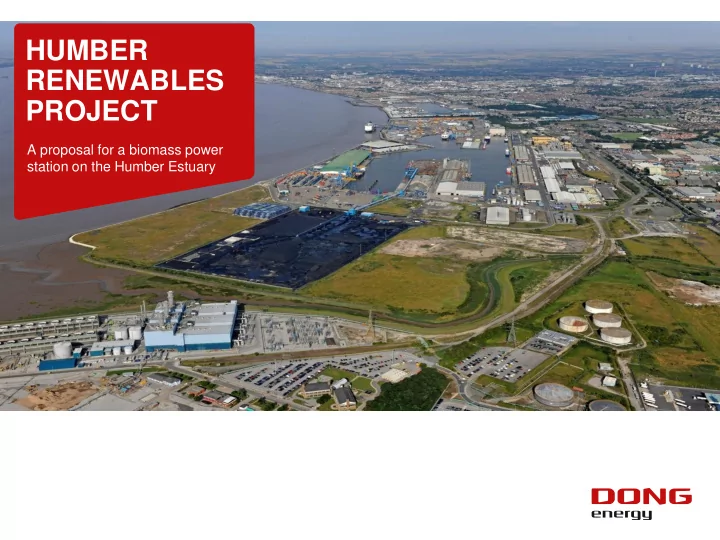
HUMBER RENEWABLES PROJECT

A proposal for a biomass power station on the Humber Estuary
slide-2
SLIDE 2

Agenda

  • Background

– who is DONG Energy? – what is the need for a new power station? – why here?

  • The Proposal

– what’s involved? – what is biomass?

  • Application Process

– what will happen and when

  • Consultation

– outline of process – feedback routes

slide-3
SLIDE 3

Who we are

  • DONG Energy is one of the leading energy groups in Northern Europe
  • Headquartered in Denmark
  • Buys, produces, distributes and trades in energy and related products
  • Employs approx 6,000 people full time
  • Revenue of approx. 6.6 billion Euros in 2009
  • Long-term goal: to provide reliable energy without CO2
slide-4
SLIDE 4

Why we need new power stations

  • Many of the UK’s existing coal fired and nuclear power stations are

reaching the end of their working life

  • Burning fossil fuels creates greenhouse gases that cause climate change

(The Renewable Energy Association estimates that more than 7 billion tonnes of carbon dioxide are emitted globally each year through fossil fuel use)

  • Demand for electricity has not decreased significantly, despite the

introduction of energy efficiency programmes

  • The UK has set a target of generating 15% of its energy from renewable

sources by 2020 – biomass is a renewable fuel

slide-5
SLIDE 5

Why choose Hull?

  • Hull already plays a role in the

UK energy sector

  • It has an established power

and transport infrastructure

  • Population has knowledge and

expertise in energy generation

  • Access to the sea allows

transportation of fuel in large quantities with no impact on local road or rail network

slide-6
SLIDE 6

What is being proposed?

  • A new power station on the

north shore of the Humber

  • Regeneration of a currently

vacant site adjacent to Queen Elizabeth Dock

  • The use of biomass -

primarily clean woodchips or wood pellets.

slide-7
SLIDE 7

What is biomass?

  • Biomass is an alternative to

fossil fuels

  • It is a renewable fuel source

because it is largely derived from plants

  • Biomass can come from

plantations where it is grown specifically as a fuel

  • It can also include residues

from forestry and agriculture

  • It is largely carbon neutral,

so it helps to combat global warming

slide-8
SLIDE 8

What will the plant look like?

Because we are consulting early, we do not have a lot of detail yet, but:

  • It will take up an area of about 92,000m2 (the size of 13 rugby pitches)
  • It will include a main turbine building, fuel reception and storage area,

boiler house, stack, administrative buildings, etc

  • Main buildings will be no higher than 100m
  • It will generate just under 300MW electricity (enough to meet the average

needs for up to ½ million homes)

slide-9
SLIDE 9

Where will the fuel come from?

  • The biomass fuel will come from a sustainable source
  • The biomass is intended primarily to be a combination of woodchips and

wood pellets

  • The wood for the power station will mainly come from abroad
  • Small quantities could also be sourced locally
  • The fuel will arrive at the site by ship and be offloaded at the deep water jetty

that ABP is developing nearby.

slide-10
SLIDE 10

What about emissions?

  • All power stations create emissions and the Humber Renewables Project is

no exception

  • However, the combustion of clean woodchip and wood pellets creates

relatively low emissions compared to conventional power stations

  • The power station will use Best Available Techniques (BAT) to ensure that

emissions do not present a risk to local people or the environment

  • Emissions associated with fuel transportation will be greatly reduced

because most of the biomass will arrive in very large ships that can hold up to 100,000 tonnes each trip

slide-11
SLIDE 11

What is the application process?

  • Because it will generate more than 50MW, the Humber Renewables Project

is classed as a Nationally Significant Infrastructure Project (NSIP)

  • The Infrastructure Planning Commission (IPC) decides whether or not this

type of project can be built

  • The application process says that people who live and work near the

proposed power station should be consulted from an early stage. This matches DONG Energy’s own approach to consultation

  • The views of local people will be taken into account when developing more

detailed proposals

  • If the IPC is not satisfied that sufficient consultation has taken place, it may

not give permission for the power station to be built

slide-12
SLIDE 12

What is the consultation process?

  • DONG Energy aims to develop a dialogue with local people from a very

early stage

  • The consultation is to find out what people think about the proposal for the

biomass power station

  • The design of the station will be made taking these views into consideration
  • All the responses will be recorded in a Consultation Report which will be

published later in the year

  • The Consultation Report will form part of the formal application for

development consent

  • Full details of the consultation process are given in the Statement of

Community Consultation

slide-13
SLIDE 13

How will we conduct consultation?

Through two-way discussion, such as:

  • Briefing meetings like this one
  • Public exhibitions or roadshows
  • Stakeholder meetings
  • We’d also like to establish a community liaison group

Through provision of information, such as:

  • Advertising and editorial in the local press
  • Printed materials (brochures, etc)
  • The project website
slide-14
SLIDE 14

Feedback routes

  • Write to us at FREEPOST HUMBER RENEWABLES (no stamp required)
  • Email your views to humberrenewables@dongenergy.co.uk
  • Feed back via the form on the website www.humberrenewables.co.uk
slide-15
SLIDE 15

Thank you for listening

Do you have any questions?