
SLIDE 1
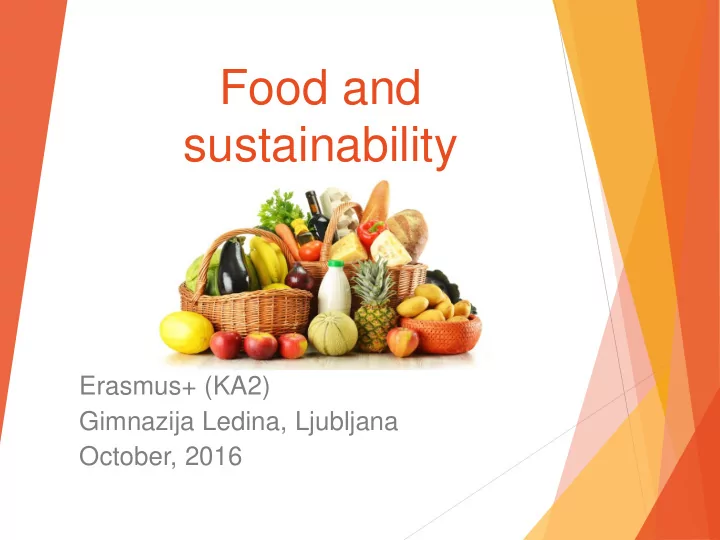
Food and sustainability
Erasmus+ (KA2) Gimnazija Ledina, Ljubljana October, 2016
Food and sustainability Erasmus+ (KA2) Gimnazija Ledina, Ljubljana - - PowerPoint PPT Presentation
Food and sustainability Erasmus+ (KA2) Gimnazija Ledina, Ljubljana October, 2016 K.W.L. chart What I already know? What I want to know? What I have learned? FOOD VOCABULARY Nutrients Traditional country Proteins, fats,
Erasmus+ (KA2) Gimnazija Ledina, Ljubljana October, 2016
What I already know? What I want to know? What I have learned?
Nutrients Proteins, fats,
carbon hydrates
Vitamins, minerals,
water, fiber and phytochemicals
Vegetables, fruits,
grains, legumes, meat, fish
Digestion and
metabolism
Traditional country
dishes
Raw/cooked food Balanced healthy
diet and health
Fast food and
NATURAL
Raw Honey Natural Stevia Dates Coconut Sugar Maple Syrup
ARTIFICAL
Saccharin Sucralose Aspartame
Isomalt
Better technical knowledge on the
environmental impacts of food
Stimulating sustainable and locally food
production
Promoting sustainable and locally food
consumption
Reducing food waste and losses (Do not
throw food away! Just eat it!)
Improving food policy
Food is essential to life. It also forms an important part of our cultural identity, and plays an important role in the economy. People are aware that the food they eat is an important factor affecting their health, but what is less well known is the impact producing and consuming food has on the world's resources.
FRUITS PRODUCTION VEGETABLES PRODUCTION VITICULTURE
are healthy, come from plants, most of them are convenient, have fiber, water, vitamins, minerals and
have significant chewing resistance.
are fulfilling (most people are satisfied after one large
apple, which contains 23 grams of sugar, 13 of which are fructose),
when fructose hits your liver slowly and in small
amounts, then your body can easily take care of fructose,
fiber can reduces cholesterol levels, slow absorption
tend to be high in several vitamins and minerals;
especially vitamin C, potassium and folate,
eat variety of fruits – different fruits contain different
nutrients.
Many human studies show that fruit intake
is assocciated with lower risk of cholesterol, heart attacks, stroke, diabetes type II and some types of cancers,
eating more of apples and oranges lead to
automatic reduction in calorie intake,
the main reason to avoid fruit include some
sort of intolerance (fructose intolerance) or being on very law – carb / ketogenic diet.
Fruit juices and dried fruits are always a bad
idea.
Fruit juices contain a lot of sugar, no fiber and
no chewing resistance.
Dried fruits (like raisins) can be a problem as
to consume large amounts.
Smoothies are somewhere in the middle. They
are better than drinking fruit juice, but not as good as eating whole fruit.
organic (eco = bio), 20 % integrated, 80 %.
10 fruit growing areas in Slovenia, 2 – 3 % of all agricultural land, 5.000 ha intensive orchards. 25 fruit species can be grown in
Each color offers a different health
No individual color does it all!
The blue/purple group
These benefit you by
It helps to maintain memory function,
Blackberries Blueberries Plums Currants Purple Grapes Raisins
Green fruits contain
lutein and indoles, have the potential to lower the risk of some cancers, promote vision health, and are partially responsible for strong bones and teeth.
Avocados Honeydew Melon Limes Grapes Kiwi
Alliicin, the
Bananas Dates Brown Pears Ginger
Tangerines Oranges Lemons Pineapple Mango Cantaloupe Papaya
The Red group offers
These provide antioxidants
Helps maintain memory
Red apples cherries, berries cranberries raspberries currants pomegranates watermelon nectarines peaches strawberies
Minimum – 5 servings a
Recommended – up to 11
Reduce
Lower your risk at stroke, heart
Reduce your risk of type diabetes 2! Lower your risk of certain types of
Help manage weight! Look and feel great!