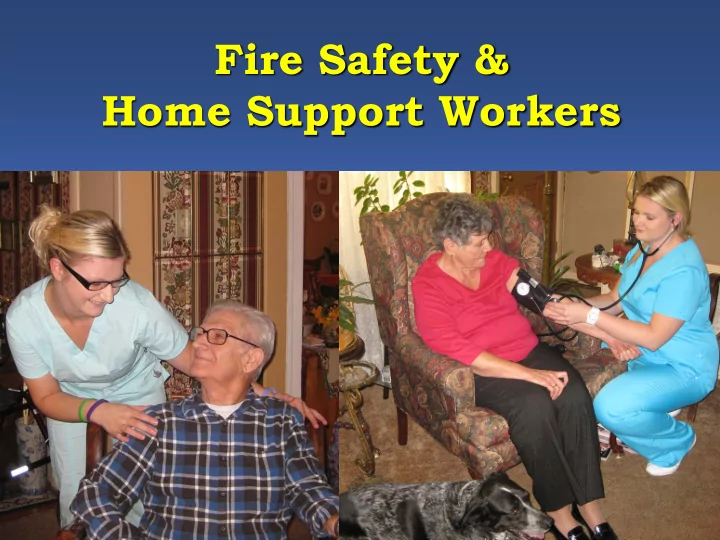
SLIDE 1
Fire Safety & Home Support Workers
SLIDE 2 Fire safety for older and vulnerable adults:
- Older adults = high risk
- Aging population
- People are living longer and staying
in their own homes
- Older or vulnerable adults face
challenges that make them more vulnerable to fire
SLIDE 3
Where Do Fires Occur? …in the home.
SLIDE 4
Who’s Dying in Fires?
SLIDE 5 Most Common Fire Scenarios
Careless cooking Careless smoking Heating equipment – space heaters
SLIDE 6
LOOK WHILE YOU COOK!
SLIDE 7
SLIDE 8
CLEAR THE CLUTTER
SLIDE 9
USE AN OVEN MITT TO PREVENT SCALDS
SLIDE 10
SLIDE 11
WEAR TIGHT- FITTING OR ROLLED UP SLEEVES
SLIDE 12 Smoking With Care
- #1 cause of fire deaths
- Smoke outside or use
large deep ashtrays
- Do not extinguish cigarettes in plant
pots
- Never smoke in bed
- Empty ashes into a metal container,
not the garbage can and put it
SLIDE 13 Portable Heaters
Give space heaters space
- at least one metre (3 feet)
SLIDE 14 Electrical Fire Safety
Check for:
- overloaded plugs with “octopus
- utlets”
- frayed or nicked electrical cords
- cords running under rugs – this can
damage the cord and cause a fire
SLIDE 15
SLIDE 16
SLIDE 17 For added protection, install a smoke alarm in every bedroom.
Install smoke alarms on every storey and outside all sleeping areas.
SLIDE 18
Smoke Alarms
Do they have smoke alarms?
Action:
Test smoke alarms every month by pressing the test button. Do they work?
SLIDE 19 Smoke Alarms
Action:
Change the battery in all smoke alarms
and whenever the low battery warning sounds.
SLIDE 20
Smoke alarms wear out
Action:
Make sure your client has smoke alarms that are not older than 10 years.
SLIDE 21 No smoke alarms?
can your agency provide smoke alarms?
can the fire dept. provide smoke alarms?
- Follow up to make sure smoke
alarms are installed/working
SLIDE 22 Fire safety concerns?
- Fill out the referral form
SLIDE 23 Home Fire Escape Planning
Meeting Place
SLIDE 24 Home Fire Escape Plan Basics
- Keep hallways and exits clear of clutter
- Know two ways out of each room, if
possible.
- Choose a meeting place outside.
- Call fire department from outside.
- Once out, stay out.
- Practice your escape plan.
SLIDE 25
Working smoke alarms Planning an escape
Can save lives!
SLIDE 26
No Time to Spare
SLIDE 27 Smoke Spread
Prevent the spread of smoke Close all doorways, including:
- apartment doors
- all hallway doors
- all stairwell doors
SLIDE 28 Discuss the following fire safety issues with your clients:
- How to be safe while cooking
- How to smoke with care
- How to use portable heaters safely
- How to reduce electrical fire hazards
- How to install and test smoke alarms
- How to develop a home fire escape plan
- Ensure doors are closed
SLIDE 29
Home Fire Safety Checklist
SLIDE 30 Questions
For more information, contact: [insert your contact here]