
SLIDE 1
FIETS assesment of the project
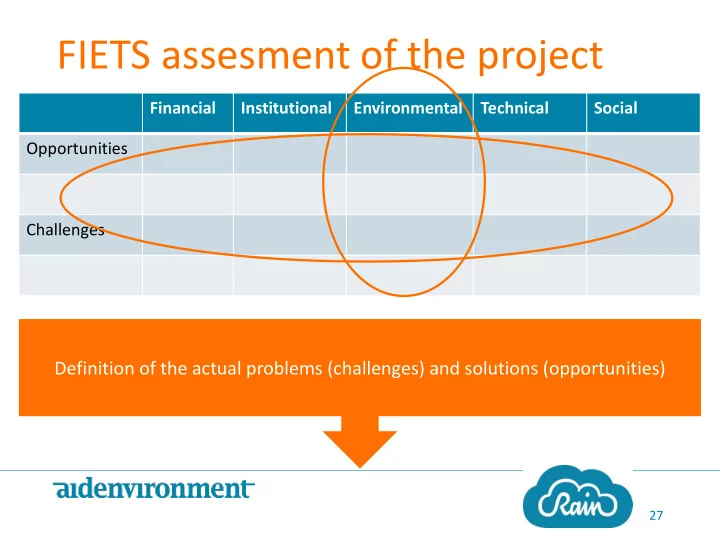
Financial Institutional Environmental Technical Social Opportunities Challenges
27
Definition of the actual problems (challenges) and solutions (opportunities)
FIETS assesment of the project Financial Institutional - - PowerPoint PPT Presentation
FIETS assesment of the project Financial Institutional Environmental Technical Social Opportunities Challenges Definition of the actual problems (challenges) and solutions (opportunities) 27 FIETS assessment Financial: payment for
Financial Institutional Environmental Technical Social Opportunities Challenges
27
Definition of the actual problems (challenges) and solutions (opportunities)
payment for water, local service providers, role of government, banks / mfi’s
stakeholders in water (power and interest), rules & regulations, (de)centralisation, level of organisation
ecosystem values, water sources and flows, issues (depletion, pollution, etc)
functioning of current infrastructure, sustainable technologies, management requirements, availability and costs of materials
culture, religion, gender
28
29
30
31
Footer 32
33
Green = forested area, little / no settlements Orange = flood plains and agricultural area with setllements Yellow = steeper, deforested hills
34
Financial Institutional Environment Technical Social Opportunities Community contribution of 500 NPR per hh per year, DDC: 5 million NPR per year. Fund of LWF project. Stakeholders: 7 wards, VDC, DDC, Oxfam, NGOs (Child protection), people Current water supply systems can be revived as water supply is sufficient Existing supply system, storage and distribution systems People want a system that functions as they are now yearly repairing the current intakes and pipes Women cooperative present: collecting monthly savings (14- 16% interest rate), bank is already providing loans. Unclear
Management structures at governmental level (VDC, DDC) Different sources available (groundwater, surface water, rainwater), but sources are not well managed nor understood People are already doing many repairs
existing structures and therefore have technical skills There is an active social mobiliser in the VDC Challenges No collective fund for maintenance
water infrastructure, LWF fund is still available (more 15 years old) No management structure between the 7 wards, as there is no existing structure,
problem they form committees Borehole (gov. plan) will be vulnerable for earthquakes as well as depleting ground water levels. Distribution network is open (open pipes, with a lot of water loss) and is unknown. 50% of people don’t own land, lack of ownership A lot of budget is now spent on repair instead
sustainable investment in infrastructure: almost 500.000 NPR Unstable political context Sever erosion and flooding in the river systems in almost all parts of the catchment Failure of intake systems of dam structure for domestic and productive water supply due to flash floods A lot of doubts amongst communities due to failure of current system Governmental project (borehole) needs significant financing, as the DDC and VDC don’t have this budget available. Unawareness
good irrigation and
water management practices in agriculture, leading to inefficient irrigation and lots of waste water, no re-use Limited awareness
all technologies
and fear
losing water for irrigation (competition between domestic and productive use) Conflicts due to water and competition between water uses (irrigation vs domestic use). Mixed communities, and possible exclusion
ward 9
productive use in dry season
systems
35
36
Financial Institutional Environment Technical Social Opportunities Challenges
Footer 37