Exercise is Medicine Dr Stuart Armstrong Sport and Exercise - - PowerPoint PPT Presentation

exercise is medicine
SMART_READER_LITE
LIVE PREVIEW

Exercise is Medicine Dr Stuart Armstrong Sport and Exercise - - PowerPoint PPT Presentation

Dr Stuart Armstrong Sports Physician Hamilton 14:00 - 14:10 Exercise is Medicine Exercise is Medicine Dr Stuart Armstrong Sport and Exercise Physician Leading Causes of Death in the U.S. The 15 leading causes of death in 2013 were: 1. Heart


slide-1
SLIDE 1

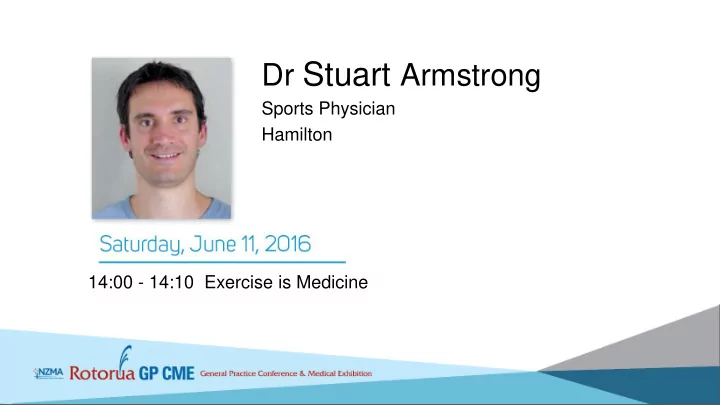
Dr Stuart Armstrong

Sports Physician Hamilton 14:00 - 14:10 Exercise is Medicine
slide-2
SLIDE 2

Exercise is Medicine

Dr Stuart Armstrong Sport and Exercise Physician

slide-3
SLIDE 3

The 15 leading causes of death in 2013 were:

  • 1. Heart Disease
  • 2. Cancer
  • 3. Chronic lower respiratory diseases
  • 4. Cerebrovascular diseases
  • 5. Accidents
  • 6. Alzheimer’s disease
  • 7. Diabetes
  • 8. Nephritis, nephrotic syndrome and nephrosis
  • 9. Influenza and pneumonia
  • 10. Suicide
  • 11. Septicemia
  • 12. Chronic liver disease and cirrhosis
  • 13. Essential hypertension and hypertensive renal disease
  • 14. Parkinson’s disease
  • 15. Pneumonitis due to solids and liquids

Leading Causes of Death in the U.S.

slide-4
SLIDE 4

All-Cause Death Rates by CRF Categories – 3,120 Women and 10,224 Men

10 20 30 40 50 60 70

Low Moderate High

Age adj death rate/10,000 PY

Cardiorespiratory Fitness Level

Women Men

Blair SN. JAMA 1989

Cardiorespiratory Fitness & Mortality

slide-5
SLIDE 5

2 4 6 8 10 12 14 16 18 Men Women

40,842 men & 12,943 women from the Aerobic Cooper Longitudinal Study

Effect of CRF on Mortality

Attributable Fractions (%) for All-Cause Deaths

Blair SN. Br J Sports Med 2009; 43:1-2.

slide-6
SLIDE 6

Activity recommendations

  • 30 mins of moderately intense activity on at least 5 days a

week

  • 2 strength based exercise sessions a week
  • Balance activities if over 65 years
  • 10,000 steps
slide-7
SLIDE 7

We have to get people moving

Regularly Active Out of the chair & off the couch Engaged in an Active, Healthy Lifestyle

slide-8
SLIDE 8
  • Physical activity can be quickly and efficiently assessed in the clinic setting through the use of

the Physical Activity Vital Sign (PAVS).

  • The PAVS is a simple 2 item questionnaire that can determine weekly minutes of moderate

intensity physical activity.

  • Healthcare teams can then assess whether patients are meeting national physical activity

recommendations and adjust their treatment accordingly.

  • The PAVS is most effective when embedded as a “vital sign” in the patient’s medical records.

Physical Activity Assessment

Healthcare professionals initiate a conversation about physical activity by assessing their current activity levels

Healthcare Systems

slide-9
SLIDE 9

Patient engagement

Getting them moving

Healthcare professionals provide their patients with a general advice as a first step in promoting physical activity to their patient

  • Using the results from the PAVS, healthcare providers can provide the

patient with an appropriate physical activity advice.

  • This needs to be worked into their normal life, practical and enjoyable.
  • Positive reinforcement on follow up visits.
slide-10
SLIDE 10

The Exercise Is Medicine Solution

Begins with the engagement of Healthcare Providers to screen for physical inactivity then provide suggestions to increase physical activity.

slide-11
SLIDE 11

Exercise Resources

  • www.exerciseismedicine.org – multitude of varying resources
  • n this subject
  • www.health.govt.nz – Green prescription
  • www.sportwaikato.org.nz – local version