
SLIDE 1
End of Life Care, Euthanasia, and the Incompetent Medical Ethics 1
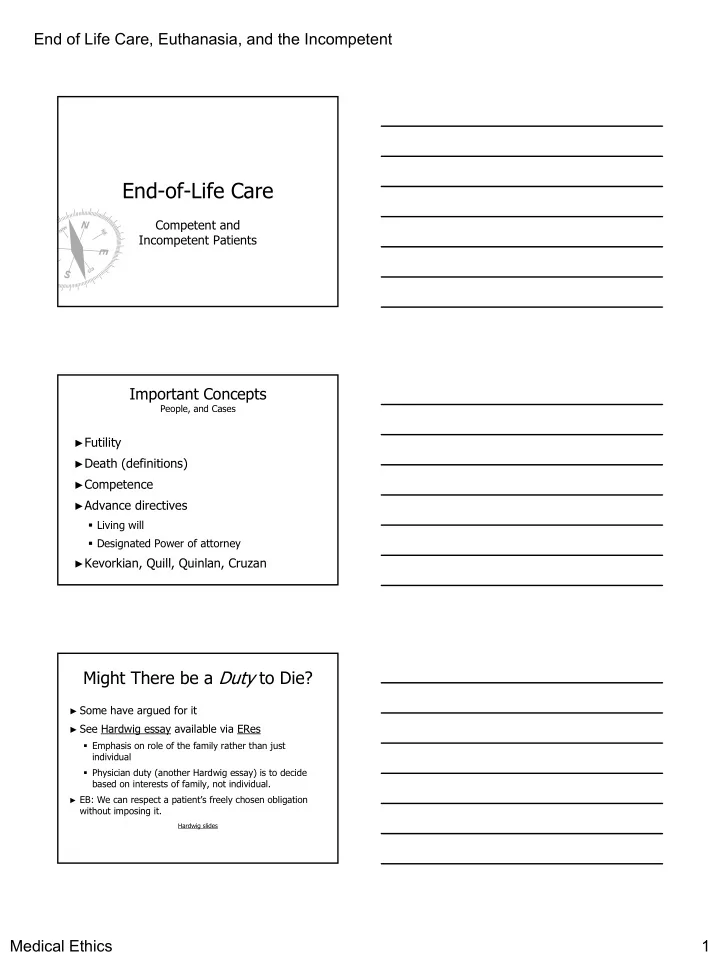
End-of-Life Care
Competent and Incompetent Patients
Important Concepts
People, and Cases
►Futility ►Death (definitions) ►Competence ►Advance directives
Living will Designated Power of attorney
►Kevorkian, Quill, Quinlan, Cruzan
Might There be a Duty to Die?
► Some have argued for it ► See Hardwig essay available via ERes
Emphasis on role of the family rather than just individual Physician duty (another Hardwig essay) is to decide based on interests of family, not individual.
► EB: We can respect a patient’s freely chosen obligation
without imposing it.
Hardwig slides