Dysphagia, oral care & hydration Anita Lopes, RD David - - PDF document

dysphagia oral care amp hydration
SMART_READER_LITE
LIVE PREVIEW

Dysphagia, oral care & hydration Anita Lopes, RD David - - PDF document

26/05/2017 Dysphagia, oral care & hydration Anita Lopes, RD David Beattie, SLP Palate Velum Tongue Lips Teeth Pharynx Valleculae Epiglottis Mandible Hyoid Larynx Sulcus Esophagus Cheek Trachea Salivary Glands Nursing Best


slide-1
SLIDE 1

26/05/2017 1

Dysphagia,

  • ral care &

hydration

Anita Lopes, RD David Beattie, SLP

Nursing Best Practices 2

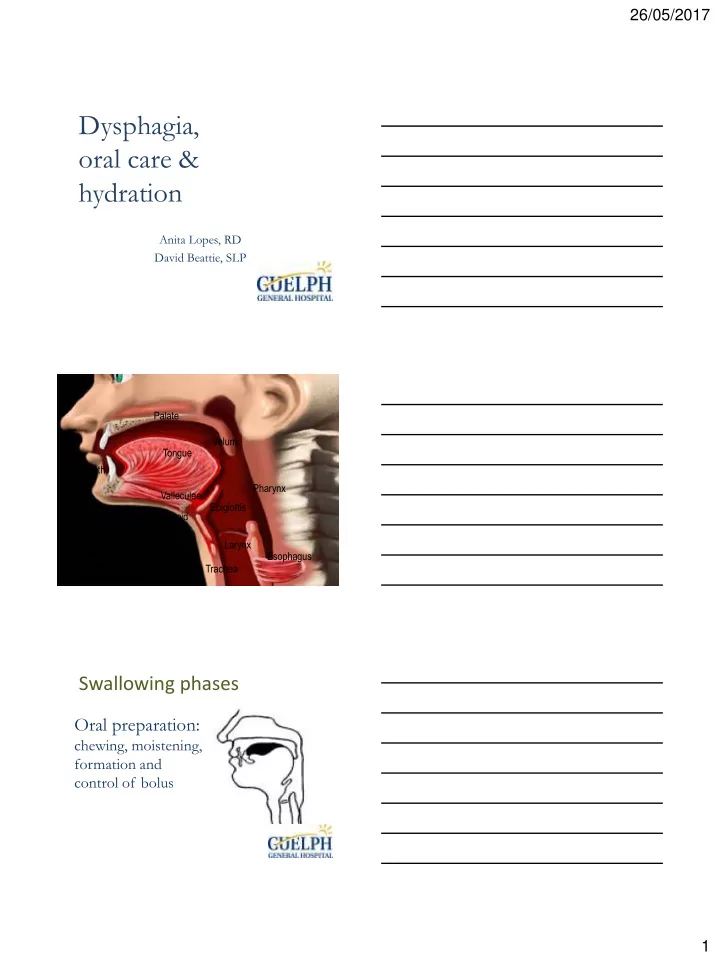
Mandible Lips Teeth Tongue Palate Pharynx Larynx Hyoid Epiglottis Valleculae Esophagus Trachea

Sulcus Cheek Salivary Glands

Velum

Swallowing phases

Oral preparation:

chewing, moistening, formation and control of bolus

slide-2
SLIDE 2

26/05/2017 2

Swallowing phases

Oral propulsive: transit of bolus to posterior oral cavity

Swallowing phases

Pharyngeal: airway protection, propulsion

  • f bolus into esophagus

Swallowing phases

Esophageal: transit to the stomach by peristalsis

slide-3
SLIDE 3

26/05/2017 3

Normal Swallow

https://www.youtube.com/wa tch?v=PwVreNrTKBw

Dysphagia

Oral Pharyngeal Esophageal

Signs of dysphagia

Oral stage

Not managing secretions Loss of food/fluid from the mouth Unable to form bolus Food residue in cheeks, on tongue

  • r roof of mouth
slide-4
SLIDE 4

26/05/2017 4

Signs of dysphagia

Pharyngeal stage

Frequent throat clearing Coughing, choking Gurgling or wet voice Nasal or oral regurgitation Food “stuck in throat” Absent swallow

Aspiration…

…can be silent. A present or absent gag… …does not predict

  • r rule out dysphagia
  • r aspiration.

Nursing Best Practices 12

slide-5
SLIDE 5

26/05/2017 5

Dysphagia— negative outcomes

  • Dehydration
  • malnutrition
  • skin breakdown
  • delayed rehab
  • ↓ independence
  • ↓ QOL
  • aspiration pneumonia
  • death

Dysphagia & stroke

50% of stroke patients have dysphagia in the first few days after the stroke. Of these, 1/3 have swallowing difficulties that persist beyond 3 months post-onset.

Dysphagia & stroke

Bilateral, subcortical or brainstem stroke

Unilateral hemisphere stroke

60-70% 15%

15

slide-6
SLIDE 6

26/05/2017 6

Dysphagia & pneumonia

33% of patients with dysphagia develop pneumonia requiring treatment.

Stroke & pneumonia

35% of post-stroke deaths are caused by pneumonia.

Aspiration on videofluoroscopy

http://www.youtube.com/watch?v=1sFNMk87558

slide-7
SLIDE 7

26/05/2017 7

Aspiration

Dysphagia ↓ Poor secretion Aspiration Management

Aspiration

Aspiration & Poor oral hygiene ↓ Pneumonia

slide-8
SLIDE 8

26/05/2017 8

Why oral care?

Pathogens that cause aspiration pneumonia (as well as VAP) can colonize the

  • ropharynx of critically ill

patients within 48 hours of admission.

Where does

  • ropharyngeal

bacteria end up?

slide-9
SLIDE 9

26/05/2017 9

Why oral care?

Most bacterial nosocomial pneumonia is caused by aspiration of bacteria from the

  • ropharynx or upper GI tract.

Why oral care?

Nosocomial pneumonia accounts for 10-15% of all hospital acquired infections.

Why oral care?

Treatment with oral hygiene alone can reduce occurrence of pneumonia in older adults in nursing homes by 30%.

slide-10
SLIDE 10

26/05/2017 10

Why oral care?

Patients who have swallowing difficulties are at risk for poor oral hygiene and aspiration.

Oral Care

Screen stroke patients on admission for obvious signs of dental disease, level of oral care, and appliances.

Oral care—considerations

Independent? Needs help? Dependent?

slide-11
SLIDE 11

26/05/2017 11

Oral care—considerations

Cognition & LOC Activity tolerance UE function Handedness Oral motor function Severity of dysphagia

NPO?

Patients who cannot eat

  • r drink have the highest
  • ral care needs.

What to do?

slide-12
SLIDE 12

26/05/2017 12

Swabs

…are for moisture and relief—not for cleaning teeth.

Suction at bedside

slide-13
SLIDE 13

26/05/2017 13

Suction toothbrush H2O

slide-14
SLIDE 14

26/05/2017 14

Dentures need cleaning too.

Best practice guidelines

…final comment…

slide-15
SLIDE 15

26/05/2017 15

Thickened fluids

…not a panacea…