document, but ABS expertise to implement the regulations and - - PowerPoint PPT Presentation

document but abs expertise to implement the regulations
SMART_READER_LITE
LIVE PREVIEW

document, but ABS expertise to implement the regulations and - - PowerPoint PPT Presentation

Baseline analysis and gaps Do you have an Do you have ABS Do you have Institutional Has a participatory PIC ABS policy in regulations? framework/procedures? processes been defined? place? Cameroon No but fragmented No . But some provisions


slide-1
SLIDE 1
slide-2
SLIDE 2

Baseline analysis and gaps

Do you have an ABS policy in place? Do you have ABS regulations? Do you have Institutional framework/procedures? Has a participatory PIC processes been defined? Cameroon No but fragmented pieces

  • No. But some provisions

in National legislations Several institutions participate in different aspects of ABS

  • issues. Source of conflict.

Discussions have started on definition of process. Kenya No ABS policy document, but ABS regulations and

  • ther acts + env.

mgmt act Yes, but no capacity and expertise to implement the regulations Not defined Not defined Madagascar Under development

  • No. Defining process

initiated but stopped Proposal not approved In draft, not operational Mozambique

  • No. Policy

framework not

  • perational

Yes, but not operational no cross-sectoral collaboration, not operational Not defined Senegal No, only National Focal point designated Not yet Not yet Not yet South Africa Yes, but: No cross-sectoral awareness/coopera tion/synergies Lack of best practice guidelines to comply with ABS regulations Yes, but no capacity to carry them out/ enforce regulations Defined, procedures need to be elaborated Not defined

slide-3
SLIDE 3

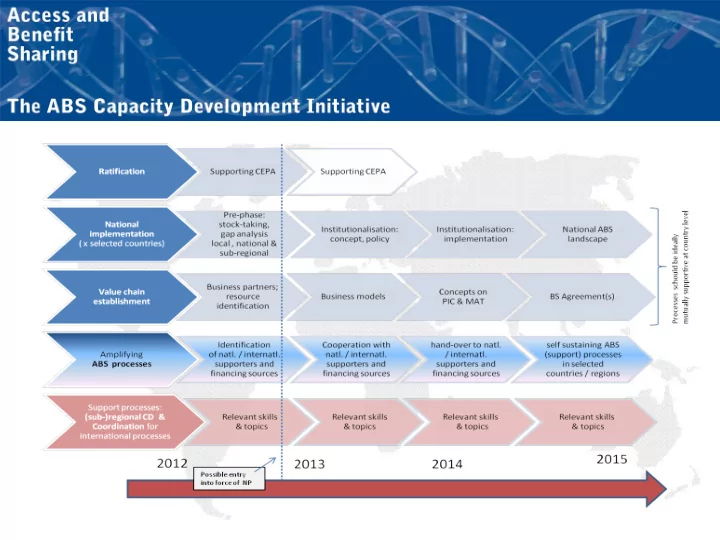
Cameroon Madagascar Mozambique Senegal Where they did not exist, national ABS policies and regulations are developed

  • 1. Development of

national ABS policies and regulations Outputs:

  • 1. ABS outreach strategies and programmes
  • 2. Review of existing national policy / CD basis for ABS
  • 3. Training of key government officials
  • 4. Development of ILC capacities to participate in development of ABS measures
  • 5. Consultative multi-stakeholder ws to input the creation of the ntl ABS policy
  • 6. National ABS policy
  • 7. Administrative/institutional settings
  • 8. Participatory mechanisms

Kenya Existing national ABS policies and regulations are being implemented

  • 2. Implementation
  • f national ABS

policies and regulations Outputs:

  • 1. Identifying existing expertise and developing a strategy to address

major gaps and capacity needs for implementation

  • 2. (National-level) technical toolkits and manuals to meet identifiedNeeds
  • 3. Technical training ws for key government officials, NGOs and private sector
  • 4. Development of ILC capacities to participate in implementation of ABS

measures

  • 5. National information sharing mechanism and/or link to a potential intl ABS CHM
  • 6. ABS outreach strategies and programmes to enhance stakeholder

and broader public awareness of ABS issues South Africa Existing national ABS policies and regulations in need of revision are revised and amended

  • 3. Revision of

existing national ABS policies and regulations Outputs:

  • 1. Review of existing national ABS policy, regulations and institutional capacity
  • 2. Process to amend existing policies and regulations

Lessons learned from the 6 ntl ABS processes are integrated into (sub) regional CD processes of the Multidonor ABS Initiative

  • 4. Regional and

sub-regional cooperation and capacity- development Outputs:

  • 1. Training of trainers for development and implementation of national-level

activities

  • 2. Participation of national ABS counterparts in the activities of the ABS Initiative
  • 3. Sub-regional CEPA ABS materials and tools
  • 4. Involvement of sub-regional organizations (COMIFAC, SADC,

ECOWAS, EAC) in ABS discussions

  • 5. Pilot business initiatives for promoting bio-prospecting ventures

and community based benefit sharing arrangements

Outcomes and Outputs