
SLIDE 1
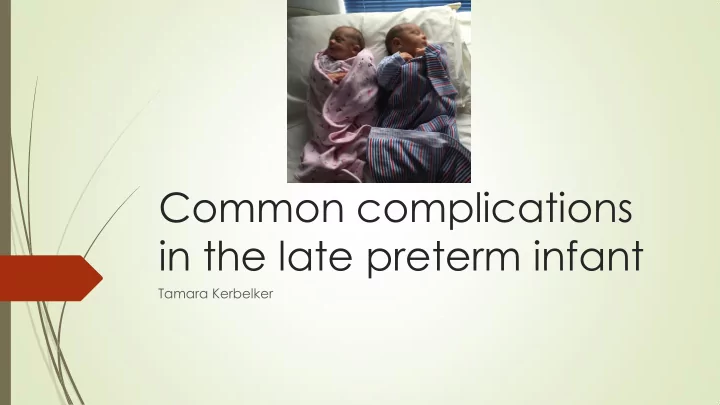
Common complications in the late preterm infant
Tamara Kerbelker
Common complications in the late preterm infant Tamara Kerbelker - - PowerPoint PPT Presentation
Common complications in the late preterm infant Tamara Kerbelker Talk overview Definitions Epidemiology Short term complications Long term complications Prevention Recommendations for outpatient management Definitions
Tamara Kerbelker
Definitions Epidemiology Short term complications Long term complications Prevention Recommendations for outpatient management
Prematurity
Birth before 37 completed weeks
Late preterm birth – GA between 34 and less than 37 weeks Very preterm (VPT) birth – GA less than 32 weeks Extremely preterm (EPT) birth – GA at or below 28 weeks
Low birth weight (LBW) – Birth weight less than 2500 g Very low birth weight (VLBW) – Birth weight 1000-1499g Extreme low birth weight (ELBW) – birth weight <999g
Hypothermia Respiratory distress syndrome Apnoeas of prematurity Patent ductus arteriosus Hypotension Intraventricular haemorrhage Glucose anomalies Infection Retinopathy of Prematurity
Rapid heat loss
large body surface area inability to produce enough heat
Heat is lost by conduction, convection, radiation, and evaporation Contributes to metabolic disorders - hypoglycaemia or acidosis. Increased mortality Intraventricular haemorrhage (IVH),pulmonary insufficiency, haemorrhage
Drying the baby thoroughly immediately after birth Removal of any wet blankets Plastic bags Kangaroo mother care (KMC) – skin-to-skin
11
Surfactant deficiency
Early CPAP
More common in the patients with lower gestational age Stimulation Helping Babies Breathe (HBB)
Keep warm Feed early
Helping Babies Breathe (HBB) Management of the sick and small newborn (MSSN) CPAP to all district facilities
15
18
Recurrent hospitalisation Increased risk of SIDS Neurodevelopmental outcomes Chronic health conditions Growth impairment Impaired lung function Effect on adult health
Respiratory RSV (any viral infection)
Asthma
Gastrointestinal
GORD Gastroenteritis
Promote breastfeeding Ensure vaccinations Influenza vaccine No tobacco smoke exposure Vitamin A supplementation Limit contact with sick people Limit crowded environments (if possible) – malls, taxis RSV immunoglobulin
Lower weight for age Lower height for age Lower BMI Smaller head circumference
Plot the child at every visit
Head circumference Height Weight Weight for height
Supplemental iron Multivitamins Vit D Wean at 6 months
23
Impaired cognitive skills Motor deficits including mild fine or gross motor delay, and cerebral palsy (CP) Sensory impairment including vision and hearing losses Behavioural and psychological problems
Infant neurological assessment (INA) Neurodevelopmental paediatrician
School placement ADHD management
Sensory screening
Vision Hearing
Allied health
Physiotherapy Occupational therapy Speech therapy Educational psychologist
Cerebral palsy Cognitive deficit Asthma
Decreased exercise capacity Increased respiratory symptoms
Chronic kidney disease
Smaller kidneys Higher blood pressure Microalbuminuria
Insulin resistance Hypertension Lower reproduction rate
Female empowerment Contraception Planned pregnancy Teenage pregnancy
29
Educate expecting moms BANC sites and the importance of antenatal care Maternal nutrition Treatment of STIs, TB HIV testing and prevention during pregnancy Alcohol and drug use during pregnancy
Supplements at discharge Encourage any breastfeeding Educate moms on basic life support Educate moms about risk factors for SIDS Apnoea monitors Synagis motivation Vigilance with any ARI Encourage immunisation Follow up visits Monitor growth and development Facilitate allied health visits
30
2017-08-08
31