
SLIDE 1
3/ 14/ 99 1
CLIQUES CLIQUES:
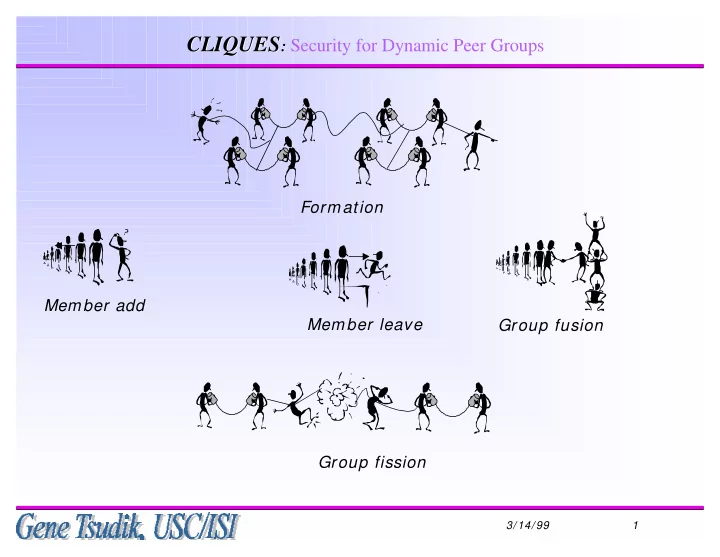
: Security for Dynamic Peer Groups Formation Member add Member leave Group fusion Group fission
CLIQUES : Security for Dynamic Peer Groups Formation Member add - - PowerPoint PPT Presentation
CLIQUES : CLIQUES : Security for Dynamic Peer Groups Formation Member add Member leave Group fusion Group fission 3/ 14/ 99 1 Problem: how to obtain security in peer groups with dynamic dynamic membership and decentralized decentralized
3/ 14/ 99 1
: Security for Dynamic Peer Groups Formation Member add Member leave Group fusion Group fission
3/ 14/ 99 2
based on group Diffie-Helman: each member contributes equally to group key
3/ 14/ 99 3
3/ 14/ 99 4
3/ 14/ 99 5
/ * called by a new group member who received a * NEW_MEMBER message from the current controller. * / int clq_join (CLQ_CONTEXT * * ctx, CLQ_NAME * member_name, CLQ_NAME * group_name, CLQ_TOKEN * input, CLQ_TOKEN * * output); / * called by the current controller to hand over group * context to a new member (who will become the next controller). * / int clq_pass_ctx (CLQ_CONTEXT * ctx, CLQ_NAME * member_name, CLQ_TOKEN * * output); / * called by every member upon reception of a * KEY_UPDATE_MESSAGE from the current group controller * / int clq_update_ctx (CLQ_CONTEXT * ctx, CLQ_TOKEN * input);
3/ 14/ 99 6
/ * clq_leave is called by every group member right after a member * leaves or a partition occurs; removes all valid members in * member_list from the group_member_list. * / int clq_leave (CLQ_CONTEXT * ctx, CLQ_NAME * member_list[ ] , CLQ_TOKEN * * output); / * called by the controller only, when group_secret needs to be updated. * / int clq_refresh_key (CLQ_CONTEXT * * ctx, CLQ_TOKEN * * output) { return OK; }