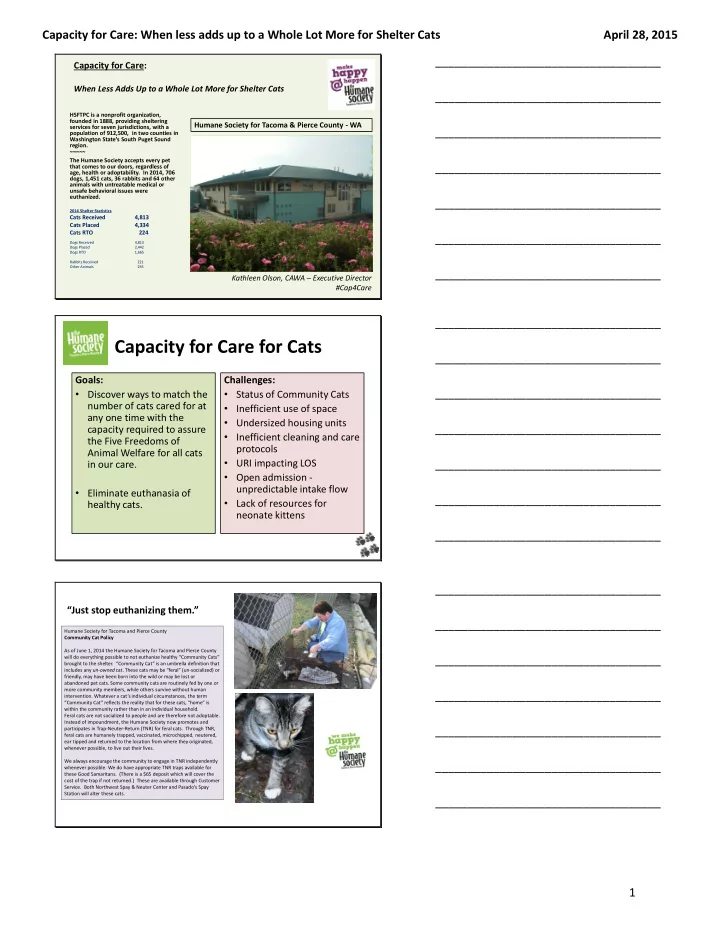
Capacity for Care for Cats ___________________________________ - - PDF document

capacity for care for cats
SMART_READER_LITE
LIVE PREVIEW

Capacity for Care for Cats ___________________________________ - - PDF document

Capacity for Care: When less adds up to a Whole Lot More for Shelter Cats April 28, 2015 ___________________________________ Capacity for Care: When Less Adds Up to a Whole Lot More for Shelter Cats ___________________________________ HSFTPC


slide-1
SLIDE 1

Capacity for Care: When less adds up to a Whole Lot More for Shelter Cats April 28, 2015 1

Capacity for Care:

When Less Adds Up to a Whole Lot More for Shelter Cats

HSFTPC is a nonprofit organization, founded in 1888, providing sheltering services for seven jurisdictions, with a population of 912,500, in two counties in Washington State’s South Puget Sound region. ~~~~~ The Humane Society accepts every pet that comes to our doors, regardless of age, health or adoptability. In 2014, 706 dogs, 1,451 cats, 36 rabbits and 64 other animals with untreatable medical or unsafe behavioral issues were euthanized.

2014 Shelter Statistics

Cats Received 4,813 Cats Placed 4,334 Cats RTO 224

Dogs Received 4,813 Dogs Placed 2,442 Dogs RTO 1,665 Rabbits Received 221 Other Animals 255

Humane Society for Tacoma & Pierce County - WA Kathleen Olson, CAWA – Executive Director #Cap4Care

___________________________________ ___________________________________ ___________________________________ ___________________________________ ___________________________________ ___________________________________ ___________________________________

Capacity for Care for Cats

Goals:

  • Discover ways to match the

number of cats cared for at any one time with the capacity required to assure the Five Freedoms of Animal Welfare for all cats in our care.

  • Eliminate euthanasia of

healthy cats. Challenges:

  • Status of Community Cats
  • Inefficient use of space
  • Undersized housing units
  • Inefficient cleaning and care

protocols

  • URI impacting LOS
  • Open admission -

unpredictable intake flow

  • Lack of resources for

neonate kittens

___________________________________ ___________________________________ ___________________________________ ___________________________________ ___________________________________ ___________________________________ ___________________________________

Humane Society for Tacoma and Pierce County Community Cat Policy As of June 1, 2014 the Humane Society for Tacoma and Pierce County will do everything possible to not euthanize healthy “Community Cats” brought to the shelter. “Community Cat” is an umbrella definition that includes any un-owned cat. These cats may be “feral” (un-socialized) or friendly, may have been born into the wild or may be lost or abandoned pet cats. Some community cats are routinely fed by one or more community members, while others survive without human

  • intervention. Whatever a cat’s individual circumstances, the term

“Community Cat” reflects the reality that for these cats, “home” is within the community rather than in an individual household. Feral cats are not socialized to people and are therefore not adoptable. Instead of impoundment, the Humane Society now promotes and participates in Trap-Neuter-Return (TNR) for feral cats. Through TNR, feral cats are humanely trapped, vaccinated, microchipped, neutered, ear tipped and returned to the location from where they originated, whenever possible, to live out their lives. We always encourage the community to engage in TNR independently whenever possible. We do have appropriate TNR traps available for these Good Samaritans. (There is a $65 deposit which will cover the cost of the trap if not returned.) These are available through Customer

  • Service. Both Northwest Spay & Neuter Center and Pasado’s Spay

Station will alter these cats.

“Just stop euthanizing them.”

___________________________________ ___________________________________ ___________________________________ ___________________________________ ___________________________________ ___________________________________ ___________________________________

slide-2
SLIDE 2

Capacity for Care: When less adds up to a Whole Lot More for Shelter Cats April 28, 2015 2

Showcase Available Cats

___________________________________ ___________________________________ ___________________________________ ___________________________________ ___________________________________ ___________________________________ ___________________________________

Portals!

___________________________________ ___________________________________ ___________________________________ ___________________________________ ___________________________________ ___________________________________ ___________________________________

Pathways to Shorter Length of Stay

  • Create Cat Team
  • Improve Intake Exams
  • Start Daily Rounds
  • Recruit More Foster Homes
  • Shelter Neuter Return
  • Intake Appointments
  • If it meows, fix it for free!

___________________________________ ___________________________________ ___________________________________ ___________________________________ ___________________________________ ___________________________________ ___________________________________

slide-3
SLIDE 3

Capacity for Care: When less adds up to a Whole Lot More for Shelter Cats April 28, 2015 3

Improve Shelter Operations

Switch to one step cleaning protocol

___________________________________ ___________________________________ ___________________________________ ___________________________________ ___________________________________ ___________________________________ ___________________________________

Shorten public hours for more staff training and animal care time

___________________________________ ___________________________________ ___________________________________ ___________________________________ ___________________________________ ___________________________________ ___________________________________

Establish a Dedicated Customer Service Call Center

& Director of First Impressions Greeter Station

___________________________________ ___________________________________ ___________________________________ ___________________________________ ___________________________________ ___________________________________ ___________________________________

slide-4
SLIDE 4

Capacity for Care: When less adds up to a Whole Lot More for Shelter Cats April 28, 2015 4

Launch a “Foster to Surrender” Program for Neonates

___________________________________ ___________________________________ ___________________________________ ___________________________________ ___________________________________ ___________________________________ ___________________________________

Challenge Ahead: Capital Campaign for Shelter Remodel

___________________________________ ___________________________________ ___________________________________ ___________________________________ ___________________________________ ___________________________________ ___________________________________

Thank nk you! !

Kathle leen Olson, CAWA

Executive Director

#Cap4Care

___________________________________ ___________________________________ ___________________________________ ___________________________________ ___________________________________ ___________________________________ ___________________________________

slide-5
SLIDE 5

Capacity for Care: When less adds up to a Whole Lot More for Shelter Cats April 28, 2015 5

Capacity for Care

When Less Adds Up to a Whole Lot More for Shelter Cats

Presented By

Ollie Davidson

Director of Programs and Digital Marketing Tree House Humane Society

#Cap4Care

___________________________________ ___________________________________ ___________________________________ ___________________________________ ___________________________________ ___________________________________ ___________________________________

Brief History

Started in 1971 and became a leader

  • f the no-kill, cageless movement -

proving cats better off in colony environments Innovative programs, including AAT, Pet Food Pantry, housing FIV+ cats Mismanagement in the 90s lead to, among other things, severe

  • vercrowding and stalled programs.

___________________________________ ___________________________________ ___________________________________ ___________________________________ ___________________________________ ___________________________________ ___________________________________

By 2004

350 cats in building, 90% of which were feral or semi-feral Adoptions around 300 annually and around 400 admissions Cats were overcrowded in community housing, and health issues were out of control

___________________________________ ___________________________________ ___________________________________ ___________________________________ ___________________________________ ___________________________________ ___________________________________

slide-6
SLIDE 6

Capacity for Care: When less adds up to a Whole Lot More for Shelter Cats April 28, 2015 6

Identifying the Problems

___________________________________ ___________________________________ ___________________________________ ___________________________________ ___________________________________ ___________________________________ ___________________________________

Majority of Cats Hard to Adopt

Too Many Feral Cats Cats overcrowded and segregated (feral room semi-shy room, aggressive/alpha room, etc.) Unstructured Volunteer and Enrichment Programs Many Cats with Chronic Health Issues

___________________________________ ___________________________________ ___________________________________ ___________________________________ ___________________________________ ___________________________________ ___________________________________

Admissions were arbitrary, inefficient and lacked structure No behavior assessment, leading to many feral admissions Health care protocols were outdated, slowing down both admissions and adoptions Poor lines of communication with admitters and adopters Adoption process was restrictive, and limited hours for adoption Inferior promotion of adoptable cats - outdated restrictions like no black (or white!) cats adopted out during month of October!

Admissions and Adoptions Programs Outdated/Mismanaged

___________________________________ ___________________________________ ___________________________________ ___________________________________ ___________________________________ ___________________________________ ___________________________________

slide-7
SLIDE 7

Capacity for Care: When less adds up to a Whole Lot More for Shelter Cats April 28, 2015 7

Lack of leadership and enthusiasm lead to stalled growth and inertia Too much bureaucracy - staff were unable to advance new ideas because of unnecessary red tape Lack of collaboration - much of the shelter was controlled by a couple close-minded (paranoid) individuals

Lack of Programmatic Advancement

___________________________________ ___________________________________ ___________________________________ ___________________________________ ___________________________________ ___________________________________ ___________________________________

Solving the Issues

___________________________________ ___________________________________ ___________________________________ ___________________________________ ___________________________________ ___________________________________ ___________________________________

Turning Unadoptable Into Adoptable

Cats classified into 5 groups internally: Shy, Semi-shy, Overstimulated, Special Needs, “Friendly” Divided larger spaces into smaller colony rooms, and determined maximum number of capacity per room based on current metrics (today 18 sq.ft./cat - 20 sq. ft. for FIV+ cats) Mixed populations, ensuring an equal mix of our 5 categories and promoting “mentor cats” in each room

___________________________________ ___________________________________ ___________________________________ ___________________________________ ___________________________________ ___________________________________ ___________________________________

slide-8
SLIDE 8

Capacity for Care: When less adds up to a Whole Lot More for Shelter Cats April 28, 2015 8

Turning Unadoptable Into Adoptable cont.

Created smaller enclosures, or condos, for cat(s) that needed extra attention or did “play well” other cats Volunteers certification program was developed, and volunteers were directed into structured socialization and enrichment programs Cats with ongoing medical issues were given health contracts to cover future medical issues related to the ongoing issue

___________________________________ ___________________________________ ___________________________________ ___________________________________ ___________________________________ ___________________________________ ___________________________________

Date-based intake system developed, based on requests placed on a waiting list - committees decide complicated admissions, with emergencies pushed through Behavior assessment on multiple levels, including initial admission request and intake exam Our Director of Veterinary Services Dr. Lynda Ewald, and Dr. Sandra Newbury, streamlined veterinary protocols Greater emphasis was put into customer service and reception, with push for non- judgemental communication, and all calls and emails returned within 1 business day Application process was made easier, with open adoption conversation style and adoption hours extended to 7 days a week/6 - 8 hours/day Digital presence was created, multiple platforms for adoption promotion used - especially social media, and street teams spread our message on a weekly basis

Revamping Admissions and Adoptions

___________________________________ ___________________________________ ___________________________________ ___________________________________ ___________________________________ ___________________________________ ___________________________________

Changes at the top, including the hiring of Executive Director David de Funiak, and Development and Community Cats Program Director Jenny Schlueter brought fresh ideas and new purpose The core team of Dave, Jenny, Dr. Ewald and myself were given the freedom to research and implement new ideas that brought our organization to the next level These ideas included the creation of Community Cats - with its offshoots, Working Cats and Feral Freedom Programs, Our Transfer and Kitten on Deck Programs with Chicago Animal Care and Control, and expanded Foster and Off-Site Adoption Programs to help us save this huge influx of cats we were dealing with Seminal moment - a fire next door caused an evacuation of all 350 cats at the shelter. This event lead to many adoptions, as some of our shyest and neediest cats were fostered by volunteers who decided to keep them. The event lead to a foster to adopt program, where cats that were shy or had special medical needs are placed into foster with “Adoption Ambassadors” who work to adopt the cat from their home.

Innovative Programs Created

___________________________________ ___________________________________ ___________________________________ ___________________________________ ___________________________________ ___________________________________ ___________________________________

slide-9
SLIDE 9

Capacity for Care: When less adds up to a Whole Lot More for Shelter Cats April 28, 2015 9

Impact of Programs

Our Community Cats Program allows us to return and relocate feral cats to managed colonies, keeping them out of our shelter - Tree House was also one of the lead agencies to help created the Cook County Feral Cat Ordinance Our Foster Program allows us to admit more cats, provides the with extra socialization and TLC, and provides more exposure to potential adopters while reducing stress and expenses at shelter resident clinic. Off-site adoption and “Adoption Ambassador” Programs increase adoptions and allow us to reach different audiences who might not

  • therwise come to the shelter.

___________________________________ ___________________________________ ___________________________________ ___________________________________ ___________________________________ ___________________________________ ___________________________________

Upward trending adoptions, with a records being set every year for the last 8 years, culminating with 1470 adoptions in 2014 (totals include in- house and offsite). Over 900 cats admitted in 2014, with another 1000 transferred from Chicago’s Animal Care and Control Tree House now has two locations, with an average of 110 cats at our Headquarters and 45 cats at our Bucktown branch.

Tree House Today

___________________________________ ___________________________________ ___________________________________ ___________________________________ ___________________________________ ___________________________________ ___________________________________

Of our previous classifications, less than 5% considered shy or semi-shy Over 100 foster homes, with an average

  • f 150 cats in foster at any given time.

In Spring, 2016, Tree House will be

  • pening the largest, state-of-the-art,

cat-focused facility in the country. The building, consulted on by Dr. Sandra Newbury and Jackson Galaxy, will feature a cat’fe, education center, resident clinic, low-cost public client (dogs and cats), and of course, modern and comfortable cat wings, complete with outdoor enclosures.

Tree House Today cont.

___________________________________ ___________________________________ ___________________________________ ___________________________________ ___________________________________ ___________________________________ ___________________________________

slide-10
SLIDE 10

Capacity for Care: When less adds up to a Whole Lot More for Shelter Cats April 28, 2015 10

Less Cats Housed Equals More Cats Served!

___________________________________ ___________________________________ ___________________________________ ___________________________________ ___________________________________ ___________________________________ ___________________________________

Contact Me for More Information About Our Programs - We Can Help!

  • llie@treehouseanimals.org

___________________________________ ___________________________________ ___________________________________ ___________________________________ ___________________________________ ___________________________________ ___________________________________ ___________________________________ ___________________________________ ___________________________________ ___________________________________ ___________________________________ ___________________________________ ___________________________________