SLIDE 1
App Development Case Study
SLIDE 2
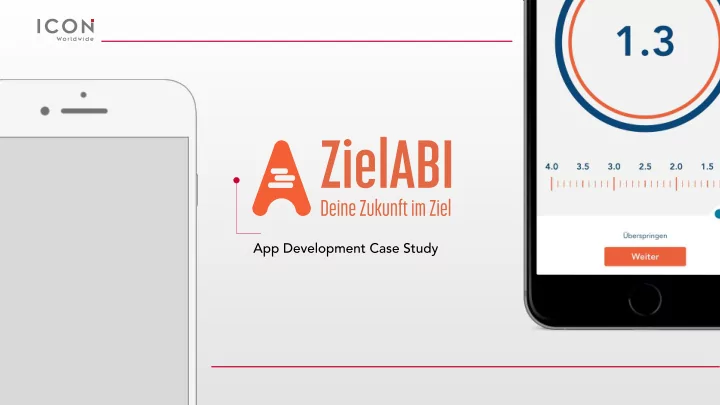
We were tasked with creating an app that helped calculate students’ Abitur scores so that they could easily see what grades they needed to get into the University of their choice, no matter where in Germany they live.
The First Abitur Calculator App for iOS & Android
Creative Brief
SLIDE 3 Students can tap multiple times to select
- ptions to differentiate between types of
courses. The goal with the initial wireframing was to keep things simple. The complicated formulas fade away and the sudent only sees a few simple questions. ZielABI revolves around students setting their initial Abitur goal. The visual target, and slide selector, make this step easy to complete.
Target Abitur Score & Course Selection
SLIDE 4 Saving scenarios allows students to return to the app and adjust their score as grades become actual. As students enter their grades, the Abitur score is updated below. When they reach their target a pop-up congratulations message appears. Abitur calcuation requires a large amount
- f data input by students which is
managed via a combination of easy tap, slide, and scroll motions.
Grade Input and Saving Scenarios
SLIDE 5 ZielABI is designed to empower students to achieve their goals by simplifying the stressful and complicated Abitur calculation. The typography and colors are deliberately warm and friendly. The logo is motivational in spirit. The tagline: Deine Zunkunft im Ziel "Your future on target" is presumptive.
ZielABI Identity Design
The final ZielABI logo uses just two colors to make an impact. This inverted design helps it to stand out among the
- ther apps on a users’s screen.
Final Logo
Working to visualize the business in a motivational manner, the "A" from Abitur is excuted in a compass style icon. A list within implies data collection.
Logo Design
Design and Logo
SLIDE 6 Much of this screen is carried over from the initial design, with a simplified interface for categorizing classes. A simple yes/no question needs no complication. The design for this screen retains much
- f the initial design concept, with some
extra refinement.
Final Designs
SLIDE 7
Students can compare various scenarios, with different goals and class grades. A pop-up shows the student when they have reached their goal. Preserving much of the initial design, this page adds greater legibility to semester grades and brings the progress bar to the bottom of the screen.
Final Designs
SLIDE 8 Inspiration for the design of the class selector ‘bubbles’ on the app came from design features in Apple’s latest release
iOS Bubble Design
We used highly customisable open source libraries to speed up the development process while ensuring that elements of the app stayed true to our design. By testing on beta versions of the next major iOS release we ensured the app worked as expected with the release of iOS 11.
Custom Libraries
Using the latest version of Apple’s design language, we were able to implement powerful formulas behind a simple interface and create an app that could easily be translated in multiple languages.
Swift
iOS Development
SLIDE 9
Android keeps the ‘bubbles’ from the iOS design, but organizes them, instead, in a simple Android-inspired grid.
Android Bubble Design
In using the most modern and powerful tools and frameworks we achieved effectiveness in the development process. The custom layouts and animations make the application more attractive and user friendly. We also included different analytics and crashlytics libraries to track and investigate the app’s behavior and results.
Powerful Frameworks
By coding natively in Java we were able to develop an efficient code base for the Android app. Through the implementation of standard code libraries we are able to insure compadibility across a whole range of mobile devices.
Java
Android Development
SLIDE 10
The design of the website draws elements from the app and includes animated mockups of the ZielABI app. Included in the site is more information about the app and how it works with a different set of calculations for each German state. We created it with simple HTML, CSS, and JavaScript. ziel-abi.de
Website
Final Release