SLIDE 1
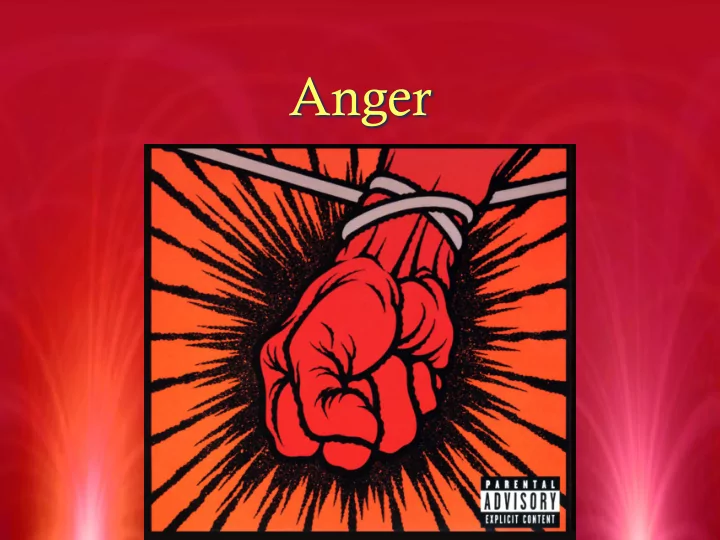
Anger
SLIDE 2 Universal trigger for anger-
Threat to self-esteem Release of catecholamines Adrenocortical R- revenge
Anger is learned Awareness of emotion –
2 interventions – challenge thoughts/ time out
Perception of situation controls R -- R- lack of info Ventilation fallacy-Catharsis
Miscellaneous Information
SLIDE 3
Film - Ventilating
SLIDE 4 Information
Context is important -
Let it all out = displacement Hold it all in = illness Wait = confront calmly(LEAPS)
Need to deal with original situation at the time or displacement/ illness result from build up of unaddressed anger Two questions
SLIDE 5
Anatomy
Anger source is physical - neocortex Pre-frontal lobes Limbic system –
Hippocampus Amygdala
Biological factors – age,
hormones, allergies, diabetes, strokes
SLIDE 6
Film - Rage
SLIDE 7
Multicausal Factors: Childhood Trauma
Poison and toxicity of anger in families – effect on children
Emotional numbing Sleep disturbances Adolescent violence Shame Rejection and depression Impulse control problem
SLIDE 8
Multicausal Factors:Divorce
Myth: It’s necessary to stay together for good of the children. Reality: It’s the dysfunctional family which is responsible for a large share of pain in the children.
SLIDE 9
Other Multicausal Factors
Self-esteem: bullies Parents’ anger Socio-cultural variables Temperament Poor role models
SLIDE 10
SLIDE 11 Methods of Expressing Anger
Passive Aggressive Passive-aggressive Assertive: D = describe behavior that makes you angry E = express your feelings, using “I” statements S = state what you need/want K = Know You May Not Get It
SLIDE 12 Other Approaches
Verbal Judo - Thompson, Ph.D.
11 statements you should never make-
Come here! You wouldn’t understand. Because those are the rules. It’s none of your business. What do you want me to do about it? Calm down! What’s your problem? You never…or, you always. I’m not going to say this again. I’m doing this for your own good. Why don’t you be reasonable?
SLIDE 13
Verbal Judo- Thompson,
Ph.D. LEAPS -
L = listen E = empathize A = ask questions P = paraphrase S = summarize
Interruptions
SLIDE 14 Power
If you have it = action = consider options of interventions If you don’t have it –
submit = compassion for other/ unknown info action = legal avenues/ protests
In any case, you need to take personal responsibility for your reactions, actions, and the consequences of your choices. Remember: life is not always fair; accept it.
SLIDE 15
Anger Management