aMAP! Project area Puyallup River Basin 900 square miles area - - PowerPoint PPT Presentation

amap project area
SMART_READER_LITE
LIVE PREVIEW

aMAP! Project area Puyallup River Basin 900 square miles area - - PowerPoint PPT Presentation

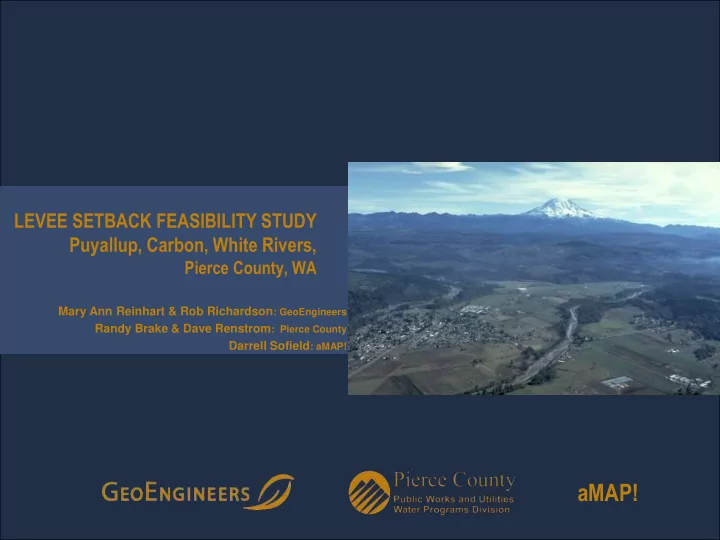
LEVEE SETBACK FEASIBILITY STUDY Puyallup, Carbon, White Rivers, Pierce County, WA Mary Ann Reinhart & Rob Richardson : GeoEngineers Randy Brake & Dave Renstrom : Pierce County Darrell Sofield : aMAP! aMAP! Project area Puyallup


slide-1
SLIDE 1

LEVEE SETBACK FEASIBILITY STUDY Puyallup, Carbon, White Rivers,

Pierce County, WA

Mary Ann Reinhart & Rob Richardson: GeoEngineers Randy Brake & Dave Renstrom: Pierce County Darrell Sofield: aMAP!
aMAP!

slide-2
SLIDE 2

Project area

  • Puyallup River Basin

– 900 square miles – area rugged mountains – low-relief floodplains / terraces of Puget Lowlands

  • Three Sub-basins

– Puyallup – White – Carbon

slide-3
SLIDE 3
slide-4
SLIDE 4

Levees - Revetments 1906 to 1965

X Y X Y X Y X Y X Y X Y X Y X Y X Y X Y X Y X Y X Y X Y X Y X Y X Y X Y X Y X Y X Y X Y X Y X Y X Y X Y X Y X Y X Y X Y X Y X Y X Y X Y X Y X Y X Y X Y X Y X Y X Y X Y X Y X Y X Y X Y X Y X Y X Y X Y X Y X Y X Y X Y X Y X Y X Y X Y X Y X Y X Y X Y X Y X Y X Y X Y X Y X Y X Y X Y X Y X Y X Y X Y X Y X Y X Y X Y X Y X Y X Y X Y X Y X Y X Y X Y X Y X Y X Y X Y X Y X Y X Y X Y X Y X Y X Y X Y X Y X Y X Y X Y X Y X Y X Y X Y X Y X Y X Y X Y X Y X Y X Y X Y X Y X Y X Y X Y X Y X Y X Y X Y X Y X Y X Y X Y X Y X Y X Y X Y X Y X Y X Y X Y X Y X Y X Y X Y X Y X Y X Y X Y X Y X Y X Y X Y X Y X Y X Y X Y X Y X Y X Y X Y X Y X Y X Y X Y X Y X Y X Y X Y X Y X Y X Y X Y X Y X Y X Y X Y X Y X Y X Y X Y X Y X Y X Y X Y X Y X Y X Y X Y X Y X Y X Y X Y X Y X Y X Y X Y X Y X Y X Y X Y X Y X Y X Y X Y X Y X Y X Y X Y X Y X Y X Y X Y X Y X Y X Y X Y X Y X Y X Y X Y X Y X Y X Y X Y X Y X Y X Y X Y X Y X Y X Y X Y X Y X Y X Y X Y X Y X Y X Y X Y X Y X Y X Y X Y X Y X Y X Y X Y X Y X Y X Y X Y X Y X Y X Y X Y X Y X Y X Y X Y X Y X Y X Y X Y X Y X Y X Y X Y X Y X Y X Y X Y X Y X Y X Y X Y X Y X Y X Y X Y X Y X Y X Y X Y X Y X Y X Y X Y X Y X Y X Y X Y X Y X Y X Y X Y X Y X Y X Y X Y X Y X Y X Y X Y X Y X Y X Y X Y X Y X Y X Y X Y X Y X Y X Y X Y X Y X Y X Y X Y X Y X Y X Y X Y X Y X Y X Y X Y X Y X Y X Y X Y X Y X Y X Y X Y X Y X Y X Y X Y X Y X Y X Y X Y X Y X Y X Y X Y X Y X Y X Y X Y X Y X Y X Y X Y X Y X Y X Y X Y X Y X Y X Y X Y X Y X Y X Y X Y X Y X Y X Y X Y X Y X Y X Y X Y X Y X Y X Y X Y X Y X Y X Y X Y X Y X Y X Y X Y X Y X Y X Y X Y X Y X Y X Y X Y X Y X Y X Y X Y X Y X Y X Y X Y

Levee, Project

Explanation

X Y X Y X Y X Y X Y X Y X Y

Levee

10,000 5,000 Feet ±

slide-5
SLIDE 5

Overtopping – Breaching– Flood Damage

slide-6
SLIDE 6

Confinement resulted in usual impacts

  • Straightened

channel

  • Increased

gradient

  • Reduced flood

corridors

slide-7
SLIDE 7

1931 - 1998

slide-8
SLIDE 8

Floodplain Development

slide-9
SLIDE 9

Project Thesis

Setback levee to achieve:

  • Floodplain reconnection
  • Reboot channel forming processes
  • Encourage aquatic habitat
slide-10
SLIDE 10

Project Approach

Goals and Objectives:

1. Increase floodplain reconnection / storage

  • Objectives

2. Re-establish channel form / function

  • Objectives

3. Maximize aquatic habitat

  • Objectives

4. Conceptual cost 5. Property availability

slide-11
SLIDE 11

Overview: Floodplain Reconnection

Objectives

  • Maximize area of floodplain inundation

– high frequency events

  • Maximize storage volume

– low frequency events

  • Minimize remedial actions
  • Improve / maintain existing flood protection
slide-12
SLIDE 12

Methods

  • Linked model for 3 river systems
  • Estimated floodplain connectivity

– Relative Surface Elevation Model developed from LiDAR and HEC-RAS model runs

  • Estimated flood storage

– Unsteady state model

slide-13
SLIDE 13

HEC-RAS Model

slide-14
SLIDE 14

HEC-RAS Model

slide-15
SLIDE 15

Replaced Region of Cross Sections, White River

Explanation

Replace Region Cross Sections White River 250 500 125 Feet ±

slide-16
SLIDE 16

Historical Movement of the Carbon River

Explanation

Current Carbon River Channel Survey Channel 720 1,440 360 Feet ±

slide-17
SLIDE 17

Relative Flood Surface Elevation Model

– Developed using HEC-RAS and LiDAR processing – Displays flood elevation relative to DEM – Predicts extent of overtopping

slide-18
SLIDE 18

HEC-Ras Integrated Method: 2yr

Elevation Relative to Surface:

High : 12.0 ft Low : -12.0 ft

slide-19
SLIDE 19

HEC-Ras Integrated Method: 1996

Elevation Relative to Surface:

High : 12.0 ft Low : -12.0 ft

slide-20
SLIDE 20

Modeled Output – No Levees

slide-21
SLIDE 21

Modeled Output: Storage With Levees

slide-22
SLIDE 22

Objectives:

  • Promote increased channel complexity
  • Encourage multi-channel form / channel migration
  • Promote sediment conveyance and storage processes
  • Improve connectivity to existing off-channel habitat
  • Anticipate potential downstream impacts

Overview: Recover Channel Forming Processes

slide-23
SLIDE 23

Historical Conditions

  • Fig. 12A - 1931

Aerial Photo

  • Fig. 12B - 1940

Aerial Photo

7 7 7 7 7 7
  • Fig. 12C - 1978

Aerial Photo

24 24.6 24.5 24.4 24.2 23.8

  • Fig. 12D - 1987

Aerial Photo

slide-24
SLIDE 24

Methods

  • Potential corridor width
  • Channel length per site
  • Sediment influx
  • Changes in sediment transport capacity

following setback

  • Estimated channel response
slide-25
SLIDE 25

Project Results and Deliverables

  • Set back levees at 32 sites
  • Prioritization strategy / tool
  • Selected two sites
  • 30% design for two sites
  • 3D animation
  • Relative Flood Surface Models
  • Linked HEC-RAS Model
slide-26
SLIDE 26

Project Challenges

Hydraulic analysis – reconciling changes in channel conditions including:

  • Channel location (migration)
  • Bathymetry from channel aggradation

Geomorphic response

  • Anticipating response to sediment loading
slide-27
SLIDE 27

Pierce County Levee Setback Feasibility Study

Thank You