
SLIDE 1
Drainage District Program Department of Agriculture, Trade, and Consumer Protection Seth McClure, State Drainage Engineer
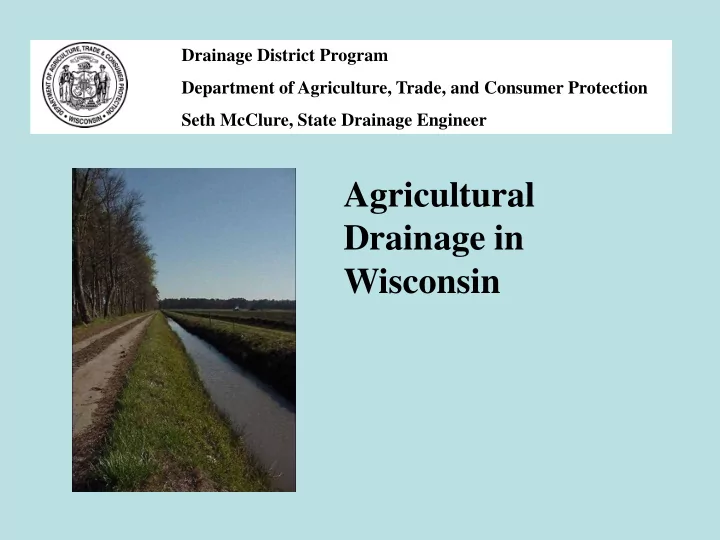
Agricultural Drainage in Wisconsin What is a Drainage District? - - PowerPoint PPT Presentation
Drainage District Program Department of Agriculture, Trade, and Consumer Protection Seth McClure, State Drainage Engineer Agricultural Drainage in Wisconsin What is a Drainage District? Local governmental districts which are organized to
Drainage District Program Department of Agriculture, Trade, and Consumer Protection Seth McClure, State Drainage Engineer
drainage must pay assessments to cover the cost of constructing, maintaining, and repairing the district drains. The majority of the existing drainage districts in the state were formed in the early 1900s.
Counties Containing Active Drainage Districts Distribution of Active Drainage Districts
DATCP is aware of about 176 active drainage districts in
Wisconsin, 31 of them contain
The majority of the drainage districts are located in the eastern and southeastern portions of the state.
water is best approached regionally, or with many neighbors working together for a common goal.
to drain their fields, divert stormwater, or pump out their basements, frequently it is at the expense of the next landowner
causes problems.
drainage districts can greatly simplify the implementation and maintenance of a common drainage system.
amount of community conflict inherent in flooding or persistent high water by providing an organized and localized process for resolving drainage problems.
discuss drainage issues within the drainage districts and to decide on a course of action.
all drainage districts under its jurisdiction comply with the standards in the drainage rule (Ch. ATCP 48, Wis.
annex or withdraw lands from a drainage district purchase or lease equipment levy assessments obtain injunctions hire attorneys, engineers, or other assistants construct and maintain district drains contract with governmental agencies borrow money perform inspections
Madison Sand and Gravel
Not Ag land
governmental entities are in conflict?
have jurisdiction over waterways?
Area of Portage County Drainage District
For further information contact: Seth McClure State Drainage Engineer DATCP Division of Agricultural Resource Management 2811 Agriculture Drive P.O. Box 8911 Madison, WI 53708 – 8911 (608) 224 -4627 seth.mcclure@wisconsin.gov Drainage Program Website: http://datcp.wi.gov/Environment/Drainage_Programs /index.aspx Drainage Districts Web Map https://datcpgis.wi.gov/DrainageDistricts/