
SLIDE 1
1 1 / 4 / 1 7
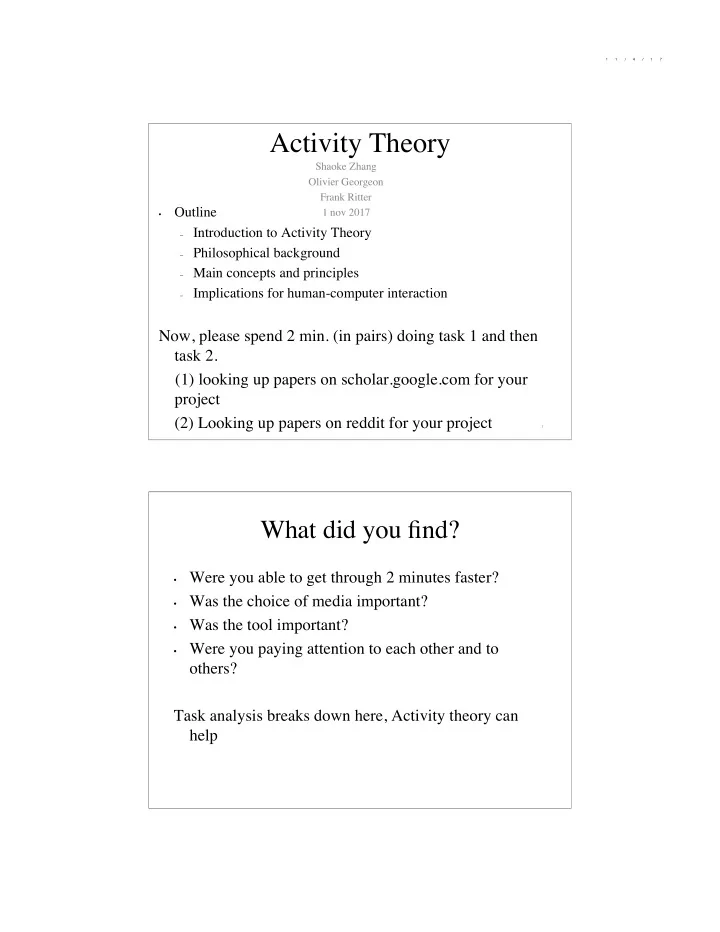
Activity Theory
1
Shaoke Zhang Olivier Georgeon Frank Ritter 1 nov 2017
- Outline
– Introduction to Activity Theory – Philosophical background – Main concepts and principles – Implications for human-computer interaction
Now, please spend 2 min. (in pairs) doing task 1 and then task 2. (1) looking up papers on scholar.google.com for your project (2) Looking up papers on reddit for your project
What did you find?
- Were you able to get through 2 minutes faster?
- Was the choice of media important?
- Was the tool important?
- Were you paying attention to each other and to
- thers?