
SLIDE 1
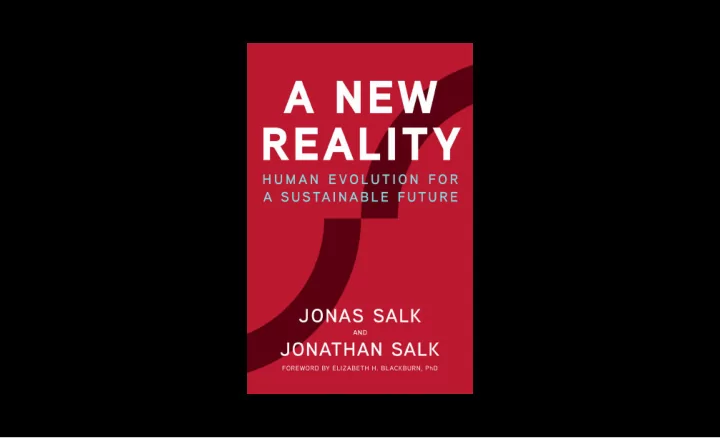
A vision of hope for a world in transition Jonas Salks wish was - - PowerPoint PPT Presentation
A vision of hope for a world in transition Jonas Salks wish was Jonas Salks wish was that his ideas would that his ideas would continue to be disseminated continue to be disseminated so that, like a vaccine, they so that, like a
JONAS SALK 1954
JONAS SALK 1954
part one
In this essay, the sigmoid curv as a “thinking tool” and as a s refmects a pattern that applie living systems and refmects character of change in our time.
In the fjrst, upturned portion of the curve, population growth follows a pattern of acceleration;
in the second part, growth decelerate a plateau is reached.
The gap in the curve empha the point of infmection change from accelera decelerating growth.
Fruit Fly
DROSOPHILA MELANOGASTER
250 200 150 100 50 number of flies 8 12 16 20 24 28 2 6 10 14 april mayDROSOPHILA MELANOGASTER
250 200 150 100 50
number of flies8 12 16 20 24 28 2 6 10 14
april may part two
From the beginning of the Common Era, the size of the human population grew gradually for about 16 centuries and then with increasing speed through the nineteenth century. The gradual but progressive acceleration was followed by a sudden steep rise in the twentieth century—a consequence of the scientifjc- technological-industrial-agricultural revolutions, which have had the efgect
population far larger than ever before.
A.D. 200 400 600 800 1000 1200 1400 1600 1800 2000 7 6 5 4 3 2 1 world population in billions CURRENT WORLD POPULATION IS 7.4 BILLION7 CURRENT WORLD POPULATION IS 7.4 BILLION 6 5 4 3 2 2000 1800 1600 1400 1200 1000 800 600 400 200 A.D.
The sharp increase in the size of human population in r raises the reasonable que Will the curve continue to rise at its present r
Will it crash?
Or will it bend and a a sigmoid shape?
12 11 10 9 8 7 6 5 4 3 2 1
world population in billions
1850 1910 1930 1950 1970 1990 2010 2030 2050 2070 2090 2110
12 11 10 9 8 7 6 5 4 3 2 1
world population in billions
1850 1910 1930 1950 1970 1990 2010 2030 2050 2070 2090 2110
11 10 9 8 7 6 5 4 3 2 1 2.0 1.5 1.0 0.5 6000 BCE 4000 BCE 2000 BCE 2000 CE 4000 CE 6000 CE 8000 CE 10,000 CE
word population in billions percent increase per year
part three
epoch a epoch b
epoch a epoch b
a b no limits consumption waste limits conservation sustainability
competition independence power collaboration interdependence consensus a b
persistent expansion dynamic equilibrium a b
either/or win-lose both/and win-win a b
part four
epoch a epoch b pragmatic
humane pragmatic and humane
a values b values b values a values
part five
In this critical period, we are responsible for guiding
to a new equilibrium.
material value human value
and
consumption conservation
sustainability
carbon intensive fossil fuels
. . ..
low/zero carbon solar/wind
a b
central command top down
. . ..
distributed collaborative
a b
individual use not connected.
. ..
shared use networked autonomous
a b
extract/use/discard degenerative linear
.
re-use/recycle regenerative circular
a b
Planetary Community Social/Political/Economic Individual International Family Work Molecular/Cellular
to be created known